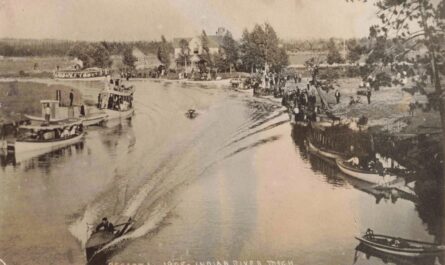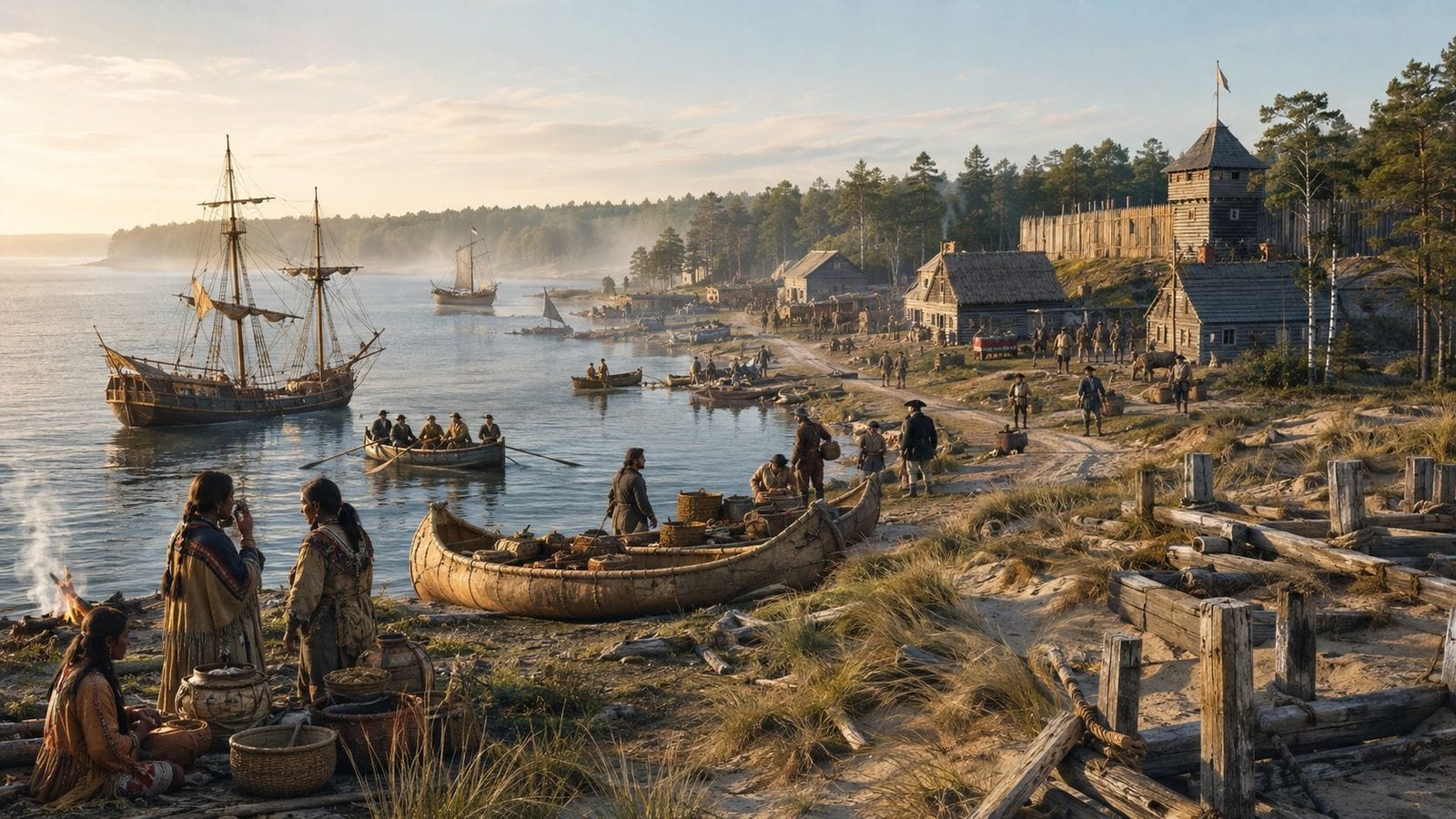


Long before Michigan became a state, French missionaries, fur traders, soldiers, and settlers were building small communities along its rivers and Great Lakes shorelines. Some became cities we know today. Others disappeared so completely that modern visitors can drive past their former locations without realizing a settlement once stood there.
Determining Michigan’s oldest city is typically not a problem. We just looked for indigenous settlements that existed in the Northwest Territory long before Europeans arrived in the area. Europeans tended to stay and settle inthe same areas.
Table of Contents
Map Michigan’s Oldest Cities

Deciding which is Michigan’s second-, third- or fourth-oldest city is surprisingly difficult.
Sault Ste. Marie has a solid claim as Michigan’s oldest European-founded city, dating to 1668. St. Ignace traces its history to 1671 and calls itself one of America’s oldest continuously inhabited cities. Yet Monroe, founded in 1785, describes itself as Michigan’s third-oldest community.
Then there is Niles. The modern town dates largely to the 1820s, but French Fort St. Joseph stood there beginning in 1691.
St. Joseph presents the same problem. René-Robert Cavelier, Sieur de La Salle, built Fort Miami there in 1679, decades before Detroit was founded. But the fort disappeared, and today’s city developed later.
The contradictions are not necessarily errors. They show how slippery the word “founded” becomes when applied to places with more than three centuries of history.
Michigan History Did Not Begin With European Settlement


Any list of Michigan’s oldest communities needs one major qualification.
People lived, traveled, traded, hunted, and fished across what is now Michigan for thousands of years before Europeans arrived. The Anishinaabe peoples — including the Odawa, Ojibwe, and Potawatomi — maintained communities and trade networks throughout the Great Lakes. Other Native nations also lived in or traveled through the region.
Many early European settlements were established precisely where Native people had already identified valuable transportation routes, fisheries, river crossings, and gathering places.
That may be the most important fact behind Michigan’s oldest cities. Europeans generally did not select these locations by accident. They followed waterways and trails that were already important.
A Timeline of Michigan’s Earliest Settlement Sites
| Place | Early date | What happened |
|---|---|---|
| Sault Ste. Marie | 1668 | Permanent French mission; developed into present city |
| St. Ignace | 1671 | Jesuit mission and fur-trade community |
| St. Joseph | 1679 | Fort Miami was established; the fort later disappeared |
| Niles | 1691 | Fort St. Joseph established; abandoned in 1781; modern Niles developed later |
| Detroit | 1701 | Fort Pontchartrain established; permanent settlement followed |
| Mackinaw City site | 1715 | Fort Michilimackinac established; community moved in 1779-81 |
| St. Clair site | 1764 | British Fort Sinclair established; modern town developed later |
| Mackinac Island | 1779-81 | Fort and much of Michilimackinac community moved to island |
| Monroe | 1785 | Frenchtown established along River Raisin |
| Dearborn | 1786 | Early European-American settlement |
| Mount Clemens | 1796-1801 | Christian Clemens arrived in 1796 and settled there |
| River Rouge | 1808 | Early settlement near Detroit River |
| Pontiac | 1818 | Organized settlement established along Clinton River |
| Ypsilanti | 1823 | Woodruff’s Grove established |
| Ann Arbor | 1824 | Founded by John Allen and Elisha Rumsey |
| Grand Rapids | 1825-26 | Permanent settlement and Campau trading post |
The table shows why a simple ranking can be misleading. Some places have direct continuity with their colonial beginnings. Others stand near colonial settlements that disappeared generations before the modern city was created.
Sault Ste. Marie — 1668

If one Michigan community deserves the title of the state’s oldest city, it is Sault Ste. Marie.
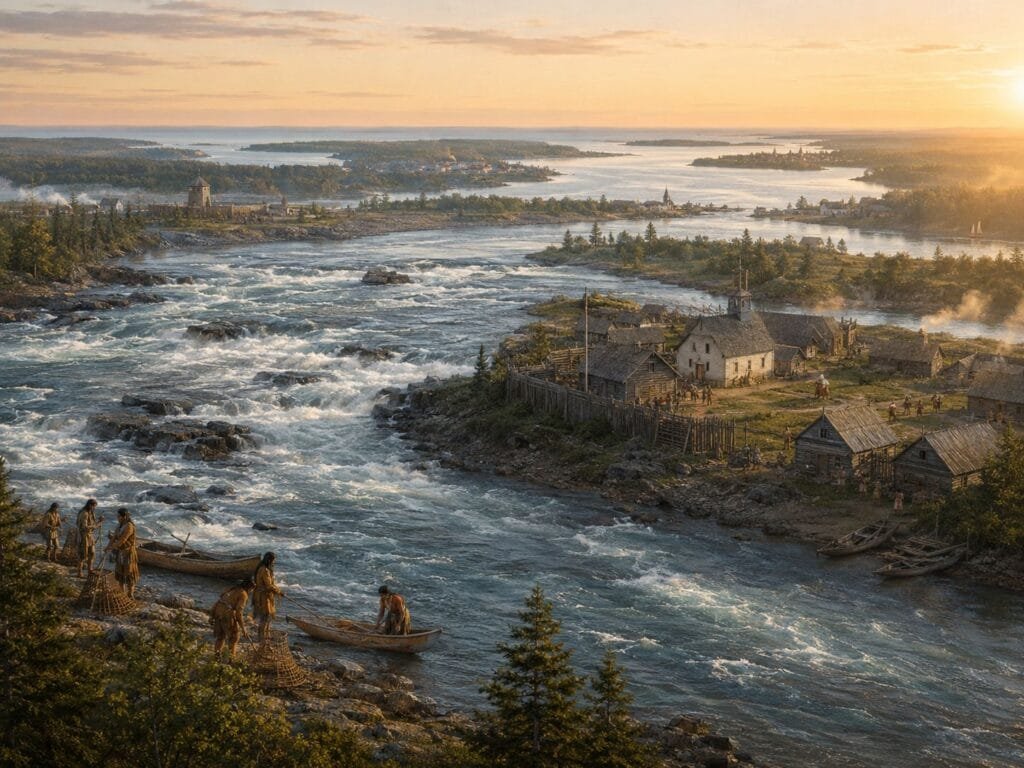
French Jesuit missionaries Claude Dablon and Jacques Marquette established a mission there in 1668. The Library of Michigan lists the Sault mission as Michigan’s first. The location had been important long before Europeans arrived. The rapids of the St. Marys River created an exceptional fishing area and a natural transportation choke point between Lake Superior and Lake Huron.
That geographic advantage never went away. The rapids that attracted Native fishermen and French traders eventually led to the construction of the Soo Locks, creating one of North America’s most important commercial shipping corridors.
The City of Sault Ste. Marie officially dates its founding to 1668.

St. Ignace — 1671

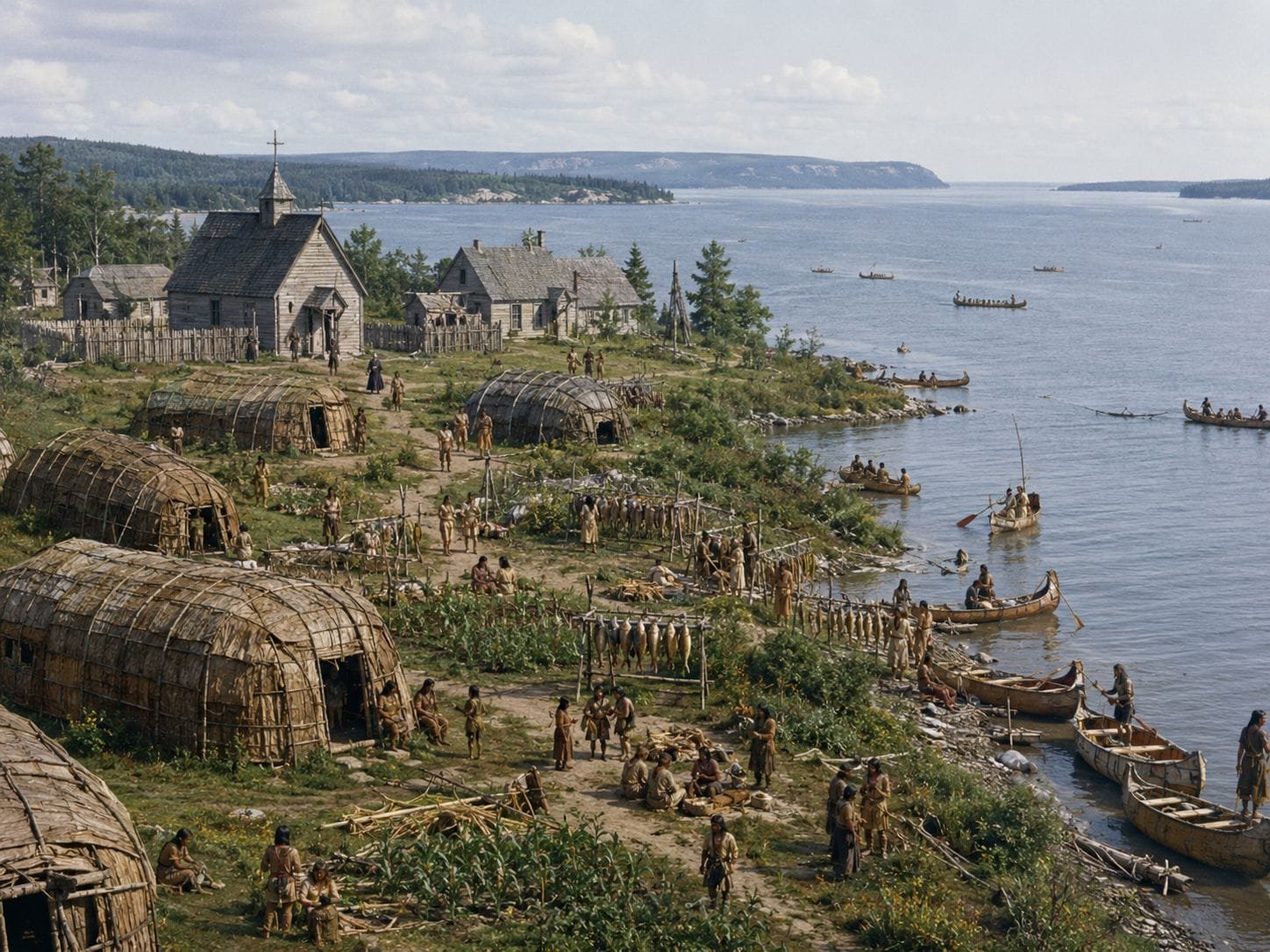
Three years after the Sault mission was founded, another important settlement appeared at the Straits of Mackinac.
Jacques Marquette established the St. Ignace mission in 1671 near existing Native communities. During the 1670s, a French trading community grew around it. St. Ignace’s history, however, was anything but orderly. Fort de Buade was established near the mission in the late 1680s and abandoned in 1697. Many Huron and Odawa residents moved toward Detroit in the early 1700s. In 1705, Jesuits closed and burned the St. Ignace mission. Religious and trading activity subsequently shifted around the Straits.
Despite those changes, the City of St. Ignace traces its community history to 1671 and calls itself the third-oldest continuously inhabited city in the United States.
That claim is one reason ranking Michigan’s oldest communities becomes debatable.

St. Joseph — A City With Roots in 1679
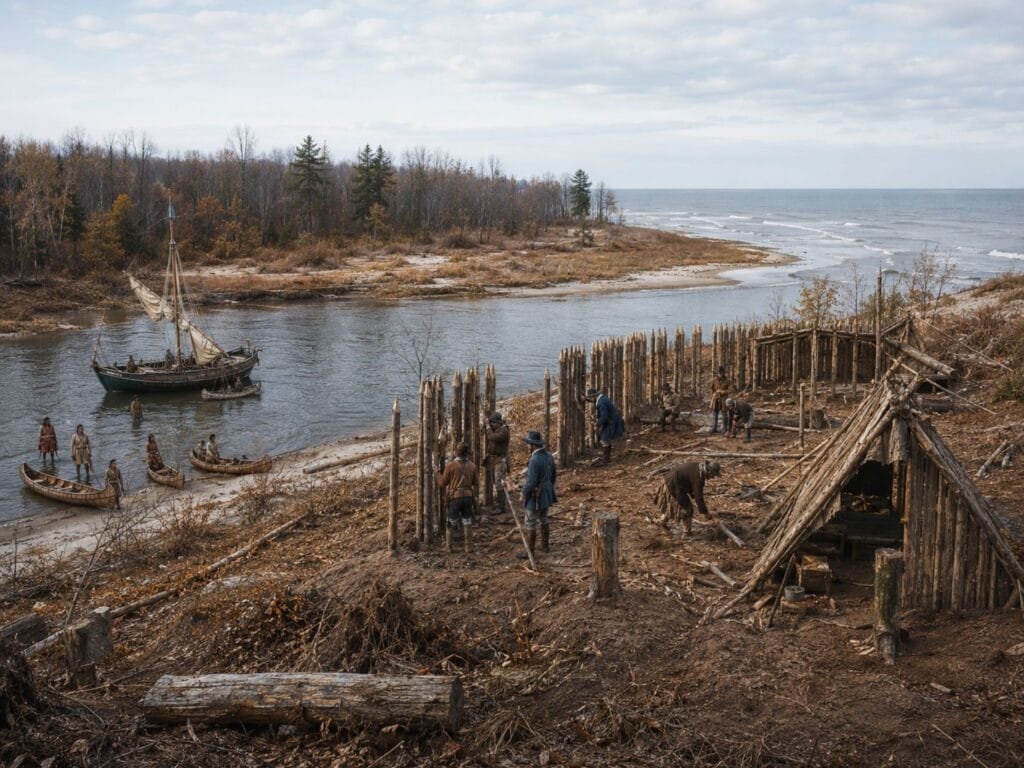
Here is where the list becomes much more interesting. In 1679, La Salle built Fort Miami near the mouth of the St. Joseph River at present-day St. Joseph.
According to the Library of Michigan’s Berrien County history, the fort demonstrated the strategic importance Europeans placed on the Lake Michigan-St. Joseph River transportation route. But Fort Miami did not simply grow into today’s St. Joseph. The first fort was short-lived, and settlement occurred in different stages afterward.
So, was St. Joseph founded in 1679?
Calling that the founding date of the modern city goes too far. Calling the location one of Michigan’s earliest European colonial sites, however, is justified.

Niles — Colonial Michigan’s Forgotten Stronghold 1691
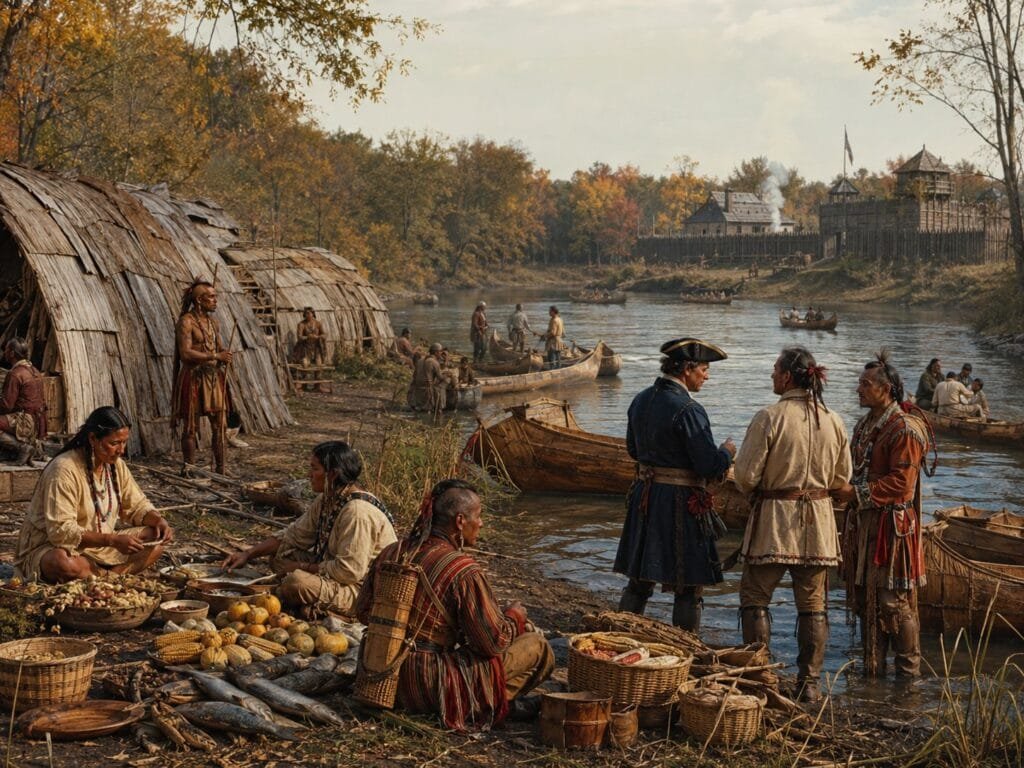
Niles may have the most surprising history on this list. The French established Fort St. Joseph along the St. Joseph River in present-day Niles in 1691 — a decade before Detroit was founded. This was not merely a lonely military stockade.
For roughly 90 years, Fort St. Joseph served as a mission, trading center, and military post. French traders interacted extensively with nearby Potawatomi and Miami communities. Control changed as European empires fought over North America. French, British and Spanish forces were associated with the post at different times. That history helped give Niles its enduring nickname: the “City of Four Flags.”
Eventually, the fort vanished.
Western Michigan University says Fort St. Joseph was abandoned in 1781. Its precise location was eventually lost. Archaeologists finally identified physical remains of the fort in 1998. More than 320,000 artifacts have since been recovered through archaeological work, according to Western Michigan University.
Modern Niles developed decades after the colonial fort disappeared. That makes it difficult to call Niles a city founded in 1691. But the ground beneath Niles contains one of the oldest European colonial settlement sites in Michigan.
It deserves far more attention in discussions of early Michigan history.
Detroit — 1701
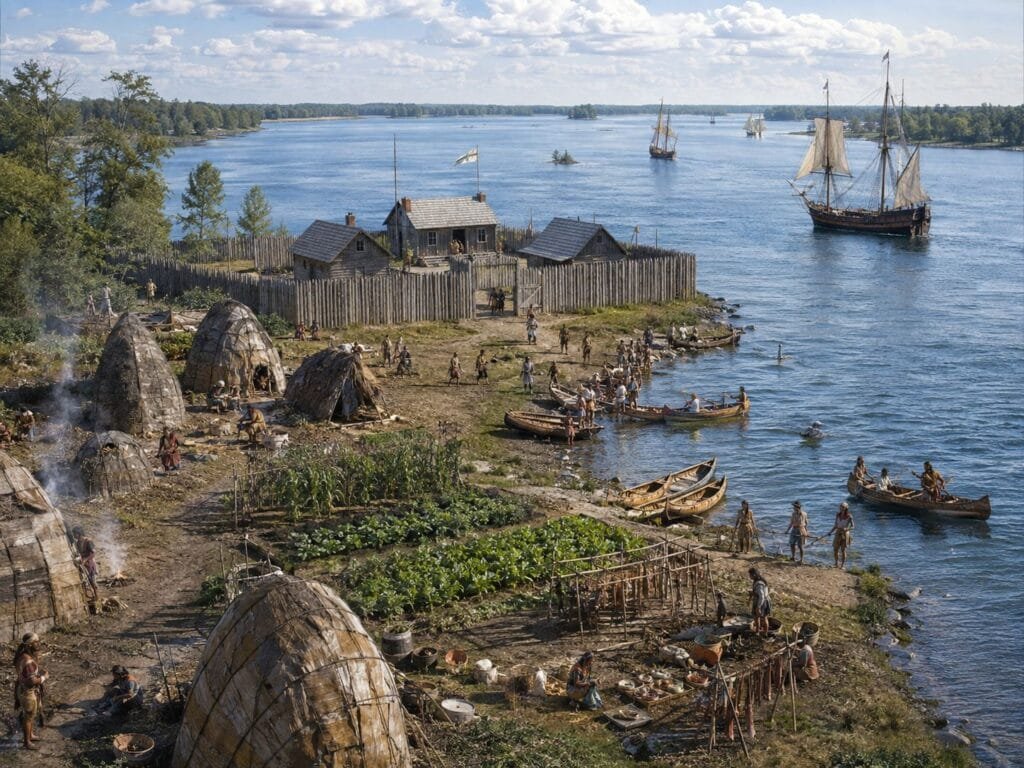
Detroit’s early history is less ambiguous.
Antoine de la Mothe Cadillac established Fort Pontchartrain du Détroit on July 24, 1701. The settlement’s location allowed France to exert greater control over the water route connecting Lake Erie, Lake St. Clair, and Lake Huron.
Detroit eventually became the dominant political and commercial center of Michigan Territory.
The city’s later automobile history became so famous that it sometimes overshadows an important fact: Detroit already had two centuries of history behind it when Henry Ford established Ford Motor Co. in 1903.
Fort Michilimackinac — 1715 to 1781
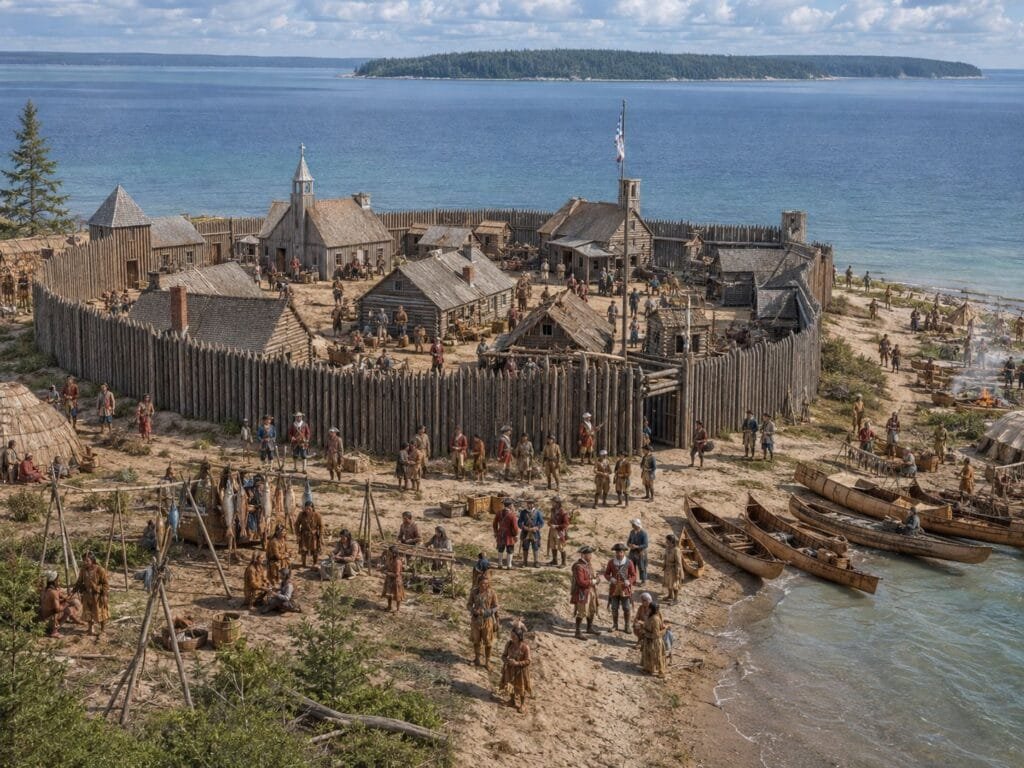
Another Michigan settlement effectively disappeared because its residents moved.
French soldiers established Fort Michilimackinac in 1715 at what is now Mackinaw City. It became an important military, commercial, and fur-trading community at the Straits. The British took control following France’s defeat in the French and Indian War.
Then British authorities decided the mainland fort was too vulnerable. Between 1779 and 1781, the military garrison, traders and much of the civilian community moved across the water to Mackinac Island. According to Mackinac State Historic Parks, buildings that could not be moved were burned.
The old community ceased to exist. Modern Mackinaw City was not platted until 1857.
Today’s reconstructed Colonial Michilimackinac therefore occupies the location of an earlier community that essentially packed up and moved away.
Mackinac Island — 1779-81
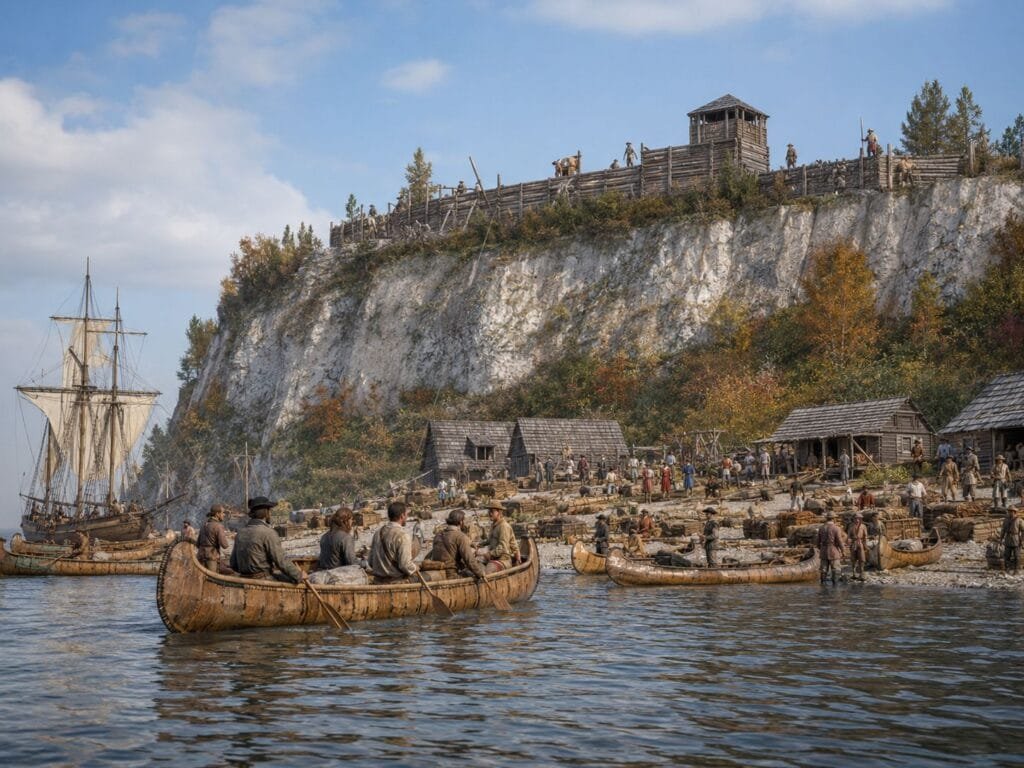
When Michilimackinac moved, Mackinac Island became the new center of military and commercial power at the Straits.
Fort Mackinac was constructed on the island’s high ground. The British occupied it until American forces arrived in 1796. The fort returned briefly to British hands during the War of 1812. American troops attempted to retake the island in 1814 but failed. The island returned to U.S. control following the war.
Mackinac subsequently became a major center of the American fur trade. By the late 19th century, its military importance was fading as tourism took over. Few Michigan communities have reinvented themselves as many times as Mackinac Island.
Monroe — 1785
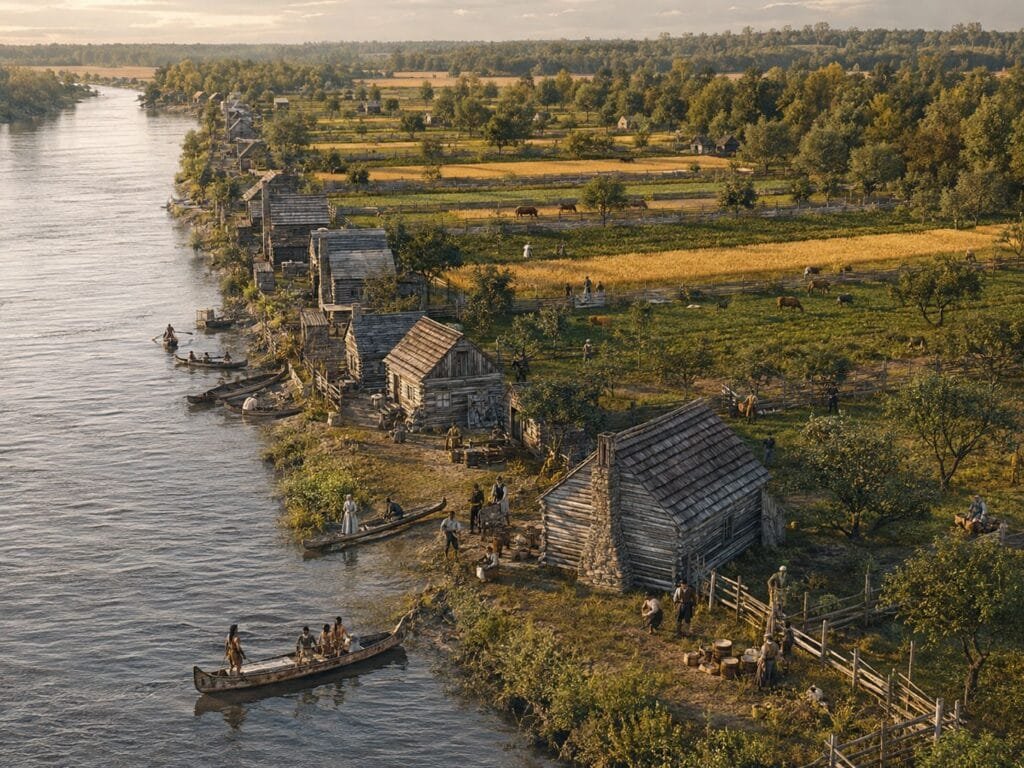
Monroe traces its European settlement history to French Canadians who established Frenchtown along the River Raisin. The City of Monroe dates the community’s founding to 1785, when Potawatomi leaders deeded land to Francis Navarre. French settlement followed. Monroe calls itself Michigan’s third-oldest community — a claim that illustrates the difficulty of comparing settlement dates.
Whatever its numerical position, Monroe’s historical importance is beyond question.
Frenchtown became the site of one of the bloodiest episodes of the War of 1812. American forces suffered a major defeat there in January 1813. The killing of wounded prisoners afterward helped produce the rallying cry “Remember the Raisin.”
The National Park Service now preserves and interprets the battlefield. Frenchtown was renamed Monroe in 1817 in honor of President James Monroe.
Dearborn — 1786
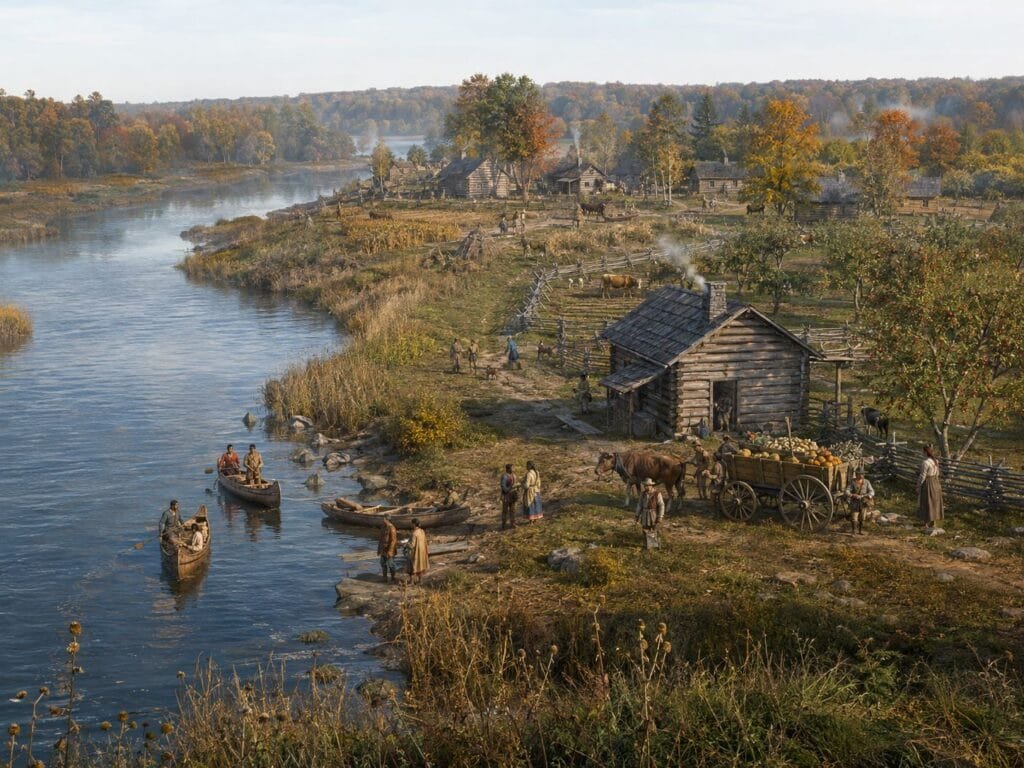
The City of Dearborn dates its founding to 1786, although it would not become an incorporated city until 1929. For much of its early history, the area consisted of farms and scattered settlements west of Detroit.
Then came Henry Ford. Ford was born in the area in 1863. His enormous River Rouge manufacturing complex later transformed Dearborn into one of the industrial centers of the United States.
The contrast is remarkable: Dearborn went from an 18th-century farming area to the headquarters of one of the world’s largest automobile companies.
Mount Clemens — 1796-1818
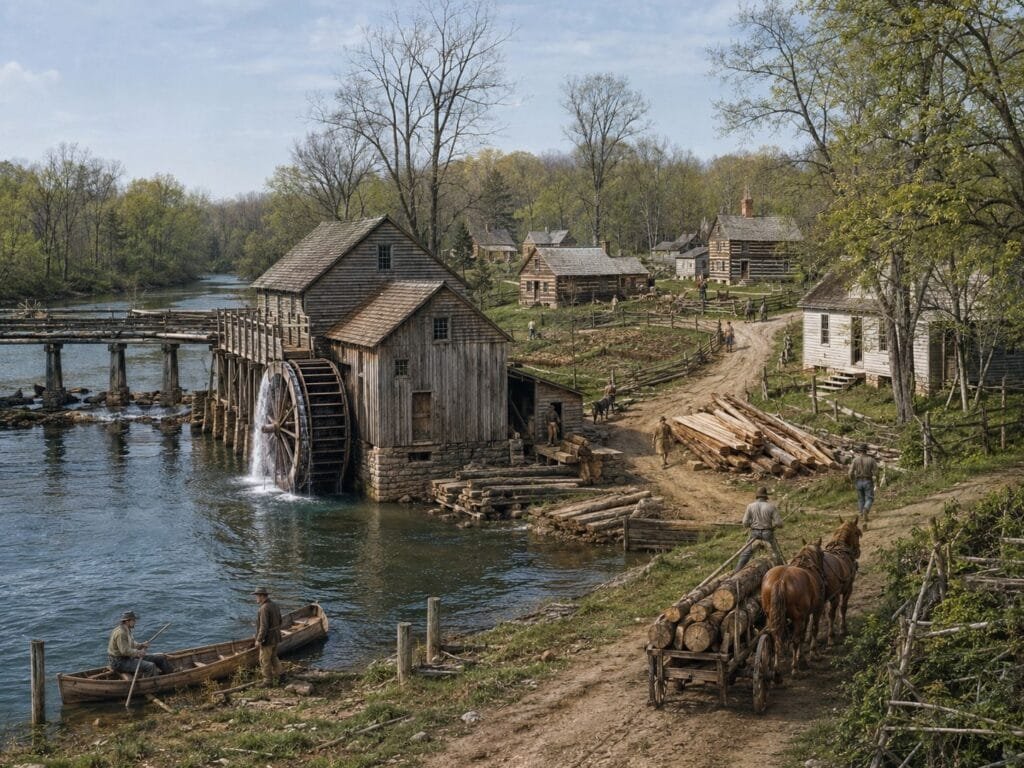
Christian Clemens arrived along the Clinton River during a surveying trip in 1796. He purchased property in 1801 and built a log house.
In 1818, Clemens formally laid out streets and lots for a village bearing his name. That year, Mount Clemens also became the seat of Macomb County. The City of Mount Clemens records both the 1796 arrival and the 1818 platting.
The town later developed an unusual national reputation. Mineral baths drew visitors who believed the local waters could relieve rheumatism and other ailments. Mount Clemens became a health resort long before suburban Detroit surrounded it.
Pontiac — 1818
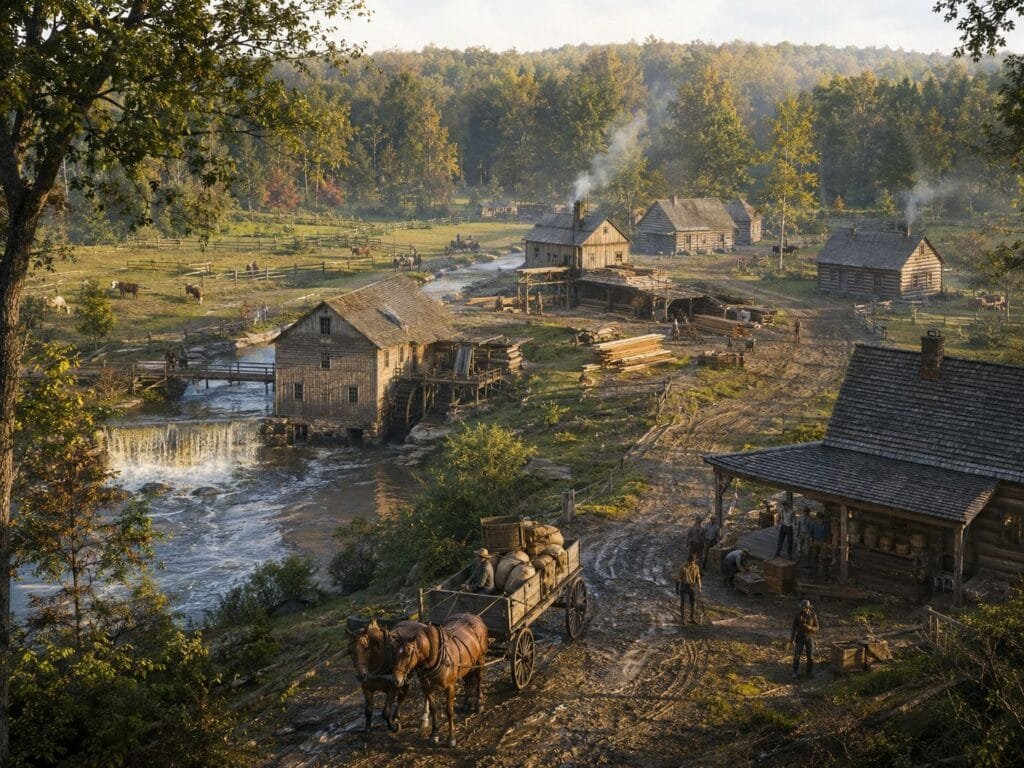
Pontiac was founded in 1818 near the crossing of an established trail and the Clinton River.
It became the county seat of Oakland County and grew with the arrival of mills, railroads, and manufacturing. Its industrial history eventually became inseparable from the automobile industry. The Pontiac automobile brand carried the community’s name across the country.
Michigan’s State Historic Preservation Office dates Pontiac’s founding to 1818.
Ypsilanti — 1823
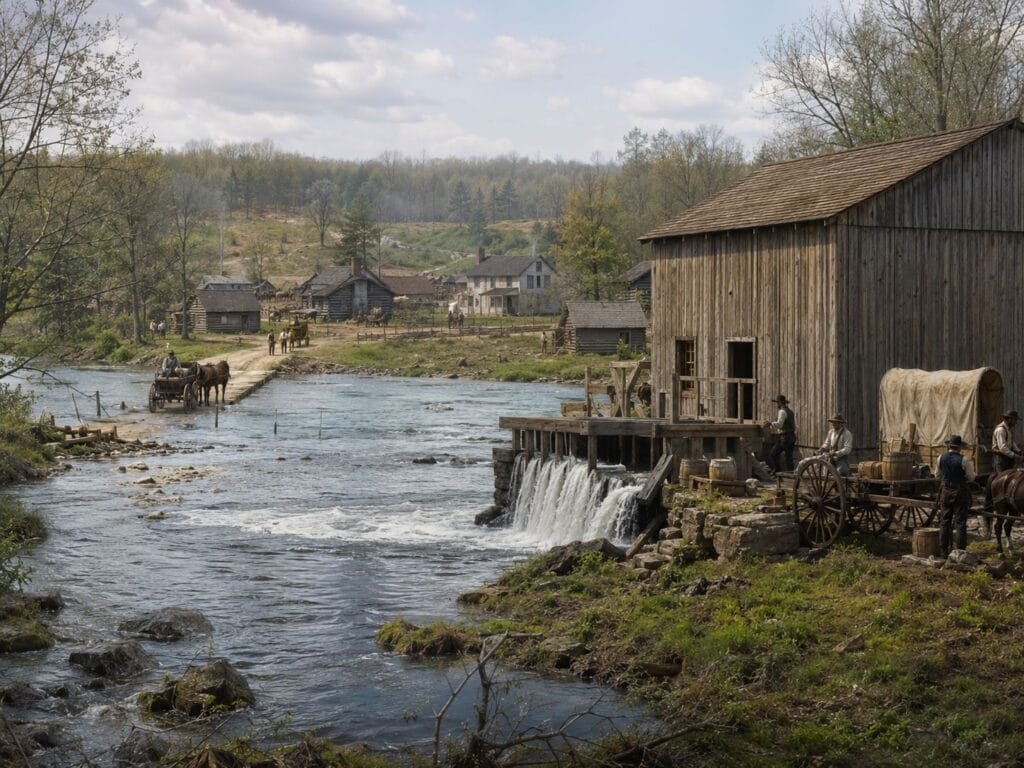
Benjamin Woodruff and other settlers established Woodruff’s Grove along the Huron River in 1823.
The location had been used by Native people long before the new settlement appeared, and a French trading post had been established nearby in 1809.
The City of Ypsilanti identifies Woodruff’s Grove as Washtenaw County’s first European-American settlement.
The community later took the name Ypsilanti in honor of Demetrius Ypsilanti, a leader in the Greek struggle for independence.
Ann Arbor — 1824
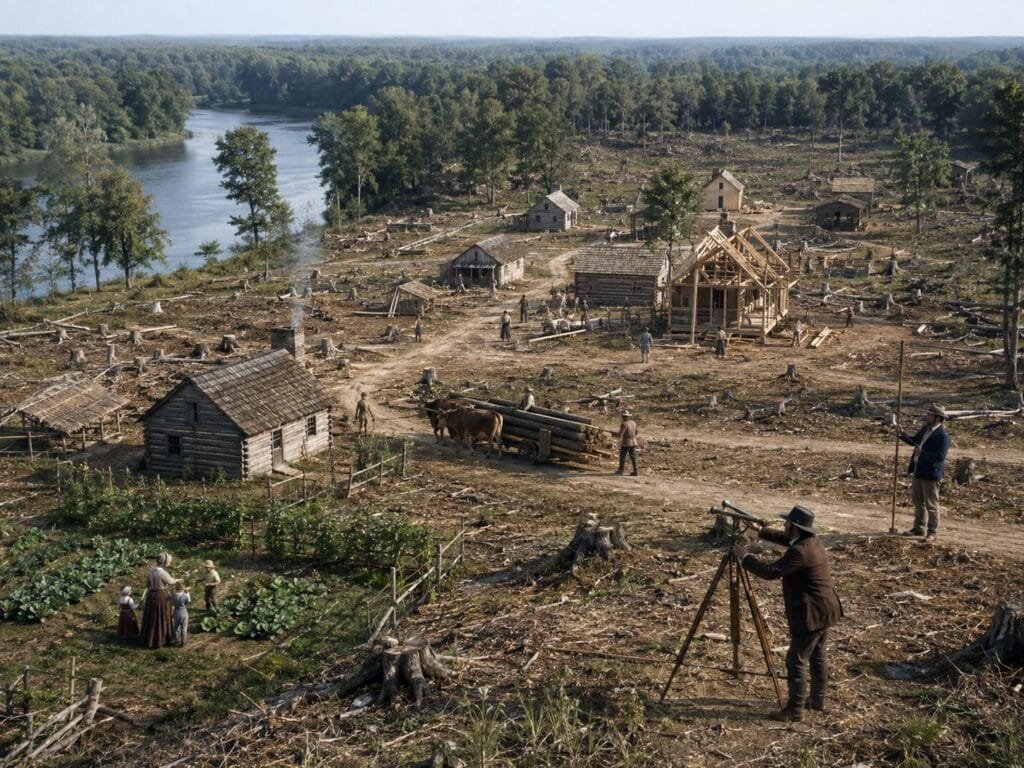
John Allen and Elisha Rumsey founded Ann Arbor in 1824. Its future changed dramatically in 1837 when the University of Michigan was moved from Detroit to Ann Arbor.
The City of Ann Arbor confirms the 1824 founding date. Ann Arbor was incorporated as a city in 1851. What began as a frontier town eventually became one of America’s best-known university communities.
Grand Rapids — 1825-26
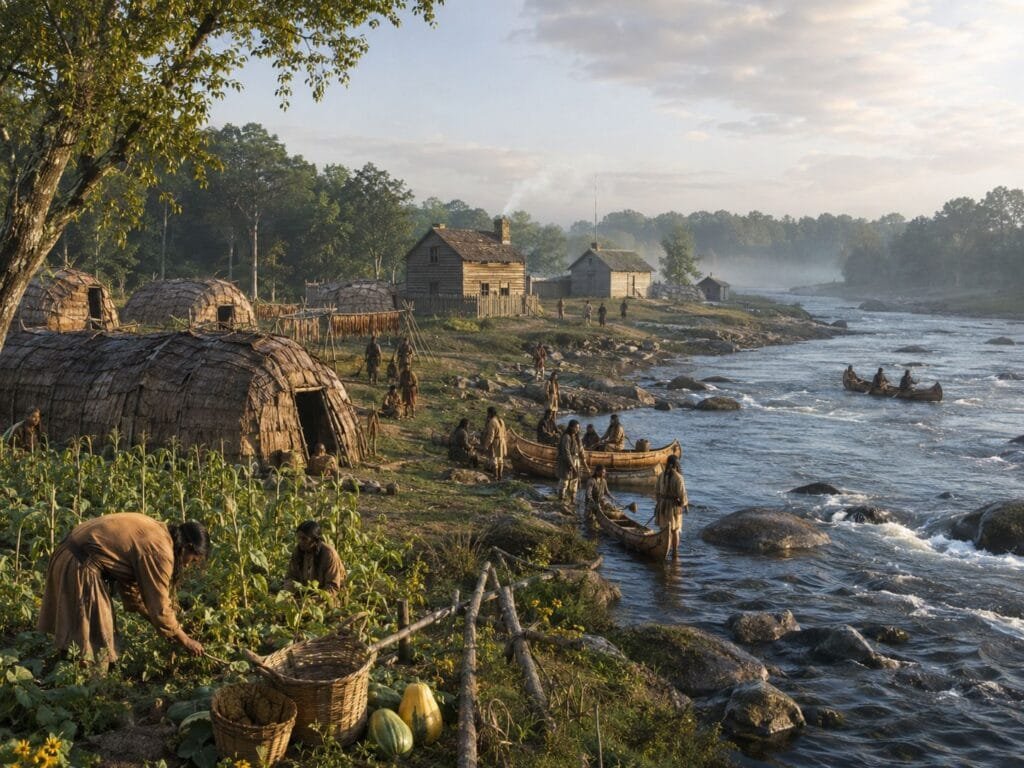
Grand Rapids developed beside a stretch of the Grand River that had supported Native communities long before European-American settlement. Baptist missionary Isaac McCoy arrived in 1825. French trader Louis Campau established a trading post the following year.
Campau purchased land that would become the downtown business district in 1831. According to the City of Grand Rapids, the settlement became a village in 1838 and a city in 1850. Grand Rapids later built an international reputation for furniture manufacturing.
The Michigan Settlements That Didn’t Make It
Michigan history becomes even more interesting when the places that failed are added to the story.
Fort Miami — Present-Day St. Joseph
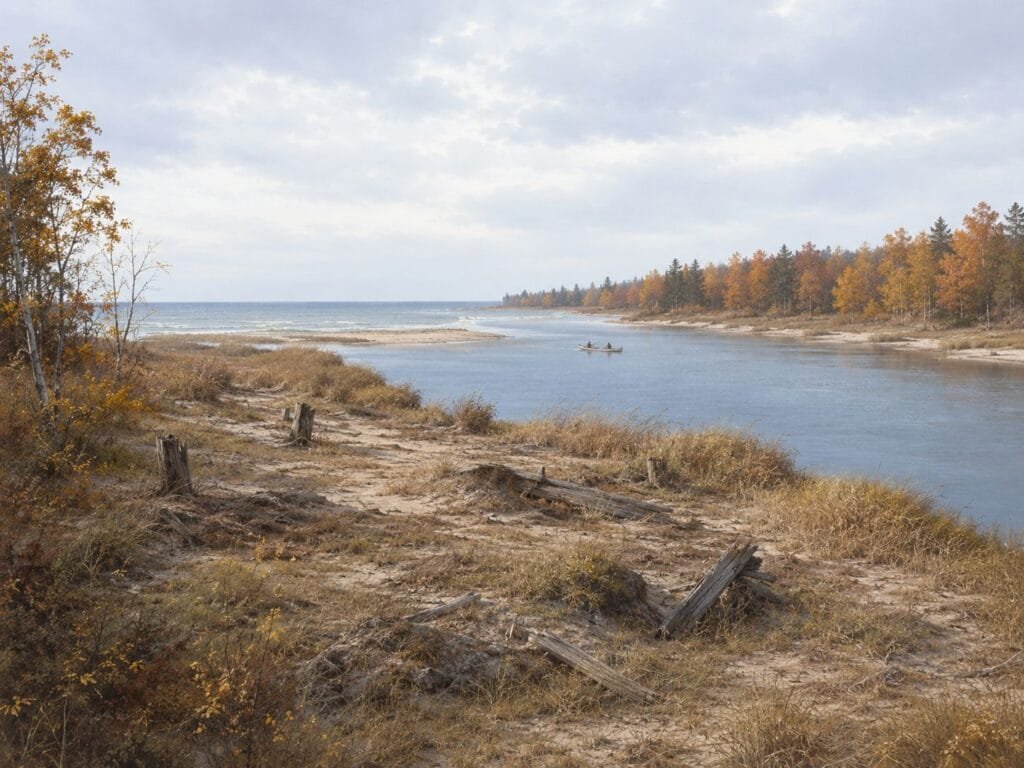
La Salle’s 1679 Fort Miami did not become a continuous town. Its brief existence nevertheless makes the site of present-day St. Joseph one of the state’s earliest documented European colonial locations. Its disappearance shows why settlement dates need to be treated carefully.
Fort St. Joseph — Present-Day Niles
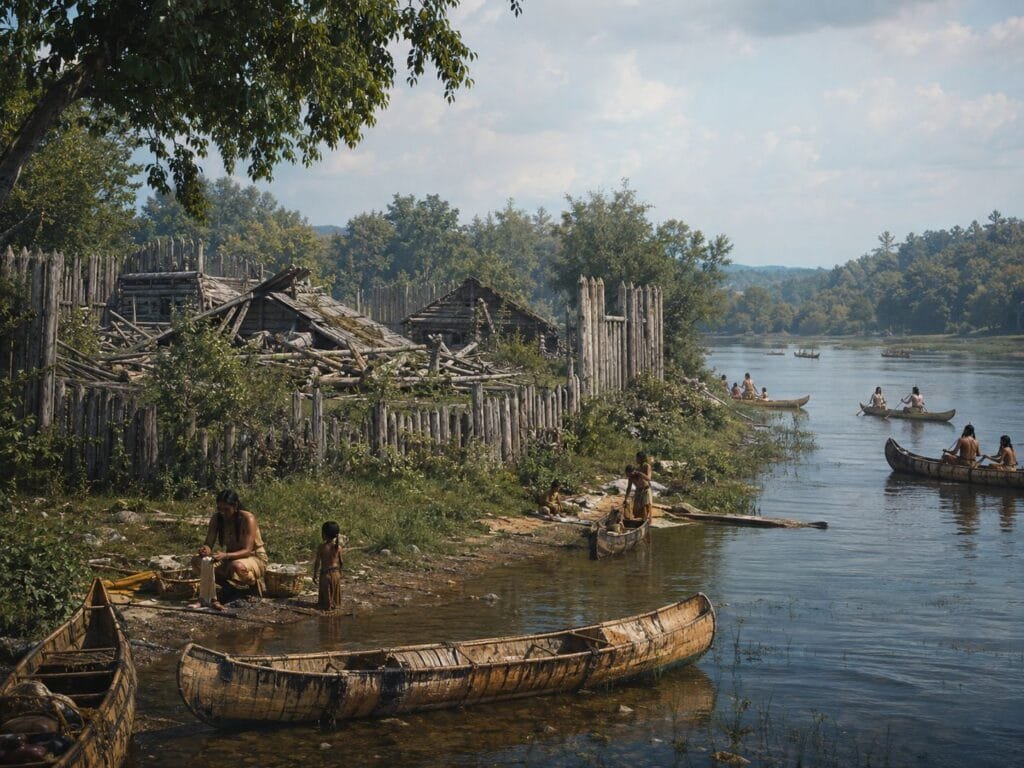
Fort St. Joseph lasted far longer.
From 1691 until 1781, the community near today’s Niles served as a trading, religious, and military center. After its abandonment, nature and later development gradually erased it. For generations, people knew the fort had existed but no longer knew precisely where. Archaeologists finally located its remains in 1998. Today the old fort survives underground rather than as a standing village.
Fort de Buade — St. Ignace
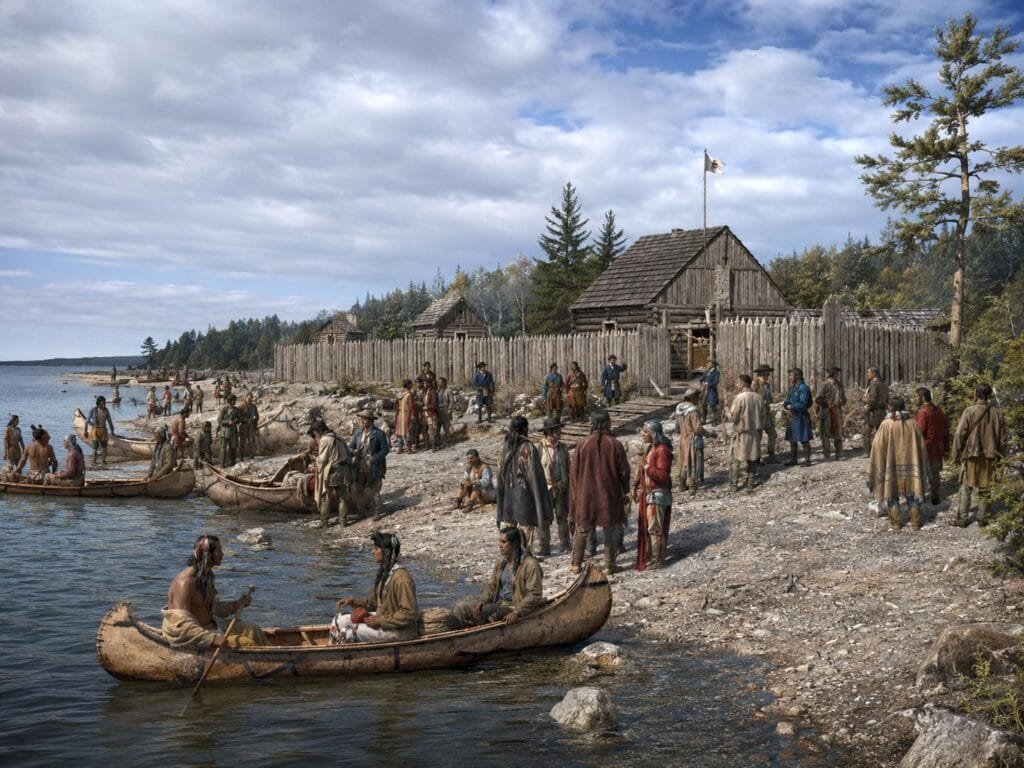
Fort de Buade was established near St. Ignace during the late 1680s. Its military role was brief. The fort was abandoned in 1697 as French strategy in the Great Lakes changed.
The St. Ignace mission itself closed and was burned in 1705 before activity shifted elsewhere around the Straits. The modern city survived. Several of its earliest institutions did not.
Old Michilimackinac — Present-Day Mackinaw City
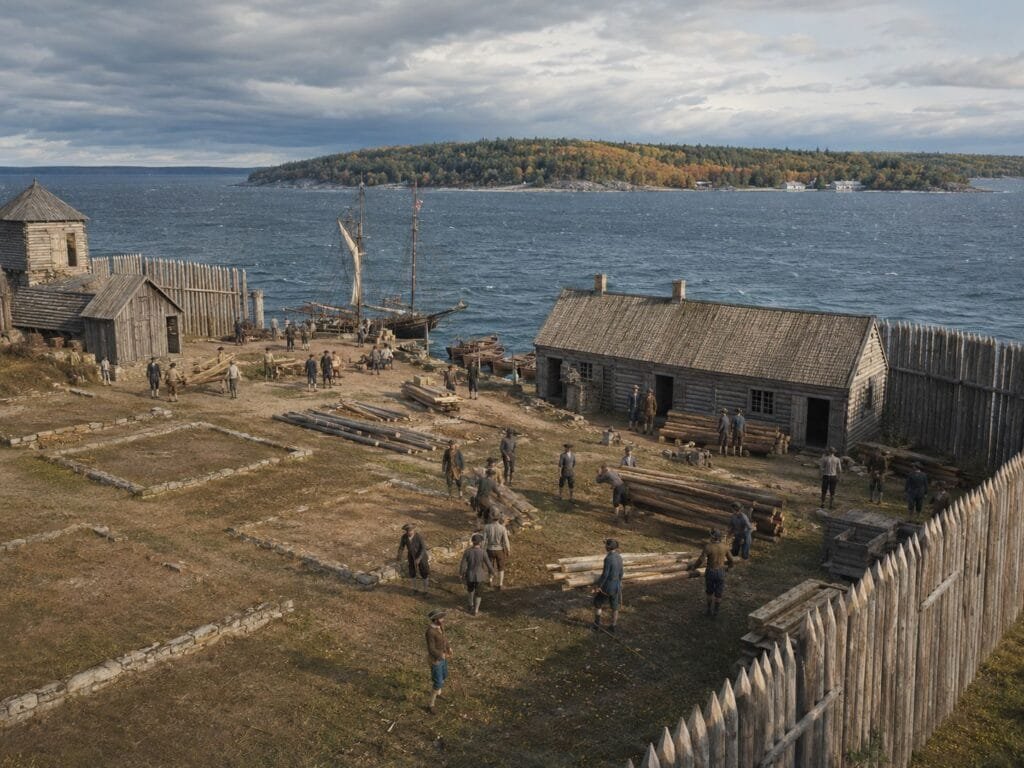
Fort Michilimackinac is arguably Michigan’s most dramatic relocated town. The community did not slowly die because its economy failed. British authorities deliberately moved it.
Residents crossed the Straits to Mackinac Island between 1779 and 1781. Structures left behind were dismantled or burned. Today’s Mackinaw City dates from a later settlement.
Singapore — The Michigan Town Buried in Sand
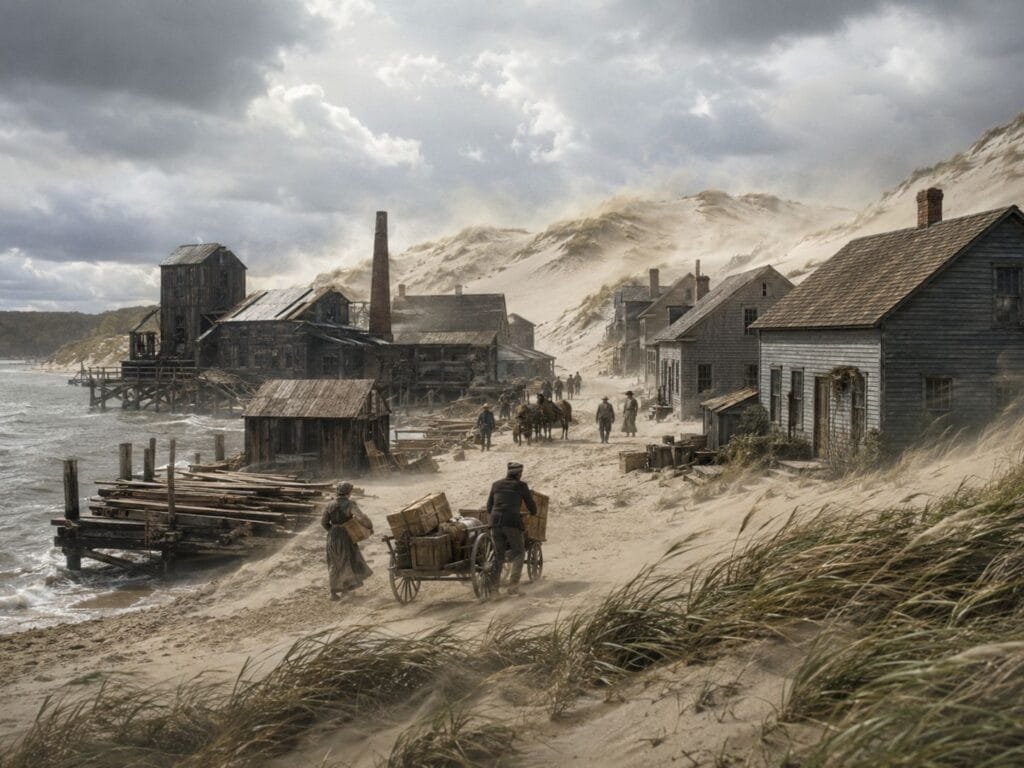
Singapore came considerably later, but no discussion of Michigan’s vanished settlements feels complete without it.
Founded in 1836 near present-day Saugatuck, Singapore was intended to become an important port on Lake Michigan. It developed sawmills, stores, hotels, and other businesses during Michigan’s lumber era.
Its success contributed to its undoing. Logging removed much of the vegetation that helped stabilize surrounding dunes. Wind-blown sand gradually overtook the settlement.
By the late 19th century, Singapore was effectively gone. The old townsite now lies beneath the dunes near the mouth of the Kalamazoo River.
Port Crescent — A Thumb Town That Simply Disappeared
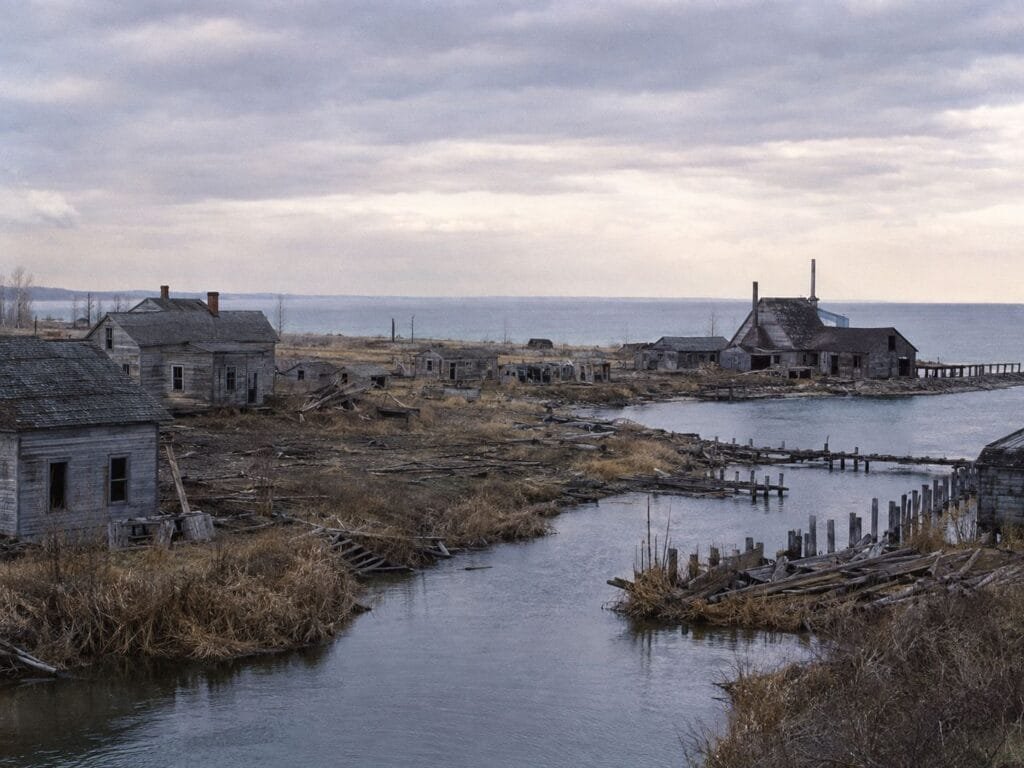
Closer to home for Eastern Michigan readers is Port Crescent.
Walter Hume established a trading post and hotel near the mouth of the Pinnebog River in 1844. Lumber mills, salt production, and commercial fishing eventually supported a sizable village.
When the timber disappeared, Port Crescent’s economic reason for existing went with it. Businesses closed, and buildings were removed. Several went to present-day Kinde south of the shoreline. The site eventually became Port Crescent State Park.
Today, thousands of people camp, hike, and watch sunsets on the ground where a working industrial community once stood.
Fayette — An Industrial Town Frozen in Time
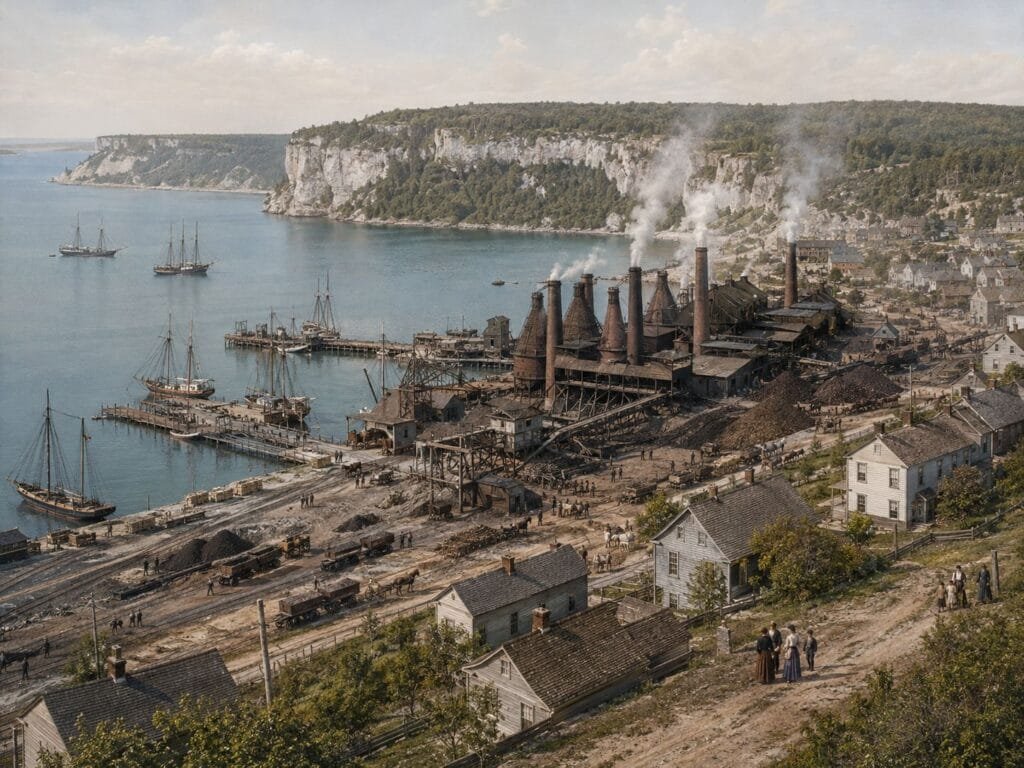
Fayette represents a different type of abandoned community because much of it remains standing.
Built beginning in 1867 on the Garden Peninsula in the Upper Peninsula, Fayette supported iron-smelting operations and roughly 500 residents. Between 1867 and 1891, the community produced nearly 230,000 tons of pig iron, according to the Michigan History Center. When the Jackson Iron Co. stopped smelting there in 1891, most employees and their families left.
Unlike many Michigan company towns, Fayette escaped complete destruction. The state acquired the property in 1959, and the remaining buildings now form Fayette Historic Townsite.
So, What Is Michigan’s Oldest City?
The safest answer remains Sault Ste. Marie, founded in 1668.
After that, certainty disappears.
St. Ignace traces its founding to 1671. Colonial sites at present-day St. Joseph and Niles date to 1679 and 1691, respectively, but those settlements did not develop uninterruptedly into today’s cities. Detroit dates to 1701 and has a far clearer line of continuous urban development.
Monroe dates to 1785 and officially calls itself Michigan’s third-oldest community, while St. Ignace claims continuous habitation dating to 1671.
Rather than proving that one city is wrong, the disagreement points to a bigger historical truth.
Michigan wasn’t settled in a neat march from Detroit northward. Its earliest colonial communities were scattered around waterways that connected the Great Lakes. Settlements appeared, shifted across rivers and straits, changed flags, burned, were abandoned and sometimes resurfaced generations later under different names.
Niles may be the best example. A modern visitor sees a small southwestern Michigan city. Archaeologists see the remains of a French colonial settlement dating to 1691.
And beneath Michigan’s parks, dunes, downtowns and riverbanks, there are undoubtedly more pieces of that story still waiting to be found.