

The Resort Haven Along the St. Joe River.

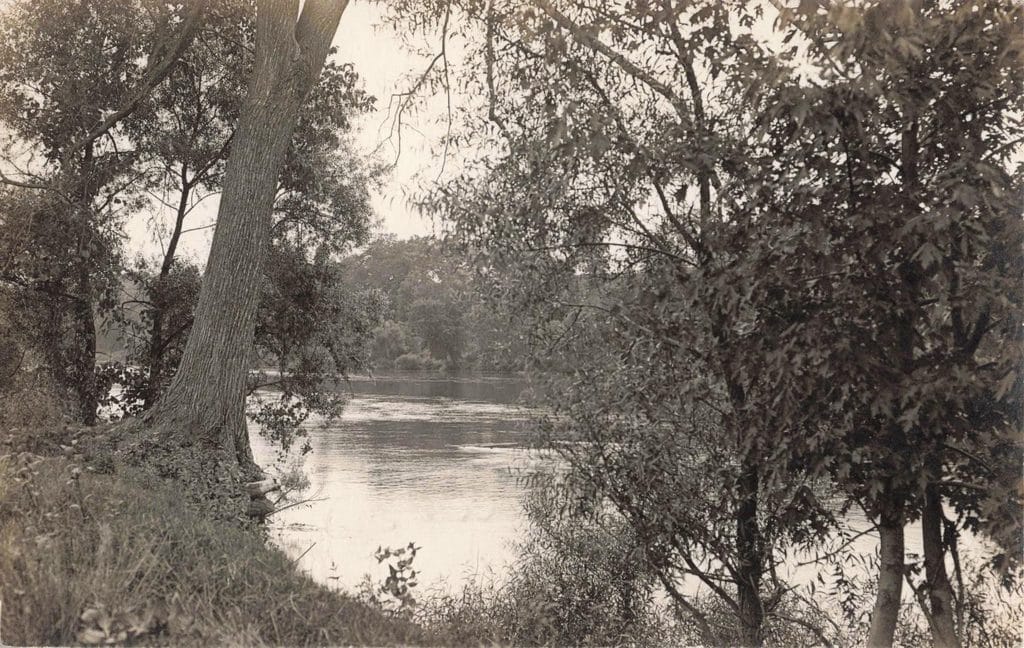
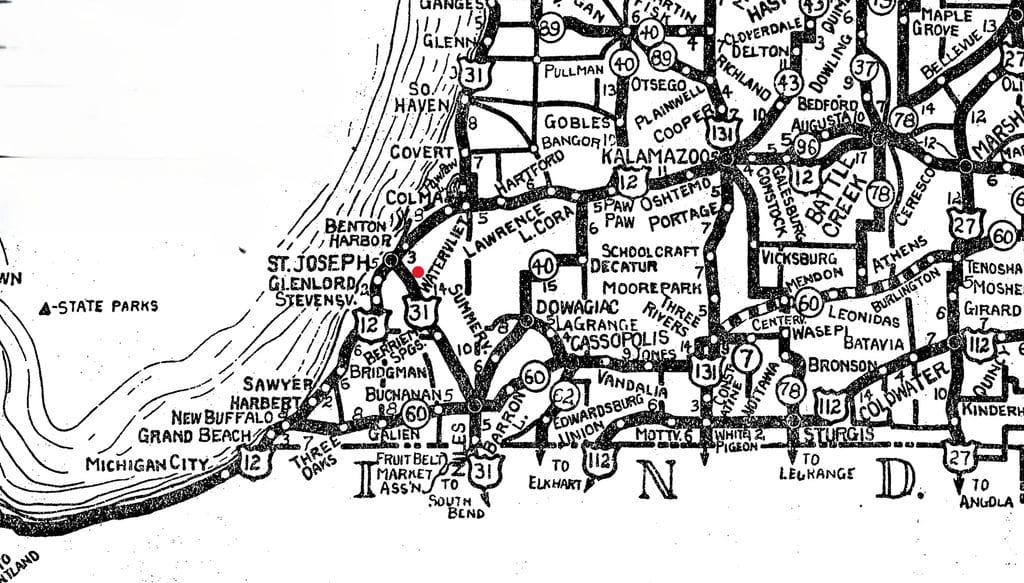
The history of Sodus Michigan includes an appealing surprise: a working farm could double as a summer resort. Along the St. Joseph River in Berrien County, visitors found cottages, shaded lawns, outdoor games and places to rest. Local owners found a way to welcome guests while maintaining ties to agriculture.
By 1906, Ernest Tabor’s resort included 12 cottages on 160 acres. His brother Carlton rented five cottages on another farm, where agricultural work continued. These businesses help explain how a small rural community joined Michigan’s growing vacation trade without becoming a grand hotel town.
Table of Contents
Watch: Sodus, Michigan: How Working Farms Became Summer Resorts

History of Sodus Michigan: A Farm Community First
Sodus Township separated from Pipestone in 1859, and its first township election followed in April 1860. David Rector selected the name of his former New York hometown for the new township. The Rector family’s earlier river work also connects the community’s settlement history with the St. Joseph River.

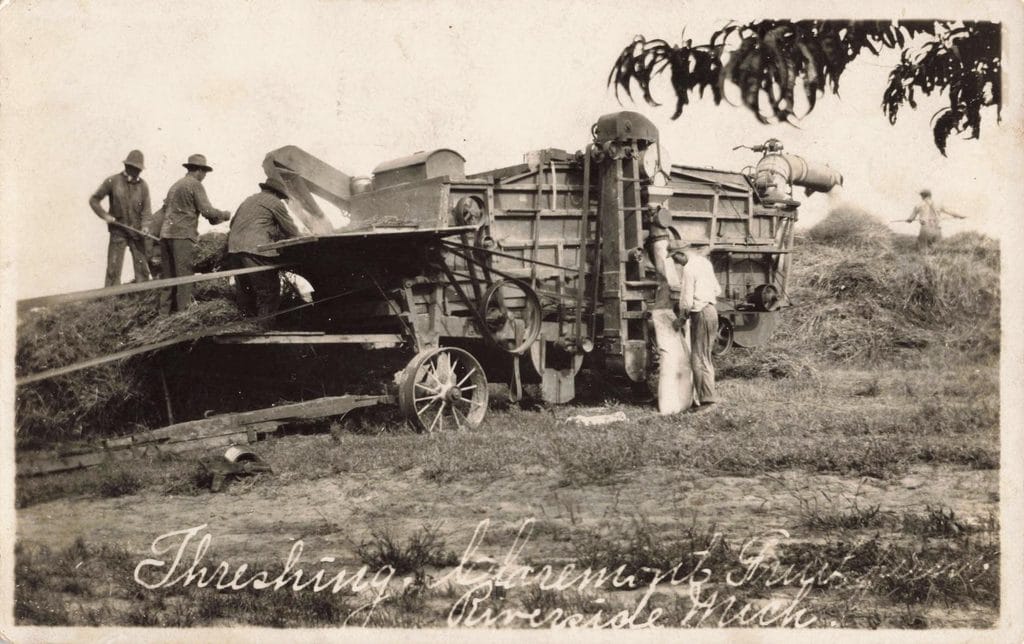
By the early 1900s, fruit growing was an important local industry. Orville W. Coolidge’s 1906 county history singled out apples and peaches as substantial crops. Farms provided the economic setting in which the resort business developed, and some owners added paying guests to their existing operations.
Tabor Farm Offered Cottages Beside the River
Ernest Tabor was born in Berrien County in 1845 and worked in farming and lumbering before establishing himself in Sodus. His resort developed in the early 1890s; published accounts differ over the precise founding year. The 1906 county history provides firmer detail about its scale: 160 acres, 12 cottages, a large residence and other buildings.

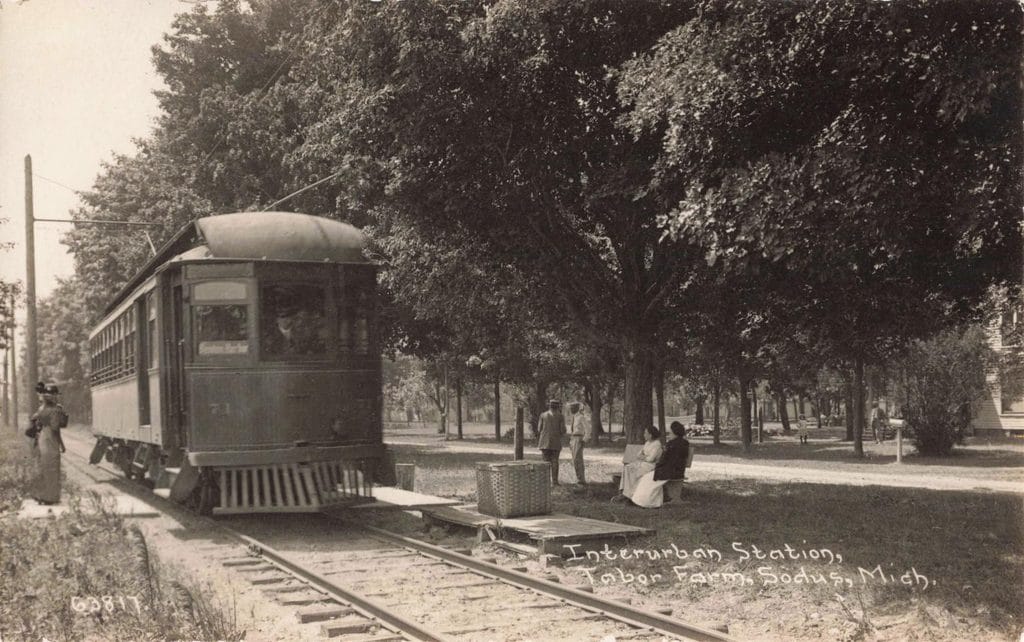
The Tabor household had interests outside its business. Hettie Tabor, whom Ernest married in 1902, had been a teacher in Sterling, Illinois. Coolidge’s account also described her artwork in crayon, oils and watercolors, giving a personal dimension to the family behind the resort name. An electric interurban at Tabor Farm’s station in Sodus. The exact year is unverified.
An Electric Railway Reached the Resort

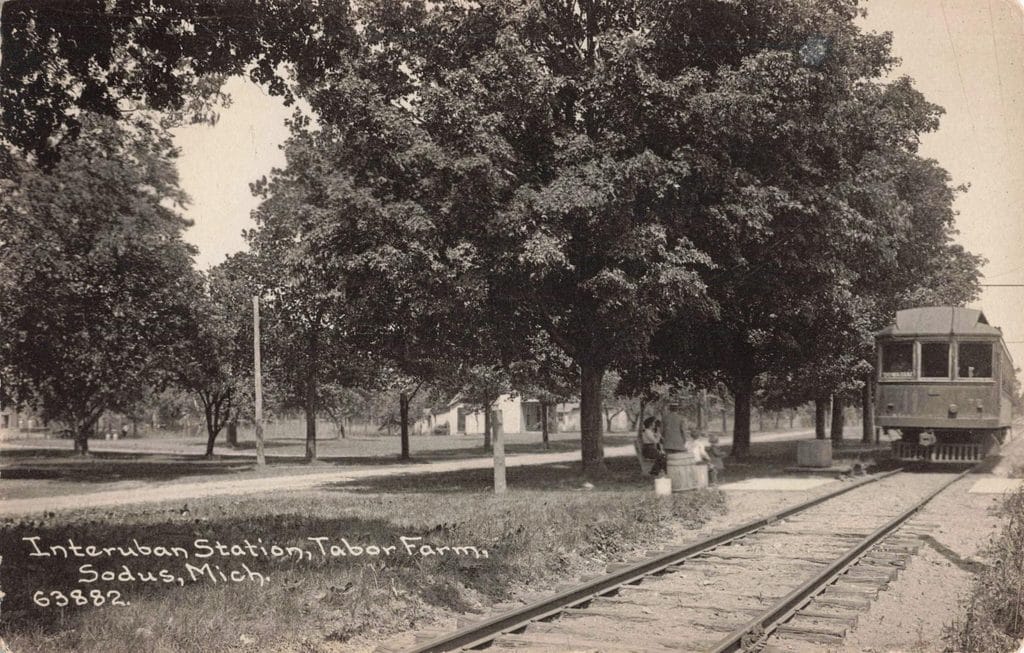
The interurban stop at Tabor Farm helps explain how visitors reached this rural setting. In the account published in 1906, Tabor’s was briefly the southern endpoint of an electric line from Benton Harbor. Construction was extending the route toward Eau Claire, placing the resort within a changing regional transportation system.

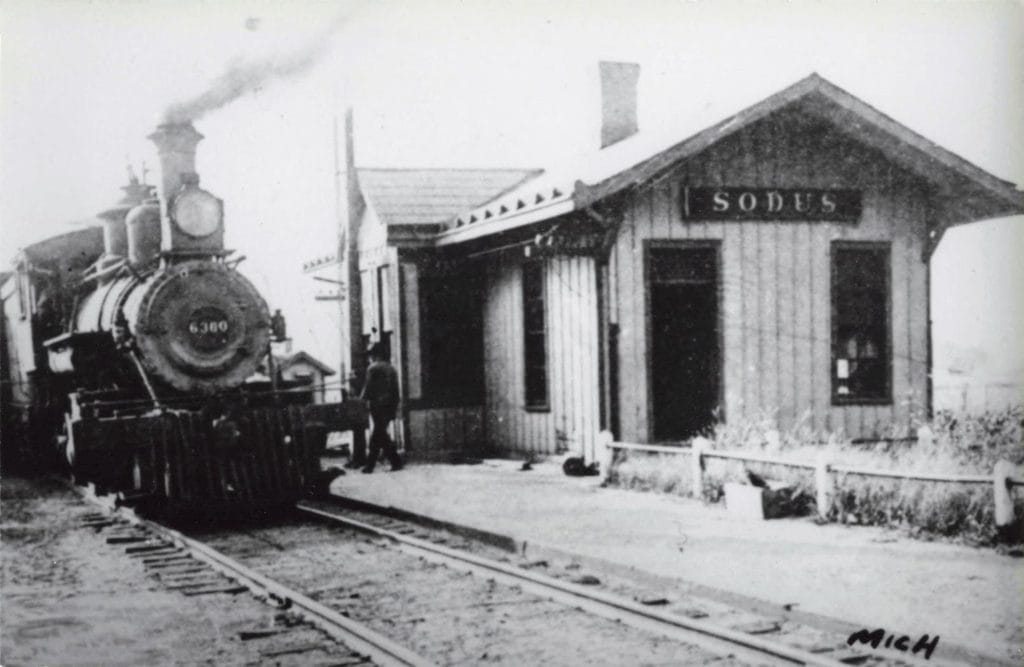
The history of Sodus Michigan also includes a separate conventional railroad connection. The community’s depot stood on the Big Four route between Benton Harbor and Niles. The supplied steam-engine view and Tabor interurban card therefore represent different rail operations, an important distinction when telling the town’s travel story. A steam locomotive at the Sodus depot, identified by MichiganRailroads.com as the Big Four station. Date unverified.
Farmers Could Also Be Summer Hosts

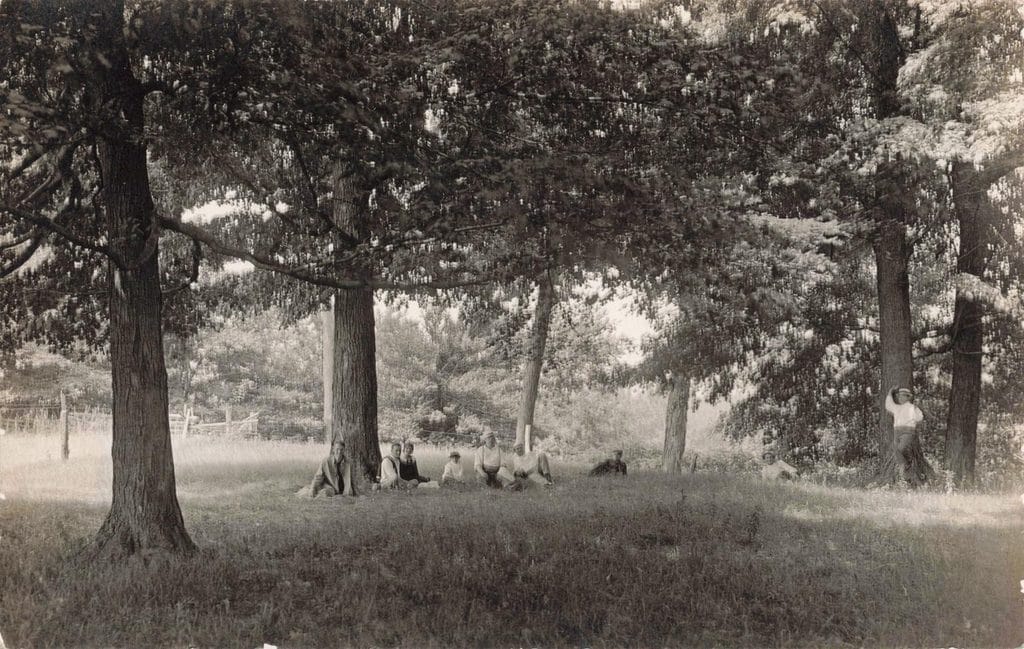
Carlton Tabor’s Bluff Resort makes the overlap between farming and tourism especially clear. Coolidge described his 134-acre farm, five rental cottages and continuing agricultural work. The property accommodated summer boarders while remaining a farm, demonstrating that hospitality could supplement an established rural business.
Edwin Sharai likewise farmed his Sodus homestead and entertained summer boarders. Nearby Sebago, established by J. J. Theiss in 1895, developed a hotel and cottages. Together, these accounts show several forms of accommodation serving the river area, rather than a single resort defining the whole community.
Shady Lawn Sold Simple Outdoor Pleasures
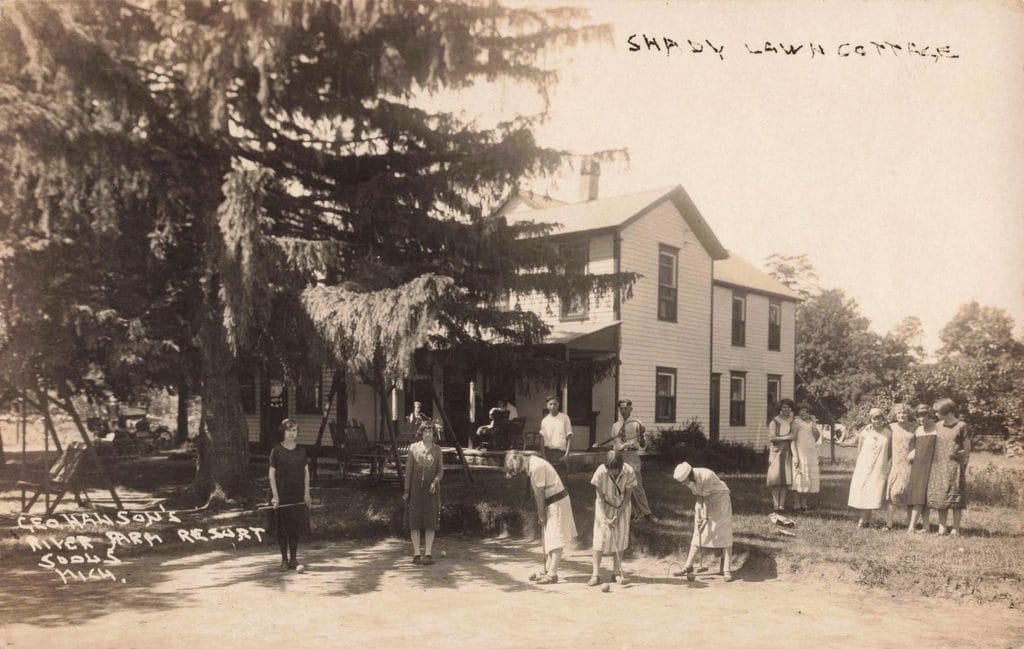
At Shady Lawn Cottage, identified on its card with George Hanson’s River Farm Resort, people gather around a croquet game. Mallets and low hoops are visible in front of the house. The scene shows a form of recreation that required space and company, with the guest house close at hand.

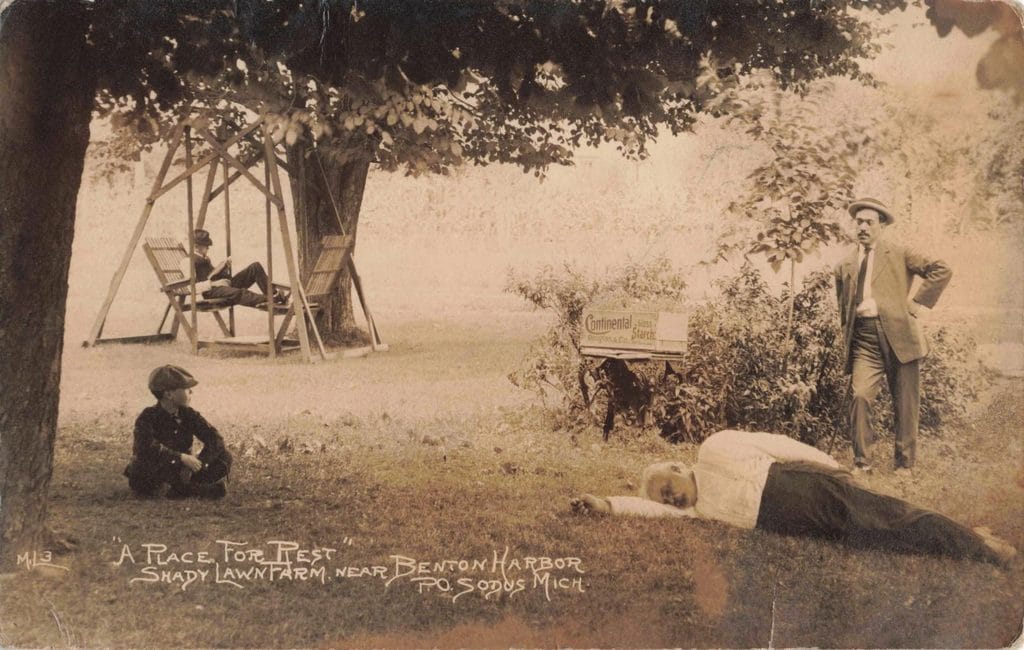
Another card identifies Shady Lawn Farm as “A Place for Rest.” People recline on the grass and in a lawn swing beneath trees. Although the relationship between the two Shady Lawn views needs further documentation, both emphasize the same attraction: a comfortable place to spend time outdoors. Croquet outside Shady Lawn Cottage at George Hanson’s River Farm Resort. The players are unidentified.
The Approach was Part of the Attraction
The photos and postcards we found places Shady Lawn within a setting of mature trees and cultivated ground. An unpaved road runs toward the distance, with utility poles marking another connection through the countryside. It is a useful companion to the railway scenes because it shows the local setting through which people moved.

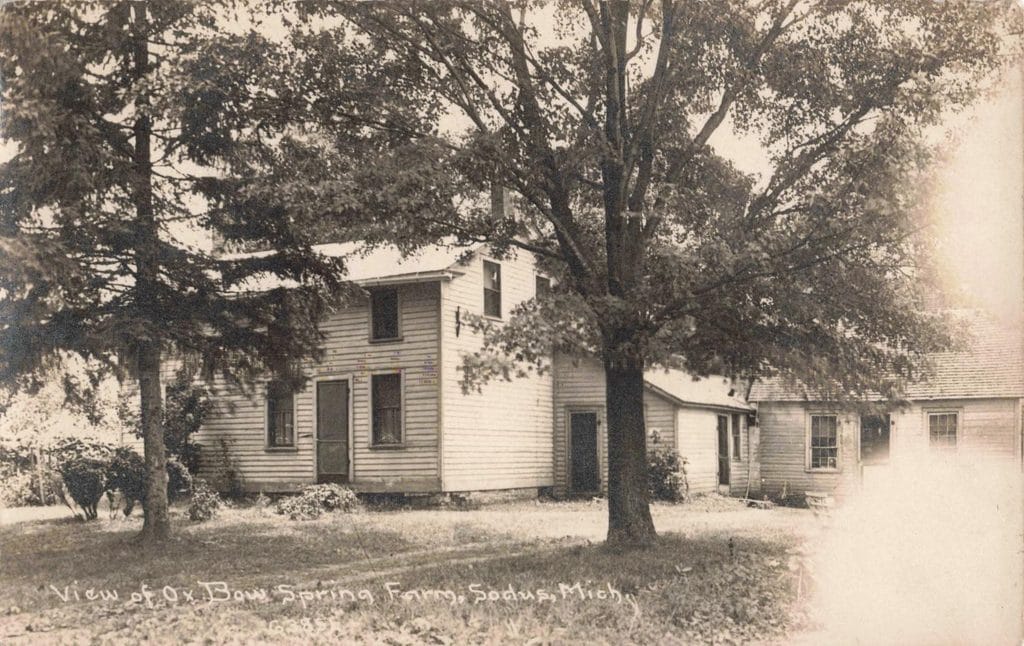
Ox Bow Spring Farm adds a named residence to the collection. Its shade trees and attached wing are visible, but no readable wording identifies it as a resort. Working farms were located next to resorts and offered what we are sure to know today as a farm to table experience.
The May Graham Brought Visitors and Carried Fruit
The May Graham made the St. Joseph River a route to the resorts as well as a place for recreation. A September 1896 column in Harper’s Round Table described arriving from Chicago by lake boat, then boarding the river steamer at St. Joseph around 7 a.m. Passengers could get off at a resort and await its return, while cyclists could take a ride ashore.
The evening trip carried fruit back toward St. Joseph and a Chicago boat connection. A single vessel helped serve vacation travel and agricultural shipping. Visitors traveling from St. Joseph toward Sodus went upstream; the return toward the lake was downstream.
King’s Landing was part of that service. In an account recorded by Walter C. Hawes, former crewman William E. Tryon recalled fares to King’s Landing and Tabor’s resort. His recollection confirms named passenger destinations rather than simply a boat passing the shoreline.

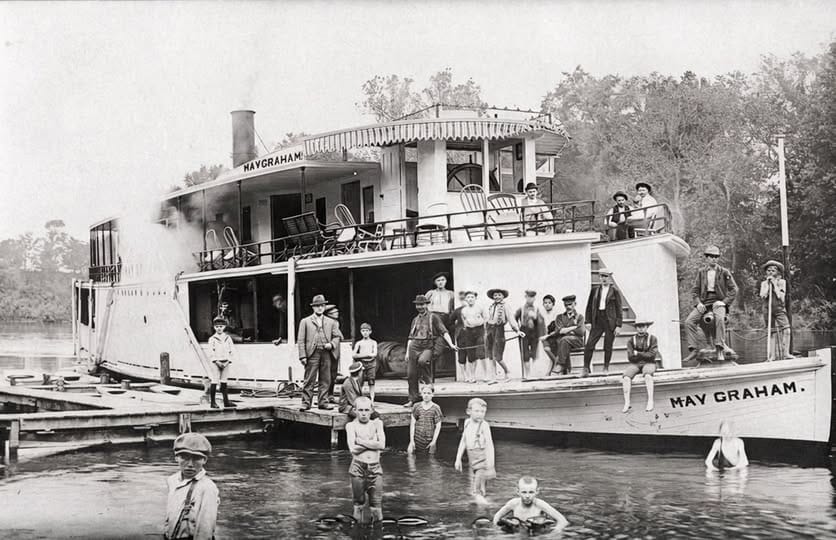
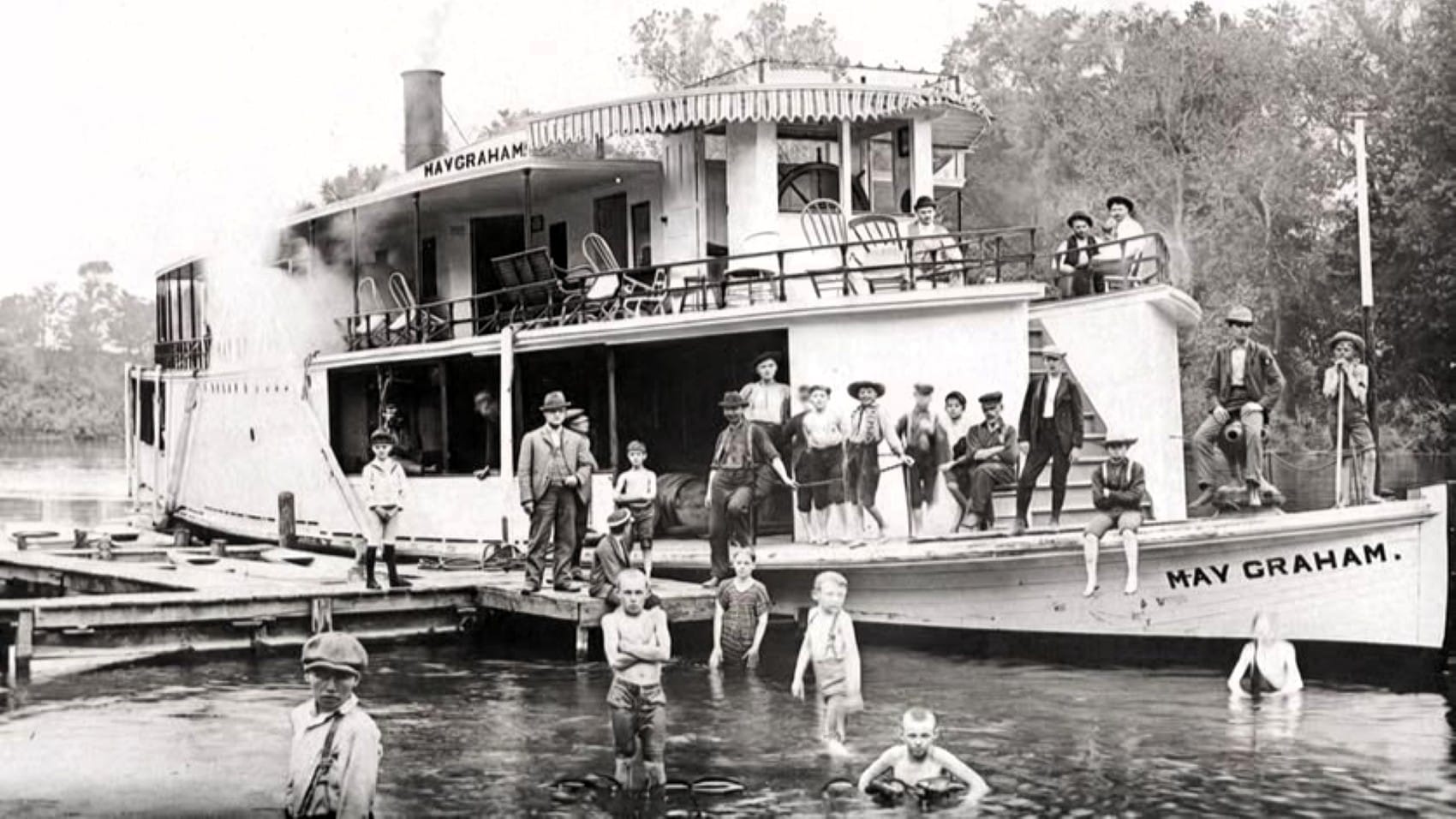
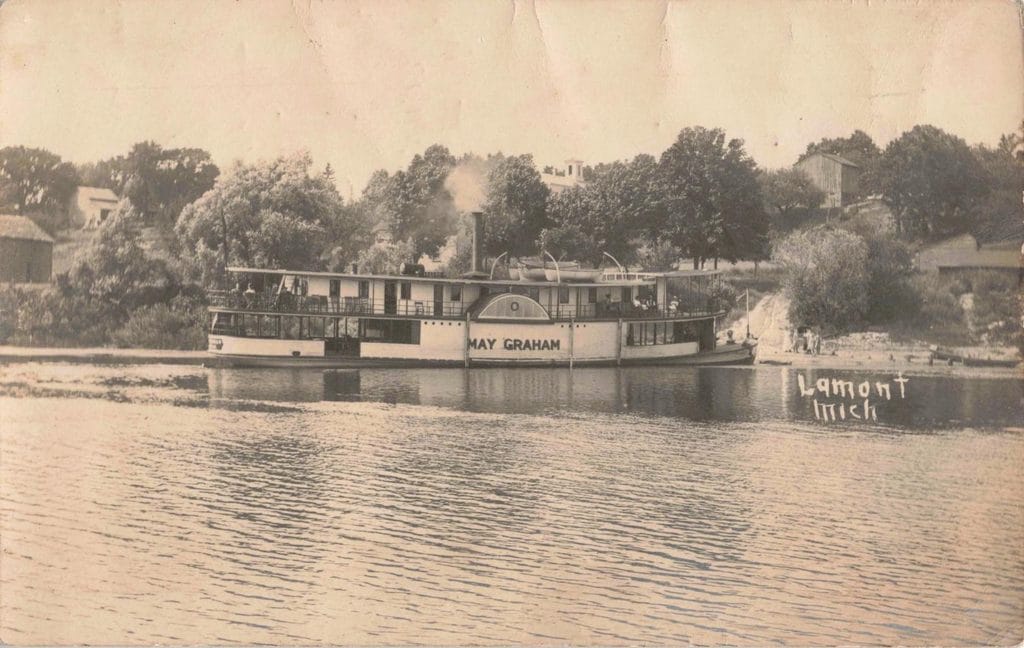
One of the more interesting views The supplied landing view shows the May Graham with people aboard and children in the water; its identification as King’s Landing comes from the supplied title. The second view explicitly says Lamont, Michigan. Local historical sources place that scene in the vessel’s later Grand River service, following its move in 1911.
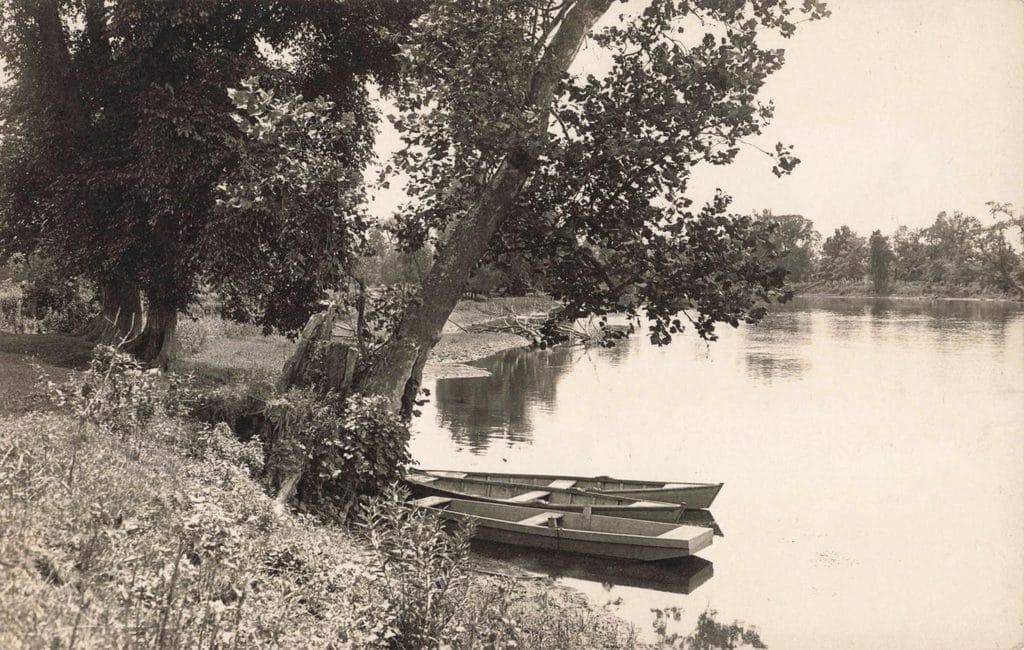
Wooden boats along the St. Joseph River at King’s Landing, give a hint of the resort area along this huge river The May Graham at a landing identified as King’s Landing near Sodus. The May Graham at Lamont, Michigan, during its later Grand River service after 1911.
McGowan’s Store Served More than Summer Visitors
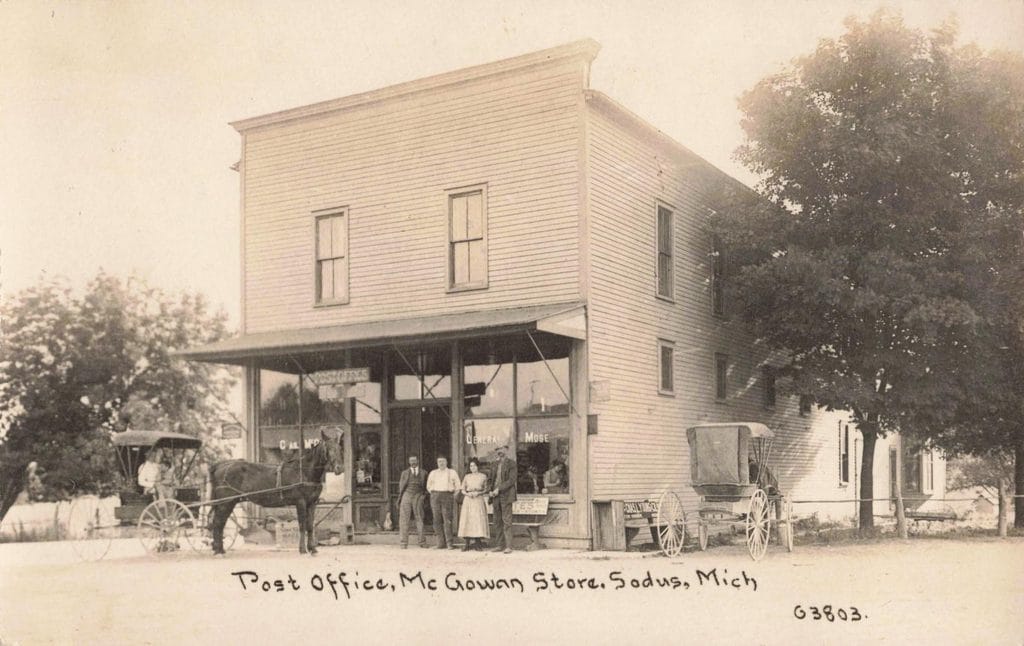
Charles McGowan opened his Sodus store in 1881 and became postmaster in 1883. His stock included groceries, dry goods, footwear, hardware, farm implements, paint and drugs. He also owned a 20-acre fruit farm and served for 10 years as a Big Four agent, according to the county history.

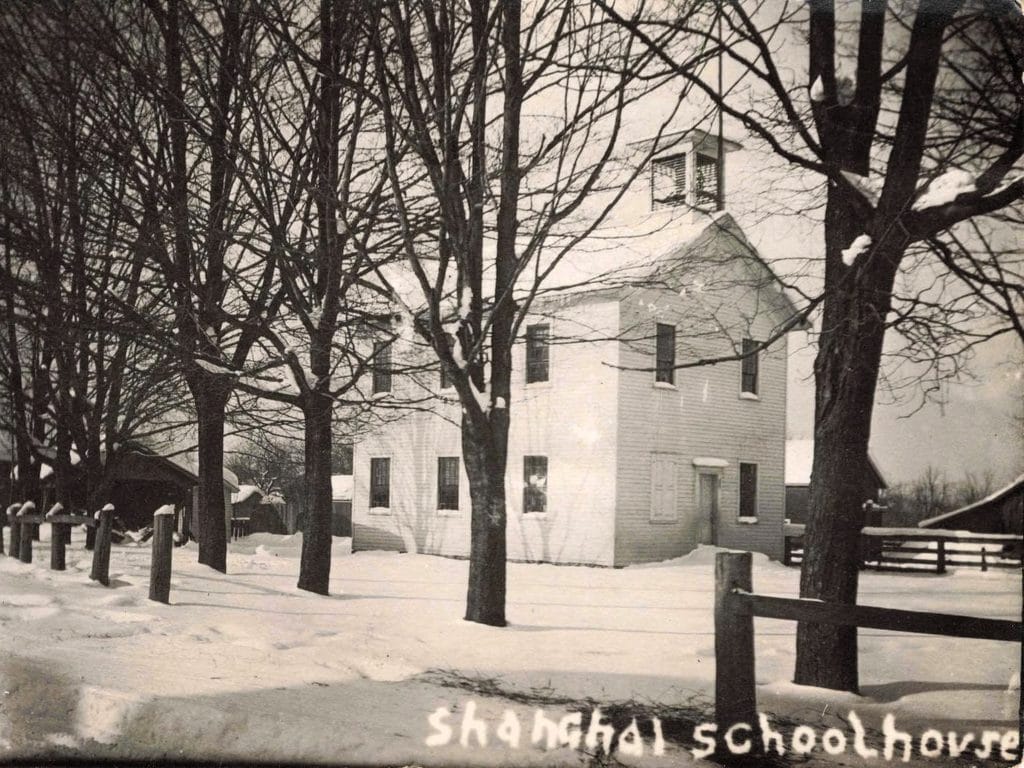
His storefront brings the year-round community into focus. So does Shanghai Schoolhouse, whose University of Michigan collection record is dated 1911. Its winter setting is a reminder that education, household needs and local services continued through seasons that the summer resort cards rarely show. The McGowan store and Sodus post office were a critcal element in the history of Sodus Michigan. We only wish we knew who these folks were as they posed for the photo.
Cars Appear Beside the Cottages

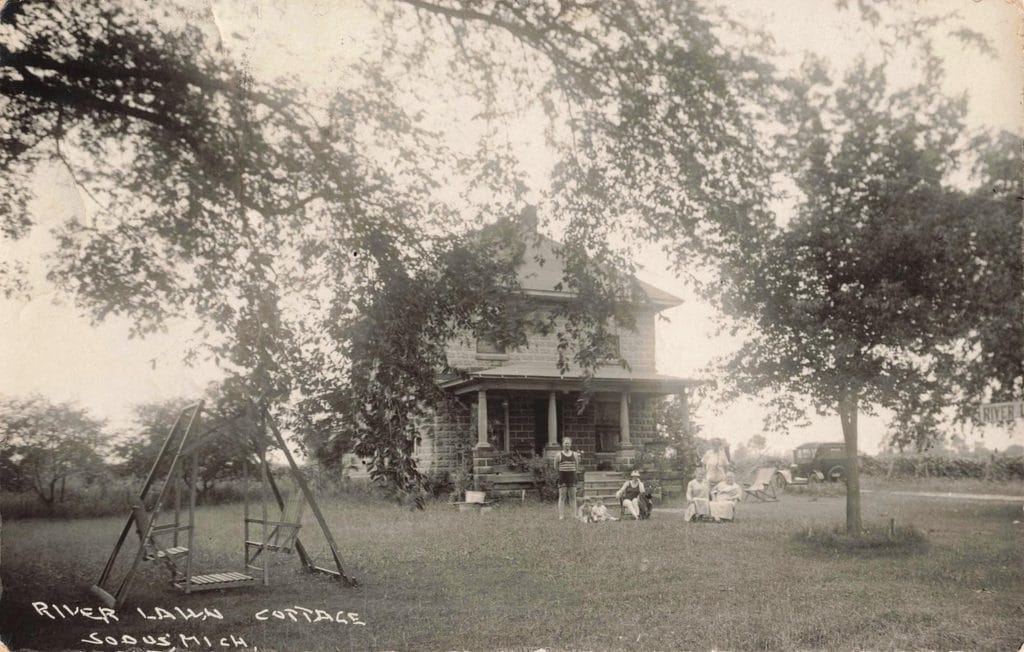
River Lawn Cottage appears in a photo in 1927, with a car near its shaded grounds. This was a time of early automobiles. Soon they would be the primary way of getting to the resorts around Soden, edging out, the steamships and rail lines. The scene of the wide porch, chairs and lawn swing preserve familiar resort features.
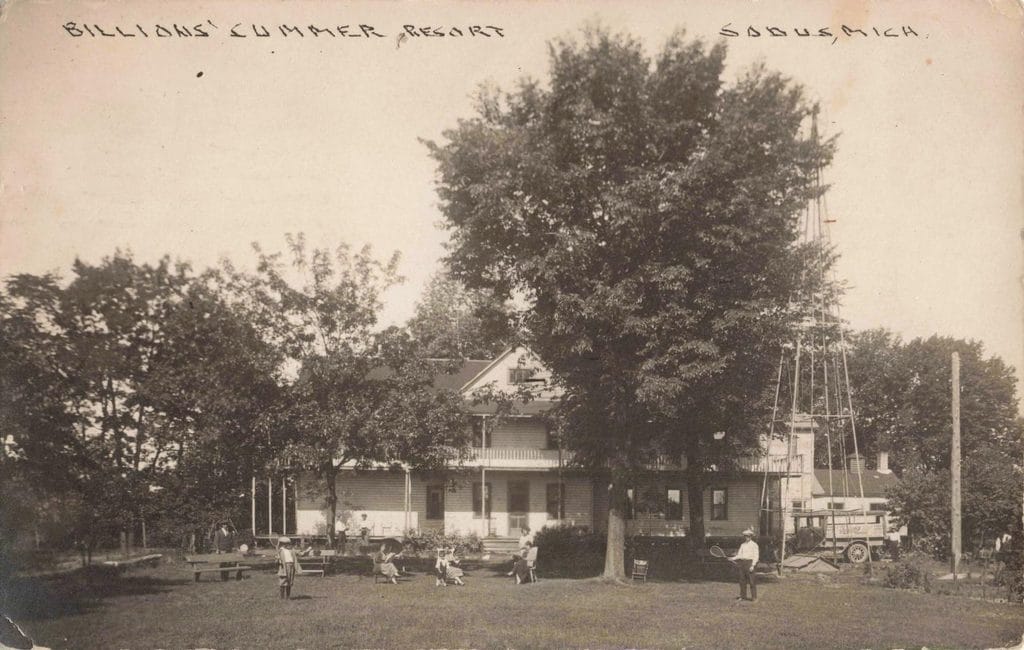
Billions’ Summer Resort appears in another shot that was taken about 1930. supplied view labeled 1930. A broad porch, lawn activities and a tall windmill structure are visible. The history of Sodus Michigan benefits from these details, but neither postcard establishes guest totals, room rates or how well its business performed during a particular season.
In 1937, the Lithuanian magazine Margutis reported that Joe Bachunas and his wife had taken over Tabor Farm in 1919. Its invitation to request resort literature shows a Sodus business reaching readers through the Lithuanian American press. River Lawn Cottage, with an automobile beside the grounds in about 1927.
The People Behind a Restful Stay
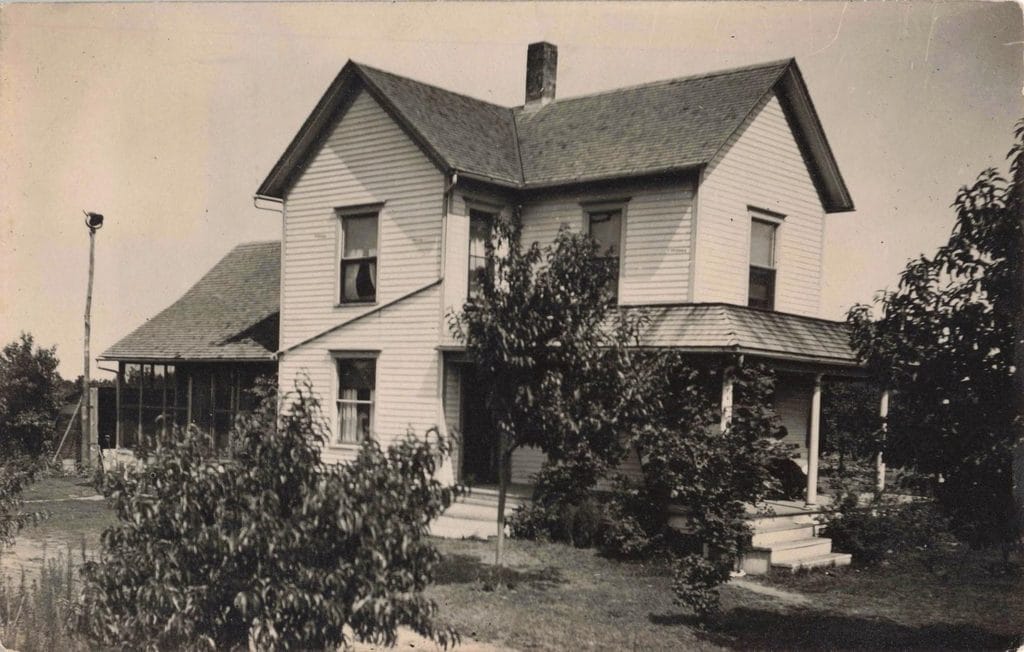
Guest rooms and grounds still needed care while agricultural work continued nearby. Unfortunaly our sources name owners more often than workers, leaving parts of who reaaly did daily operations lost to time. The history is strongest when it distinguishes visible activities and recorded facts from scenes we might only imagine.
Why Sodus belongs in Michigan’s Vacation History
The history of Sodus Michigan shows how rural communities could serve travelers using land, buildings and transportation connections already close at hand. Its farm resorts offered a recognizable kind of summer pleasure: a cottage, a shady place to sit and time beside the river. The appeal came from the setting and the opportunity to enjoy it.
Sodus also leaves a useful correction to a familiar assumption about tourism. Becoming a vacation destination did not always require abandoning agricultural work. Here, farms and guest accommodations operated together, giving this stretch of the St. Joseph River a distinctive place in Michigan’s summer history.
Works Cited For the History of Sodus Michigan

“Bicycling.” Harper’s Round Table, 8 Sept. 1896, p. 1104. Project Gutenberg. Accessed 4 Oct. 2026.
Coolidge, Orville W., editor. “Carlton E. Tabor.” A Twentieth Century History of Berrien County, Michigan, Lewis Publishing Company, 1906, pp. 966–67. LDSGenealogy.com. Accessed 4 Oct. 2026.
Coolidge, Orville W., editor. “Charles McGowan.” A Twentieth Century History of Berrien County, Michigan, Lewis Publishing Company, 1906, p. 971. LDSGenealogy.com. Accessed 4 Oct. 2026.
Coolidge, Orville W., editor. “Edwin Sharai” (continuation). A Twentieth Century History of Berrien County, Michigan, Lewis Publishing Company, 1906, p. 963. LDSGenealogy.com. Accessed 4 Oct. 2026.
Coolidge, Orville W., editor. “Ernest Tabor.” A Twentieth Century History of Berrien County, Michigan, Lewis Publishing Company, 1906, pp. 961–62. LDSGenealogy.com. Accessed 4 Oct. 2026.
Coolidge, Orville W., editor. “James P. Versaw.” A Twentieth Century History of Berrien County, Michigan, Lewis Publishing Company, 1906, pp. 965–66. LDSGenealogy.com. Accessed 4 Oct. 2026.
Coolidge, Orville W., editor. “Sodus.” A Twentieth Century History of Berrien County, Michigan, Lewis Publishing Company, 1906, pp. 264–66. LDSGenealogy.com. Accessed 4 Oct. 2026.
Hawes, Walter C. “Concerning the Last Days of the May Graham on the St. Joseph River.” Berrien County Record, 20 Oct. 1982, p. 3. “Tales of an Old Town,” ch. 23, reprint. Buchanan District Library. Accessed 4 Oct. 2026.
Hawes, Walter C. “In Which We Talk to Billy Tryon, Last of the St. Joe River Boat Captains.” Berrien County Record, 16 Nov. 1988, p. 3. “Tales of an Old Town,” ch. 31, reprint. Buchanan District Library. Accessed 4 Oct. 2026.
“May Graham Steamboat at Lamont Landing.” Coopersville Area Historical Society. Accessed 4 Oct. 2026.
“Shanghai Schoolhouse.” 1911. David V. Tinder Collection of Michigan Photography, William L. Clements Library, University of Michigan Library Digital Collections, item 6215. Accessed 4 Oct. 2026.
The history of Sodus Michigan via historical postcard and depot image collection. Fourteen digital images supplied were from the University of Michigan and other sources., 4 Oct. 2026. Original creators and dates unidentified except where noted in captions. Private working collection; no public collection URL supplied.
“Station: Sodus, MI.” MichiganRailroads.com. Accessed 4 Oct. 2026.
“Tabor Farm.” Margutis, 30 Sept. 1937, p. 14. Spauda2.org. Accessed 4 Oct. 2026. Lithuanian-language account; factual summary translated for this article.