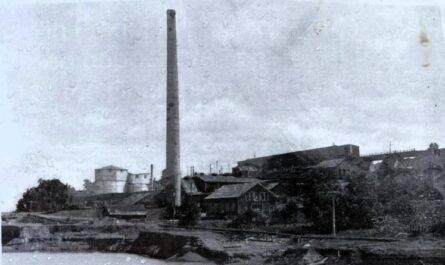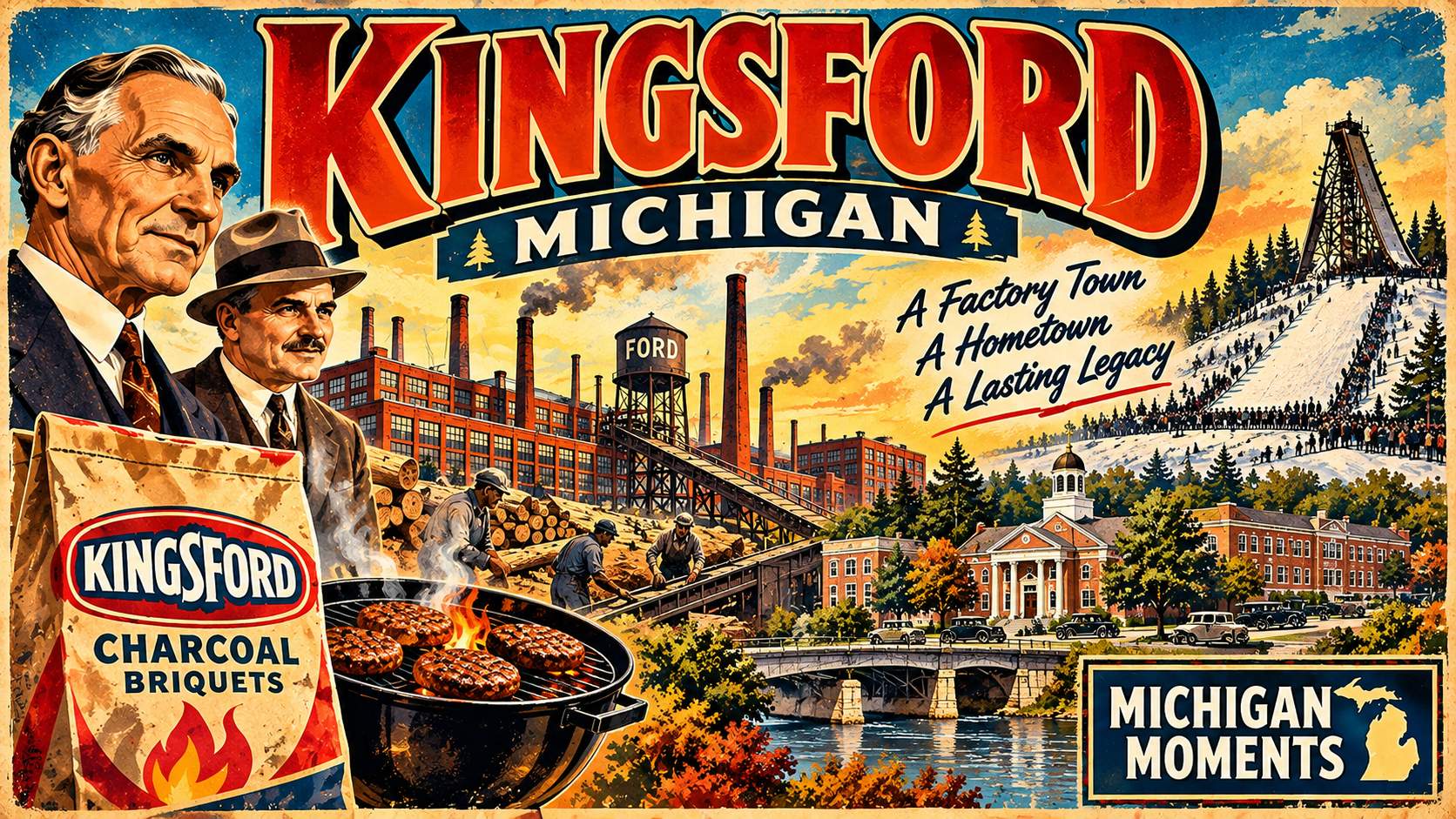


The history of Kingsford Michigan begins in 1920, when Henry Ford started building an enormous lumber and automobile parts operation near Iron Mountain. His factories would help create an entire community and establish one of America’s best-known charcoal brands.
At its peak, the Ford Iron Mountain plant employed thousands of workers. It produced wooden automobile components, manufactured charcoal briquettes, and eventually built military gliders during World War II.
Yet Kingsford, Michigan’s history reaches beyond the factory gates. Historical postcards show a community building schools, churches, and civic institutions, while nearby winter sporting events drew enormous crowds.

Henry Ford Needed Timber, and Edward Kingsford Knew Where to Find It
Early 20th-century automobiles used large amounts of hardwood for body parts and other components. Henry Ford wanted more control over the materials supplying his growing company. He turned to Edward G. Kingsford, an Iron Mountain Ford dealer and businessman whose wife, Minnie Flaherty, was Ford’s cousin. According to the city’s historical account,

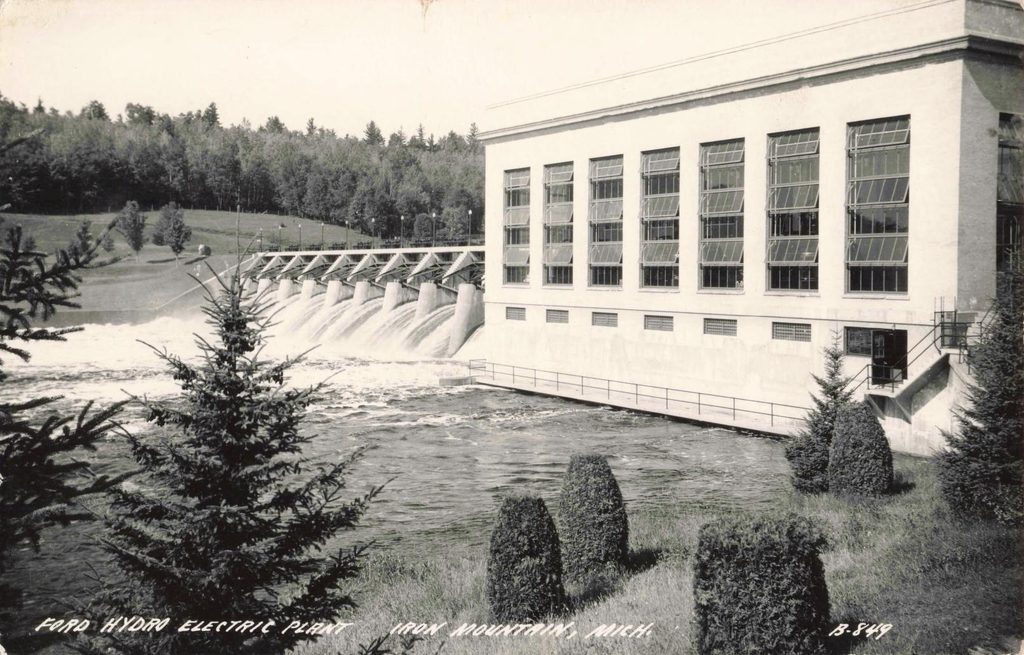
Kingsford helped the company acquire 313,447 acres in the Upper Peninsula. The city reports that construction of the sawmill and parts plant began in 1920. The city reports that the immediate area had just 40 residents at the time. More than 3,000 people worked on construction during the first year.
Workers processed logs, milled lumber, and made wooden parts that Ford could ship to other factories. These operations linked the local timber industry with automobile production hundreds of miles to the south.

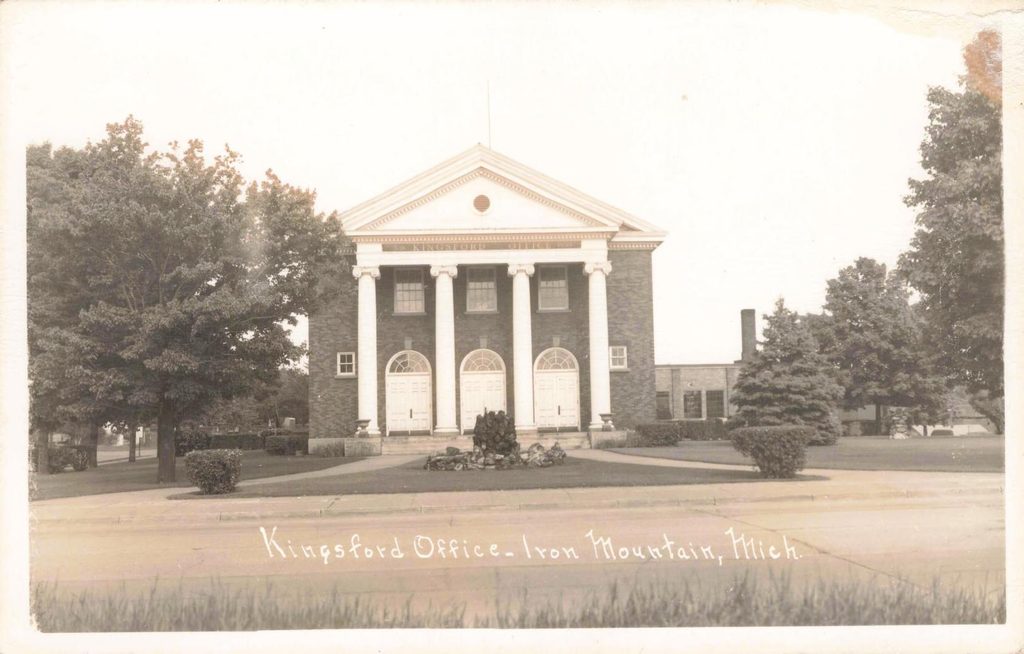

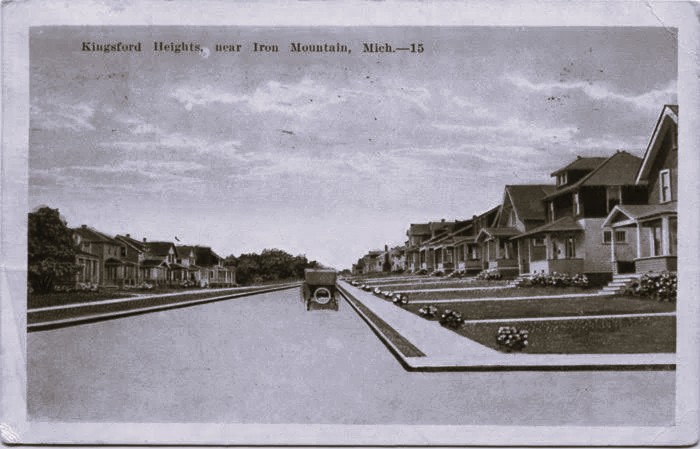
Ford also backed housing and local facilities for his employees. More than 100 houses went up in what became known as the Ford Addition. The company’s name appeared on the airport, hospital, clubhouse, park, and other properties. The growth was substantial enough that Kingsford received its village charter on Dec. 29, 1923.
A New Community Takes Shape Alongside Iron Mountain
Kingsford did not grow in isolation. Iron Mountain, already an established mining and commercial center, supplied businesses and institutions within the same closely connected urban area. The postcard labeled “Iron Mountain–Kingsford” offers a useful view of that relationship, although the card does not mark the municipal boundary.

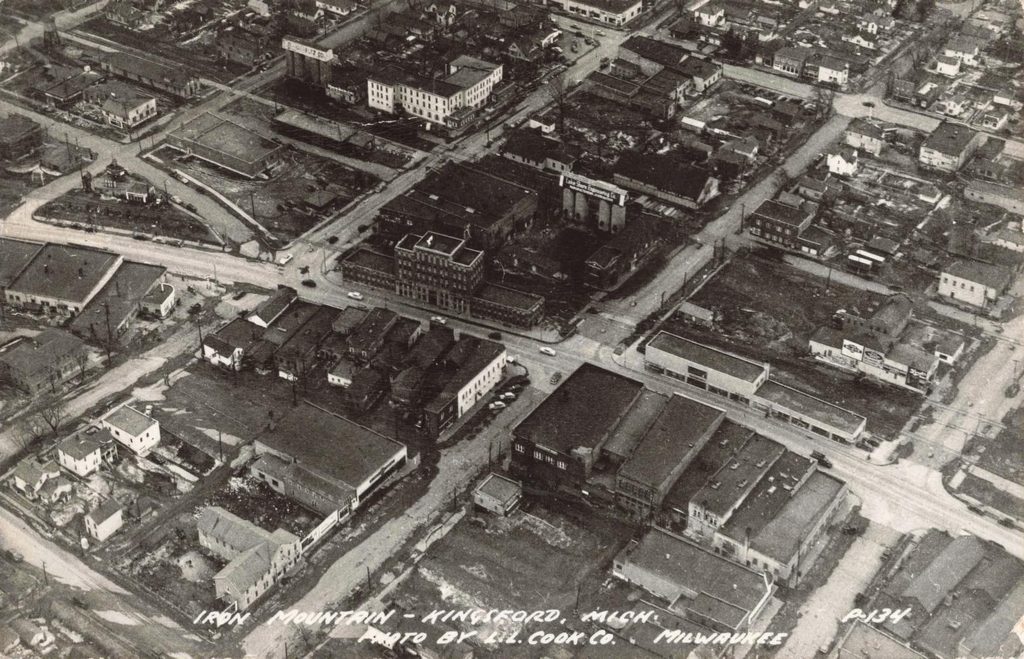
Ford-related employment in Dickinson County reportedly reached 7,500 in 1925. That figure represents jobs tied to the expansion across the area, not 7,500 residents within Kingsford itself. The arrival of working families created demand for schools, places of worship, and local government.

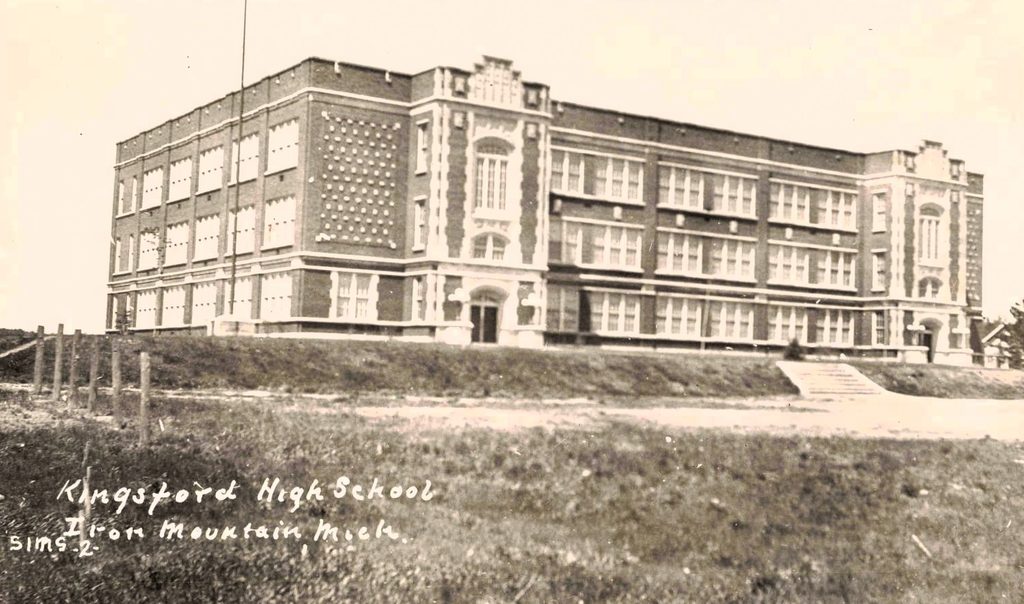
The imposing high school building shows how far the community had moved from the sparsely settled area described in 1920. Its large windows, brick facade, and formal entrances belong to a town planned for long-term education, not a temporary logging camp. Kingsford’s athletic teams adopted the name Flivvers, an old nickname for the Model T.

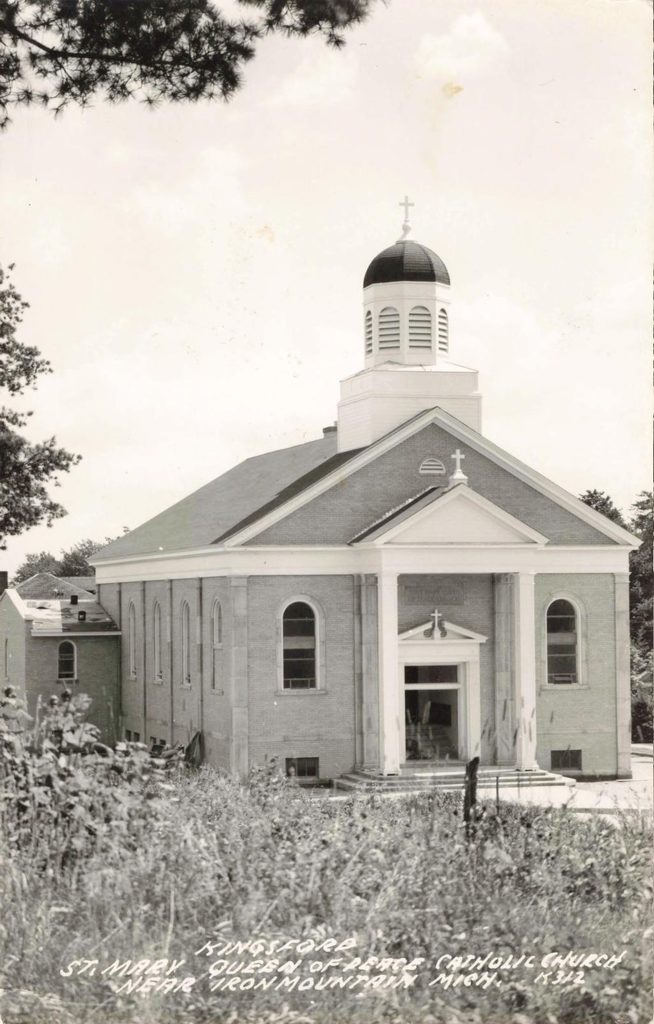
The historical postcards also record religious life. St. Mary Queen of Peace Catholic Church, identified near Iron Mountain, appears with a tall domed cupola and a columned entrance. The view helps establish the broader network of parishes that served families in this growing community.

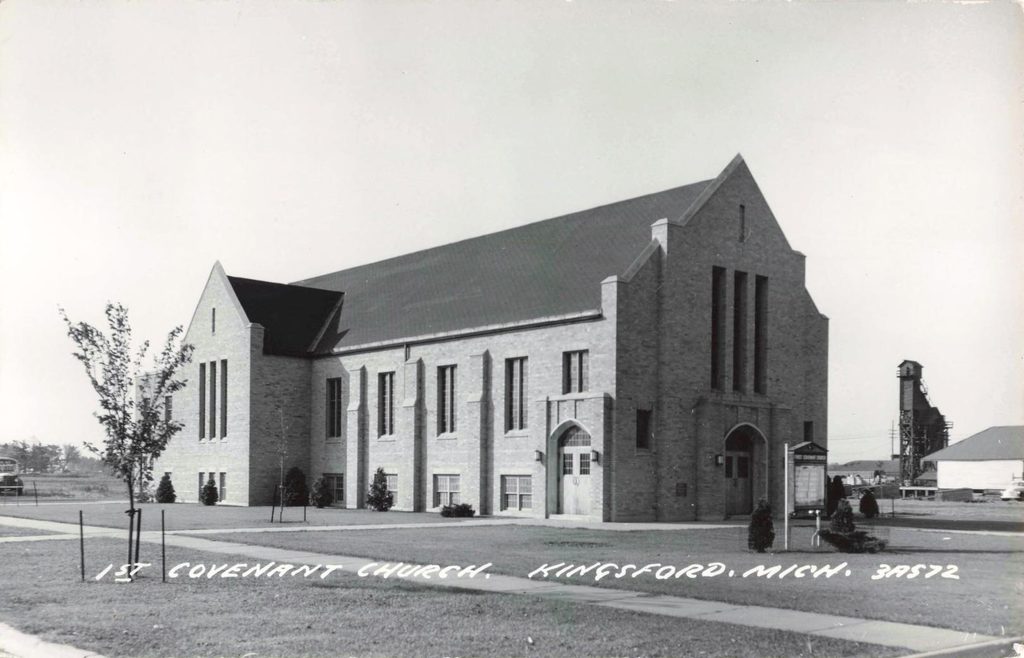
First Covenant Church appears in another view specifically captioned Kingsford. Its brick walls and narrow windows tell us what the building looked like when the postcard was made. Neither image, however, establishes when the congregation began or when the building was completed.
The Wood Scraps That Built a Charcoal Business
At Ford’s sawmill, cutting logs into usable lumber left piles of smaller wood pieces. Instead of treating them as worthless waste, Ford’s operation processed the scrap into materials it could sell. A wood-chemical plant was operating by 1924. The city reports it recovered about 610 pounds of charcoal from each ton of scrap wood.
Workers crushed the charcoal, added a starch binder, and formed briquettes. The fuel could be packaged consistently and sold far from Kingsford. As The Henry Ford’s charcoal collection explains, the company sold its product through Ford dealerships and ordinary retail stores.
Ford did not invent charcoal or barbecue. The company helped expand a commercial market for manufactured charcoal briquettes, giving consumers a convenient product for picnics and home cooking. Our companion article, Henry Ford Charcoal, describes that unusual connection in more detail.
The forest-to-factory chain was not the whole story of Kingsford, however. The next generation also needed public facilities, and its residents increasingly sought activities unrelated to car parts.
Schools, City Hall and the Institutions of an Established Town
The photograph labeled “City Hall, Kingsford” shows a formal brick building with a broad entrance and four white columns. Local government had become a permanent part of community life. Kingsford’s city charter was approved Aug. 7, 1947, though the postcard alone does not show when this building was built.
Nearby roads and river crossings connected the adjoining communities to work and recreation. The region depended on the Menominee River for commerce and industry, even as residents came to know it as a place to cross, fish, and spend time outdoors.
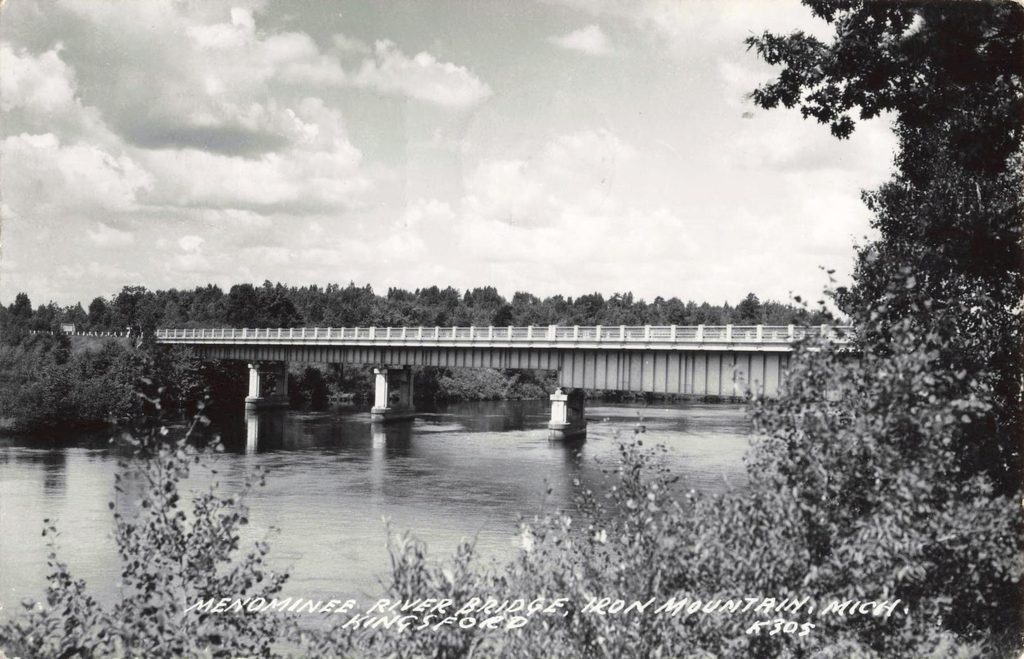
This bridge postcard gives a good sense of the steel-and-concrete infrastructure that connected settlements around the Menominee River. It identifies the Iron Mountain-Kingsford vicinity but does not name the road or record a year. Those details should remain open until another record confirms them.
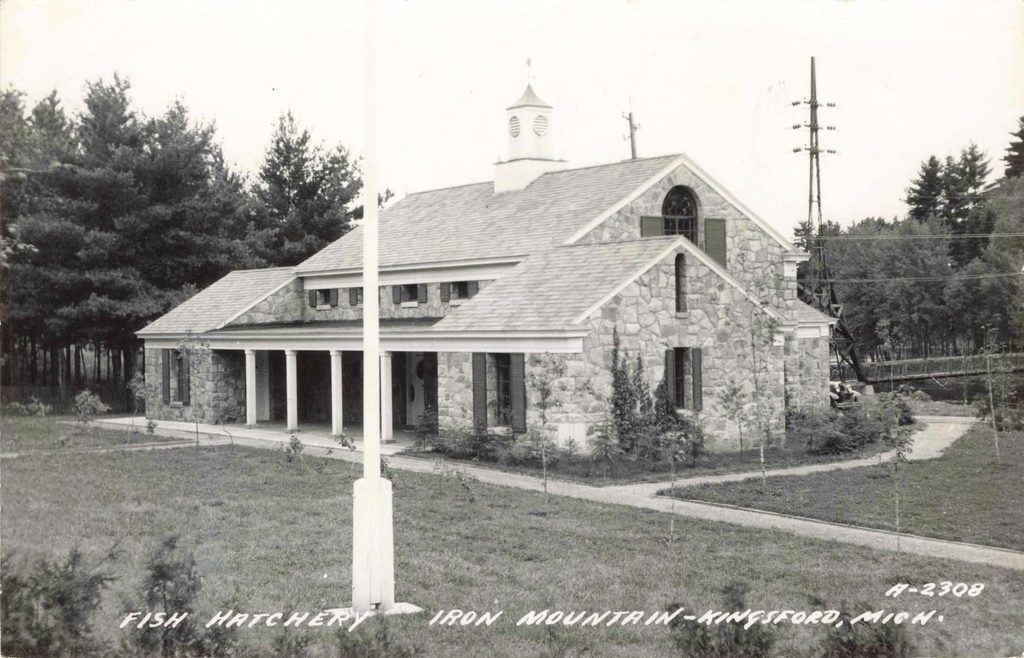
Another postcard identifies a fish hatchery in the Iron Mountain-Kingsford area. The stone-faced building and neat grounds provide a different picture of local institutions than the factory complex. The postcard is useful visual evidence, but it does not tell us when the hatchery operated or what species it raised.
A Ski Jump That Filled the Parking Fields
Few scenes in this set have more people in them than the winter ski-jumping competition. A huge slope rises above rows of parked cars. Spectators stand in groups near the landing area, dotting the snowy hillside. The image shows that winter sports could draw a major crowd to the Iron Mountain-Kingsford area.

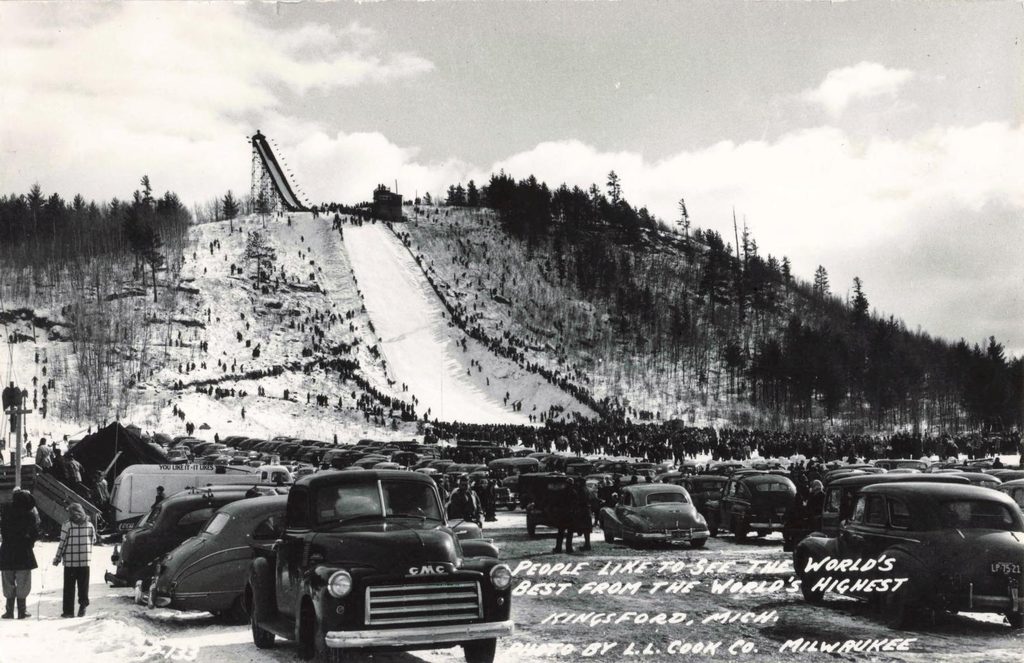
The ski-jumping tradition is closely associated with Pine Mountain in Iron Mountain. Dickinson County tourism materials describe the area’s longstanding international competitions. The postcard’s claim about seeing the “world’s highest” was advertising; it shouldn’t be repeated as an established sporting record.
For residents, a day at the jump offered a break from industrial routines. For visitors, it was another reason to come to this part of the Upper Peninsula. The crowd pictured here is an unusually vivid record of that regional attraction.
Paul Bunyan Even Had a Local Comic-Strip Connection
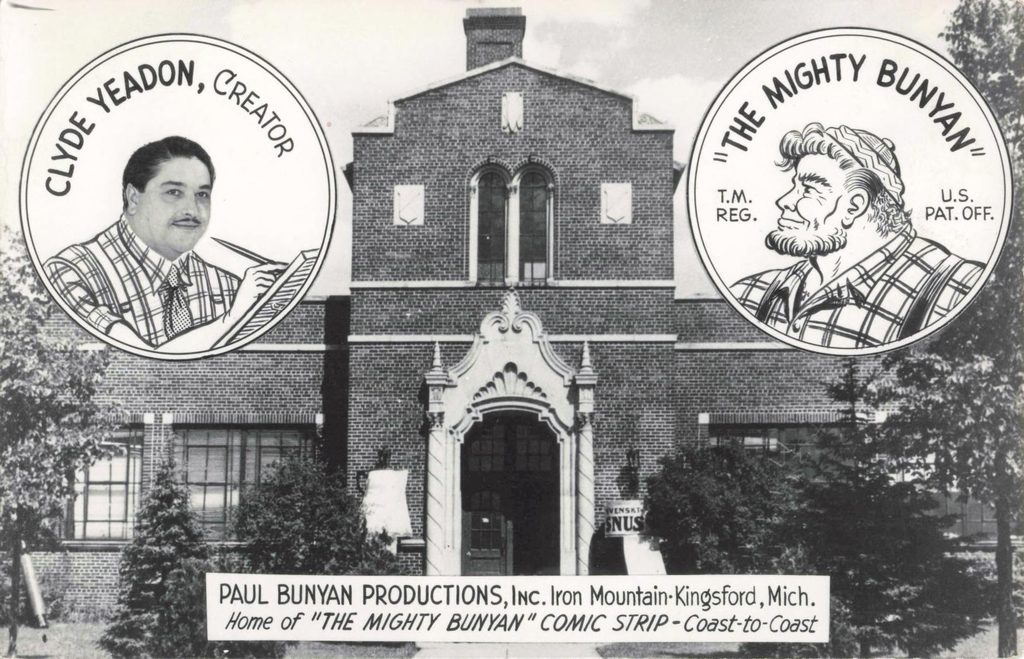
One surprising postcard promotes The Mighty Bunyan, a Paul Bunyan comic strip. Its printed design identifies Clyde Yeardon as the creator and links Paul Bunyan Productions Inc. to Iron Mountain-Kingsford. The card includes a portrait, a drawing of the lumberjack hero, and a brick building.
The advertisement claims the strip appeared “coast-to-coast.” That is the publisher’s claim, not independently confirmed circulation information. Still, the card shows that a local business promoted entertainment built around the lumberjack character. In a region whose economy had depended heavily on forests, the choice of hero seems fitting.
The Ford Factory Switched From Car Parts to War Gliders
When the United States entered World War II, the Ford complex took on a different assignment. Its workers assembled military gliders, aircraft towed behind powered planes and released near landing sites. The factory’s existing wood- and metal-working experience made this shift possible.
The Henry Ford Museum’s 1942 glider assembly image records this wartime work. The plant built more than 4,000 gliders and received the Army-Navy “E” Award in 1944 for its production effort.
The wartime program was a sharp change from sawmills and station wagon bodies. It also underscored how deeply local employment depended on manufacturing decisions made far outside Kingsford.
Why the Ford Plant Closed, but the Charcoal Name Stayed

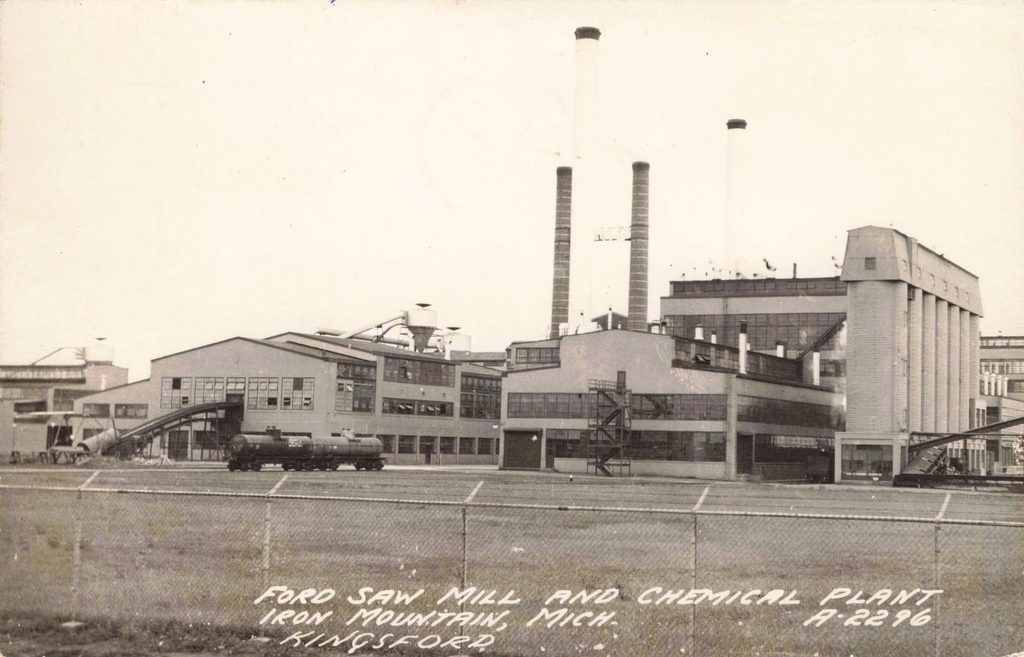
After the war, automobiles increasingly used steel rather than wood. Ford closed its sawmill and automobile parts operation in 1951. Local investors bought the chemical operation, and the charcoal business took the Kingsford name in recognition of Edward G. Kingsford. The original local charcoal operation continued until 1961.
The factories left another record: waste-disposal sites from the former manufacturing complex. Michigan environmental documentation describes former industrial waste pits and groundwater-management concerns. That side of the history deserves attention alongside the jobs and new businesses.
Kingsford, Michigan, still shows its history in its street names, older institutions, and the Flivvers nickname. Yet most Americans first hear the name in a hardware store, printed on a bag of charcoal. That nationwide brand began with a factory trying to make practical use of leftover Upper Peninsula wood.
Kingsford Historical Timeline
Kingsford, Michigan:
From Forest to Factory Town
Henry Ford came to Michigan’s Upper Peninsula for timber. His factories helped build a town, created a famous charcoal business and later produced military aircraft. These milestones trace Kingsford’s remarkable transformation.
Henry Ford Turns Toward the Upper Peninsula
Edward G. Kingsford helps Ford Motor Company acquire approximately 313,000 acres of Upper Peninsula timberland. Ford wants a dependable supply of hardwood for automobile manufacturing.
Ford Begins Building an Industrial Town
Construction begins on Ford’s enormous sawmill and automobile parts complex near Iron Mountain. The immediate area has only about 40 residents. Thousands of construction workers arrive as the operation takes shape.
Kingsford Becomes a Village
Kingsford receives its village charter. The growing settlement is named for Edward G. Kingsford, whose business connections and knowledge of the region helped bring Ford Motor Company north.
The Charcoal Business Takes Shape
Ford’s wood-chemical plant is operating. Instead of discarding sawmill scraps, the company converts waste wood into charcoal and other products. The charcoal is formed into briquettes and eventually sold through Ford dealerships and retailers.
Ford Employment Reaches Its Peak
Ford-related employment in Dickinson County reportedly reaches 7,500 workers. The company-supported economy fuels the development of housing, schools and other local institutions.
Charcoal Becomes a Major Industrial Product
Historical records document large-scale charcoal manufacturing and wood distillation at the Ford plant. The company is producing nearly 100 tons of charcoal briquettes daily, according to historical accounts.
From Automobile Parts to Military Gliders
With America fighting World War II, Ford converts the Iron Mountain operation to military glider production. Workers build aircraft designed to carry troops and equipment into combat zones.
The Factory Receives a Wartime Award
Ford’s Upper Peninsula plant receives the Army-Navy “E” Award for outstanding war production. The factory ultimately produces more than 4,000 military gliders.
Kingsford Becomes a City
Kingsford receives its city charter. The former industrial settlement has become an established Upper Peninsula community with its own municipal government and civic institutions.
Ford Closes the Manufacturing Plant
Ford ends its Kingsford-area sawmill and automobile parts operations. Local investors acquire the wood-chemical business, allowing charcoal manufacturing to continue under new ownership.
The Original Charcoal Factory Closes
Charcoal manufacturing ends at the original Kingsford operation. The nationally recognized Kingsford brand continues, carrying the name of the Upper Peninsula businessman who helped Henry Ford establish his northern industrial complex.
From Automobile Parts to Backyard Barbecues
Ford came north looking for timber. The company left behind a permanent Michigan community and a charcoal business whose name became familiar across America.
Read more about the remarkable connection between Henry Ford, Michigan lumber and manufactured charcoal.
Read the History of Henry Ford Charcoal →Historical sources: City of Kingsford | The Henry Ford Collections
Questions About Kingsford’s History
Was barbecue invented in Kingsford?
No. Kingsford’s contribution was large-scale production and marketing of charcoal briquettes, not inventing charcoal cooking.
Why is Kingsford named Kingsford?
The community was named for Edward G. Kingsford, who helped Henry Ford acquire timberland in the Upper Peninsula.
What did Kingsford make during World War II?
The local Ford plant manufactured military gliders for the U.S. Army.
Are all the postcards from within Kingsford?
No. Several are captioned Iron Mountain-Kingsford or Iron Mountain. They document the closely connected region, not necessarily buildings inside Kingsford city limits.
Do you recognize a building or have family memories of the Ford plant, local schools or the ski jump? Please share what you know in the comments, especially when you can help identify a date or location.
📚 Works Cited
City of Kingsford. “The History of the City of Kingsford.”
Dickinson County Tourism Association. “History of the Area.”
The Henry Ford. “Ford Charcoal Briquets.”
The Henry Ford. “Workers on Assembly Line for Glider Production, Iron Mountain, Michigan, 1942.”
Michigan Department of Environment, Great Lakes, and Energy. “Ford Kingsford Site Summary.”
University of Michigan. “TINDER: The Image Bank of the Northern Great Lakes.”
Michigan4You. “Henry Ford Charcoal.”