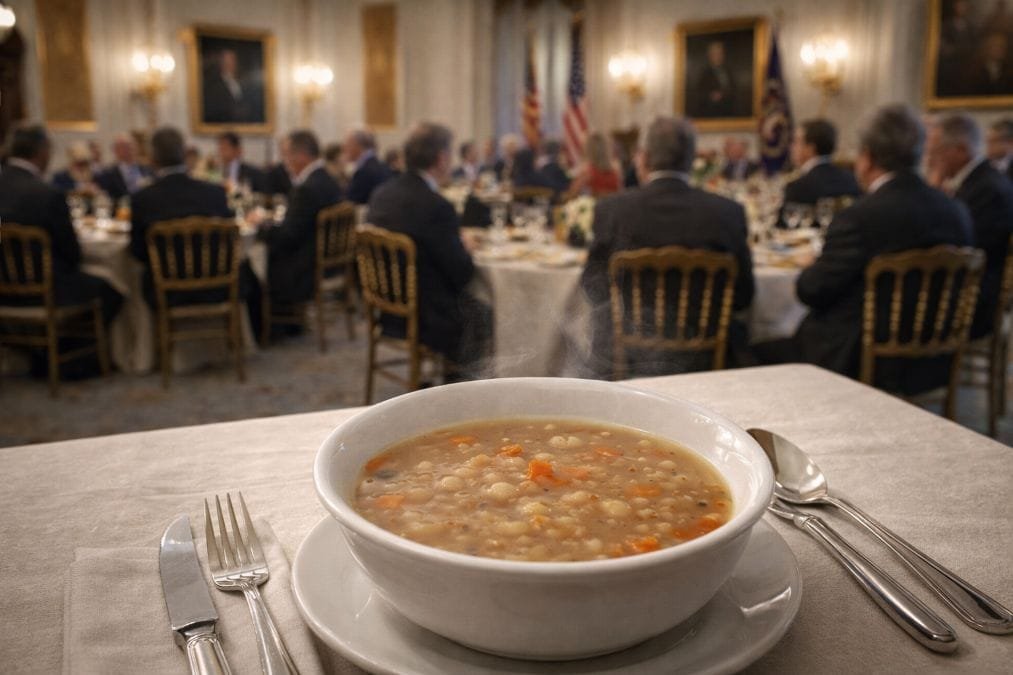


For more than a century, one dish has appeared on the United States Senate menu every day without interruption: bean soup.
It is not a law. It is not ceremonial. It is simply a rule that stuck. Behind that rule is a quiet story about cost, habit, and agriculture — including a direct line to Michigan’s navy bean fields, especially in the Thumb region.
This is not a story about politics. It is a story about food that worked.
A Rule Built on Routine


The Senate’s daily bean soup tradition dates to the early 1900s. The most commonly cited start year is 1903, when the Senate dining room began serving bean soup as a standard offering.
Senators came and went. Parties changed. Wars were fought. The soup stayed.
The reason was practical. Senate kitchens needed meals that were:
- Inexpensive
- Filling
- Easy to prepare in large quantities
- Made from ingredients that could be reliably sourced year-round
Michigan’s White Navy Beans checked every box.
Why Bean Soup Made Sense for Government


In the early 20th century, government institutions faced the same constraints as factories, schools, and railroads. They needed food that could be bought in bulk and stored without refrigeration.
Dry navy beans were ideal:
- Long shelf life
- High protein content
- Low spoilage risk
- Predictable pricing
Once bean soup became part of the routine, there was little reason to remove it. The Senate valued continuity, especially in its dining operations. Removing a dependable staple would have solved no problem.
Michigan’s Navy Bean Advantage

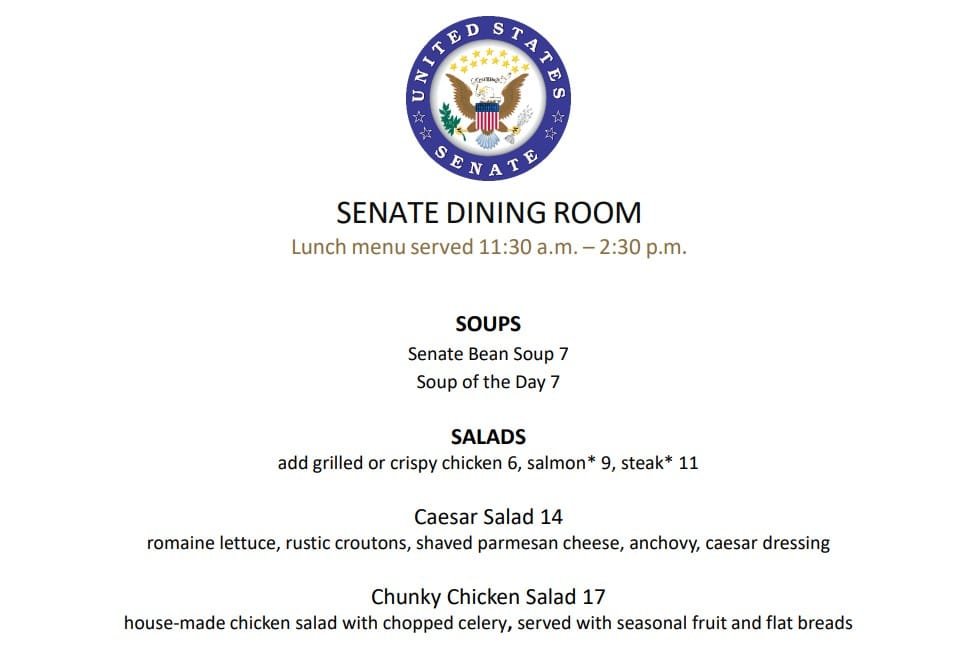
At the same time, bean soup became a staple in Washington, and Michigan was emerging as a national center for navy bean production. The economical recipe was perfect during the Great Depression, but this dish is also ranked high as a comfort food for most Americans.
By the late 1800s and early 1900s, Michigan farmers — particularly in Huron, Tuscola, Sanilac, and Bay counties — were growing navy beans at commercial scale. The Thumb region proved well-suited to dry bean farming due to:
- Soil structure
- Climate conditions
- Crop rotation compatibility with wheat and sugar beets
Michigan would go on to rank among the top navy bean-producing states in the country, a position it has held for decades.
From Michigan Fields to Senate Tables

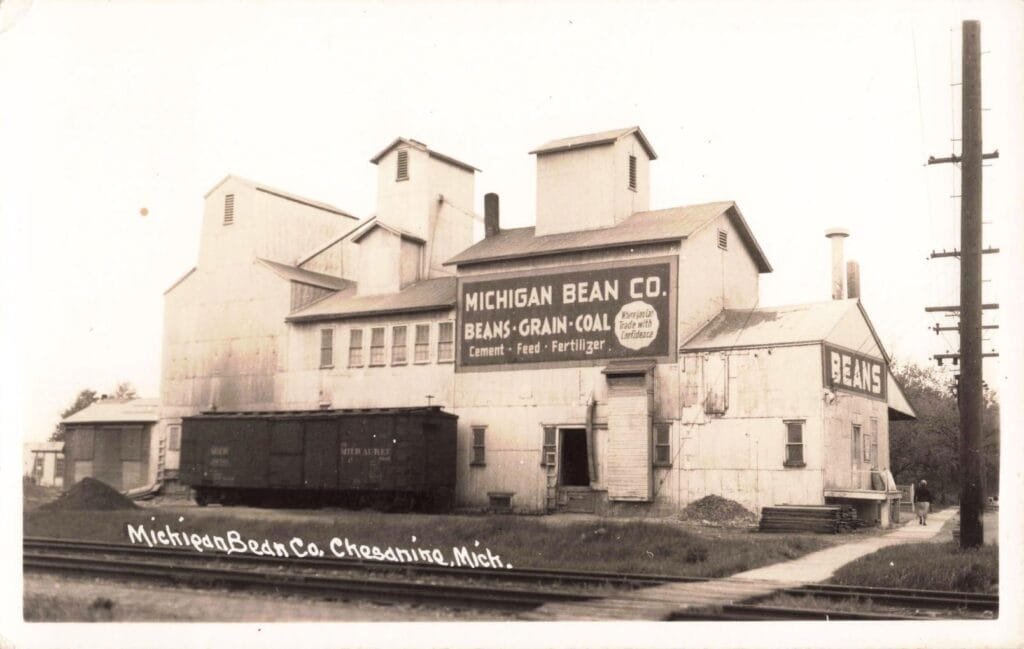
Dry beans were not shipped as specialty items. They moved through the same transportation networks that carried grain, lumber, and coal.
Michigan beans traveled:
- By rail through Detroit, Toledo, and Chicago
- By Great Lakes freighters to Buffalo and eastern ports
- Through wholesale food distributors supplying large institutions
Federal dining operations did not buy from individual farms. They bought through large suppliers. Michigan beans were part of that supply chain because they were available, consistent, and competitively priced.
The connection was indirect, but real.
Senators Ate What Workers Ate

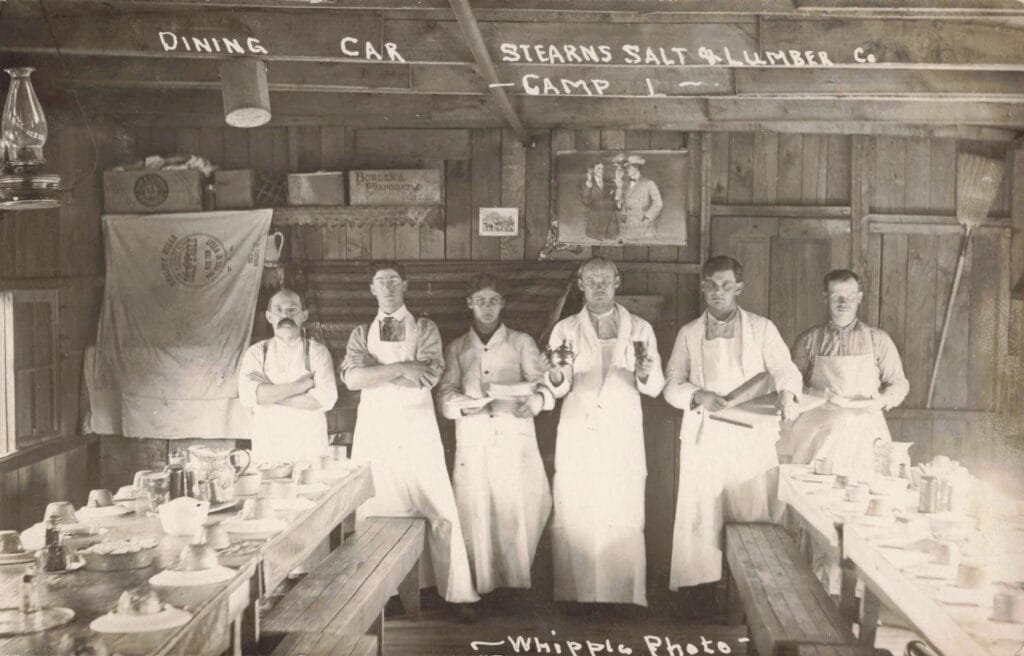
Bean soup was not a luxury dish. It was a common food.
In Michigan, during the same period, the recipe for US Senate bean soup appeared regularly in:
- Lumber camps
- Farm kitchens
- Factory lunch pails
- Boarding houses near mills and mines
The ingredients were familiar. The appeal was the same. It filled you up and stretched the budget.
In that sense, the Senate’s daily soup mirrored the eating habits of working people across the Great Lakes region.
Why the Soup Never Left
As Senate menus modernized, many dishes disappeared. Bean soup did not.
The reasons were institutional:
- It symbolized thrift
- It required no debate
- It avoided controversy
- It worked
Once a food tradition becomes routine inside government, removing it requires justification. No one ever made the case that bean soup needed to go.
What This Says About Michigan’s Quiet Influence
Michigan’s role in Senate Bean Soup was not about branding or recognition. It was about supply.
The state produced a crop that met the needs of large buyers. That crop became part of a national routine that still exists today.
Michigan agriculture shaped daily life in Washington not through speeches or votes, but through a dependable product grown in ordinary fields and shipped along familiar routes.
Bean soup did not become a tradition because it was famous. It became a tradition because it worked.