 by
by Lakeland, Michigan, grew without a downtown. It did not need one. From the late 1800s through World War II, Lakeland existed to move people from trains to water and back again. The history of Lakeland, Michigan, is not a story of growth in size, but of importance in timing.
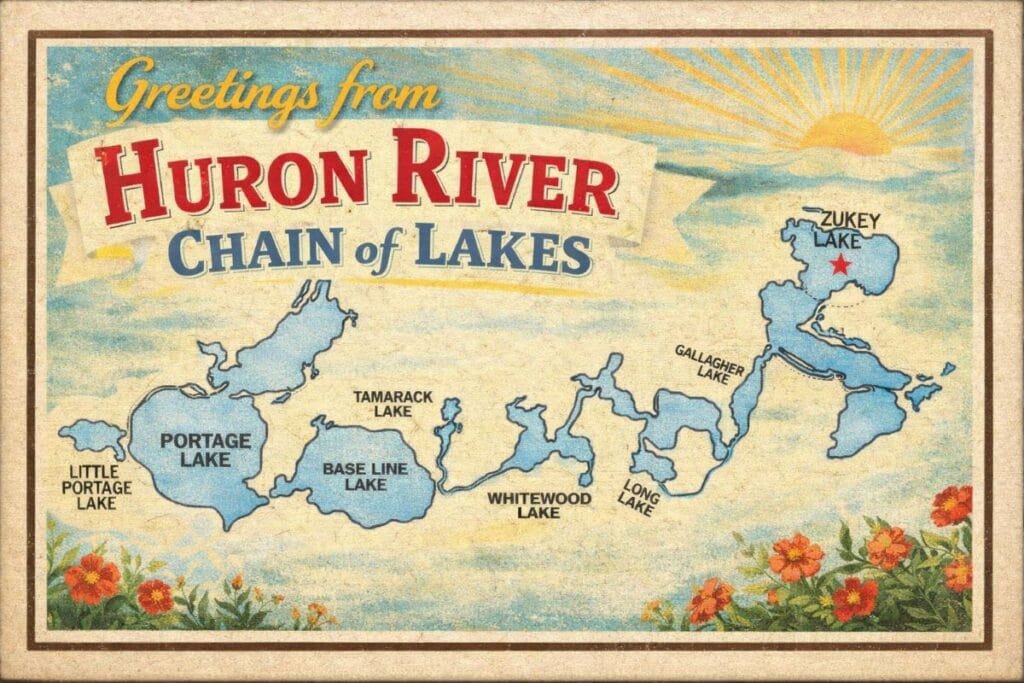
Similar to the communities such as Irish Hills near Adrian, Lakeland’s location on the Huron River Chain of Lakes placed it at the center of one of southeast Michigan’s earliest recreation corridors, driving a steady rise in tourism and cottage ownership in the early 1900s. Linked by navigable water, lakes such as Zukey, Portage, Strawberry, and Base allowed visitors to arrive by train, transfer to boats, and move freely between resorts, hotels, and private camps.
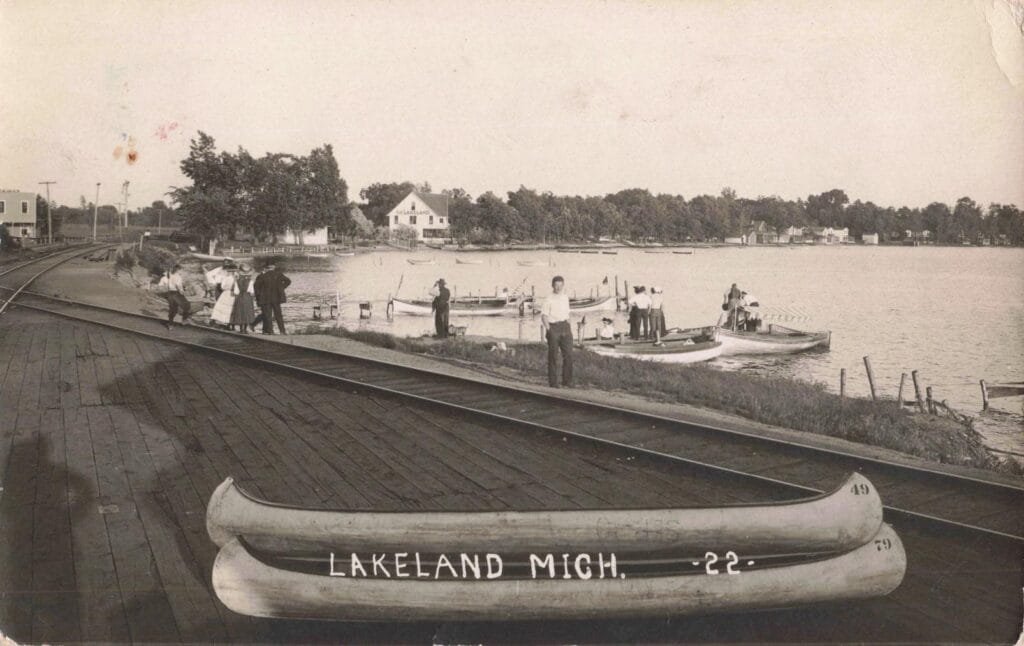
This access made Lakeland attractive to working- and middle-class families from Detroit, Ann Arbor, and Toledo who wanted affordable summer retreats rather than grand resorts. By the 1910s and 1920s, modest cottages began replacing tents and boarding houses, signaling a shift from short visits to seasonal stays. The growth of cottage ownership reshaped Lakeland’s economy, favoring groceries, boat liveries, taverns, and repair shops over large hotels, and cemented the Chain of Lakes as both a transportation route and a defining feature of everyday life in the community.
Video – This Tiny Michigan Town Was Busier in Winter Than Summer — Here’s Why
Watch this Michigan Moments video for a quick look at Lakeland’s early resort and railroad history.
This Michigan Moments episode explores the history of Lakeland, Michigan, from the late 1800s through the early 20th century. Located in Livingston County, Lakeland developed as a railroad-to-resort transfer point where passengers arrived by train and continued by boat onto Zukey Lake and the surrounding chain of lakes.
Using rare historical photographs, this video examines how Lakeland functioned during its peak years between 1890 and 1940. Topics include the Ann Arbor Railroad station, lakeside hotels, private clubs, ice harvesting operations, and the transition from rail travel to automobile tourism.
A Town Built on Arrival
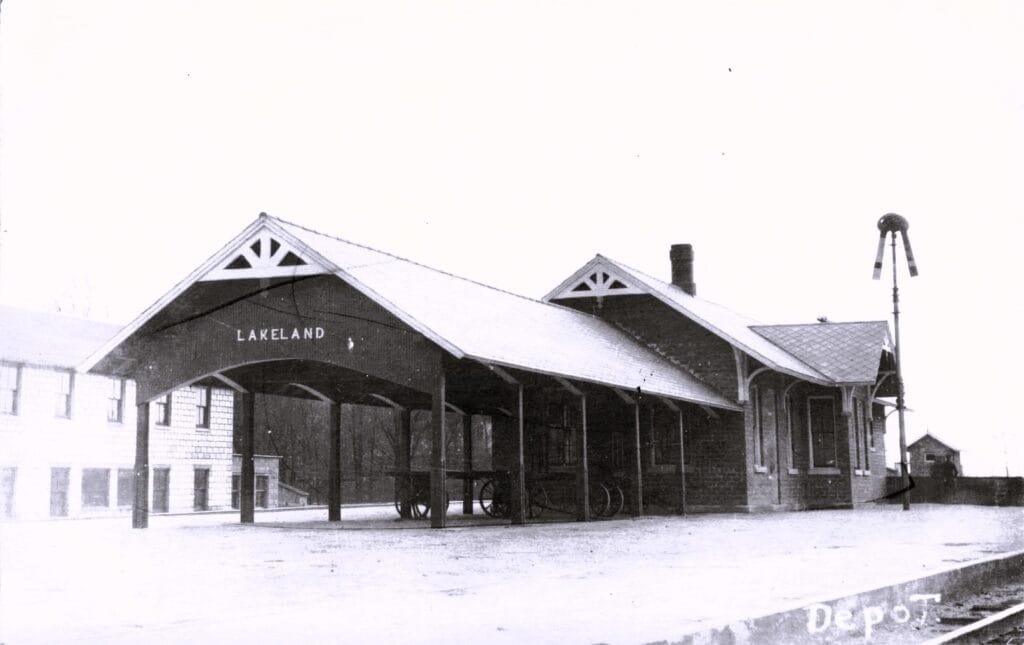
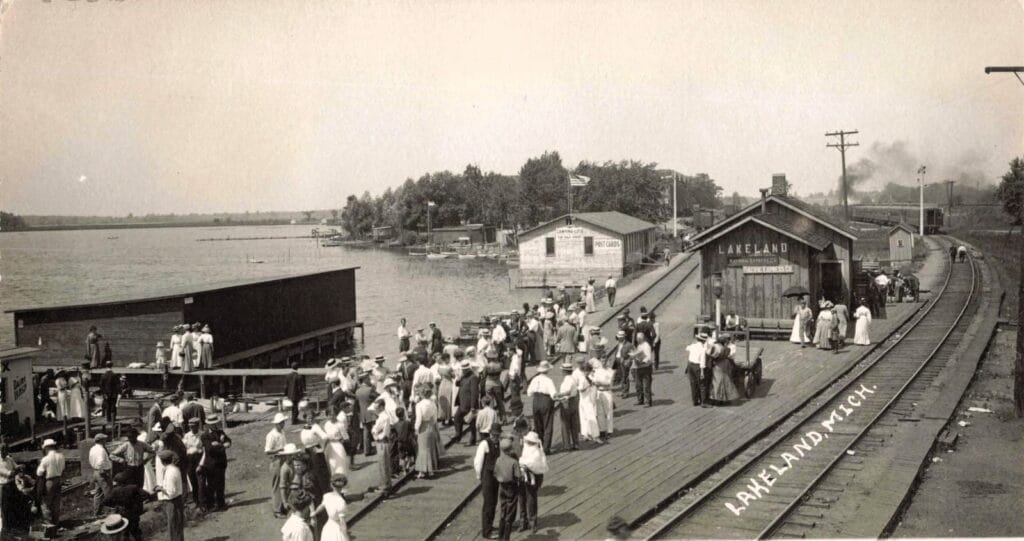
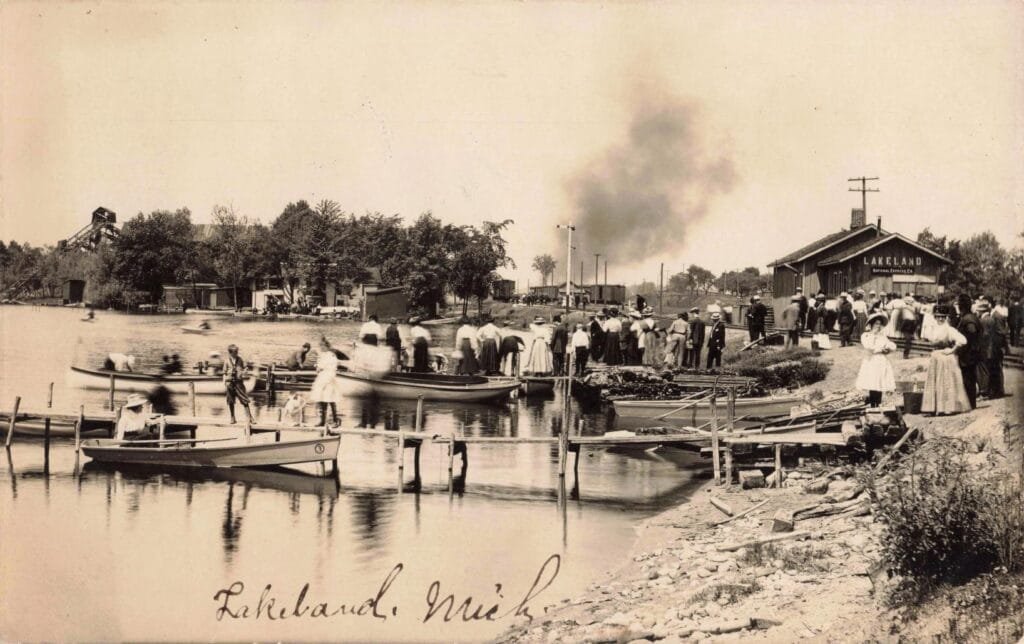
When the Ann Arbor Railroad reached Lakeland in the 1870s, it unlocked access to Zukey Lake and the surrounding chain of lakes. By the 1890s, Lakeland was a transfer point. Passengers arrived by rail and boarded boats waiting just steps away.
The station mattered because it sat where movement mattered.
Resort Life on the Water
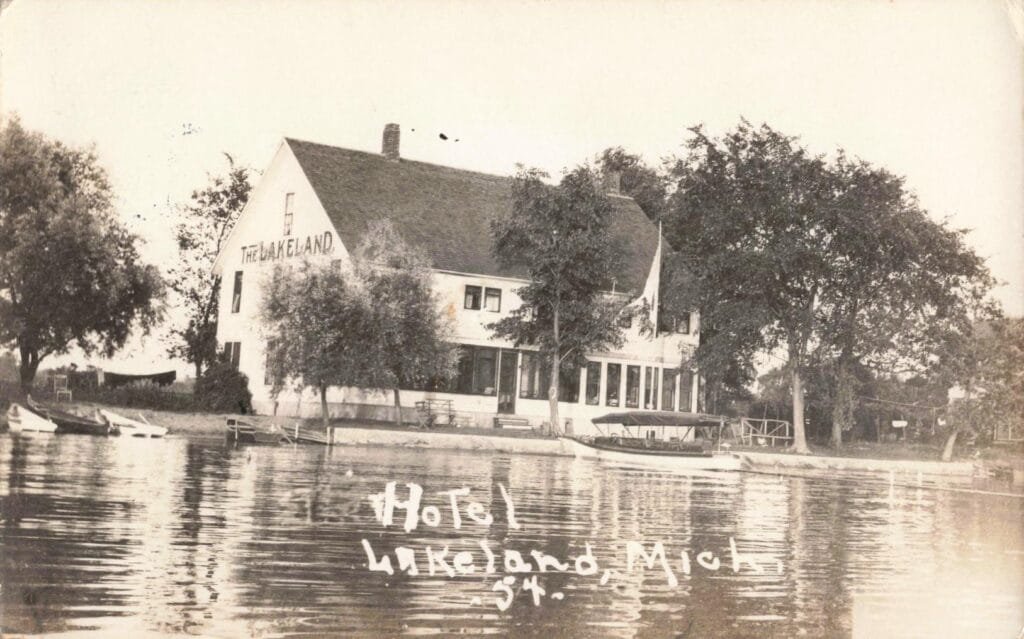
Hotels followed the rails. The Hotel Lakeland, shown in multiple photographs, sat directly on the water with docks stretching into the lake. Boats lined the shoreline. Signs advertised rentals.
Visitors did not need streets. They needed water.

Private clubs like the Keystone Club served members seeking retreat rather than spectacle. These were seasonal places. Quiet. Controlled.
Lakeland Ice Harvesting – The Ice That Paid the Bills
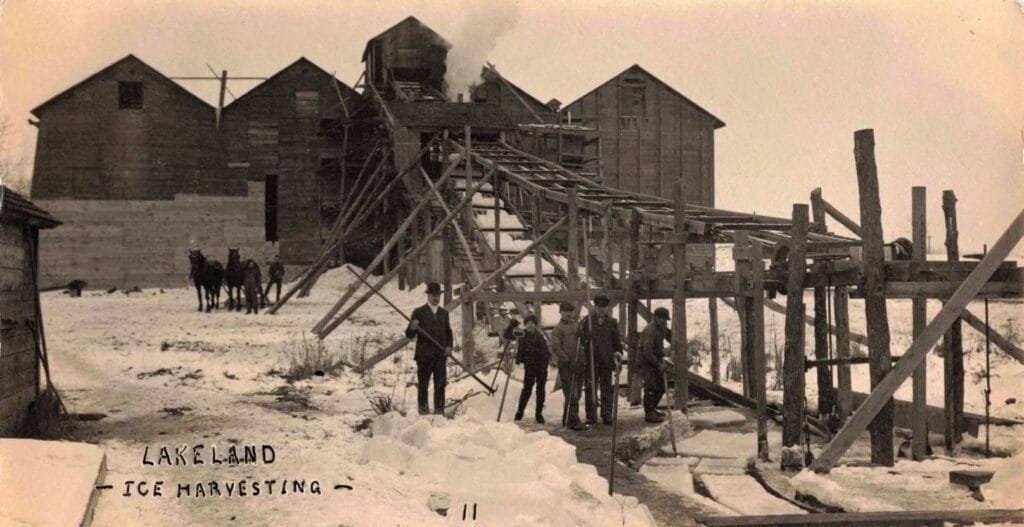
The history of Lakeland, Michigan, includes a winter industry that many visitors never saw.
In the pre-electric refrigeration era, Zukey Lake’s clean water and cold winters made it ideal for ice harvesting. By the turn of the 20th century, Lakeland had a large ice-house operation on Zukey Lake. A five-story icehouse stood on the shore, where workers cut huge blocks of ice and loaded them onto conveyor belts into the building. These ice blocks were then shipped by rail to cities for use in packing and chilling food.
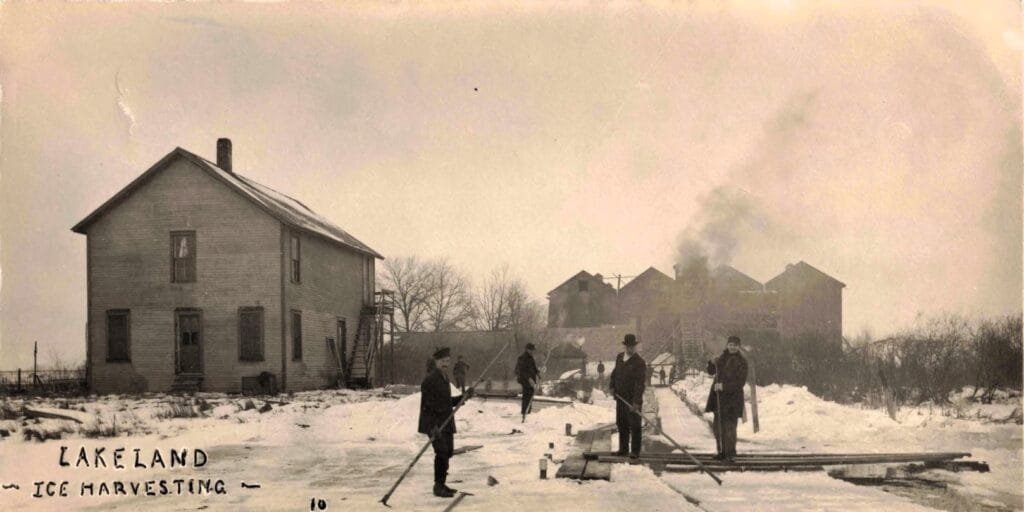
Photographs from around 1900 show stacks of ice and steam-driven conveyors at the Lakeland Ice House. This ice trade provided steady local employment from about the 1890s through the 1920s. Indeed, one history notes that Lakeland’s ice industry “flourished… from 1890–1929” under entrepreneurs like George Schuller, whose company ran the Zukey Lake icehouse (located just west of today’s Zukey Lake Tavern).
Risk on the Rails

Railroads brought prosperity, but not safety. In November 1908, two Ann Arbor Railroad trains collided near Lakeland in dense fog. Newspaper reports note two dead and three hurt in that head-on wreck. The wreck became part of local memory. Progress had limits.
A New Center After the Trains

Euler’s Grocery & Restaurant was a small but important fixture in Lakeland during the 1920s, serving as both a general store and a place to eat for locals and visitors. A 1928 photograph shows a straightforward roadside business, typical of lake towns tied to rail travel and seasonal crowds. Businesses like Euler’s supplied groceries, basic goods, and hot meals to ice workers in winter and vacationers in summer, filling the gap between train arrivals and lake activity.
In a community without a true downtown, Euler’s functioned as a practical gathering point, reflecting how Lakeland relied on small, flexible businesses rather than large commercial blocks to support daily life.
As automobiles replaced rail travel, Lakeland adjusted. The depot disappeared. The tracks remained. After Prohibition ended, the Zukey Lake Tavern opened and became the town’s social anchor. Boats still arrived. Music replaced train whistles.
Lakeland changed, but it did not vanish.
From Rail Line to Trail

The old railroad corridor eventually became the Lakelands Trail State Park, preserving the path that once brought visitors to the lake.
Today, cyclists follow the same route trains once ran.
The history of Lakeland, Michigan, remains visible if you know where to look.
Timeline – Notable Dates in the History of Lakeland Michigan
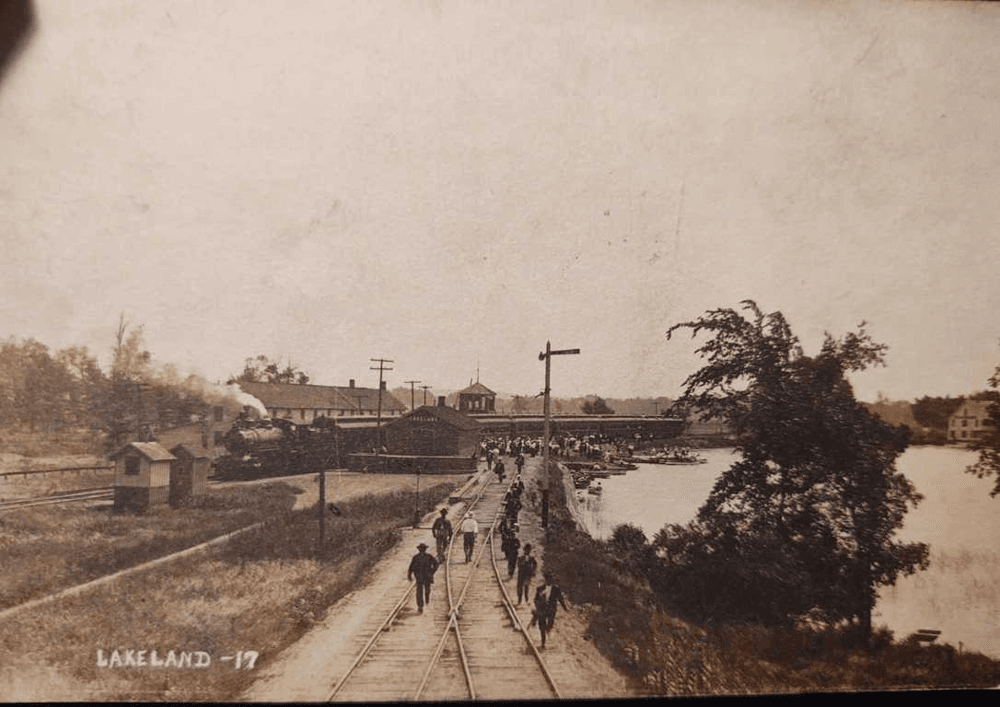
1878 – The Ann Arbor Railroad reaches Lakeland, making it a resort and railroad hub on Zukey Lake. Excursion trains brought day-trippers and vacationers to Lakeland’s beaches and lakeside cottages.
Early 1900s – Lakeland supports a large ice-harvesting industry. A five-story ice house on Zukey Lake stored blocks of lake ice for shipment by rail.
1915–1930s – The Waters’ Pavilion and other lakeside attractions operate at Lakeland. For example, Waters’ Pavilion resort advertised “Motor boats, row boats and canoes for all” to lake visitors. In the 1920s the “Valley of a Thousand Lakes” promotion highlighted Lakeland’s boating and beaches.
1933–1934 – Prohibition ends and brothers Maggie and Baldy Girard build the Zukey Lake Tavern on Zukey Lake’s shore. This tavern (nicknamed The Dugout) quickly became Lakeland’s social hub. The Girards even ran a motor launch to ferry customers from other lakes back to the tavern.
November 21, 1908 – A head-on train collision occurred between two Ann Arbor Railroad trains near Lakeland in dense fog, due to a mix-up in orders. The crash killed 2 people and injured 3. (This wreck is part of Lakeland’s railroad lore.)
Post-1940 – Lakeland’s rail depot was eventually closed and torn down. The abandoned railroad right-of-way was later converted into the Mike Levine Lakelands Trail State Park. In fact, the GTW gave its corridor from Jackson to Lakeland to the state (1978) and the Lakelands Trail opened in 1994, preserving the old rail route through Lakeland.
Works Cited for the History of Lakeland Michigan
- Ann Arbor District Library. “Chain of Lakes History.”
- Michigan Department of Natural Resources. “Lakelands Trail State Park.”
- Michigan Railroad History Museum. “Ann Arbor Railroad.”
- Livingston County Historical Society. “Lakeland and Hamburg Township History.”