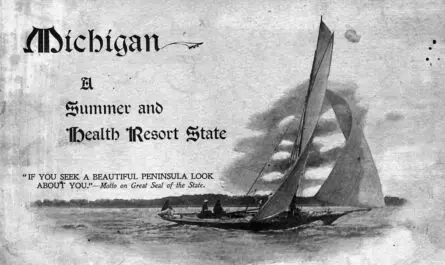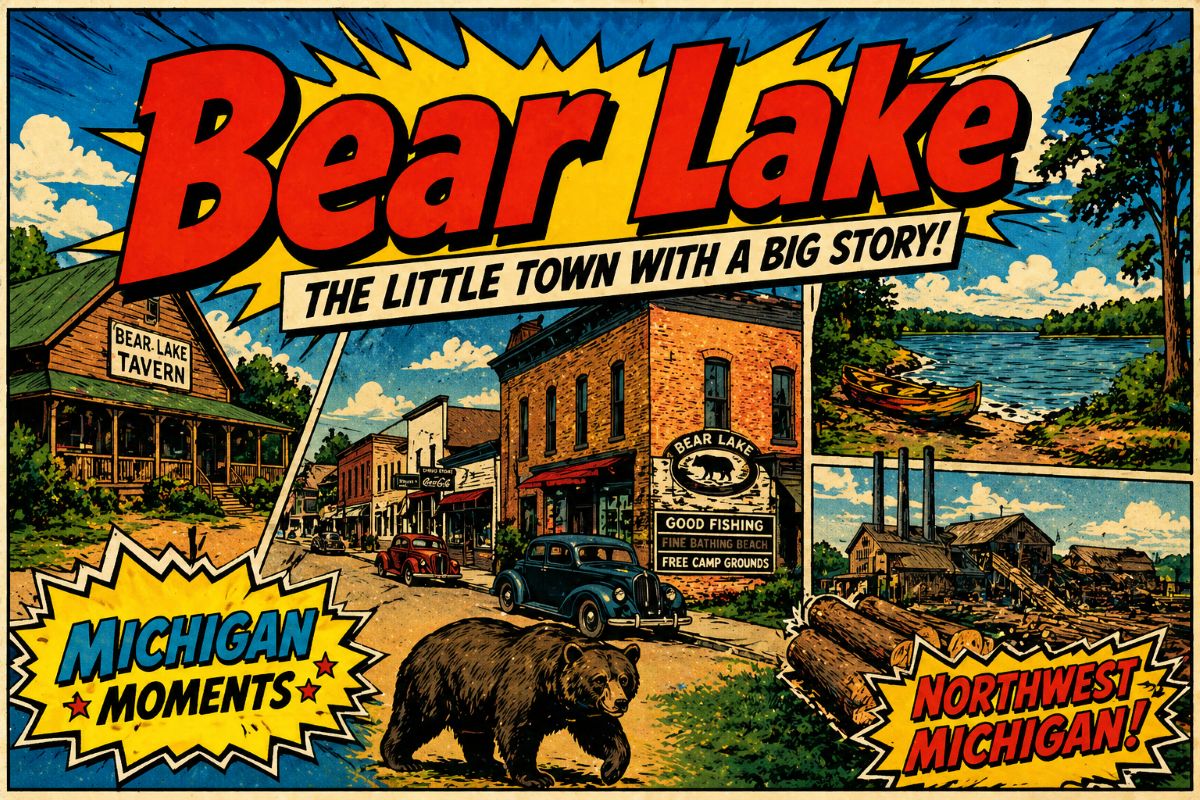


The history of Bear Lake Michigan is tied to a hard truth. Towns built on timber rarely last once the forests are gone. These rare photos show how Bear Lake avoided that fate—and what changed when the mills went quiet. These early 20th-century photographs, taken between 1909 and 1947, document that shift with clarity. They show a town shaped by labor, then slowly reshaped by visitors seeking quiet summers along the water.

Early Settlement and the Logging Economy

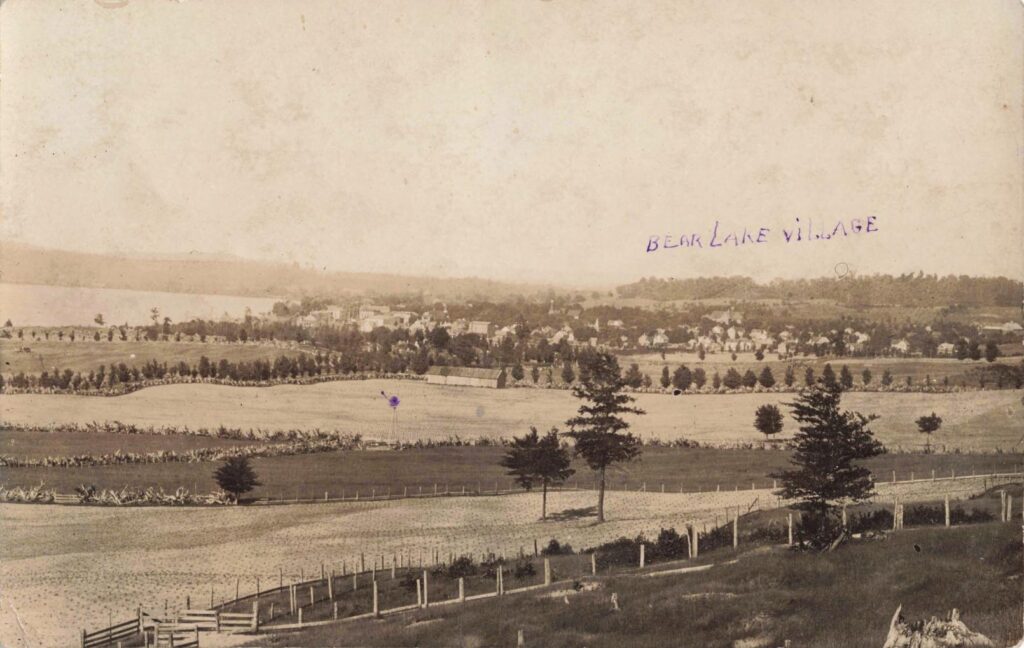
The history of Bear Lake Michigan begins in the mid-1800s, when settlers moved into Manistee County as part of a broader push into northern Michigan’s timber region. By the 1860s, homesteaders had established small farms and settlements near the lake, drawn by access to timber and water routes. According to historical records, the area developed quickly as part of Michigan’s lumber boom, which drove settlement across the northern Lower Peninsula Michigan Place Names.
By the late 1800s, Bear Lake had become a working lumber town. Sawmills operated near the shoreline, where logs could be floated and processed efficiently. Timber from surrounding forests was hauled into the area and cut into usable lumber for shipment to expanding cities across the Midwest. Michigan’s lumber industry was one of the largest in the nation during this period, supplying material for construction and industrial growth.
This rapid growth came at a cost. By the early 1900s, much of the accessible timber in the region had been cut. As forests were depleted, lumber operations slowed or closed entirely. Many northern Michigan towns faced economic decline as a result, forcing communities like Bear Lake to reconsider their future. Logging and Lumbering in the United States.
That shift led to a new phase in the history of Bear Lake Michigan. With its natural setting still intact, the lake became the foundation for a different kind of economy. Improved transportation and the rise of automobile travel made the area more accessible to visitors. By the 1920s and 1930s, tourism began to replace logging as the primary driver of local activity, with resorts, cottages, and campgrounds appearing along the shoreline.
A Pattern Seen Across Northern Michigan
By the late 1800s, Michigan produced more lumber than any other state in the nation. Bear Lake was not alone. Dozens of towns across northern Michigan followed the same path. Logging created fast growth, then decline came just as quickly. Some towns disappeared. Others, like Bear Lake, shifted toward tourism and survived.
Early School Life in Bear Lake Michigan

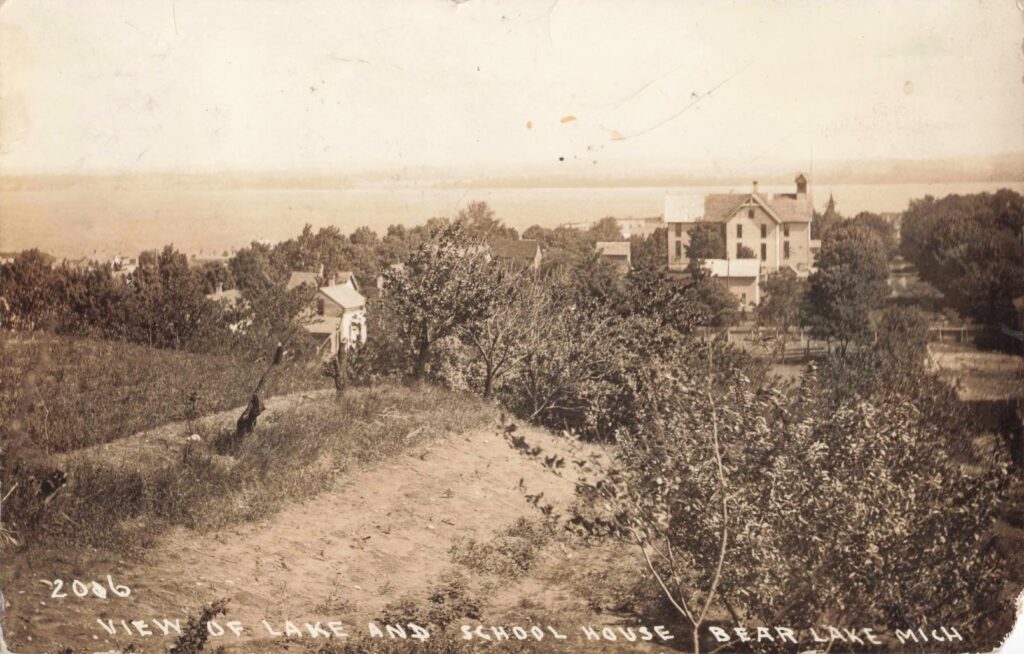
From this elevated view, Bear Lake appears modest but organized. Homes cluster along the slope, framed by trees and open ground. The schoolhouse anchors the scene. It suggests a stable community at a time when many nearby lumber camps were temporary. Education was not an afterthought. Even in a resource-based town, families invested in permanence.
What Would You Visit First In Old Bear Lake?
Bear Lake changed from a lumber town into a summer stop for fishing, camping and lakefront resorts. If you could step into one of these old photos, where would you go first?
- The Bear Lake Tavern: Stop by the lakefront tavern, watch the boats, and hear what locals were talking about after a long day.
- Richmond Drug Store Soda Bar: Sit at the soda fountain, order a cold drink, and take in the small-town chatter along Main Street.
- Edgewater Trailer Camp: Spend a summer night in an early travel trailer when auto tourism was just changing northern Michigan vacations.
- The Lumber Mill: Stand near the stacks of cut logs and see the industry that helped build Bear Lake before tourism took hold.
Join the conversation: Which stop would you choose, and why? Share your pick in the comments.
How Tourism Changed Bear Lake Michigan – Rise of Resorts and Summer Life

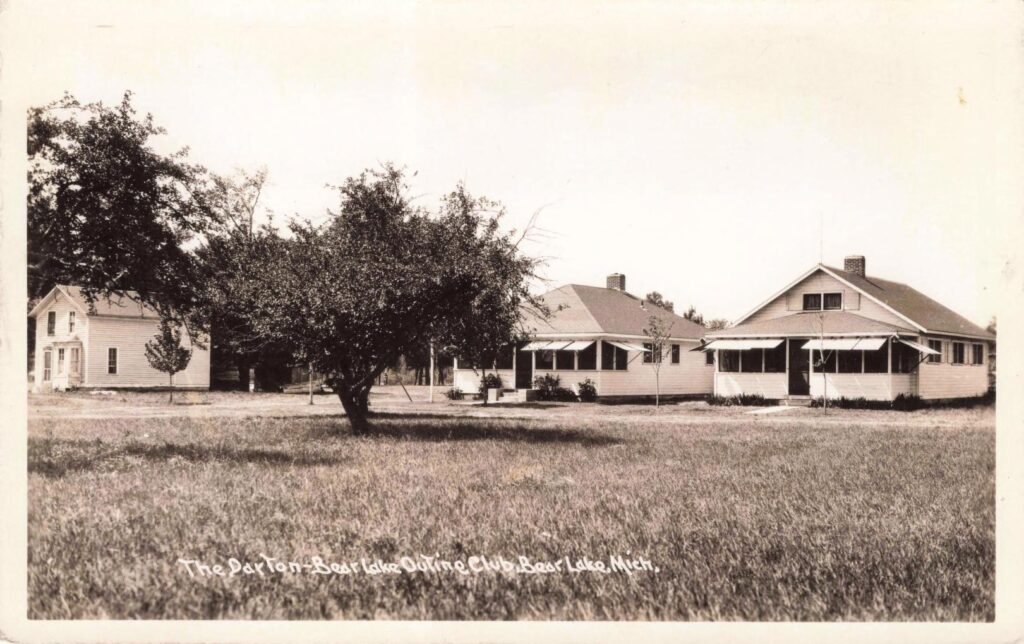
As timber declined, the lake itself became the draw. Private clubs and resorts emerged along the shoreline. Visitors arrived from cities like Grand Rapids and Chicago. They sought cooler air and open space. These properties were simple by modern standards, but they offered something the cities could not—quiet and distance from industrial life.
Tourism Goes Mobile: The Trailer Camp Era

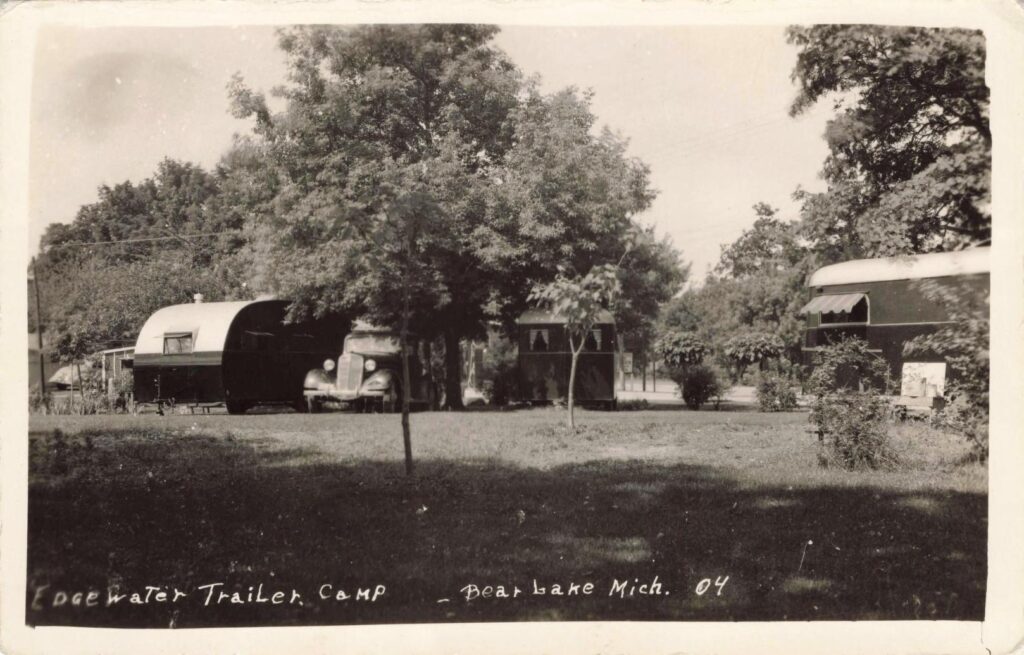
By the 1930s, travel changed. Families no longer depended on rail lines or resort bookings. They arrived in cars, towing compact trailers. Camps like Edgewater allowed them to stay longer and spend less. This marked a shift toward middle-class tourism, expanding Bear Lake’s seasonal economy.
Life at the Cottage: A Slower Pace

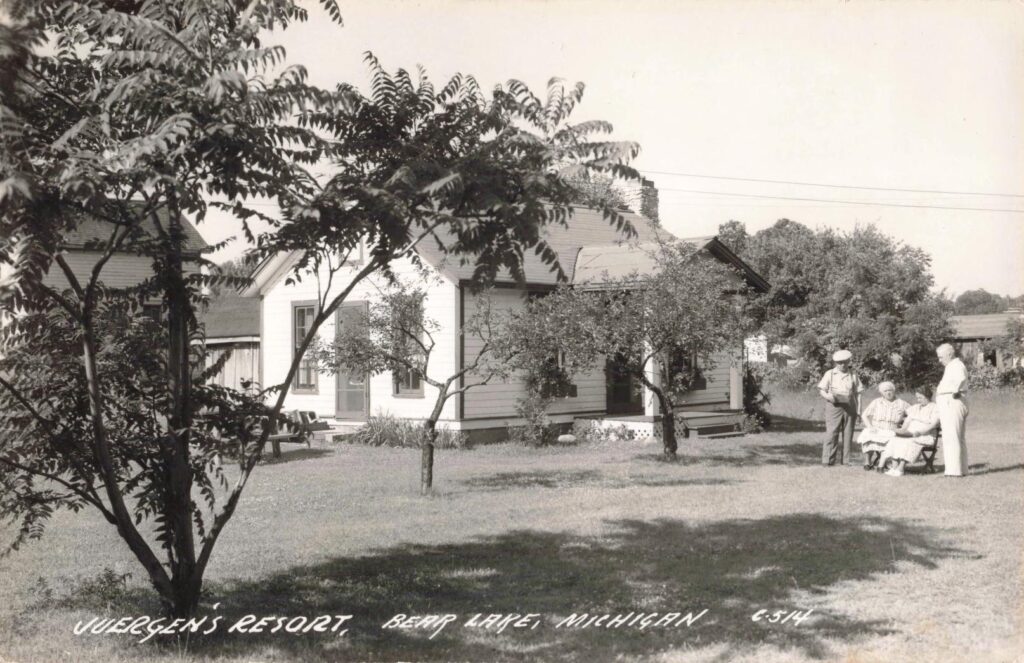
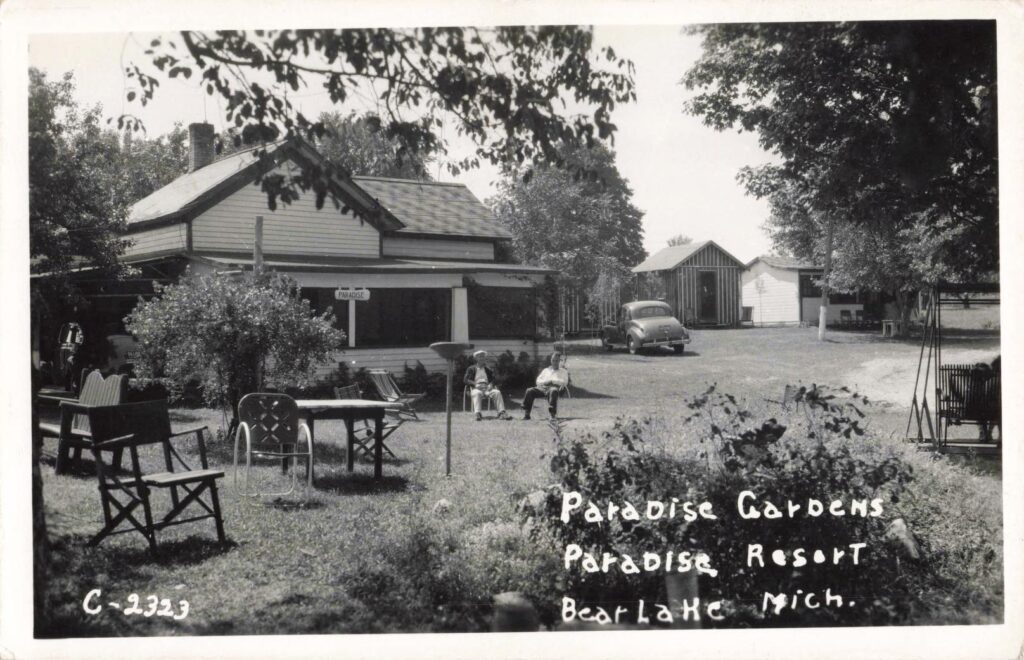
One image shows residents seated in the yard of a cozy cottage, shaded by small trees. There is no urgency. No machinery. No visible work. This is the Bear Lake that replaced the earlier industrial phase. The lake became the center of daily life, not the mills.
Main Street in Bear Lake Michigan During the 1930s

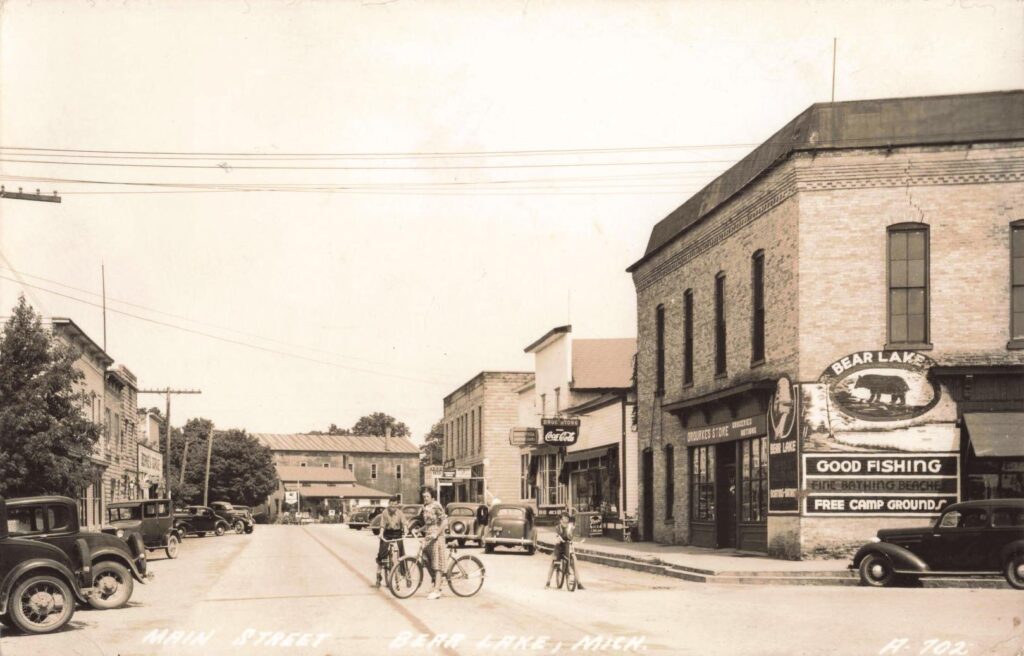
Main Street reflects both locals and visitors. Cars line the street, and bicycles are just as common. Businesses adapted to new demand. Groceries, supplies, and simple dining supported both year-round residents and seasonal guests. Painted signage promoted outdoor activities, reinforcing Bear Lake’s identity as a place to unwind.
A Second Look at Town Life

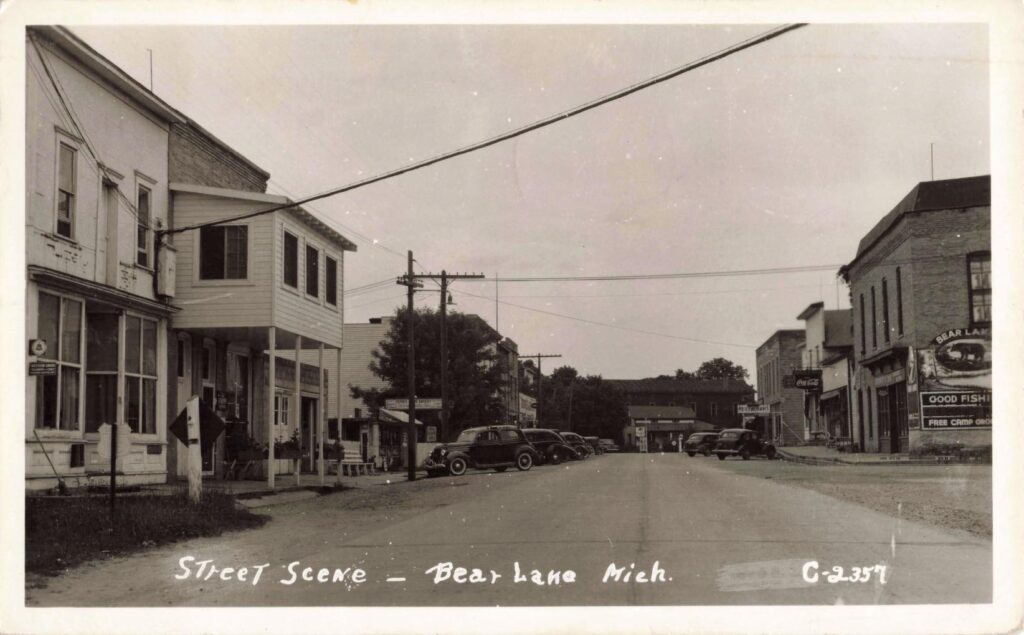
A later street scene shows subtle change. Utility lines cross overhead. Vehicles are more prominent. The buildings remain, but the town is no longer isolated. It is connected to a broader regional economy.
Inside the Soda Bar

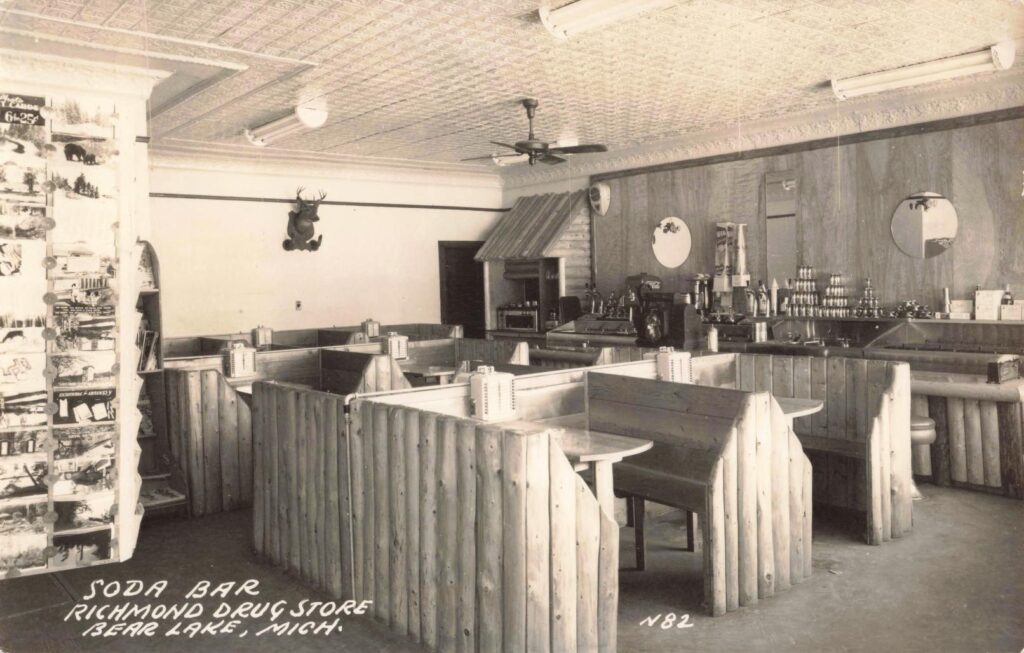
Inside the drug store, the soda bar offered more than refreshments. It was a social hub. The pressed-tin ceiling, wooden booths, and mounted decor created a setting that blended rustic design with small-town pride. These spaces mattered. They gave residents a place to gather beyond work.
The Bear Lake Tavern on the Water

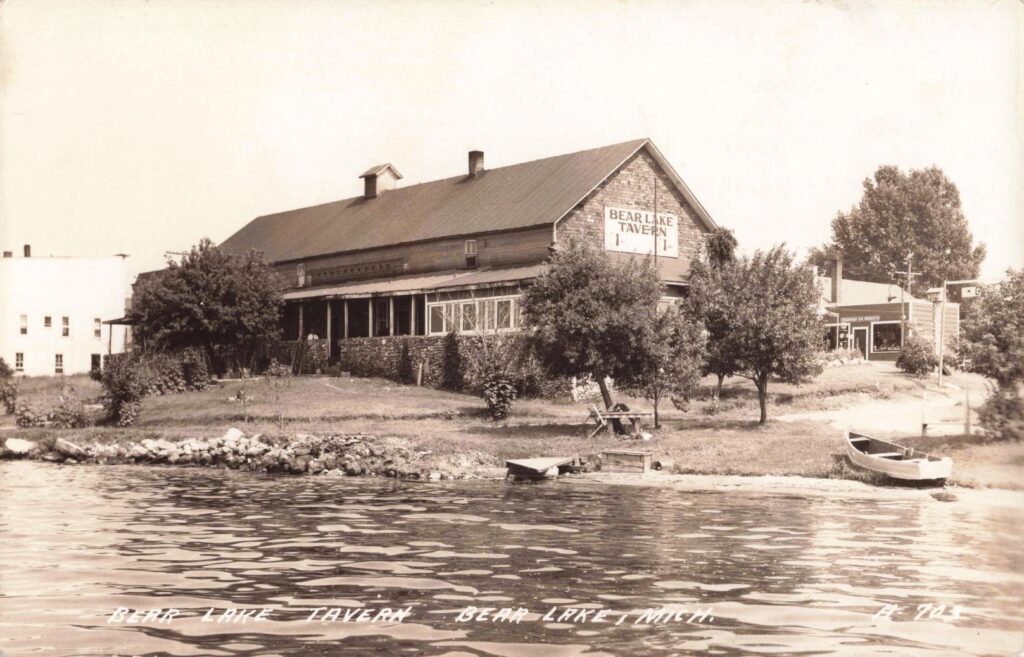
Few buildings capture the town’s identity like the Bear Lake Tavern. Set at the water’s edge, it was both practical and social. Canoes and small boats were tied nearby. Visitors could step off the lake and into conversation. It was a meeting point between two economies—work and leisure.
Resort Interiors: Rustic Comfort
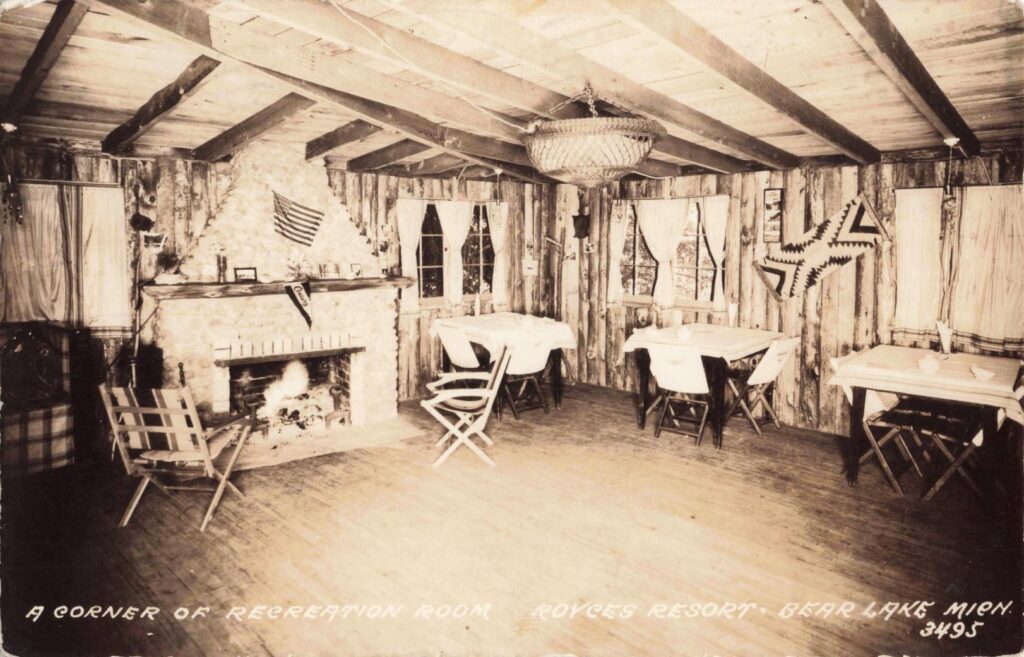
Inside Royce’s Resort, the details tell the story. A stone fireplace, exposed beams, and basic furnishings reflect modest expectations. Visitors were not seeking luxury. They came for quiet, fresh air, and time away from city demands.
The Decline of Logging in Bear Lake Michigan

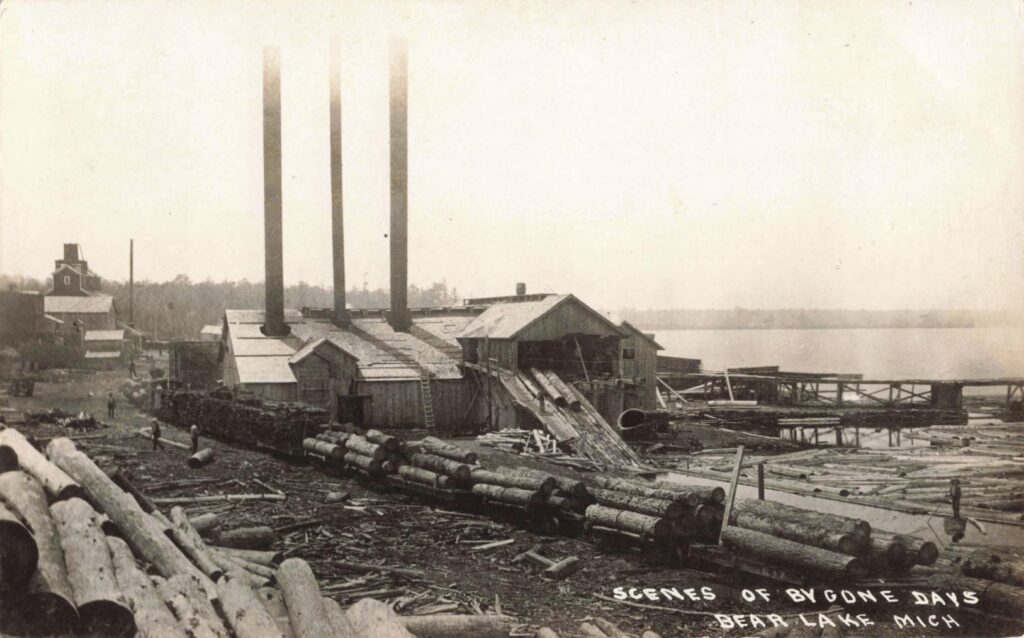
This is the foundation of the history of Bear Lake Michigan. The mills processed timber from surrounding forests, sending it across the state. The work was demanding. The impact was lasting. By the early 1900s, much of the nearby forest had been cut. The industry slowed, forcing the town to adapt.
From Timber Industry to Cottage County

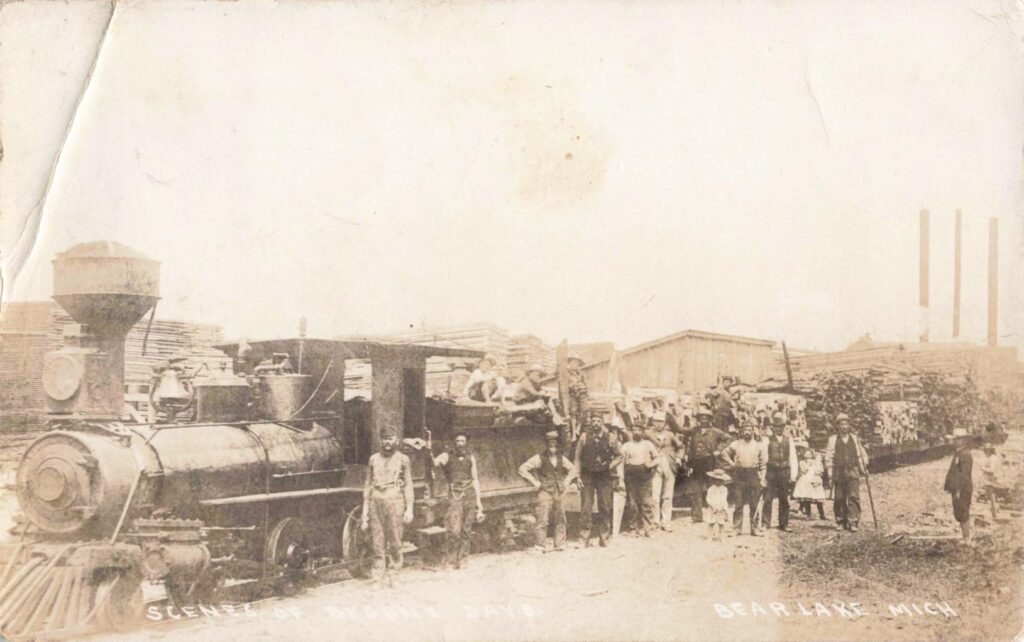
The photos show a clear transition. Bear Lake did not fade when the mills declined. It adjusted. It leaned into its natural setting. It welcomed visitors. It held onto its identity as a small Michigan town.
Bear Lake did not fade when the lumber industry ended. It changed course. These photos capture that moment when survival depended on adaptation. What remains today is more than a quiet lake town—it is a record of how small Michigan communities endured when their original purpose disappeared.
Frequently Asked Questions About Bear Lake, Michigan
What is the historical significance of Bear Lake, Michigan?
Bear Lake, Michigan began as a logging-based community in the late 1800s, with sawmills driving the local economy. As timber resources declined in the early 20th century, the town shifted toward tourism, using its lake and natural setting to attract visitors. This transition helped sustain the community and shaped its identity as both a working town and a summer destination.
When did tourism become important in Bear Lake, Michigan?
Tourism began to grow in Bear Lake during the 1920s and 1930s as improved roads and automobile travel made northern Michigan more accessible. Resorts, cottage rentals, and trailer camps started appearing around the lake, drawing visitors from cities like Grand Rapids and Chicago. By the 1940s, seasonal tourism had become a key part of the local economy.
What industries supported Bear Lake before tourism?
The primary industry in early Bear Lake was logging, supported by sawmills located near the lake for easy transport of timber. Logs were processed and shipped out to other parts of Michigan and beyond, providing jobs for many local families. As forests were depleted, the logging industry declined, forcing the town to adapt.
Are there still traces of historic Bear Lake today?
Yes, elements of historic Bear Lake remain visible today, including some original buildings, street layouts, and the continued use of the lake for recreation. While modern development has changed parts of the town, its identity as a quiet lakeside community remains consistent with its past. Visitors can still experience the same natural setting that first drew tourists nearly a century ago.
Works Cited for the History of Bear Lake Michigan

“Bear Lake, Manistee County.” Michigan Place Names, Central Michigan University.
“Logging in Michigan.” Michigan History Center, State of Michigan.
“Tourism in Northern Michigan.” Pure Michigan.
“Early Automobile Tourism.” Library of Congress Transportation and Travel Collections, Library of Congress.
“Michigan Lumber Industry Overview.” Michigan State University Archives and Historical Collections.
“Historic Postcard Collections.” University of Michigan Digital Collections.
“Manistee County Historical Society Records.” Manistee County Historical Museum.
“Recreation and Resort Development in Michigan.” National Park Service.