 by
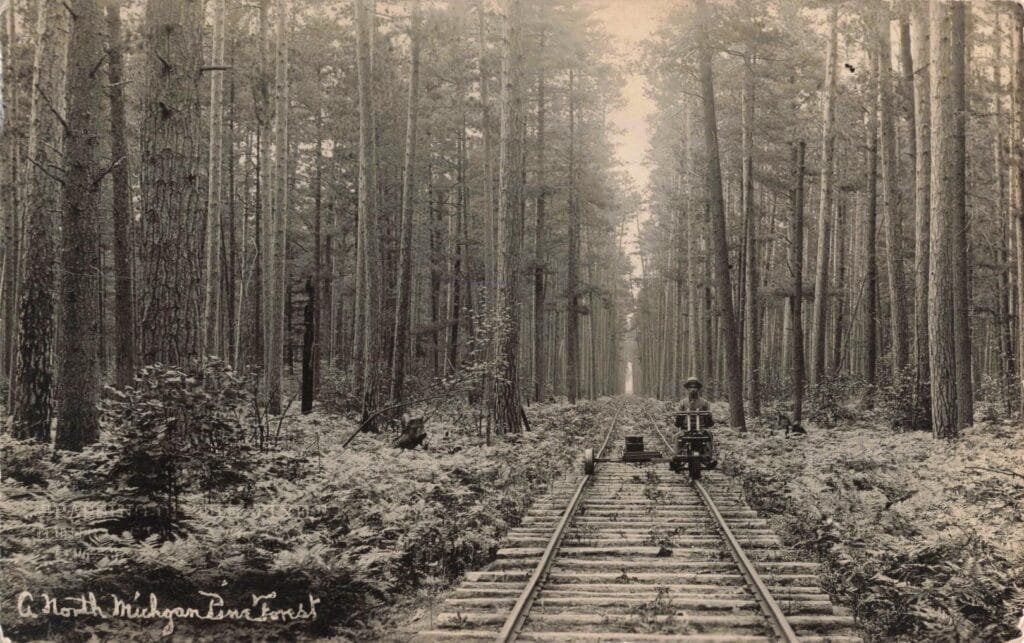
by Roscommon began in 1845 when George Robinson, a Detroit farmer, set up camp where the Au Sable River cut through a pine forest. Those pines drew loggers from around the Great Lakes. By 1873, Roscommon had a Michigan Central Railroad station. That depot on Lake Street was the village’s lifeline. Historians note it had “a fine modern depot and freight house,” telegraph, and two trains daily. Soon, a general store (Bennett Bros.) and a boarding house rose near the tracks. The modern history of Roscommon Michigan, starts when it became the county seat in 1875 and was incorporated in 1882, with its street grid forming around the rail line.
Early Roscommon Settlement and Logging Era
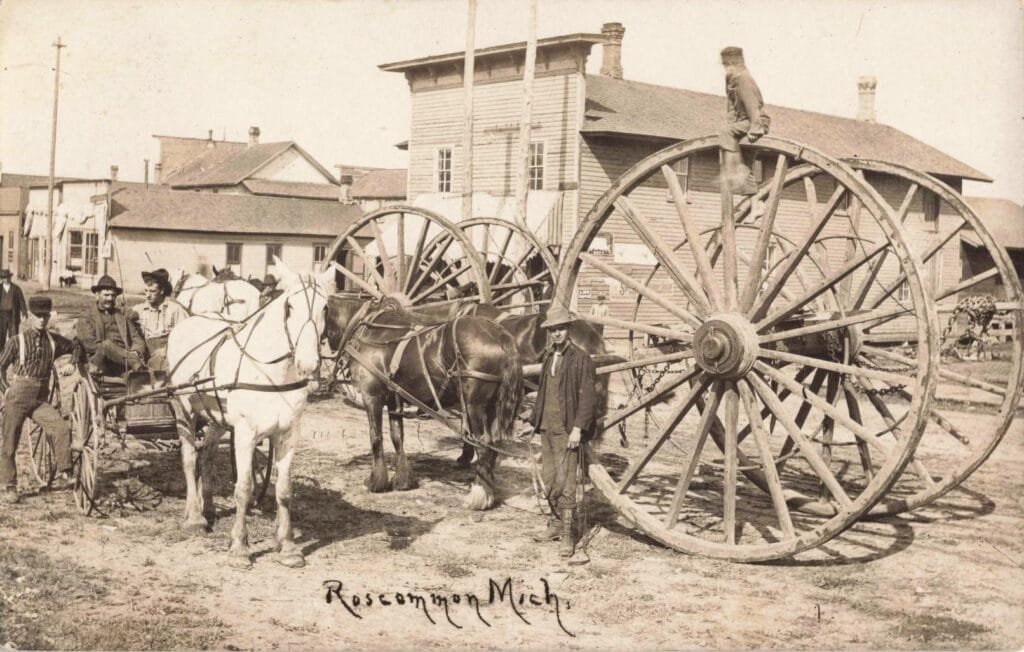
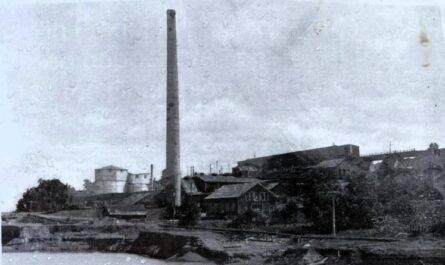
In the 1870s-1890s, the village was a true logging town. Sawmills and shingle mills operated on the edge of town, sawing the tall white and red pines that once cloaked the county. Roscommon’s first residents mostly worked for lumber companies. Newspapers of the 1870s reported that hunters and trappers filled the county; in a wild turn, 317 deer were loaded onto trains from Roscommon in December 1879. One report describes how a single family “four miles from here, killed 31 [deer] in the season” – evidence of both bounty and a need to ship the venison out.
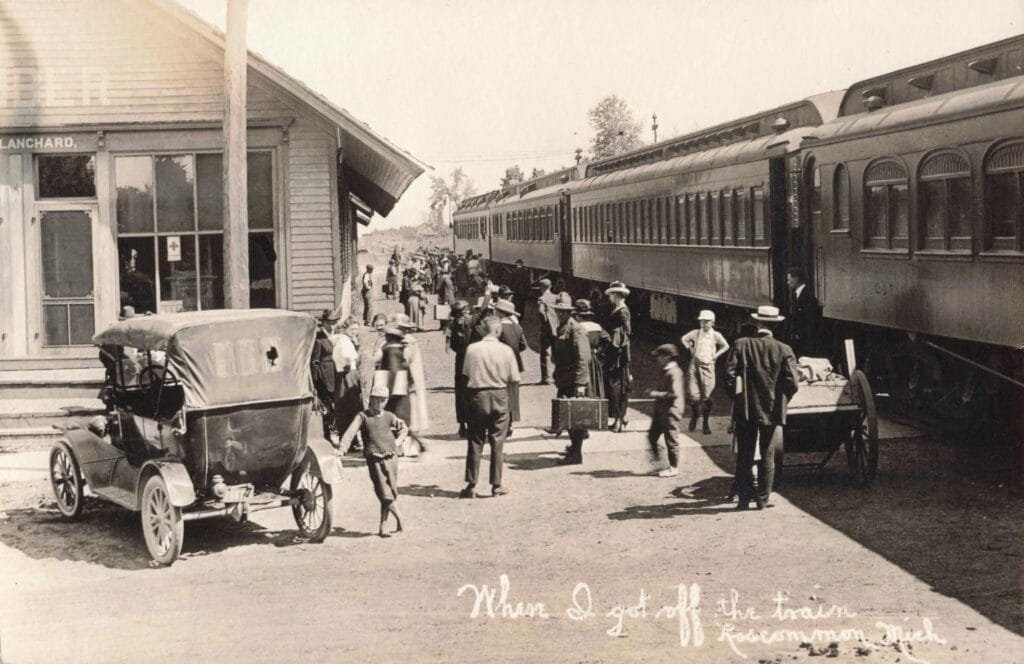
The town grew slowly but steadily. By 1880, a post office and a school district were in the planning stages. The depot photo shows a wooden station with people and wagons waiting – a snapshot of that era. Roscommon’s name, chosen by settlers from Ohio and the East, was inspired by County Roscommon in Ireland. The Irish name lives on in the straight roads laid through the former pines.
Roscommon Was A Railroad Town and a Commerce Center
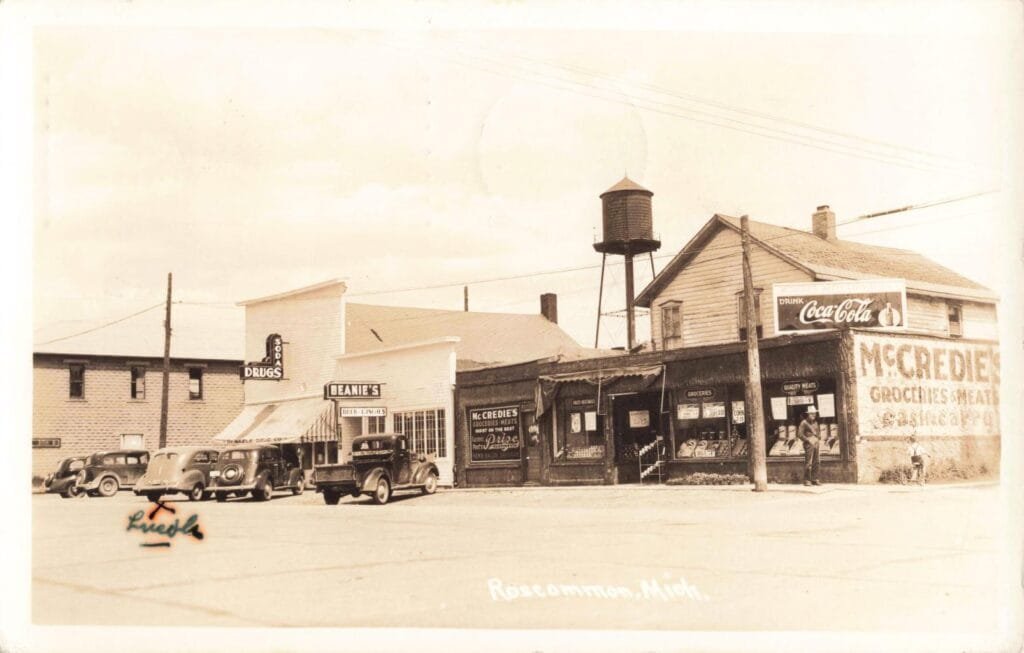
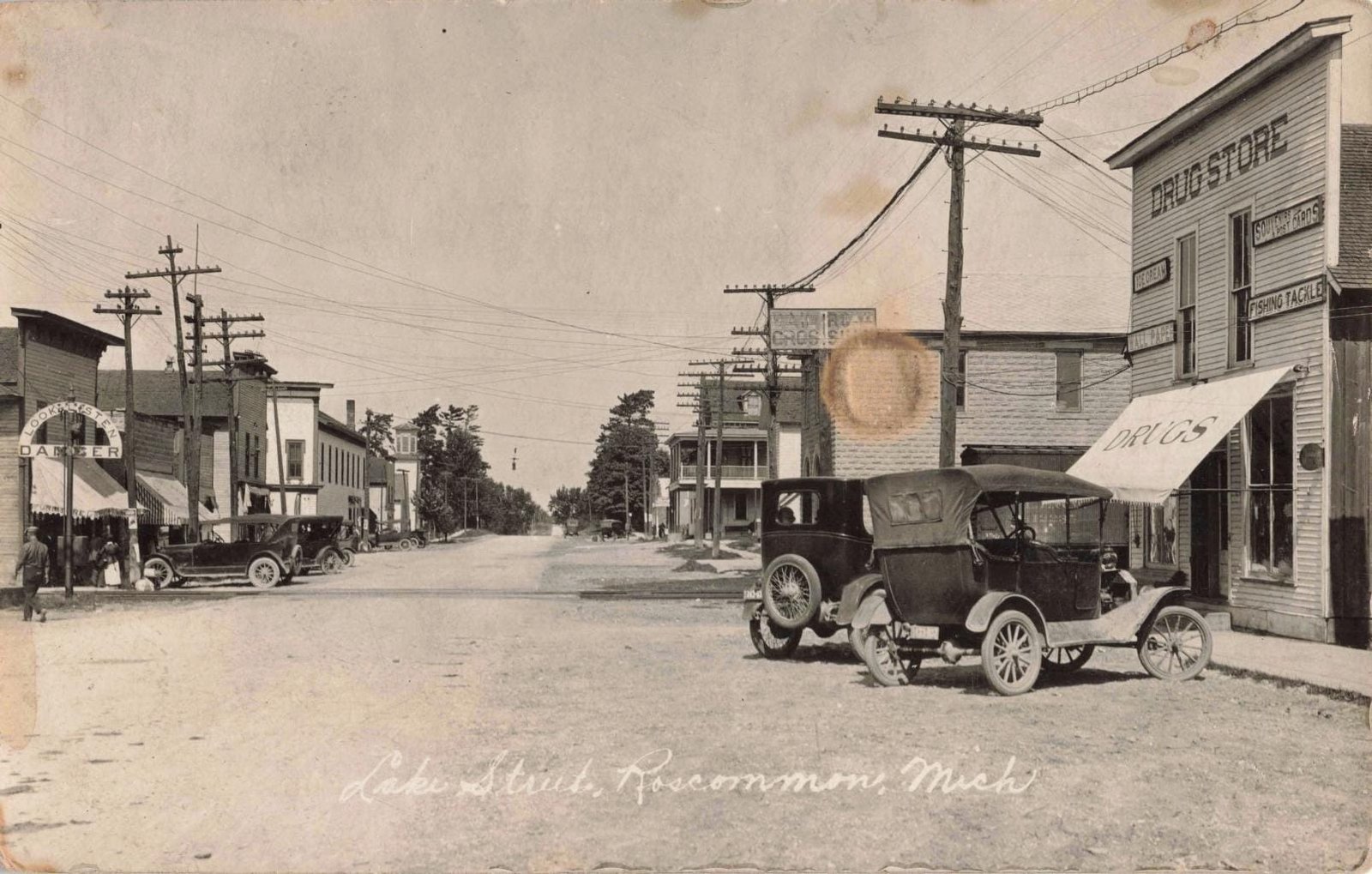
The railroad put Roscommon’s history on the map. The Michigan Central depot helped local farms and stores thrive. A business directory from 1890 lists Bennett Brothers store, a creamery, a hotel, and even a tin shop. After Bennett’s general store burned in 1874, another was replaced it. By 1910, Main Street had wooden storefronts, including a drugstore that sold hardware, groceries, and grain. Farmers brought grain to the freight house by horse and wagon.
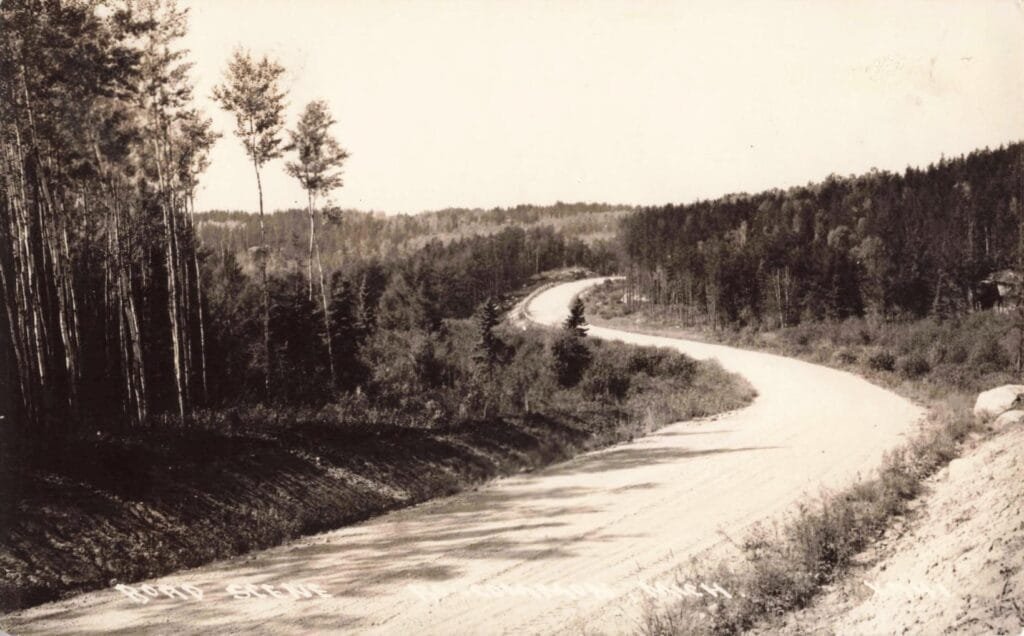
Rare Old Pines: Amid the logging, one natural treasure survived just east of town. The Roscommon Red Pines Natural Area contains a 34-acre stand of untouched red pine, “one of the best stands” in the region. Tourists still visit this grove to walk among trees spared from the sawmill.
20th Century Industries and Tourism
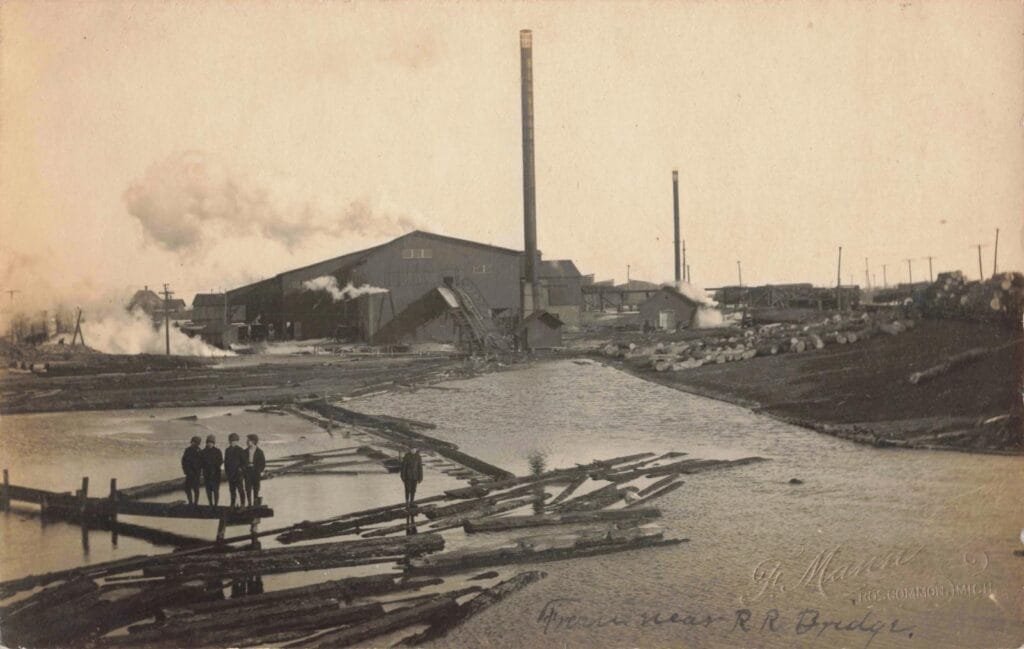
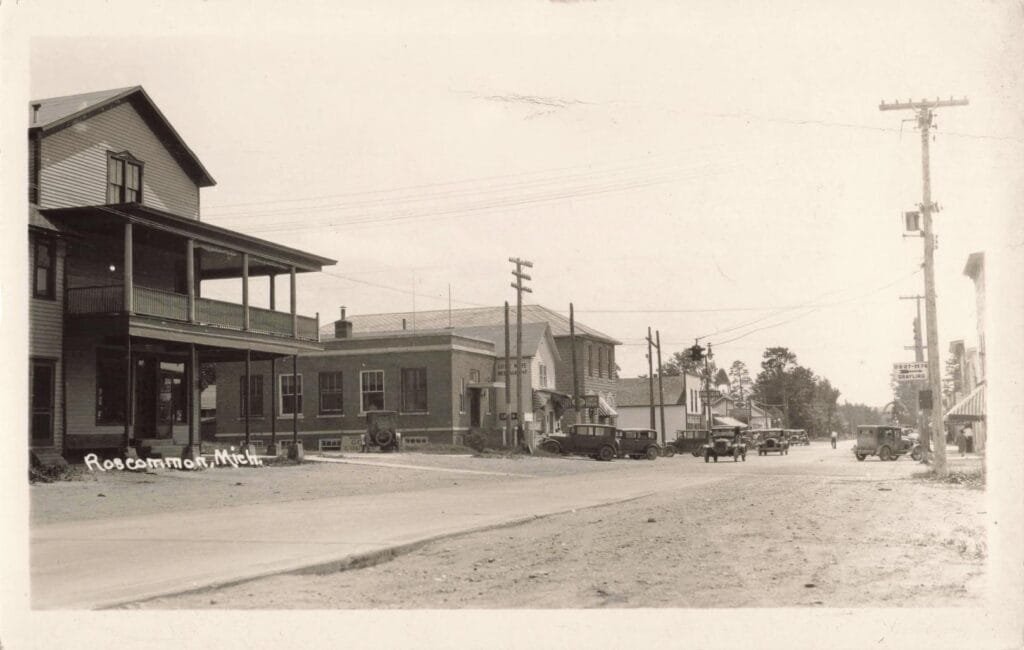
By the 1920s, Roscommon’s forests were largely cut over. The economy diversified. The county built roads, and the village laid sidewalks and streetlamps. A new brick high school opened in 1925. Roscommon’s first car-owning residents are now parked along Lake Street.
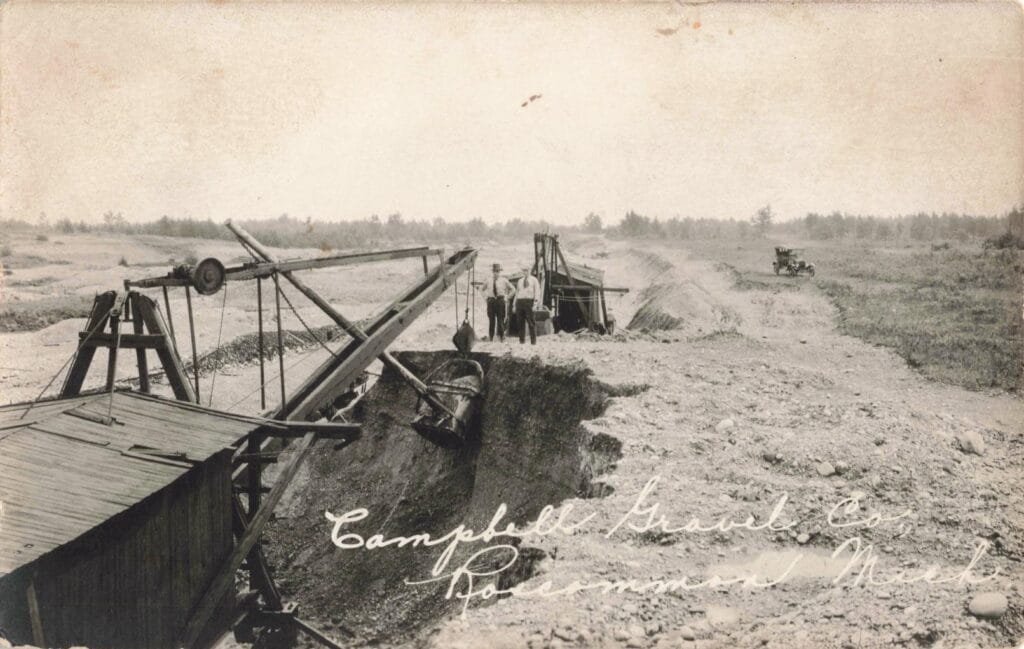
Some men found work in mining sand and gravel: a photo from the 1930s shows men operating steam shovels in the “Campbell Gravel Pit”.
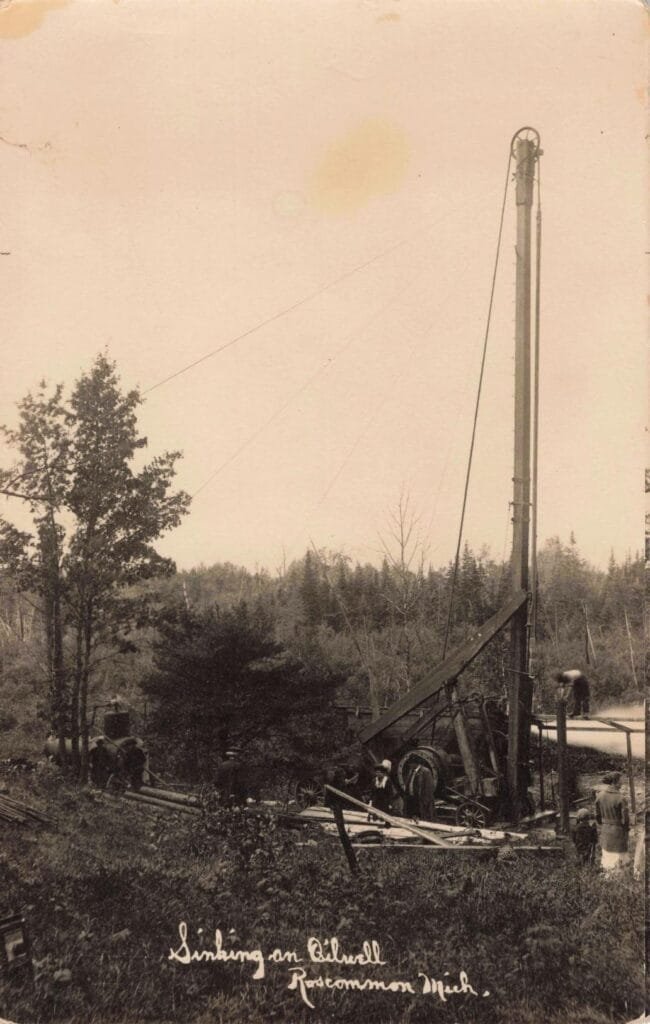
Others tried drilling for oil. A 1930s photo still shows an early oil derrick in the fields east of town. Oil never boomed like in Michigan’s Thumb, but it was enough to get local headlines.
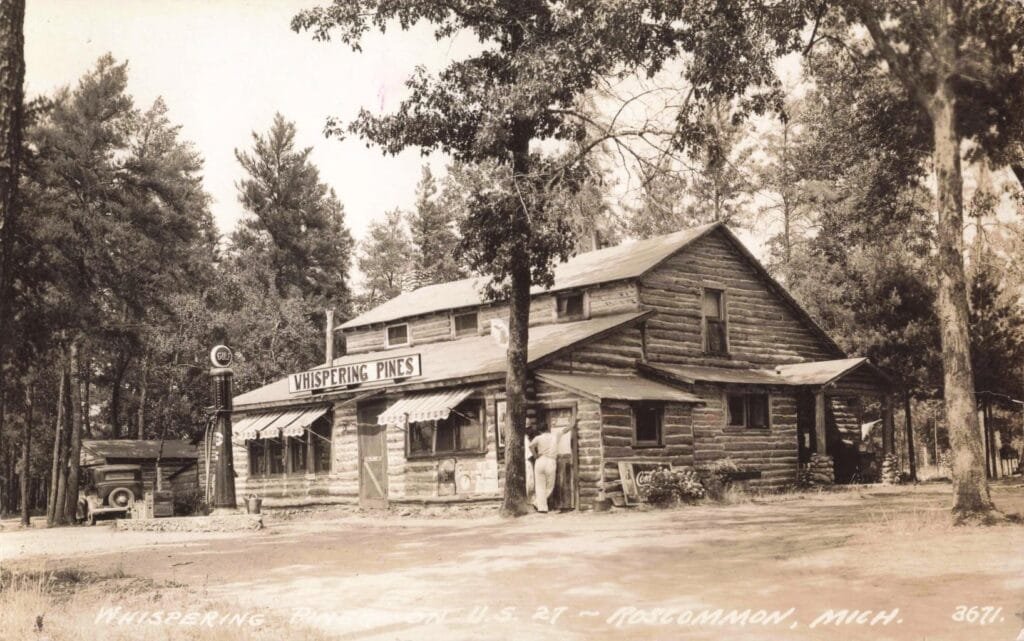
Tourism also arrived. The legends of the “Wilderness State” drew city folk north. In the mid-1930s, Roscommon built a lodge by Round Lake – Whispering Pines – and advertised in magazines. A hand-colored postcard (not shown here) from 1934 promotes dancing and fishing at the lodge.
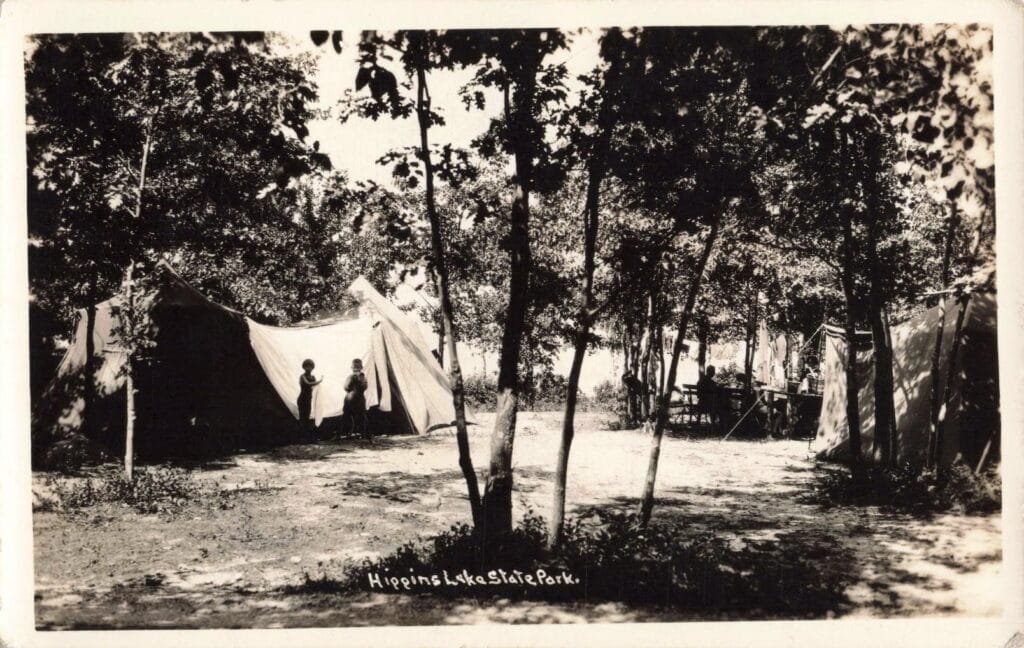
Nearby Higgins Lake, just three miles east, was turning into a summer resort. The State Parks Department opened South Higgins Lake State Park in 1927.
The Pioneer House
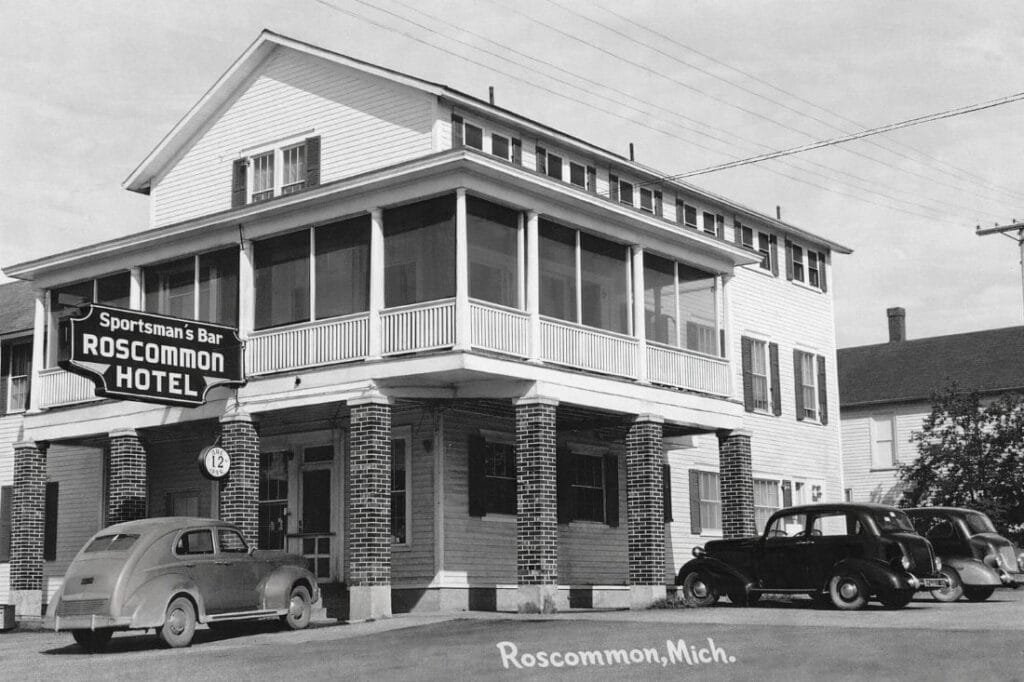
Travelers now came through Roscommon by car on M-18. The Pioneer House, in the early 1870s, was a boardinghouse for lumbermen. Later known as the Roscommon Hotel—later beloved as the Spruce Motor Lodge—once buzzed with the energy of a classic roadside era.
In its heyday, its distinctive wrap-around balconies offered a grand view of the town, while the iconic porcelain “Sportsman’s Bar” sign served as a neon-lit beacon for weary travelers and local hunters alike. Though it was recently torn down, the hotel’s spirit lingers in the memories of those who passed through its doors and through the vintage signage salvaged by those who refused to let its history fade completely.
Social Life and Legacy
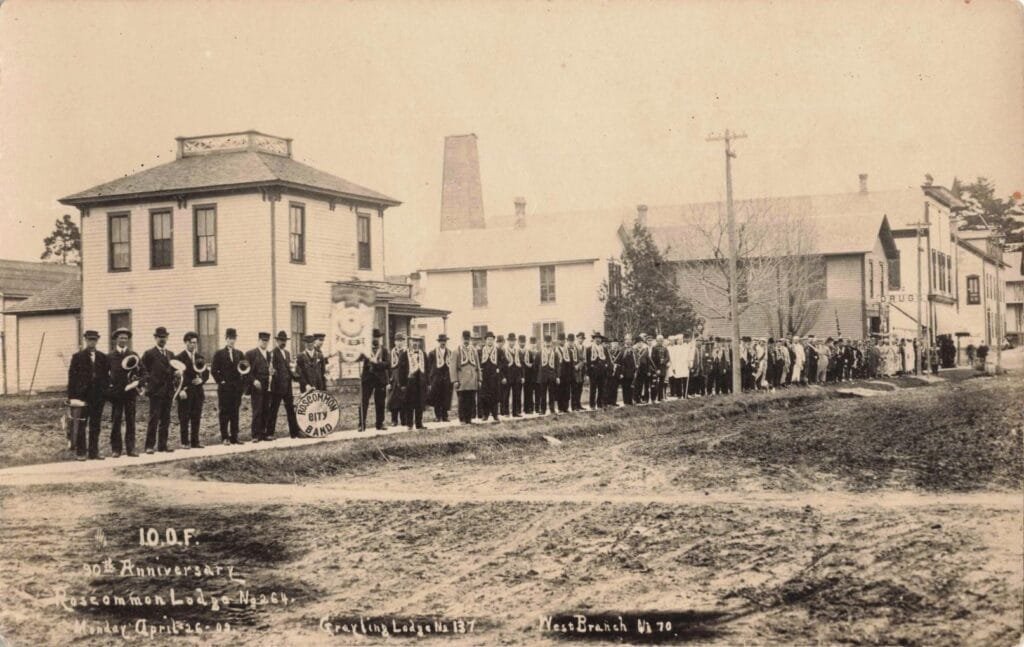
Small towns like Roscommon were built on community. The IOOF (Odd Fellows) Lodge hosted dances and Memorial Day parades. Churches, the school gym, and even the Roscommon School Barn (now a museum) anchored daily life. In 1940, Roscommon’s population was under 600, but the village had electricity and a phone. One elderly resident remembered hearing a Model T sputter by each morning, delivering newspapers.
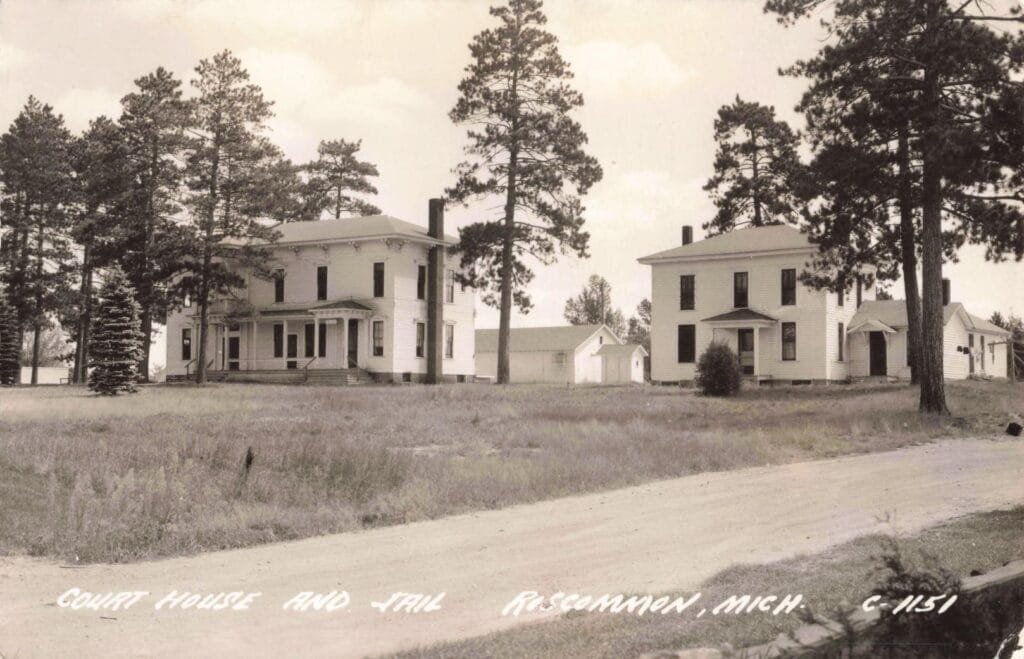
Roscommon’s history is woven into Michigan’s larger story. It captures the end of the lumber era, the return of people to nature, and the struggles of rural life. It’s little known today that this village once shipped more deer than some hunting camps. By preserving places like the Red Pines, Roscommon honors the landscape that first drew its people. The courthouse was rebuilt in the 21st century (after this photo), but the original county building still stands on Lake Street – a reminder of the town’s early civic roots.
Roscommon Today
Roscommon remains small – population around 980 in 2020 – but history lives here. The Pioneer House museum on Lake Street showcases artifacts from the lumber era. Every August the Firemen’s Festival brings vintage trucks and friends together, celebrating volunteer firefighters (a tradition since 1979). The Red Pines trail draws hikers seeking old forest. Tourists still pass through en route to the four lakes around town.
Works Cited
“History – Roscommon, MI.” HometownRosco, Weebly, hometownrosco.weebly.com/hometownrosco/history. .
“Roscommon, Michigan.” Wikipedia, The Free Encyclopedia, Wikimedia Foundation, 27 May 2024, en.wikipedia.org/wiki/Roscommon,_Michigan. .
“Roscommon, MI.” MichiganRailroads.com, michiganrailroads.com/stations-locations/136-roscommon-county-72/1806-roscommon-mi. Accessed 20 Feb. 2025. .
“Roscommon Red Pines.” Michigan.gov – Department of Natural Resources, State of Michigan, 2019, michigan.gov/dnr/places/natural-areas/roscommon-red-pines. .
“The History of Higgins Lake: A Look Back in Time.” Winter-Chard, 6 Jan. 2025, winterchard.com/the-history-of-higgins-lake-a-look-back-in-time/. .