 by
by The history of Crystal Falls Michigan from 1900 to 1949 is a true tale from a rough iron mining outpost to a thriving small city and county seat. In this period, Crystal Falls evolved through mining booms and busts, the arrival of railroads, growth of commerce, and the forging of a tight-knit community.
This article explores how the town changed across the early to mid-20th century, recalling the dramatic events and everyday moments that shaped the history of Crystal Falls Michigan. From the roar of the falls and the clang of mine hoists, to the chug of locomotives and the laughter of children in a new school, each decade brought new challenges and triumphs. Let’s step back in time and see what life was like in Crystal Falls during these pivotal years.
A Boomtown Built on Iron and Water (1900–1910)
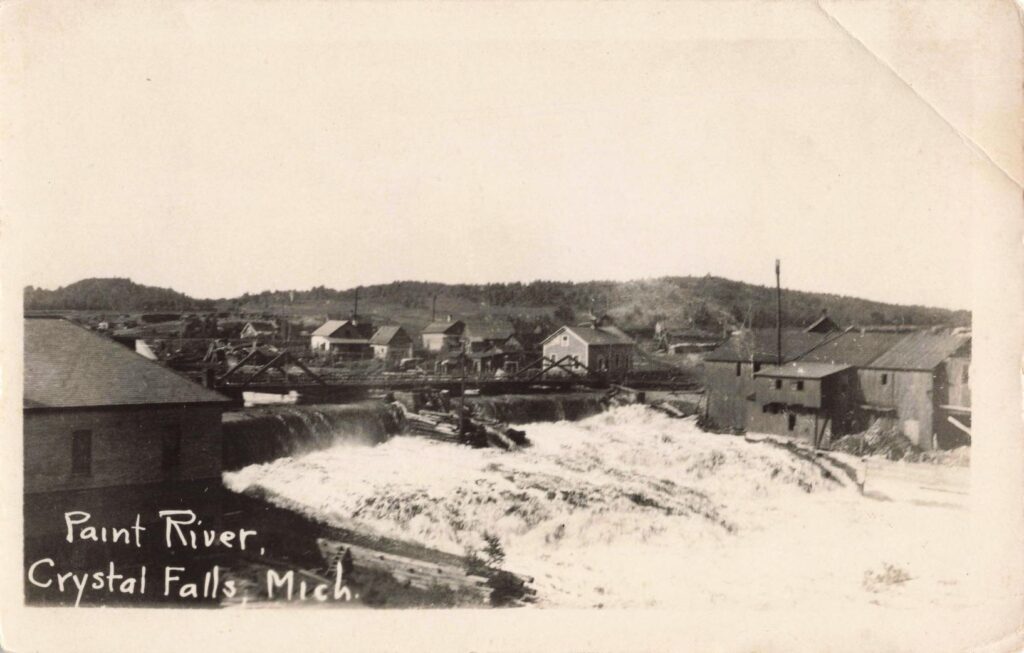
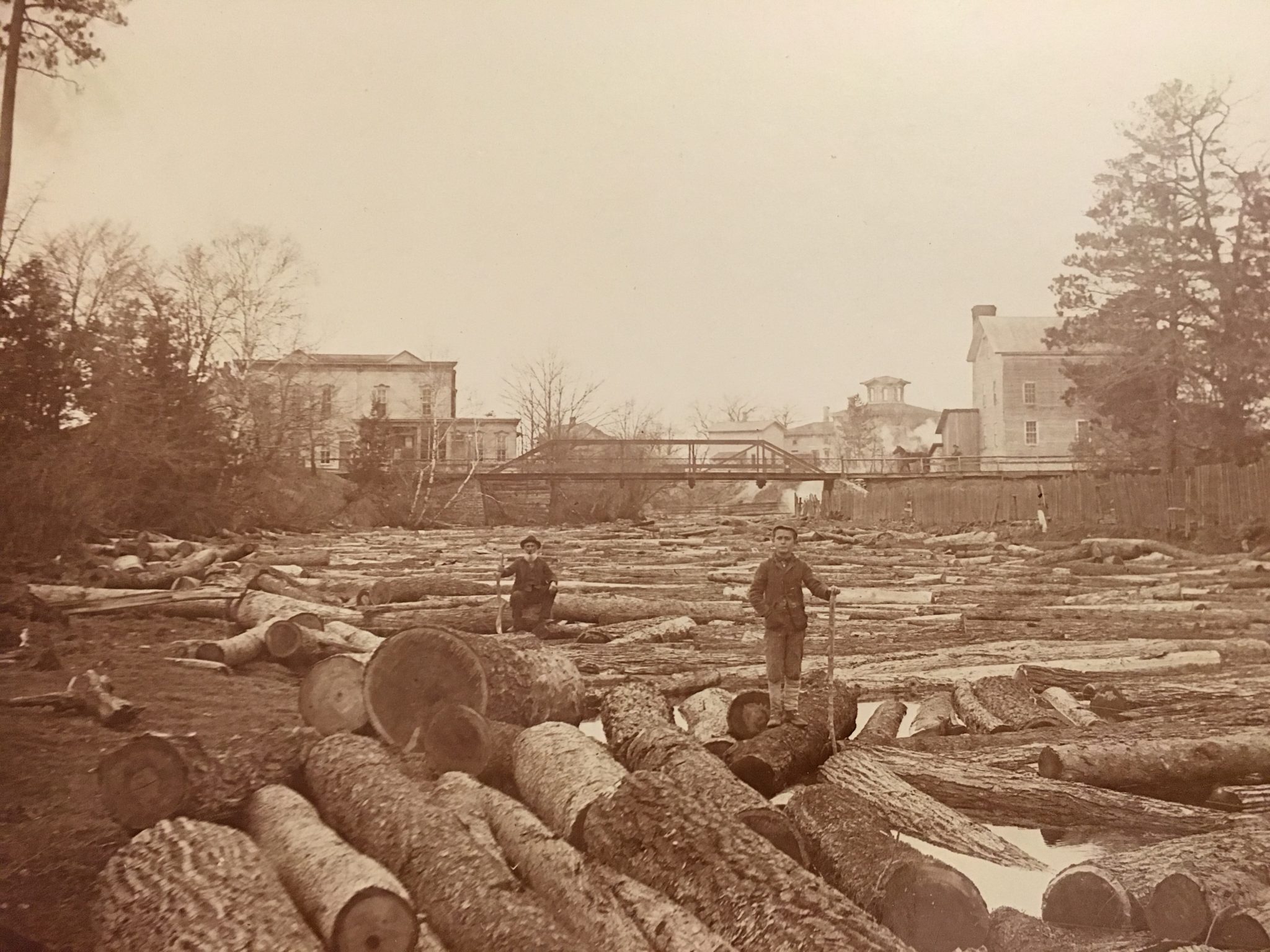
Crystal Falls was founded in the 1880s when rich iron ore deposits were discovered in this rugged corner of Michigan’s Upper Peninsula. By 1900, it was a boomtown fueled by iron and logging. The city’s own hydroelectric power plant, built in the 1890s, provided electric light to streets and homes – a rarity in that era. Indeed, Crystal Falls installed electric power in 1891, long before many places, thanks to the municipal dam and powerhouse on the Paint River. This early investment in infrastructure kept local electricity rates low and lit up the town’s future.
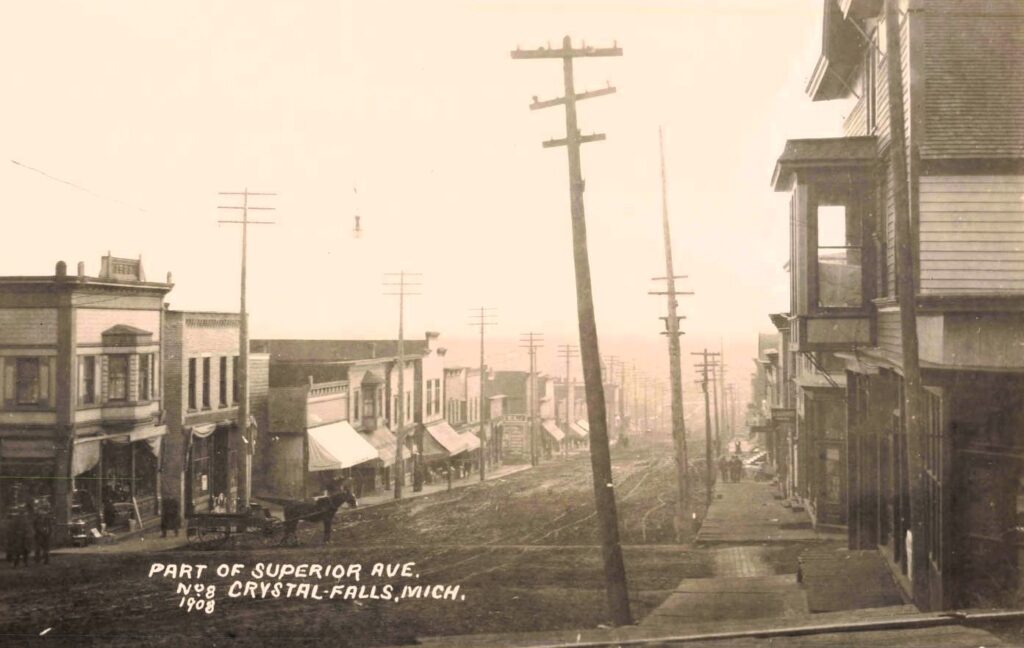
The turn-of-the-century downtown was lively and chaotic. Saloons, general stores, and boarding houses catered to miners and lumberjacks.
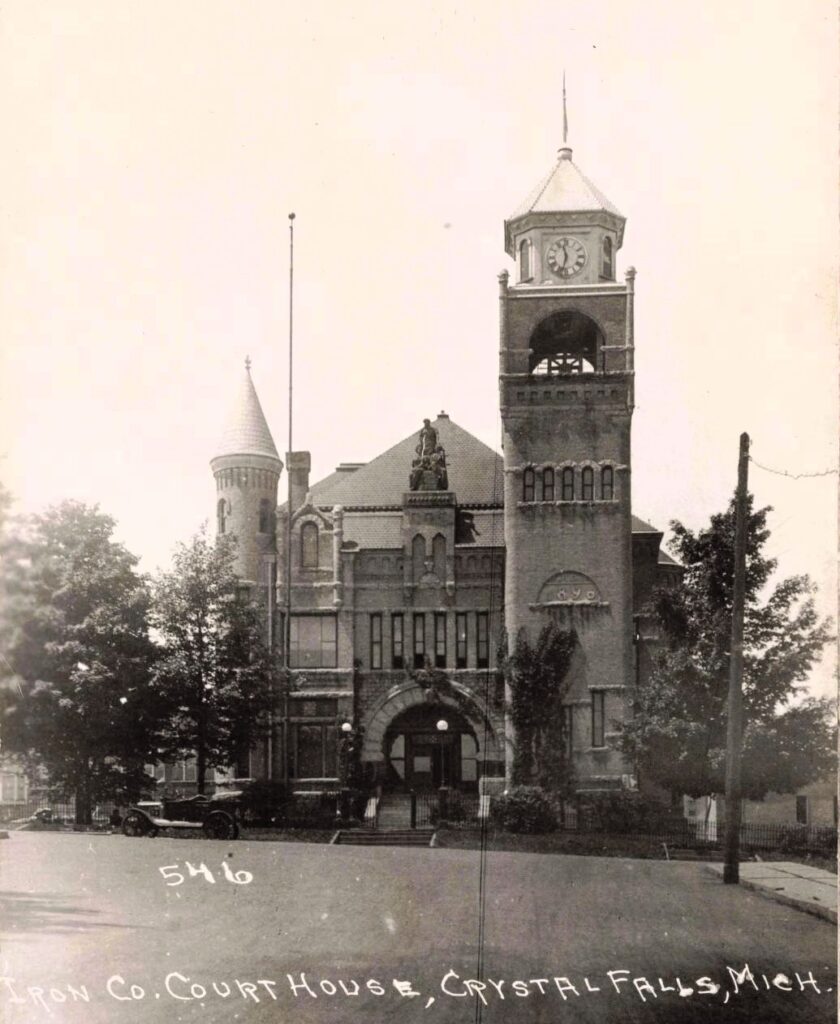
The Iron County Courthouse, an imposing castle-like building completed in 1890, anchored the west end of Superior Avenue. Locals bragged it was “the finest building northwest of Milwaukee or Detroit” when it opened. This courthouse, with its red brick walls and tall clock tower, symbolized stability and civic pride in a raw frontier town.
In 1900, Crystal Falls was incorporated as a city, and by 1910 its population had grown to 3,775, the highest in its history. Many residents were immigrants drawn by mining jobs – notably large groups of Finnish and Swedish families who formed a cooperative mercantile association in 1908. These newcomers brought Old World traditions but worked together to build a new American community. The history of Crystal Falls Michigan during this boomtown era is one of rapid growth and cultural melting pot on the Iron Range.
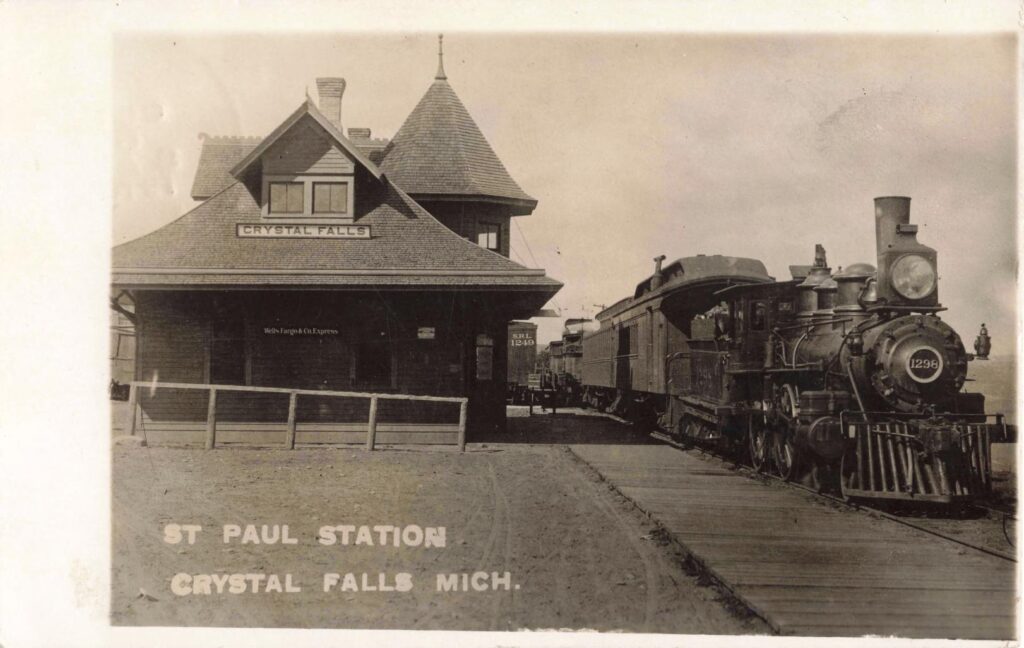
In the early 1900s, railroads were the lifeline of Crystal Falls. The Chicago & North-Western Railway had reached the area in 1882, enabling the first iron ore shipments.
In 1900, the Milwaukee Road (Chicago, Milwaukee & St. Paul Railway) extended a line to Crystal Falls, ending the C&NW monopoly on ore transport. The Milwaukee Road built a downtown depot and spurs to nearby mines, immediately carrying iron ore from Crystal Falls to the docks at Escanaba on Lake Michigan. Having two railroads sparked competition that benefited the miners – rail fees stayed low and more ore could be shipped out efficiently. Passenger service also improved. By 1908–1910, one could board a comfortable train in Crystal Falls and reach Chicago or Milwaukee in a day.
The St. Paul depot was even beautified with brick walkways and a landscaped embankment, described as “a beauty spot” of the city. This railway boom knitted Crystal Falls into the national economy and brought modern conveniences to town, further shaping the early history of Crystal Falls Michigan as an important mining center.
Hard Work, Community, and Challenges in the Mines
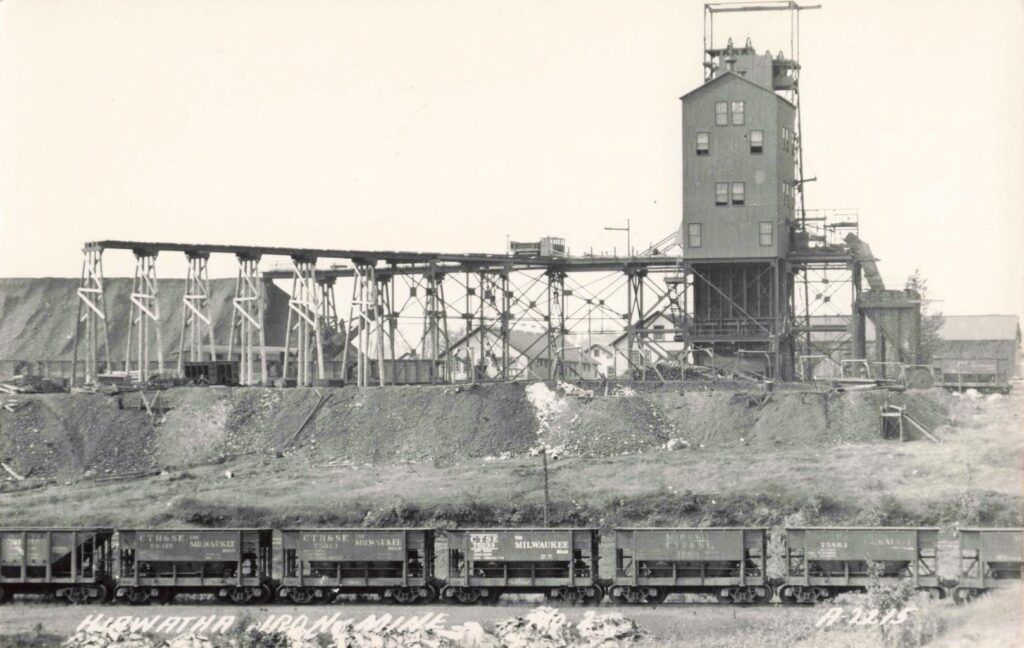
The daily life of a Crystal Falls miner in the 1900–1920 period was tough and often dangerous. Miners typically labored 10 hours a day underground, swinging pickaxes and shoveling heavy ore for about $2.00 to $2.50 a day. Work shifts ran around the clock, with crews alternating days and nights each week.
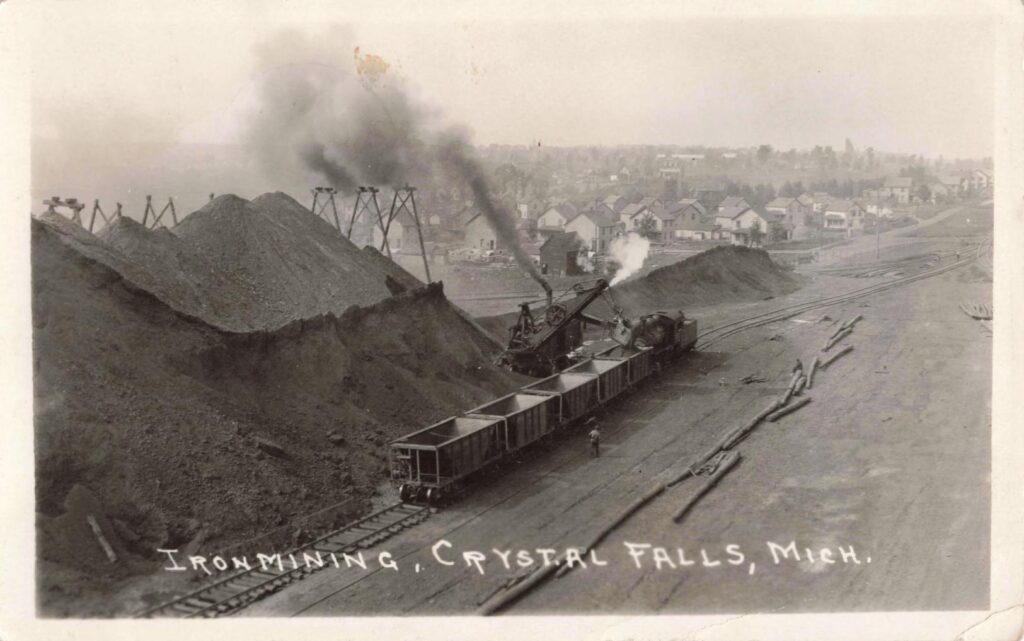
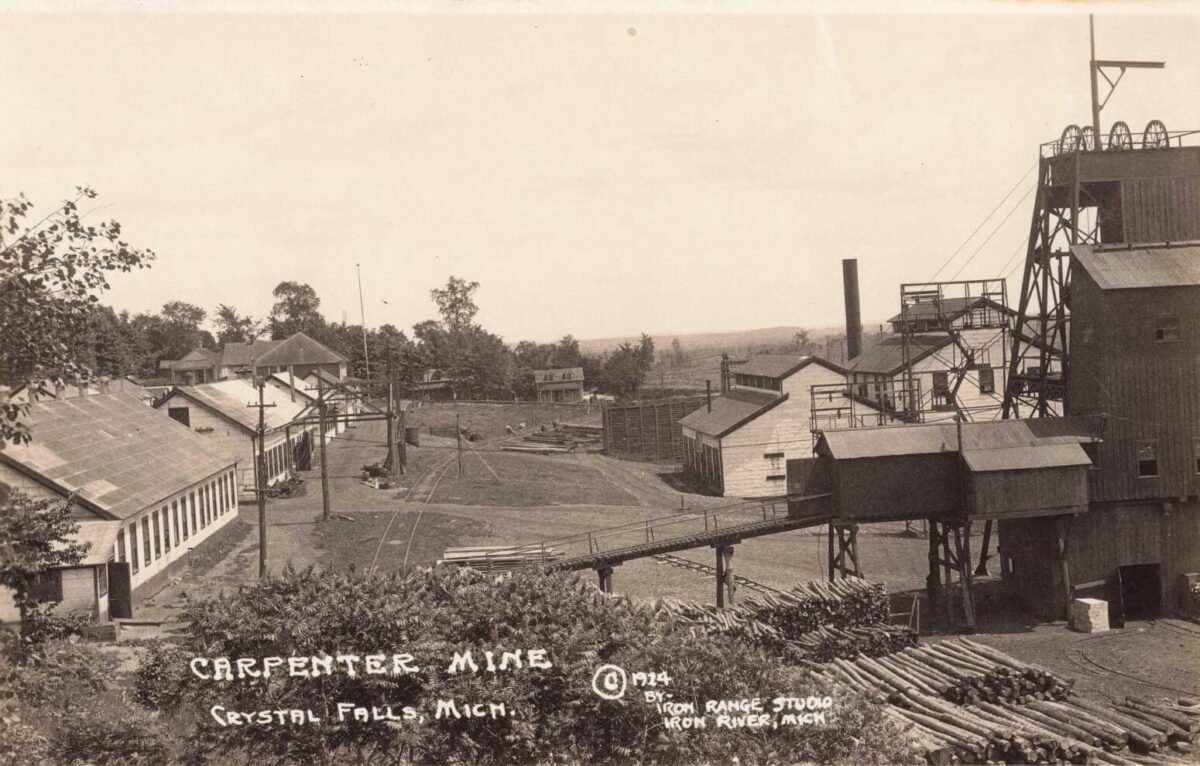
The city’s mines – names like Great Western, Bristol, Dunn, Tobin, and many others – produced millions of tons of iron ore to feed America’s growing industries. However, safety standards were minimal by today’s measures. Accidents were frequent: cave-ins, falling rock, and dynamite explosions took lives every year. When a miner was killed on the job, mining companies covered the funeral and maybe a month’s wages to the family – a small consolation for the widows and children left behind.
Miners themselves formed a brotherhood forged by danger. If a fatal accident occurred, crews would halt work and stand by until their fallen comrade was recovered and laid to rest. This solidarity, born in the dark shafts below ground, strengthened the community above ground. Churches, ethnic halls, and volunteer groups in Crystal Falls all grew out of the mutual reliance miners and their families had on each other.
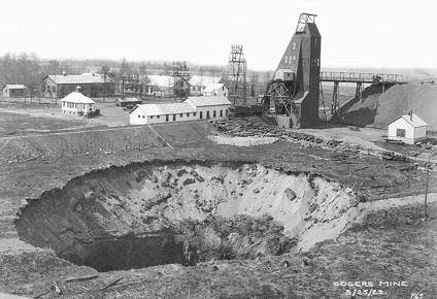
Some mining disasters scarred the town’s memory.
In February 1918, the nearby Porter Mine collapsed without warning, killing 16 miners in one tragic moment. It was one of the deadliest incidents in Iron County’s history. Churches overflowed during the funerals, and the entire community mourned. A few years later, the Odgers Mine collapse of 1923 fortunately claimed no lives, but it permanently shut down that mine.
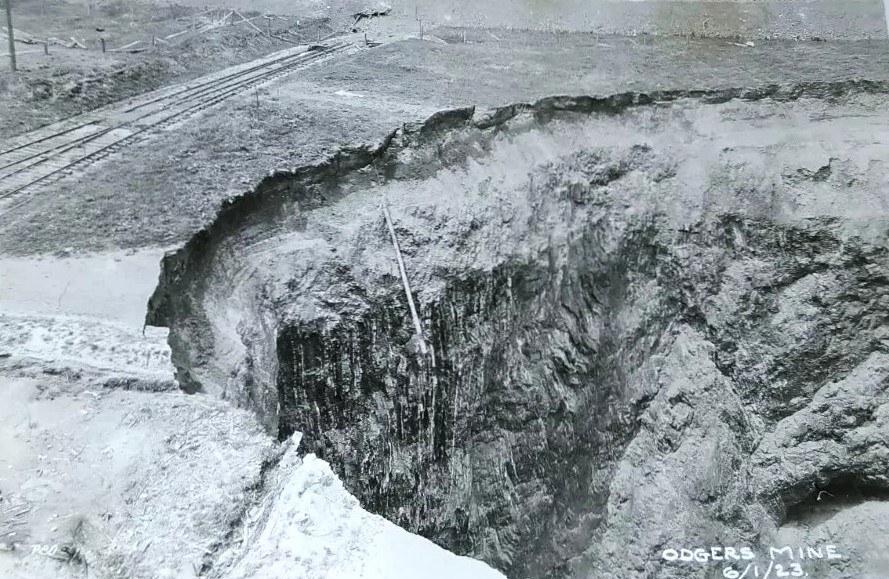
Photographs show the earth sunken where tunnels gave way, as if the land had swallowed a piece of Crystal Falls’ livelihood. Each such event instilled both fear and resilience in residents (though they would not use the word – they simply kept going). Miners returned to work, families carried on, and the town persisted. These challenges underscored that Crystal Falls was built on determination as much as on iron. The people supported each other through tragedies, reinforcing bonds that made the community strong.
Progress and Change in the 1920s
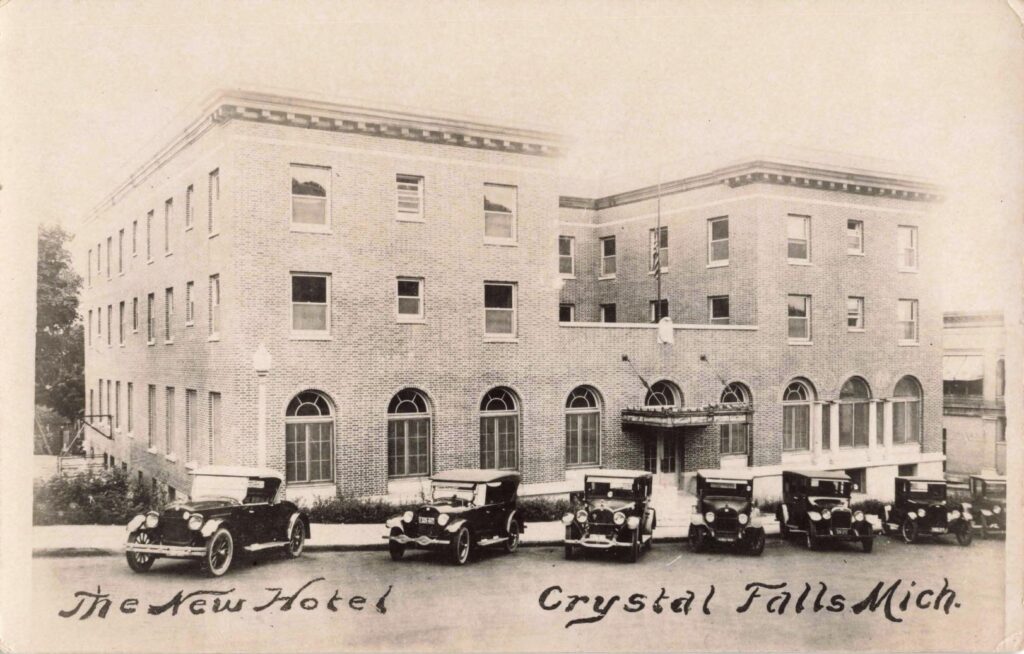
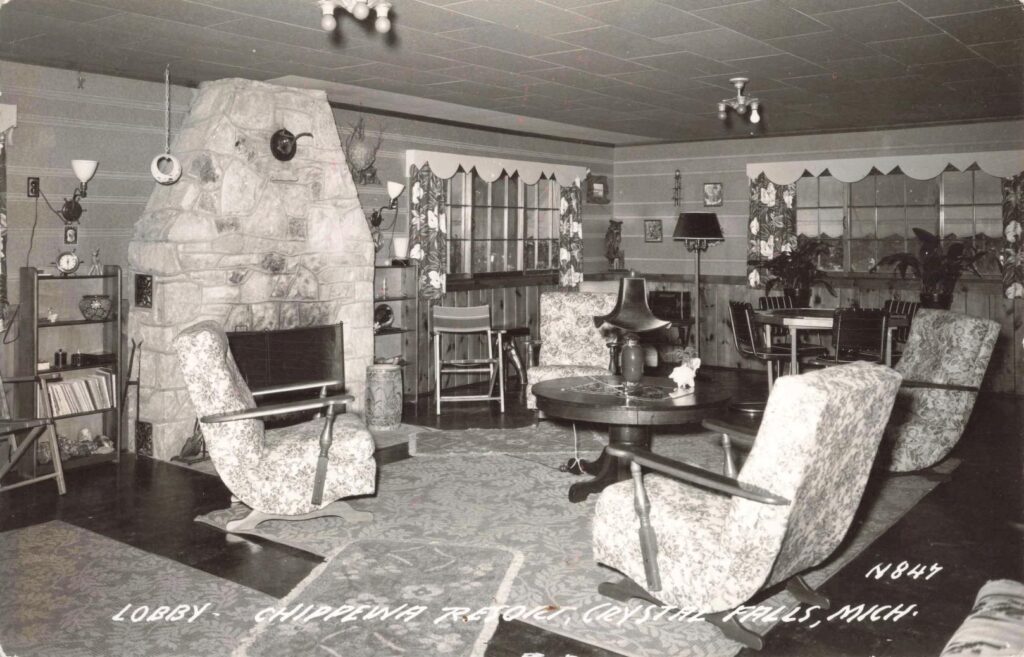
The post-World War I 1920s were a time of optimism and civic improvement in Crystal Falls. After a destructive fire in 1918 burned down the old Lockwood Hotel (the city’s first hotel from 1882), local leaders – including the American Legion – formed a company to build a new hotel on the same prime corner downtown. In 1922 the elegant three-story Crystal Falls Hotel (often just called “The New Hotel”) opened its doors. It boasted 50 rooms with steam heat, a fine dining room, and a lobby that became a social hub for the city.
The New Hotel signaled that Crystal Falls saw itself as a modern city, ready to welcome tourists and traveling salesmen as well as miners. Automobiles were becoming common; by the late 1920s, local roads were improved to accommodate cars, and gas stations and garages appeared along main routes.
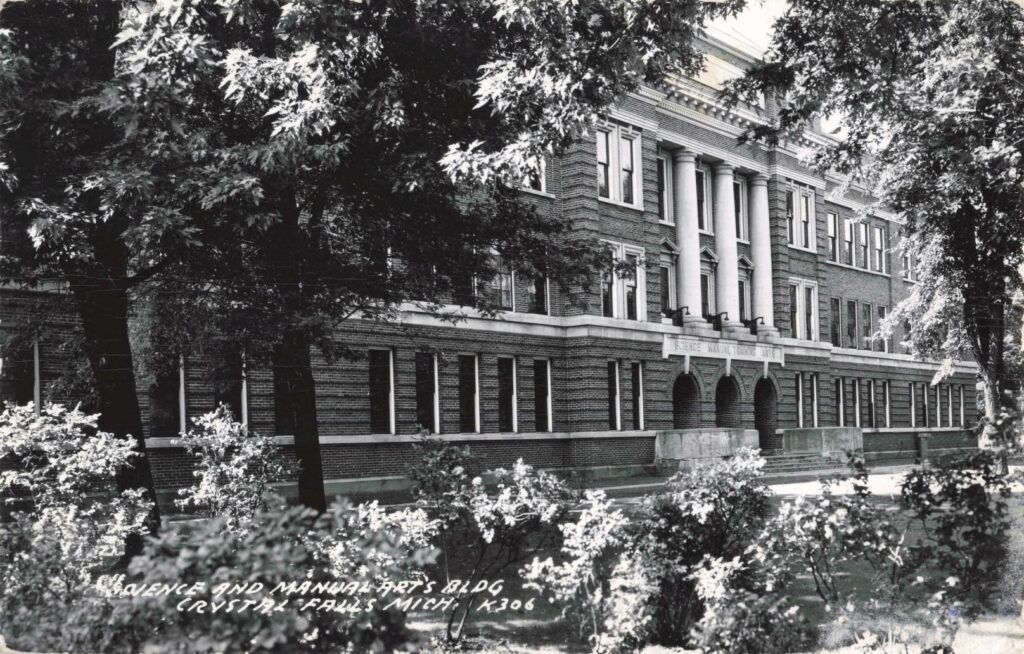
At the same time, the community invested in education and culture. Crystal Falls High School, which had opened in 1906, expanded with a dedicated Science and Manual Arts Building in the 1920s. This facility provided students with laboratories for chemistry and physics, as well as workshops for carpentry and mechanics. The sturdy brick structure, trimmed with classical columns, reflected a pride in giving the next generation a broad, practical education.
The town also maintained a public library and hosted frequent civic events – from Fourth of July picnics at Runkle Lake Park to ethnic festivals where Finnish saunas and Italian pasta were celebrated side by side. The economy in the 1920s remained heavily tied to iron mining, but there was diversification in small businesses, retail shops, and service industries as the city’s role as a county seat grew.
However, not all was carefree. The national Prohibition era (1920–1933) touched Crystal Falls in surprising ways. Iron County gained brief notoriety in 1920 for the so-called “Rum Rebellion.” Local authorities in Crystal Falls (the county seat) defied a federal Prohibition agent who tried to crack down on a family’s wine making operation. The incident escalated with the Prohibition agent, Major A. V. Dalrymple, declaring Iron County in open rebellion against the alcohol ban, and the Iron County sheriff in Crystal Falls threatening to arrest Dalrymple if he made warrantless raids.
Ultimately, cooler heads prevailed and no arrests were made, but the Rum Rebellion became part of local lore – a story of a small community standing up for itself during a tumultuous time in America. This episode is an intriguing footnote in the history of Crystal Falls Michigan, illustrating the independent streak of its residents.
By the end of the 1920s, Crystal Falls was riding high on a wave of relative prosperity. Iron production had been steady (though not at the frenzied levels of 20 years prior), and the city’s infrastructure and institutions were firmly established. No one could foresee the economic storm that was about to break.
The Great Depression and World War II (1930s–1940s)
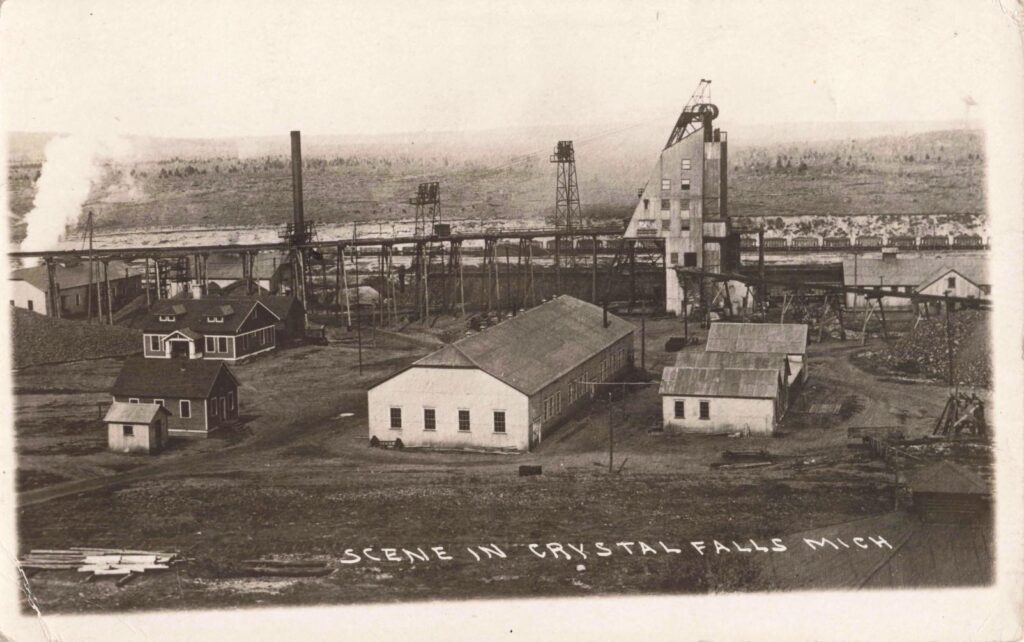
The Great Depression hit Crystal Falls in the early 1930s with a force that rivaled a mine cave-in. As national iron and steel demand collapsed, most mines in Crystal Falls shut down by the mid-1930s. Hundreds of miners were laid off. The steady flow of ore cars on the railroads slowed to a crawl. Businesses on Superior Avenue struggled or closed; families tightened their belts or left town seeking work. Crystal Falls’ population declined as well, dropping from its 1910 peak. Despite the hardships, the city sought ways to get by.
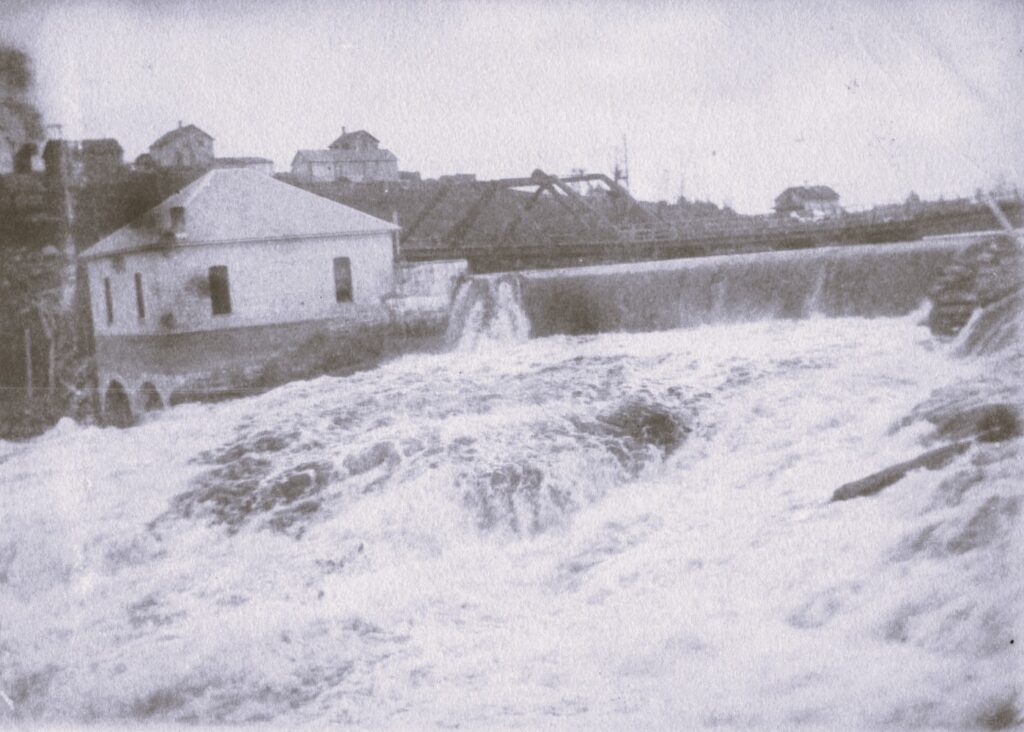
The city government initiated public works where possible – for instance, in 1931 a new dam was constructed to enlarge the water reservoir for the hydro plant, a project that provided jobs to local laborers and ensured even cheaper electricity. The Iron County Courthouse, needing upkeep, saw repairs and maintenance that kept some carpenters and masons employed. The community also pulled together with charity drives; neighbors helped feed neighbors through church pantries and local farms.
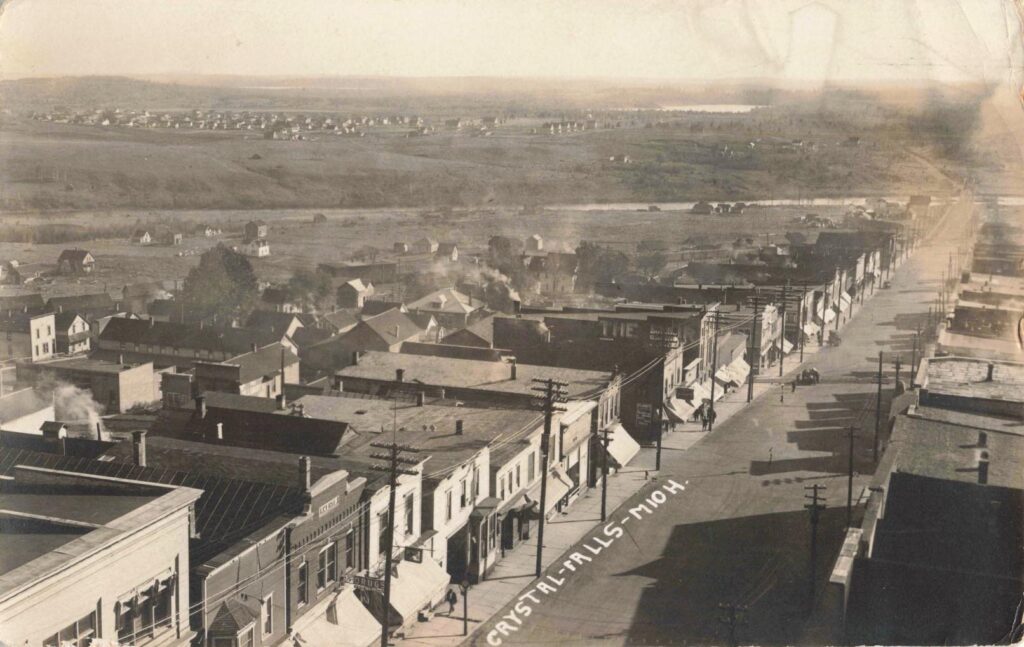
Though the Depression was a dark time, it reinforced the communal spirit of Crystal Falls. People shared what they had, and the town’s traditions – Friday night high school football games, holiday parades, and summer fishing on local lakes – continued as sources of free entertainment and normalcy.
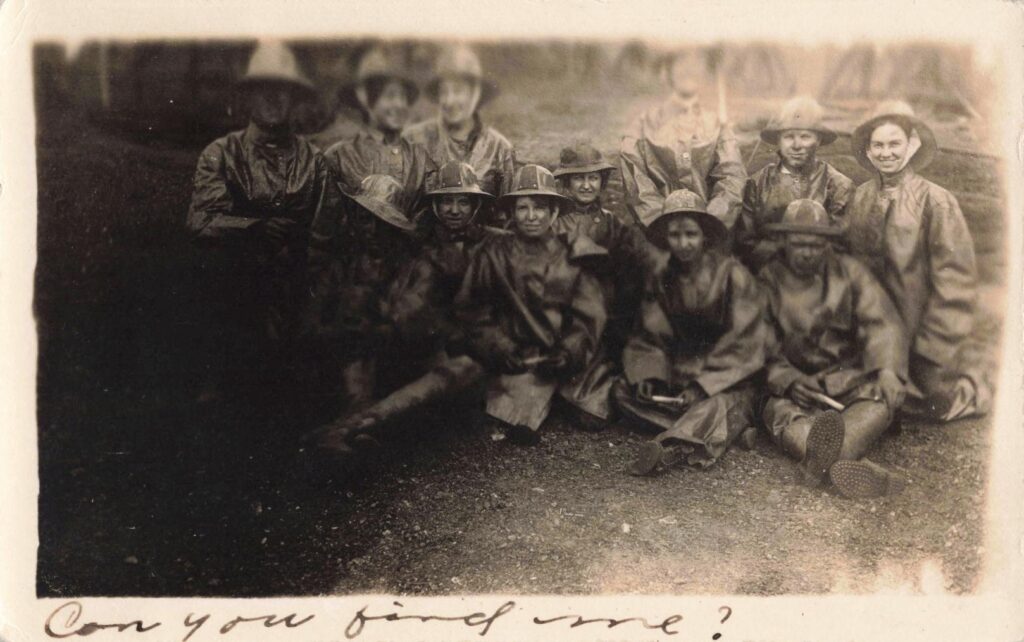
A bright spot in this era was the creation of the Iron County Historical Museum (then a small collection of artifacts at the library), as locals became interested in preserving the stories of the pioneers and miners. Unemployed miners sometimes participated in Oral History projects, recounting the early days, which is why we know so much about the history of Crystal Falls Michigan today.
In 1933, Prohibition ended, bringing legal taverns back to town – a small moral boost if not an economic one. Slowly, as the 1930s progressed, there were hints of recovery. The New Deal programs put some men to work building trails in the nearby forests and improving roads. But it was the outbreak of World War II in 1941 that truly jolted Crystal Falls out of its slump.
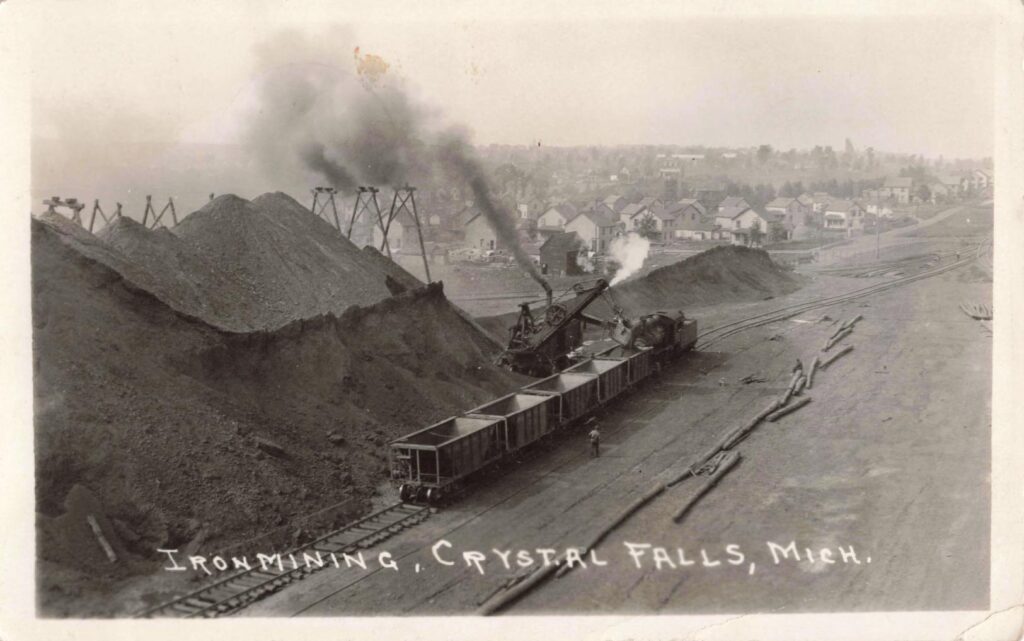
The war created a massive demand for iron and steel. Idle mines reopened. Young men who didn’t go off to fight often found work again in mining, logging, or at the town’s small manufacturing shops that repaired mining equipment. In Crystal Falls, the Bristol and Youngstown mines, which had closed years earlier, were refurbished and combined into one operation in 1949, shipping over 100,000 tons of ore in 1950.
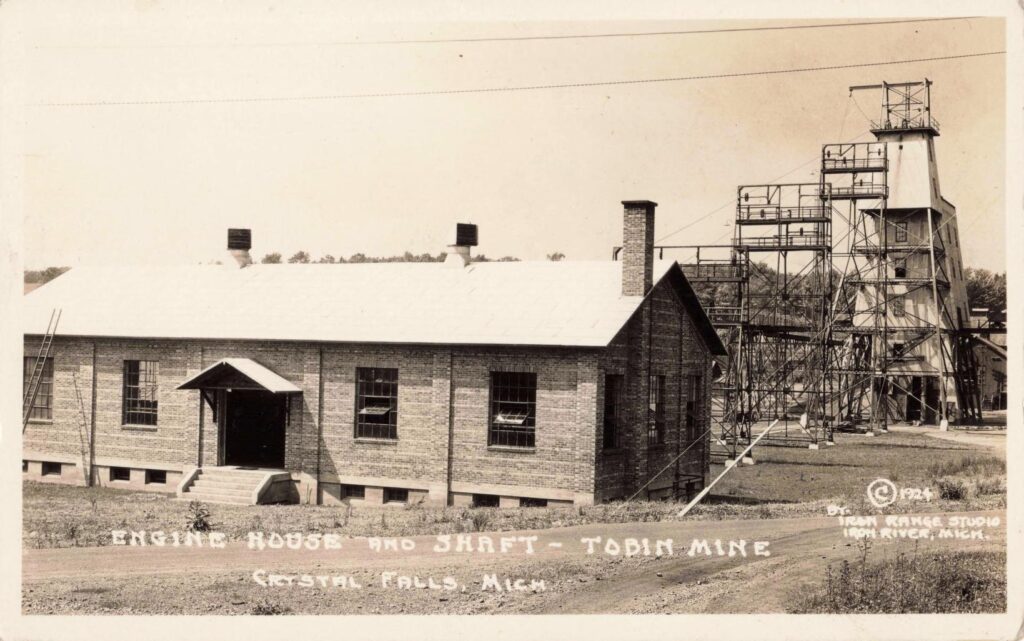
The Hiawatha Mine (part of the Iron River district a few miles west) was modernized by the M. A. Hanna Company in the early 1940s and reached new depths, with 18 levels down to 2,100 feet by 1943. Miners worked around the clock again, and the rail yards echoed with the clang of ore cars and locomotive whistles. Wartime also brought federal investment: Crystal Falls saw improvements to its rail infrastructure and highways to ensure ore and troops could move efficiently. Rationing and war bond drives became part of daily life, but overall the local economy boomed after years of stagnation.
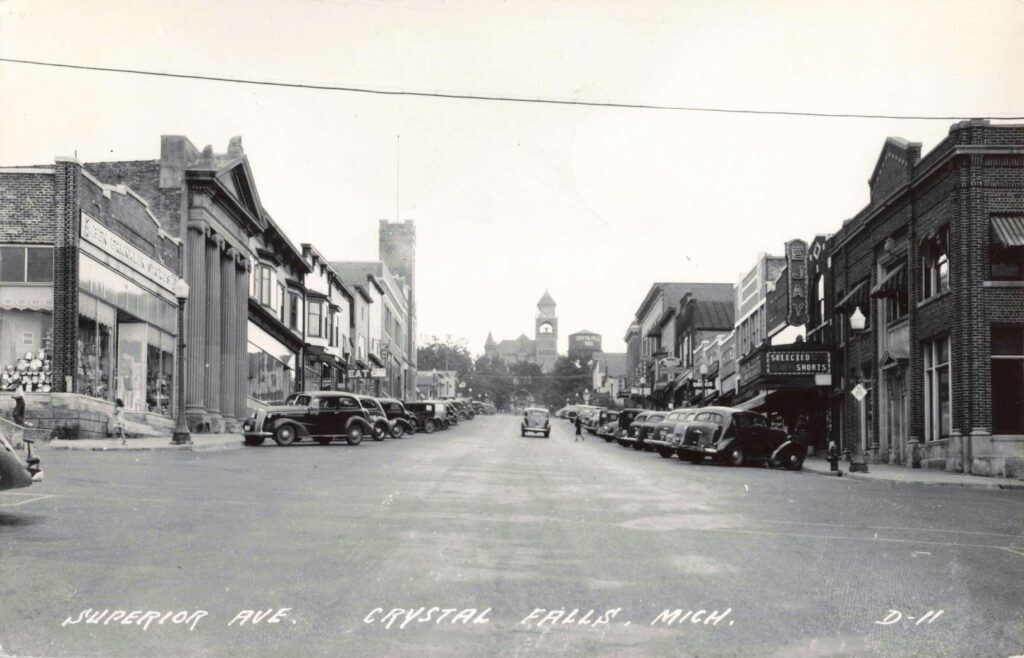
The post-war 1940s brought significant changes to everyday life in Crystal Falls. The dusty, unpaved streets of earlier decades were now smooth pavement. The hitching posts and horse troughs were long gone, replaced by neon signs and parking meters. Soldiers returning from WWII joined their families on Friday nights to watch movies at the Delf Theater or attend dances at the Veterans’ hall. New shops opened, like a Ben Franklin dime store and modern supermarkets, reflecting a shift from a pure mining economy to a more service-oriented town center.
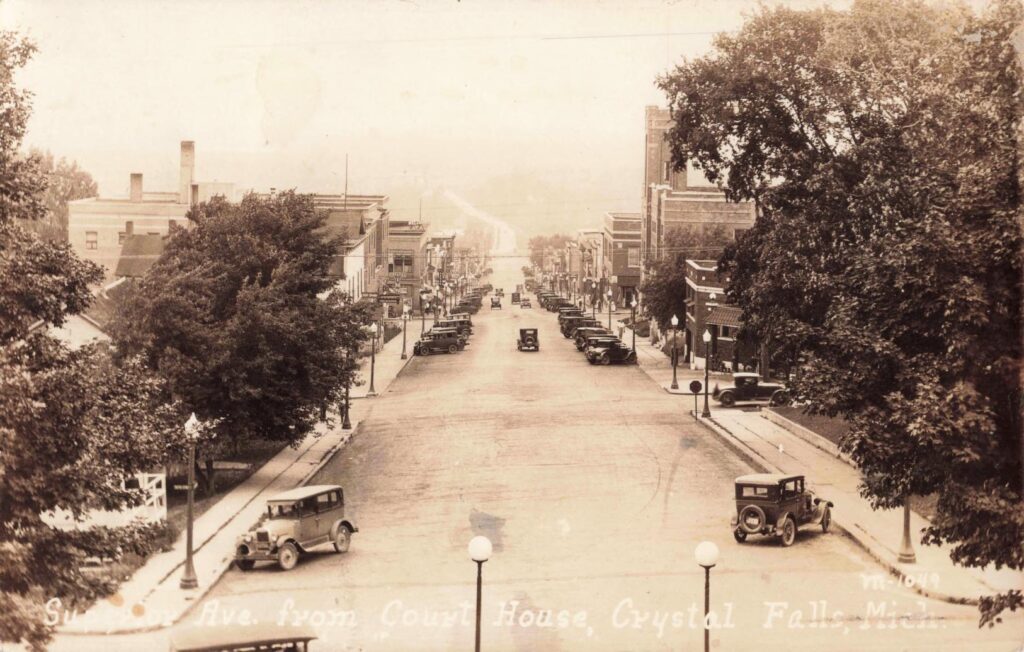
Yet, even as the community enjoyed peace and prosperity, the local mining industry was nearing its twilight. By 1949, the wartime mining resurgence was slowing. Rich iron ore was becoming harder to find, and cheaper ores from Minnesota’s Mesabi Range and foreign sources were entering the market. Crystal Falls prepared to transition once again – this time from a mining boomtown to a quieter county seat and service center for the region.
Legacy of the Early 20th Century
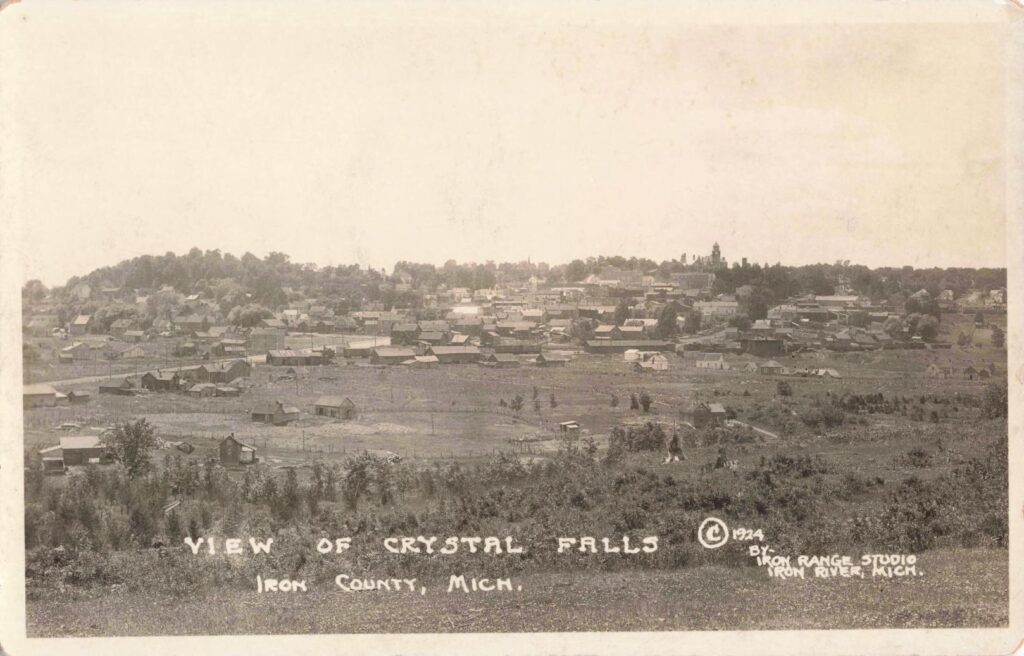
By 1949, fifty years of history had indelibly shaped Crystal Falls. The town entered the 20th century as a rough mining camp and left mid-century as an established community with enduring institutions. The history of Crystal Falls Michigan in these decades is defined by resilience, innovation, and community spirit. The landscape itself bears the marks of that history – towering headframes of old mines, the tranquil reservoir above the dam where a waterfall once crashed, and the stately courthouse and school buildings built with iron wealth and civic pride. Crystal Falls evolved through boom and bust but always managed to adapt.
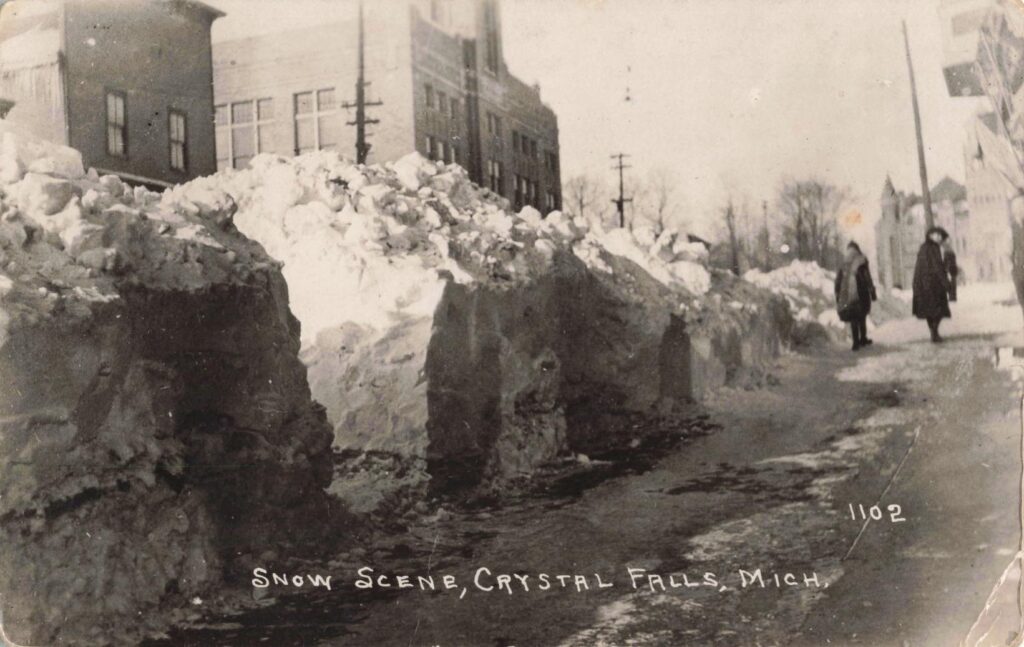
The people of Crystal Falls in 1900–1949 built more than mines and railroads; they built a hometown. They raised families, founded libraries and hospitals, and even stood up to outside forces when they had to (as in the colorful “Rum Rebellion” of 1920). Every generation added a new chapter: the pioneers of the 1900s, the strivers of the Roaring Twenties, the survivors of the Great Depression, and the heroes of World War II.
Each left lessons and stories that residents still cherish. Today, when one walks down Superior Avenue or hears the hum of the hydroelectric dam, the echoes of those early 20th-century days are all around. Crystal Falls’ identity – forged in iron, tested by hardship, and enriched by community – remains strong, a living legacy of its remarkable first half-century of growth and change.