 by
by If you stood on Main Street in Atlanta, Michigan, in 1900, you would have felt the town exhale.
The logging era that built Atlanta was fading. The great pine forests were mostly gone, the saws quieter, the camps closing. But the town didn’t vanish with them. Instead, the history of Atlanta Michigan settled into something steadier — a small county seat surrounded by farms, rivers, and second-growth woods, held together by familiarity and routine.
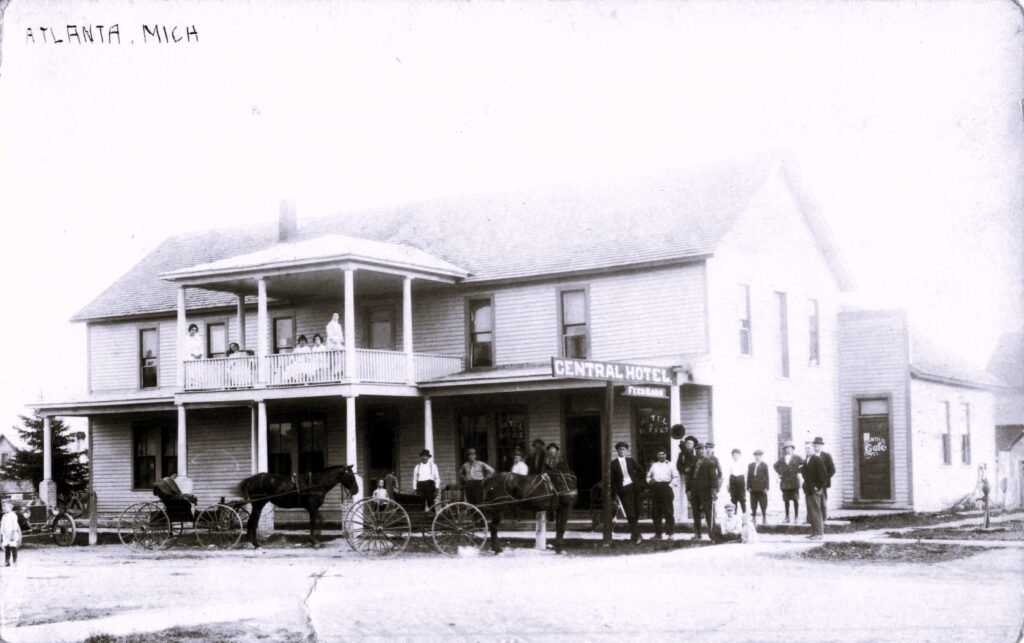
The Central Hotel anchored downtown. It was a two-story wooden inn with a wide porch where travelers tied their horses and locals lingered longer than they planned. Across the street, the hardware store doubled as the post office. You went there for nails, lamp oil, and your mail — and usually left knowing everyone else’s business.
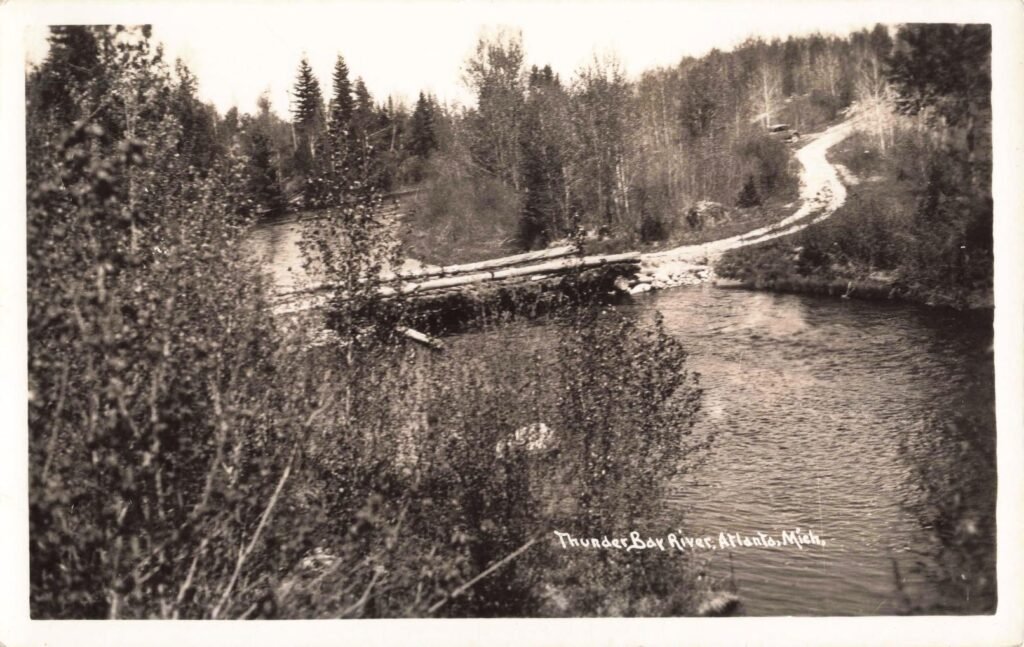
Behind town, the Thunder Bay River dam powered the mill and shaped daily life. Kids fished along its edge in summer. In winter, it froze solid enough for skating. Atlanta moved slowly, but it moved together.
Video – Brief History of Atlanta Michigan – From Lumber Camp to Buck Poles
When the Train Came to Town
The 1920s briefly changed everything.
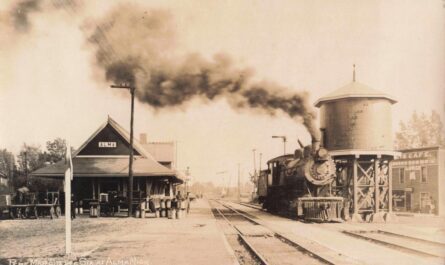
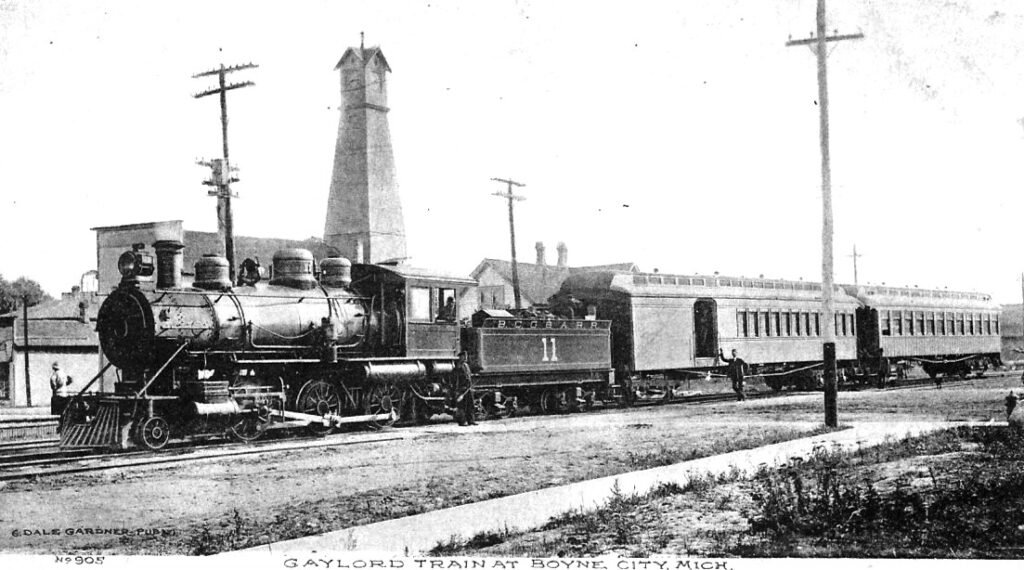
When the Boyne City, Gaylord & Alpena Railroad reached Atlanta, it felt like the outside world had finally arrived. The whistle echoed through the trees. People gathered just to watch the train come in. Freight cars brought supplies and hauled timber out. Passengers stepped onto the platform with suitcases and stories.
For a dozen years, Atlanta felt connected.
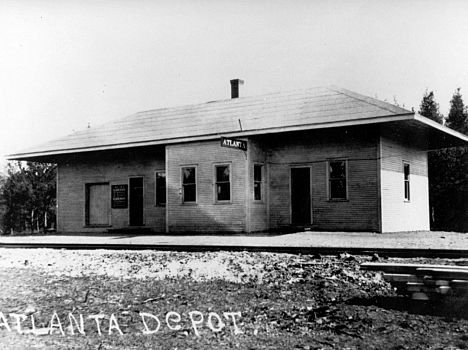
Then the timber ran out. By 1932, the railroad was gone as quietly as it arrived. The tracks emptied. The depot went still. Atlanta returned to the road and to itself.
The 1930s: Lean Years, Shared Space
The Depression pressed hard on northern Michigan. Jobs were scarce. Farms struggled. Many families leaned on hunting, fishing, and what they could grow.
But Atlanta didn’t fold inward.
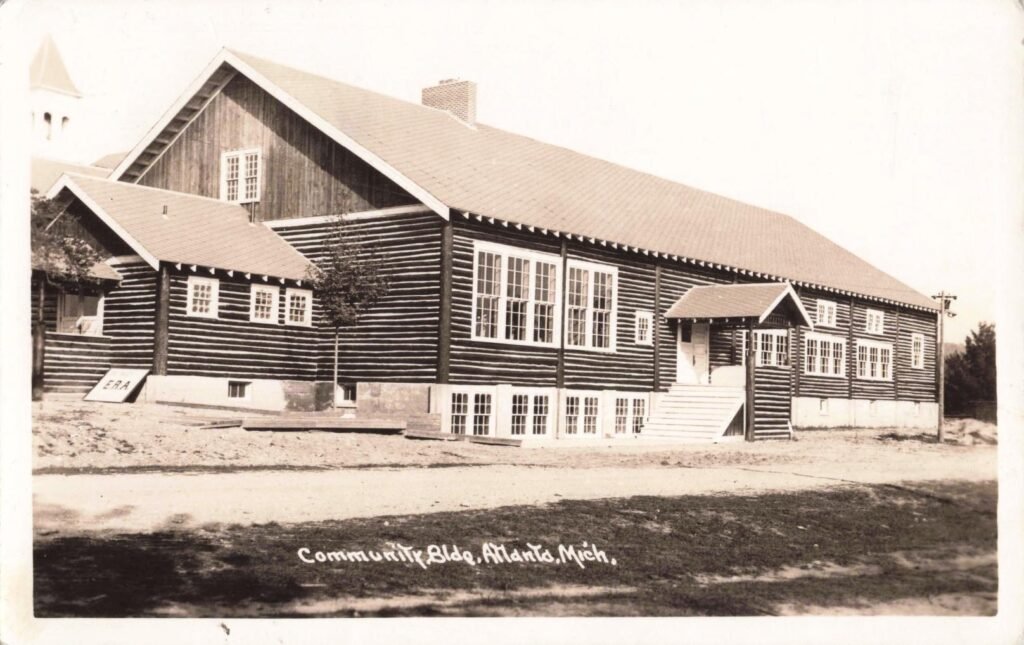
In the late 1930s, residents built a log Community Hall with federal relief help. It became the town’s living room.
That hall hosted:
- School plays and basketball games
- Wedding receptions and funeral lunches
- Holiday dinners and town meetings
It wasn’t fancy, but it mattered. In uncertain years, it gave the town a place to gather.
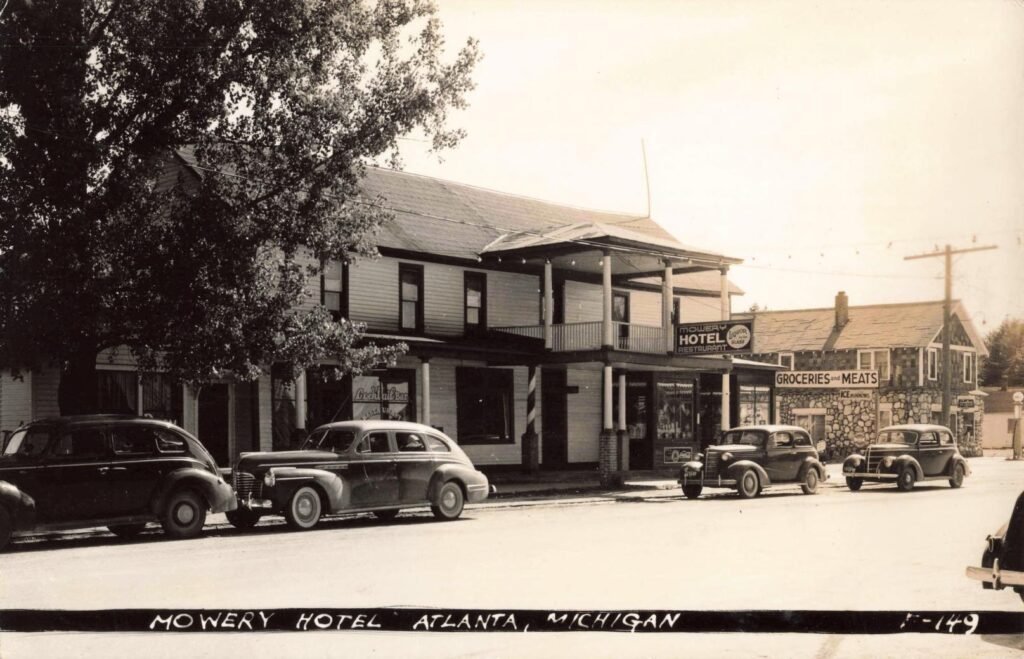
Downtown, the Mowery Hotel served motorists and hunters. Horses were gone now. Cars lined Main Street. Atlanta was changing again, slowly, on its own terms.
Fire, Loss, and Rebuilding of Atlanta Michigan
The hardest chapter came during World War II.
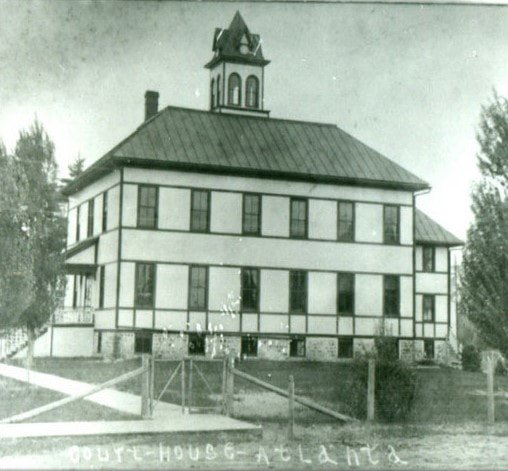
In January 1942, fire destroyed the Montmorency County Courthouse, wiping out decades of records. County offices moved into the Community Hall.
A year later, fire struck again.
The Community Hall burned to the ground.
In just two winters, Atlanta lost both its courthouse and its gathering place — along with nearly all remaining county documents. The loss was permanent. The shock was immediate.
And yet, the town moved forward.
By late 1943, construction began on a new brick courthouse, built to last. It still stands today, quiet proof that Atlanta chose rebuilding over retreat.
After the War: Tradition Returns to Atlanta Michigan
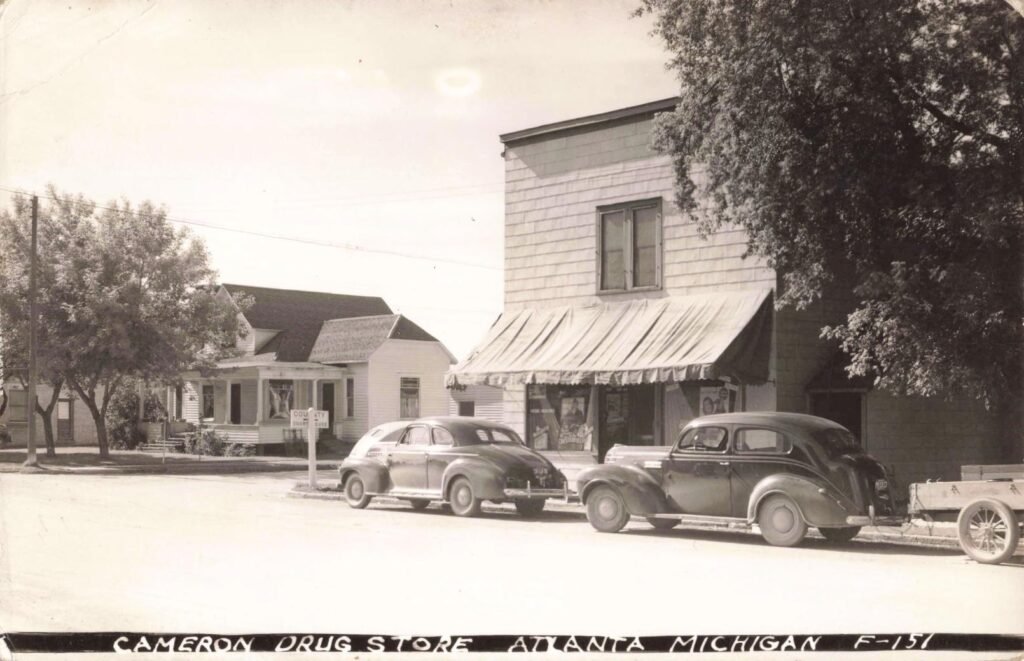
By the late 1940s, Atlanta felt alive again.
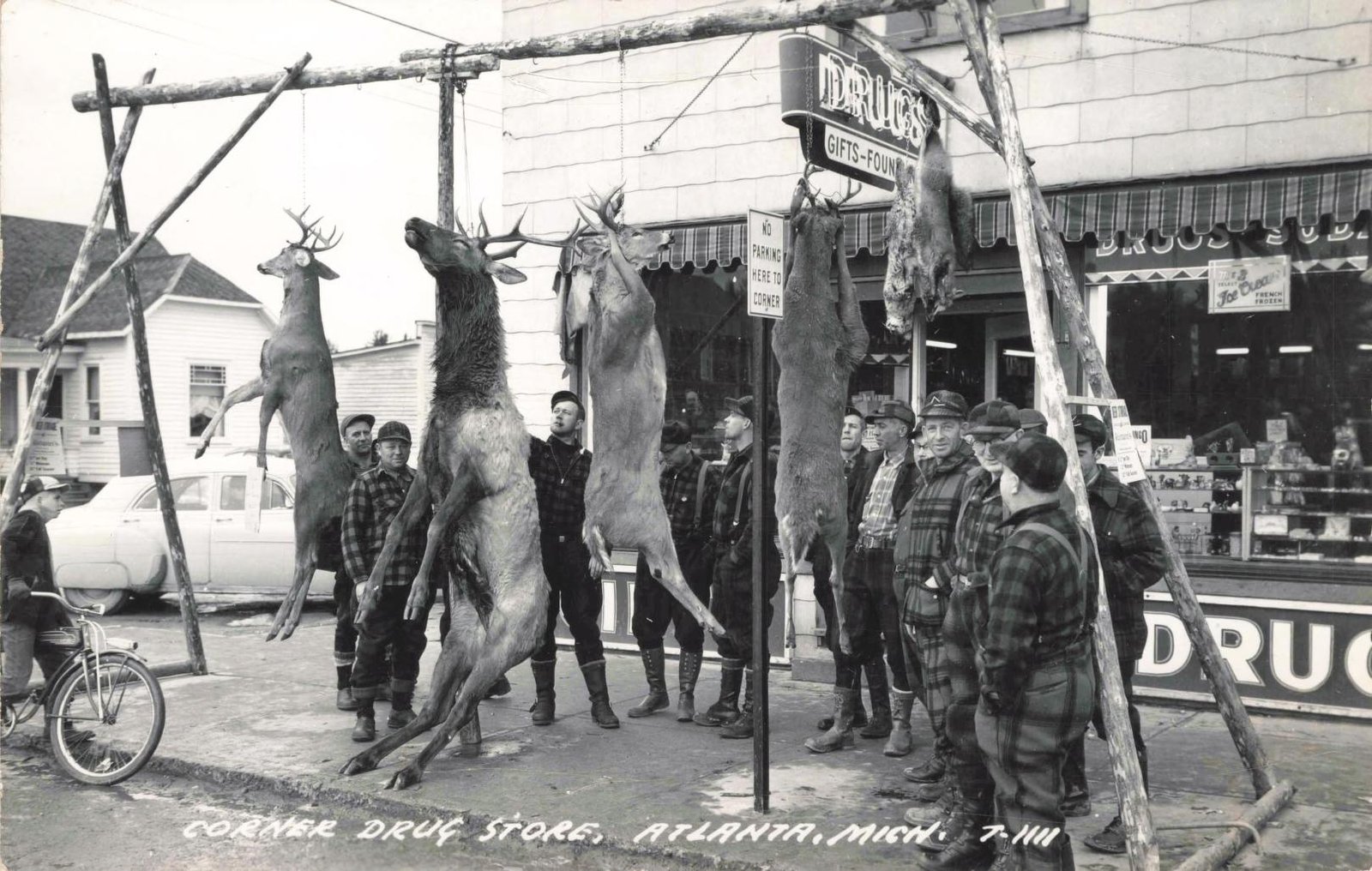
The Cameron Drug Store became a favorite stop. Its soda fountain drew teenagers after school. Locals lingered at the counter, catching up on news beneath a bright Coca-Cola sign.
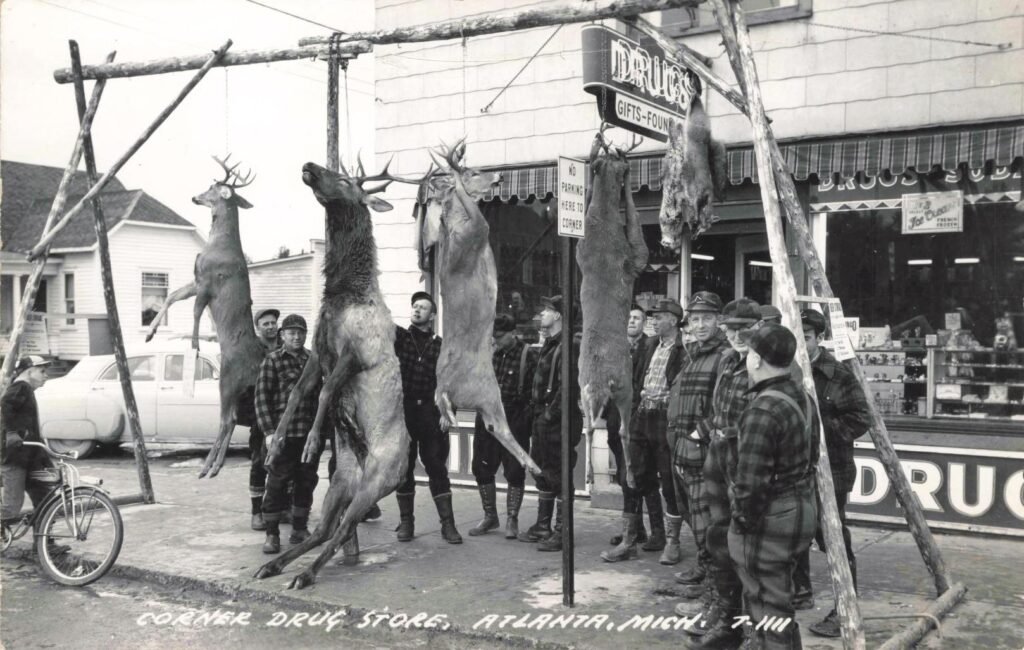
Every November, the town gathered for deer season. Opening day felt like a holiday. Hunters brought their deer into town and hung them at the buck pole downtown. People gathered not just to look, but to talk — about the hunt, the weather, and the year behind them.
It was never just about the deer. It was about being part of something shared.
A Town That Stayed Itself
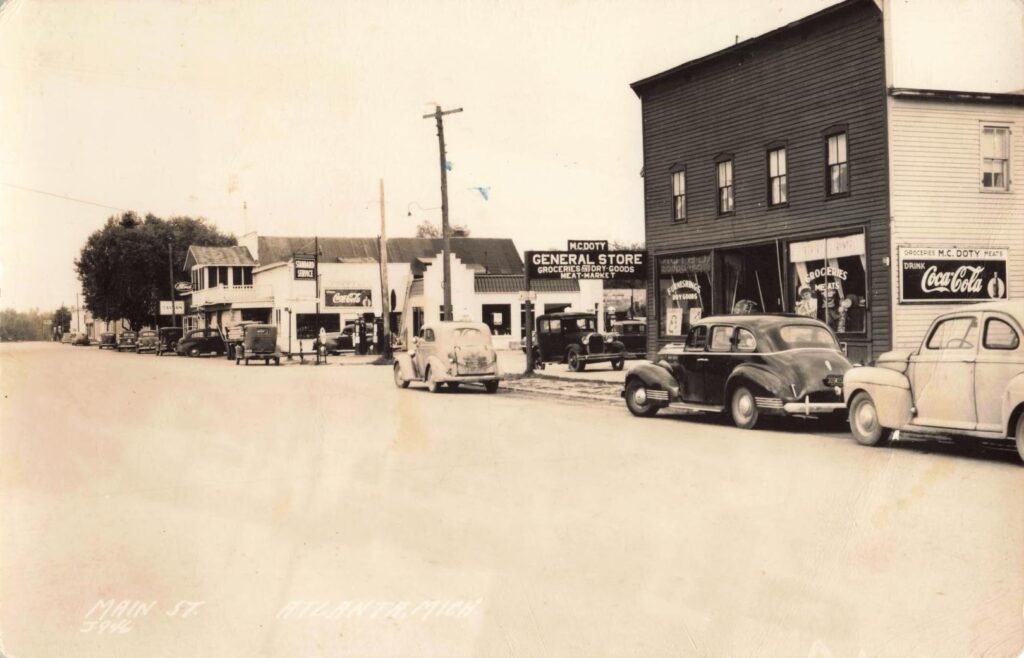
By 1950, the history of Atlanta Michigan already carried decades of change — lumber, railroads, fire, rebuilding, and tradition. Through it all, Atlanta stayed small, steady, and connected.
Its story lives in old photographs, in the courthouse walls, and in traditions that still return every fall.
In Atlanta, the past doesn’t sit behind glass. It waits right there on Main Street.
Images on this page may contain affiliate links in which we may receive a commission. See our affiliate disclosure for details.
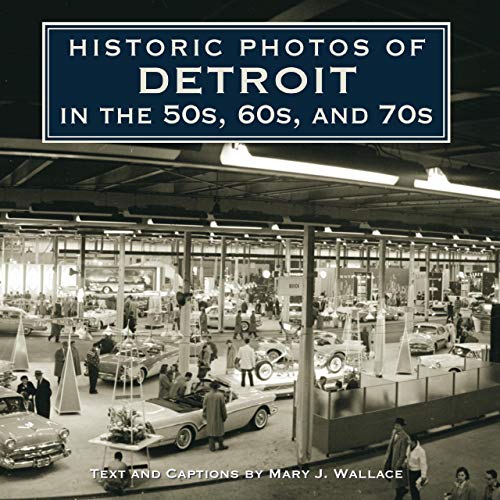
Historic Photos of Detroit in the 50s, 60s, and 70s
Historic Photos of Detroit in the 50s, 60s, and 70s documents what a Metro Detroiter would have experienced through those decades, from the commonplace—to a visit from John F. Kennedy.