 by
by A few miles east of Romeo, in Ray Township, a set of photos captures a very Michigan kind of ambition: take a working landscape of farms, woods, and creek bottom, then sell it back as leisure. The history of the Cascades near Romeo is a story of reaching to provide a getaway for Detroit’s emerging upper middle class, looking to escape the city without taking all day to do it.
A Countryside Escape Within Reach of Detroit
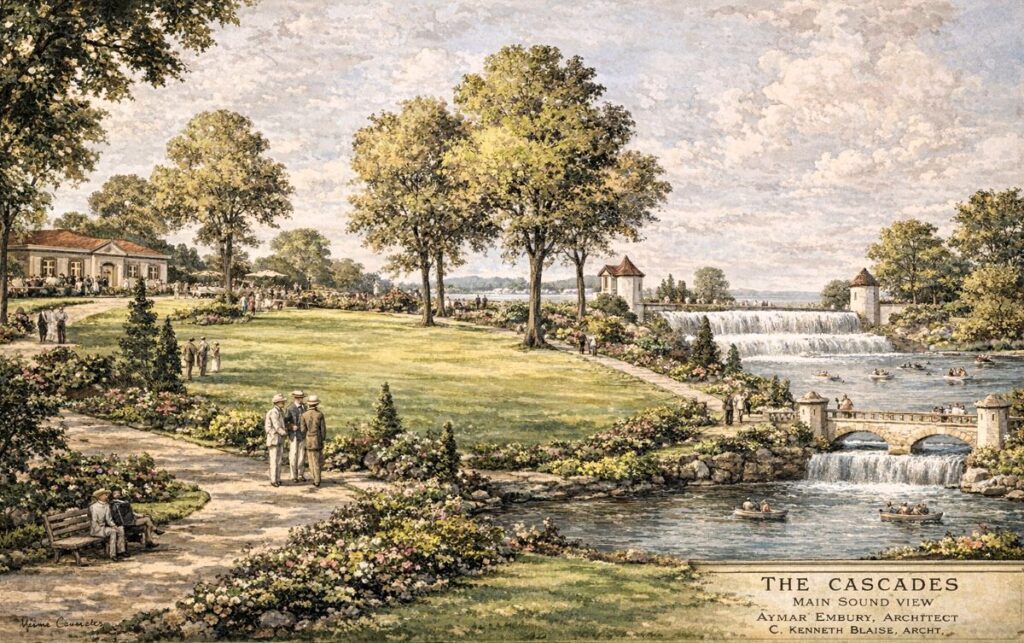
In the late 1920s, developers promoted a place they called The Cascades, a planned summer-home community aimed at people who could drive up from Detroit for a day or a season. Located about three miles east of Romeo off Plank Road, it was an effort to offer an exclusive resort-like experience without a long, arduous train or car ride. The sales pitch was straightforward for its time: good roads, fresh air, organized recreation, and a clubhouse where you could eat well without packing a picnic.
The Clubhouse: A hilltop house made into a destination
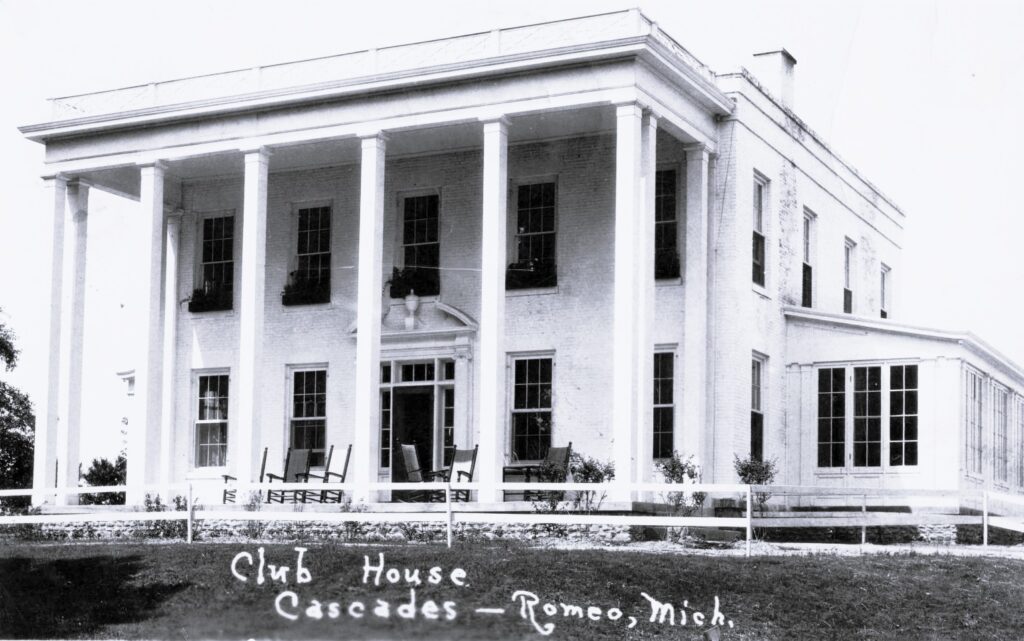
The images tell the story in layers. First, there’s the clubhouse — a big, squared-off building fronted by tall columns and a deep porch lined with chairs. It looks like a Southern transplant, but it sat on a Michigan hilltop.
On a hilltop in Ray Township, just east of Romeo, the Cascades clubhouse began as a prosperous 19th-century home and became the front door to a 1920s dream. The house is closely tied to Dr. Neil Gray Jr., a Scottish immigrant by way of early Michigan who built wealth not only through medicine but through mills and local enterprise. It was built in about 1845, long before anyone called the place “The Cascades.” The site sat in a rural landscape of farms, creeks, and small settlements — the kind of country Detroiters would later be sold as a restorative escape.
That sales pitch peaked in the late 1920s, when developers began transforming the property into a carefully planned summer community. The old home was remodeled into a clubhouse, and its most memorable “country club” signals — the deep porch and tall classical columns — belong to this era. The building wasn’t just a shelter; it was a marketing you could walk into. Visitors were meant to arrive, sit a while, take in the view, then move on to the recreational attractions: golf, the grounds, and the engineered spectacle of the nearby dam and spillway. The clubhouse also served as the social engine of the project, pairing the leisure of the outdoors with the formality of dining rooms and fireplaces, turning a day trip into an occasion.
Then history did what it often does: it tested the plan’s weak points. The Cascades opened to the public in 1928, but the broader vision never fully materialized after the Depression-era collapse in confidence and capital. Over the decades, ownership and purpose shifted, and the clubhouse was adapted for institutional use, requiring practical changes to its interiors and exits. Yet the building’s silhouette — porch, columns, hilltop stance — continues to broadcast the optimism of its reinvention. In the clubhouse, you can still see a familiar Michigan story: an older rural landmark repurposed for modern leisure, then reshaped again by necessity, leaving behind a structure that carries multiple eras at once.
The Dam and “Waterfall” – Making infrastructure into entertainment
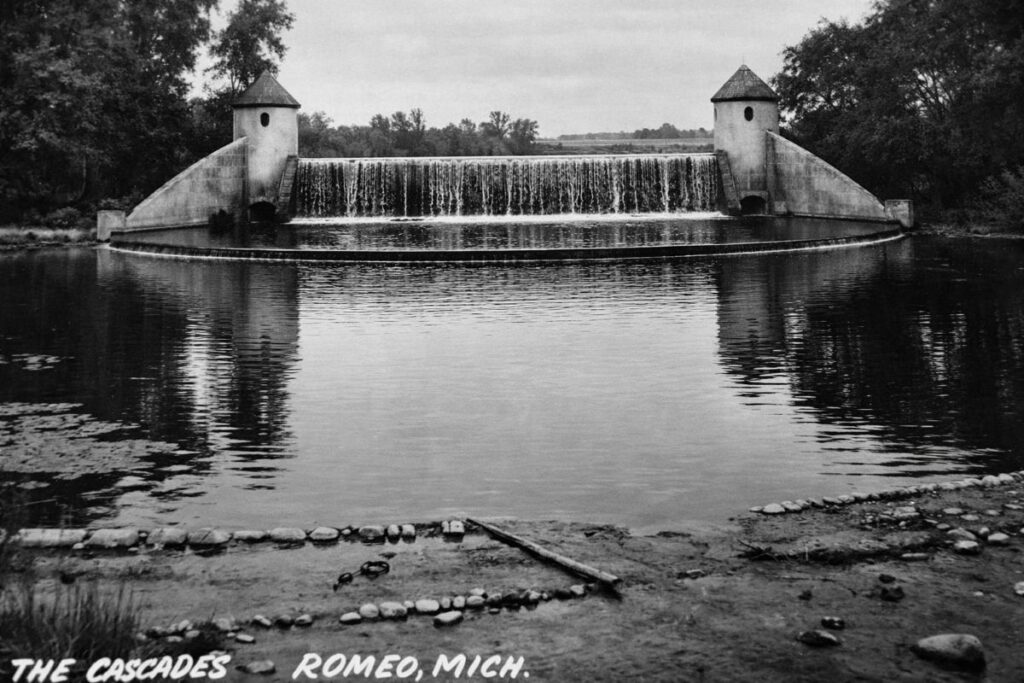
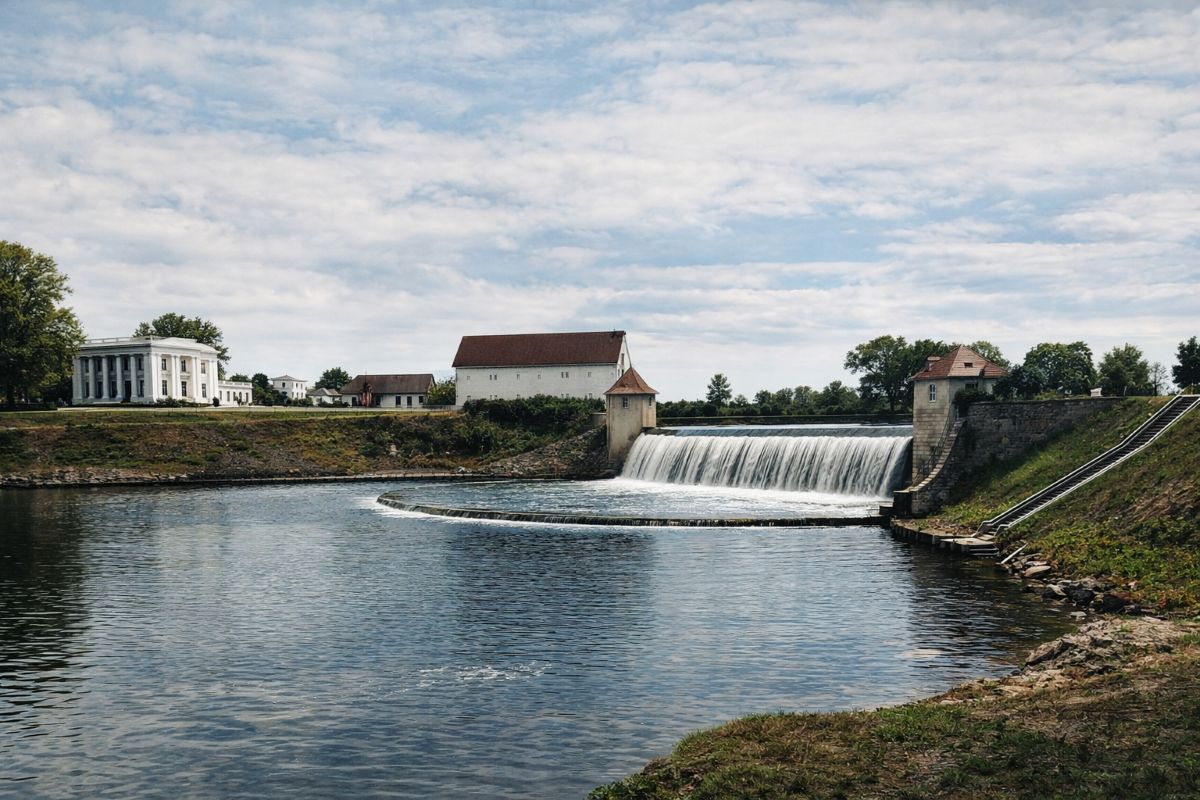
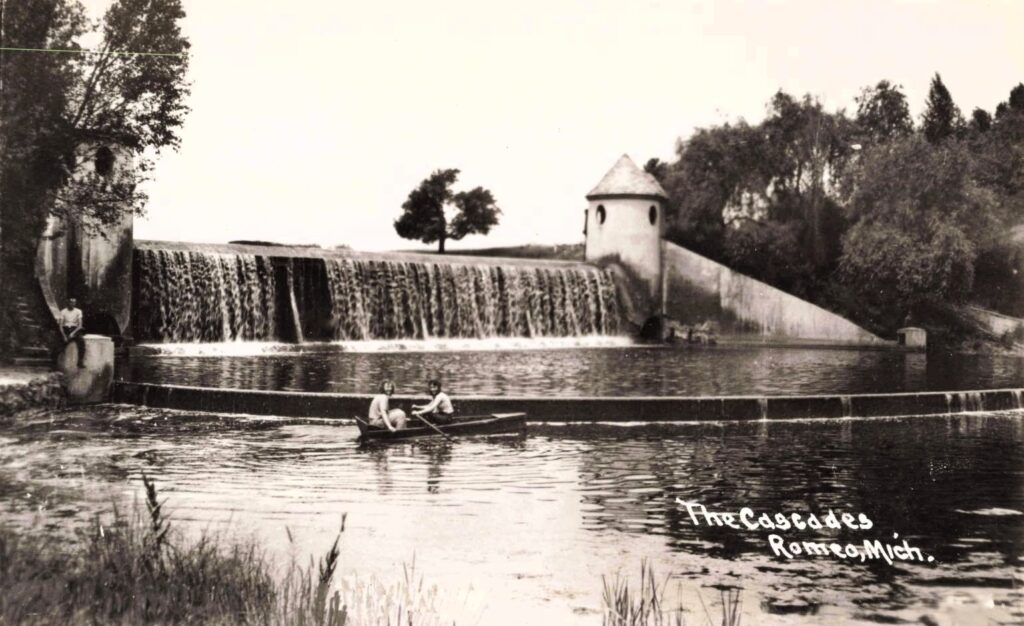
Then there’s the centerpiece: the dam and spillway. Postcards show water pouring in a broad sheet, turning a practical structure into a show.
Period descriptions on this site say visitors could walk under the falling water and climb the towers at the ends. Even if you treat the most dramatic details carefully, the concept is clear: make the infrastructure part of the fun. Michigan has a long history of reshaping rivers and wetlands for mills, farms, and industry. Here, the same impulse was repackaged as recreation.
Golf, pony rides, and a $1 chicken dinner
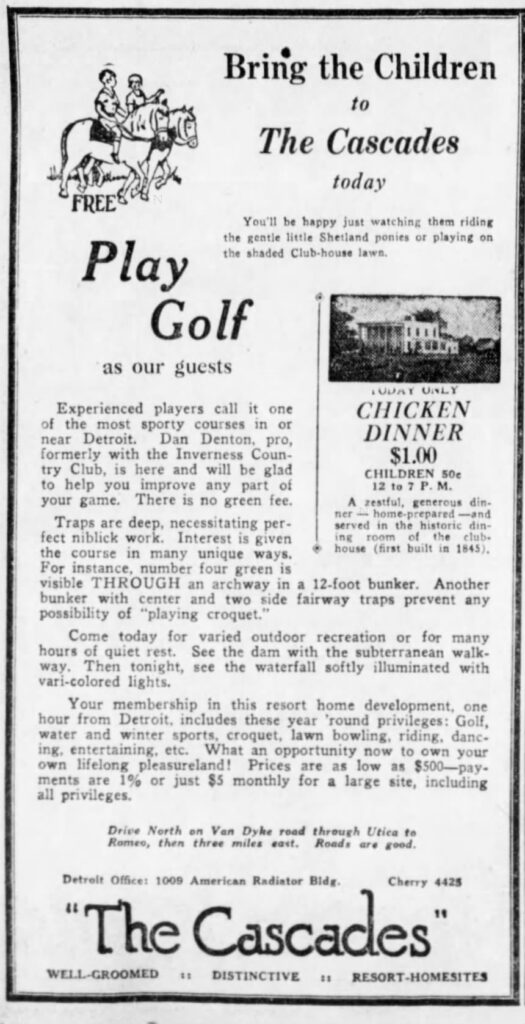
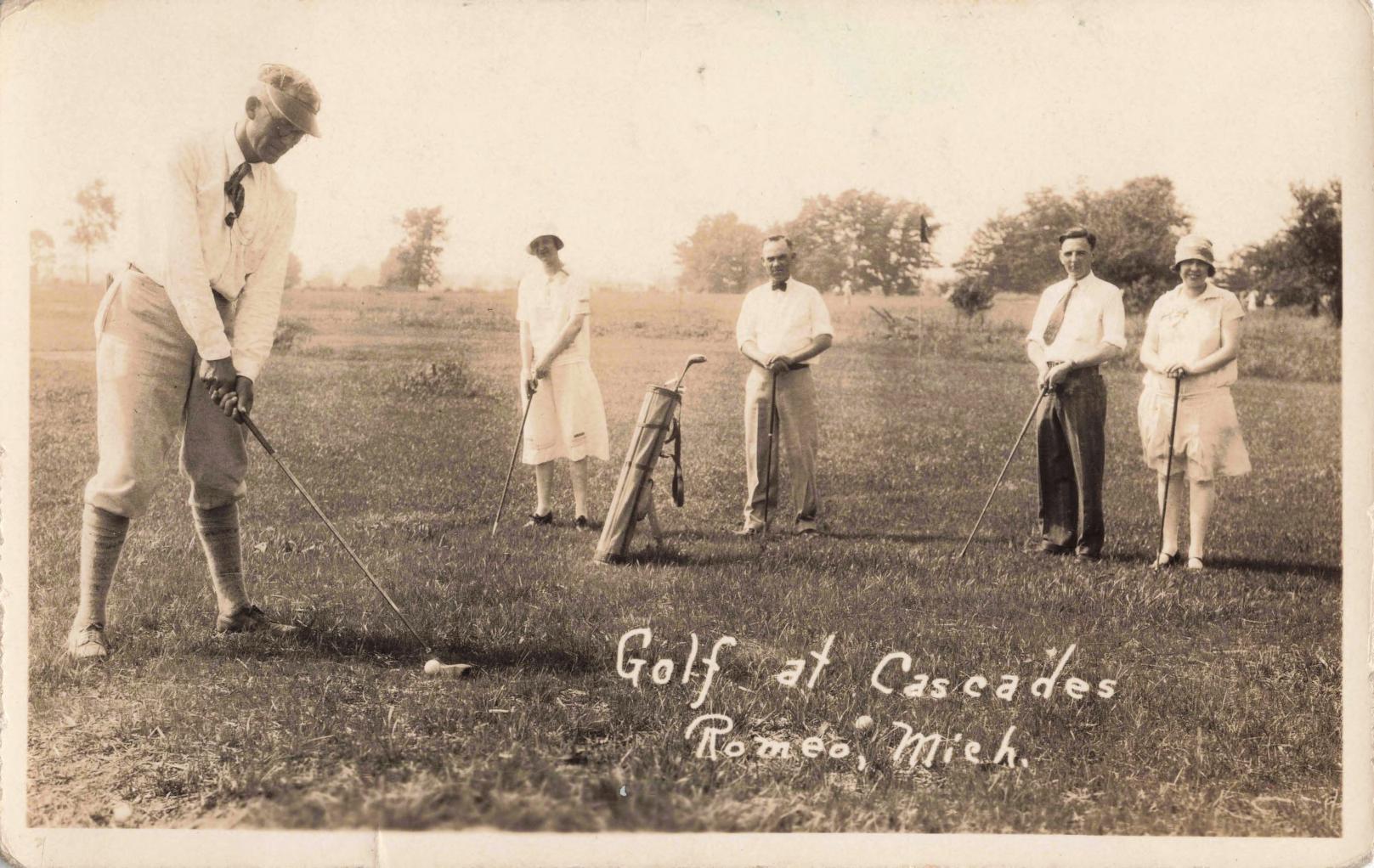
The clippings in this collection reinforce the pitch. One article frames the course as a technical test, built to reward accuracy rather than brute force — a “thinker’s” course more than a power course.
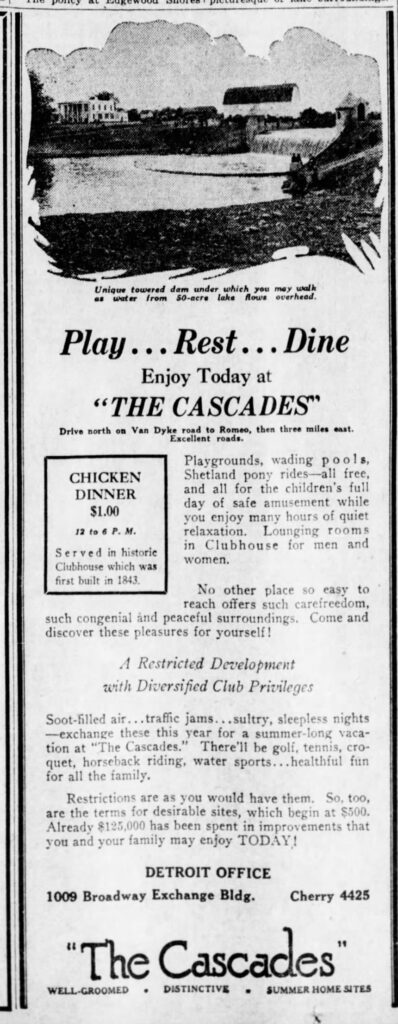
The ads lean hard into family fun: pony rides for kids, shaded lawn space, and the kind of meal that sounded like a bargain and a promise — a complete chicken dinner for $1. The message was “play, rest, dine,” all in one place, without the city noise.
Opening in 1928, and the risk of timing
Timing is the quiet antagonist here. The Cascades opened to the public in 1928, when optimism still felt like policy. Then the economy shifted.
The Great Depression didn’t just shrink bank accounts; it changed what people believed was safe to plan. Projects that depended on steady lot sales and steady visitors became vulnerable quickly. Your research summary notes that lots were sold, but the larger vision — a fully built-out summer-home community — never fully arrived.
That pattern is familiar across Michigan in the early 1930s: big plats, bold names, and only partial build-out. Even today, you can find subdivision maps across the state that promised parks, canals, or grand entrances that never made it past the brochure.
What happened after the dream stalled
The latter history is as Michigan as the origin story. Properties like this often survive by adapting. Over the decades, the Cascades site shifted ownership and uses, including serving as a care facility.
The dam, meanwhile, stopped working as intended. By 2010, state and watershed partners moved toward a different goal: restoring natural flow in the river system. Parts of the structure were removed to help the creek run more freely, and the site entered a new chapter — less spectacle, more restoration.
What these photos still say today
So what do these photos really show?
They show a community trying to sell an idea of countryside calm within reach of the city. They show how recreation became a product — golf, lawn games, picnics, and postcard views — and how quickly grand plans can be bent by economics, maintenance, and the passage of time.
If you visit the area now, you won’t find the full 1928 vision waiting, intact. But the landscape still reads like a caption. The Cascades remains a reminder that Michigan’s past isn’t only factories and fields — it’s also the places built to help people forget them for an afternoon.