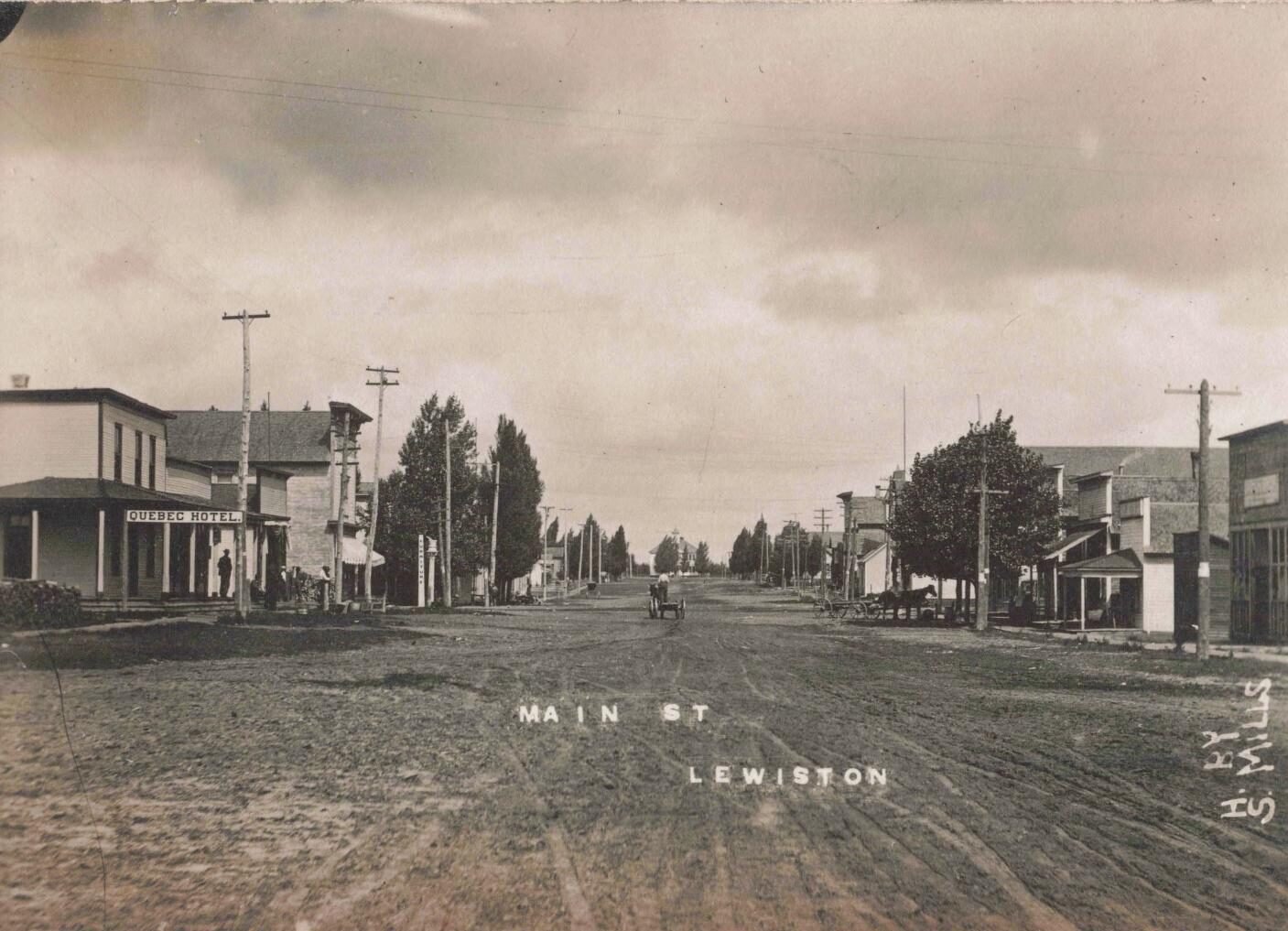
Why is Lewiston’s main street so wide? Part of the answer goes back to the fires that once threatened this northern Michigan lumber town.
This historic postcard captures Main Street during Lewiston’s early years, when sawmills, rail traffic and lumber camps supplied much of the work. The Michelson and Hanson Lumber Company helped establish the village in 1891, but timber brought a problem as well as jobs. Sawdust, scrap wood and wooden buildings made fire a serious danger.
Lewiston suffered destructive fires during the years that followed, including major losses between 1910 and 1916. A local historical marker explains that Kneeland Street’s broad width was intended in part to help separate buildings and slow the spread of flames.
The town eventually found new business in its lakes, forests and vacation resorts. Yet its street plan still reflects the practical worries of a place once built around wood.
Have you walked down Lewiston’s wide Main Street or heard family stories about its old businesses?