 by
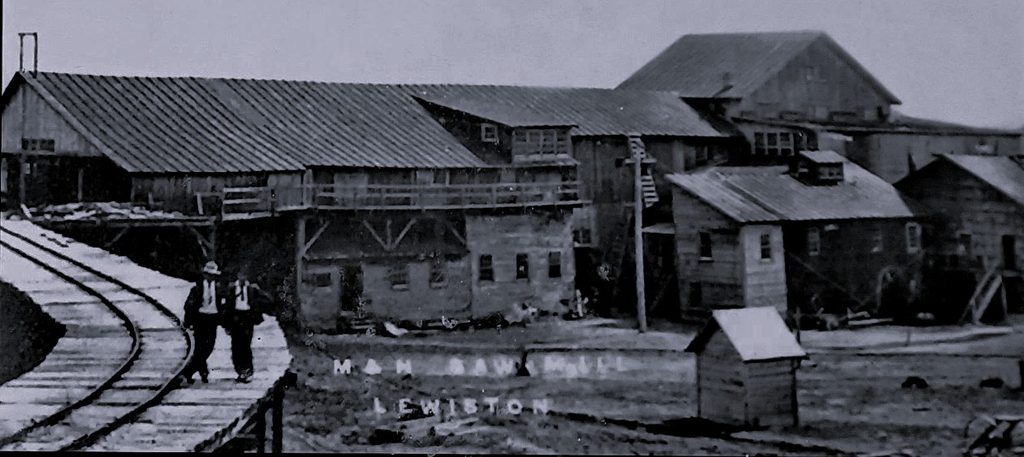
In April 1892, the owners of a brand-new sawmill in Lewiston, Michigan, faced a costly problem. Their mill had barely begun operating when it burned down.
Only two frame houses stood in the settlement at the time. The lumber company could have abandoned the project, but it replaced the machinery and buildings. By August, the mill was running again. That quick recovery helped establish a community that would survive far longer than the timber industry that created it.
The history of Lewiston Michigan follows a familiar northern Michigan pattern, with one important difference. When the lumber was gone, residents found another use for the forests and lakes that surrounded their town.
Watch: The History of Lewiston, Michigan: From Lumber to Lakeside Leisure
A Lumber Company Builds a Town in the Michigan Woods
Lewiston began taking shape in 1891 when the Michelson and Hanson Lumber Company platted a village in southwestern Montmorency County. The company had extensive timber interests in northern Michigan. Its owners needed a dependable place to process logs before shipping finished lumber to distant markets. East Twin Lake provided a convenient location for the operation.
Lewis Jensen, a company manager, helped lay out the settlement. According to the Lewiston Area Historical Society, the community was initially known as “Lewie’s Town” before being renamed Lewiston. The new town grew quickly. At its peak, the Michelson and Hanson operation employed more than 150 men. A local historical marker records that workers commonly earned about a dollar a day.
The sawmill operated two 10-hour shifts, six days a week. Its reported capacity exceeded 100,000 board feet of rough lumber daily, while an adjoining planing mill could finish approximately 70,000 board feet. Those were substantial operations for a village surrounded by forest.
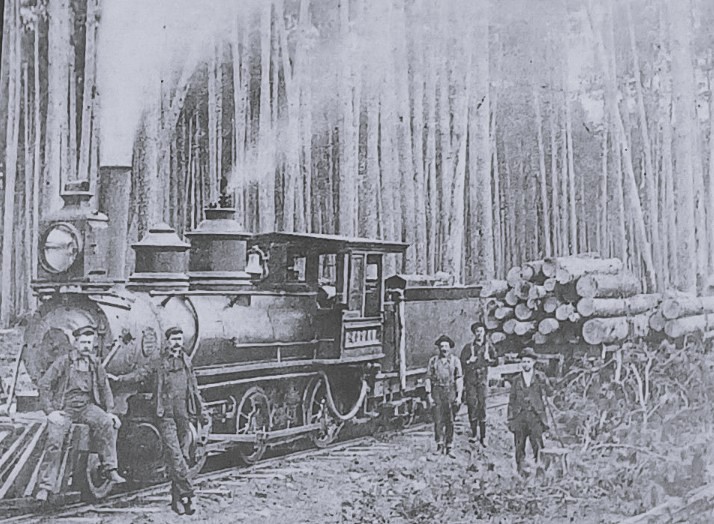
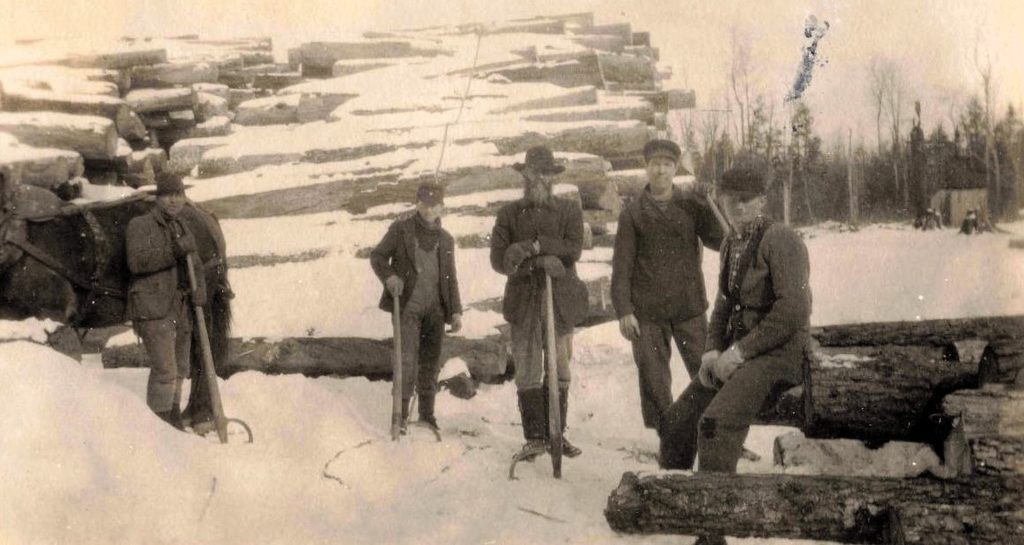
Logs arrived from camps throughout the area on narrow-gauge railroads. Workers floated and stored them in East Twin Lake before guiding them toward the mill’s conveyor system. Men wearing spiked shoes used long pike poles to maneuver the logs. The work was dangerous and required strength and experience. Some logs sank before reaching the mill. According to the local historical marker, timber bearing the company’s identifying stamp has been found on the lake bottom.
The mill also provided Lewiston with its first electricity. Steam generators attached to the mill’s boilers powered machinery and lighting. The company was building an industrial community, but it was also creating a permanent village. Its workers needed somewhere to live, shop and raise families.
The Railroad That Put Lewiston on the Map
Railroads were essential to northern Michigan’s lumber industry. Without them, companies would have had to move enormous quantities of timber by water or over rough roads. The Grayling, Twin Lakes and Northeastern Railroad reached Lewiston in 1892. The line became part of the Michigan Central Railroad system. Its connection to Grayling let Lewiston receive supplies and ship lumber to other markets.
It also carried passengers and mail.
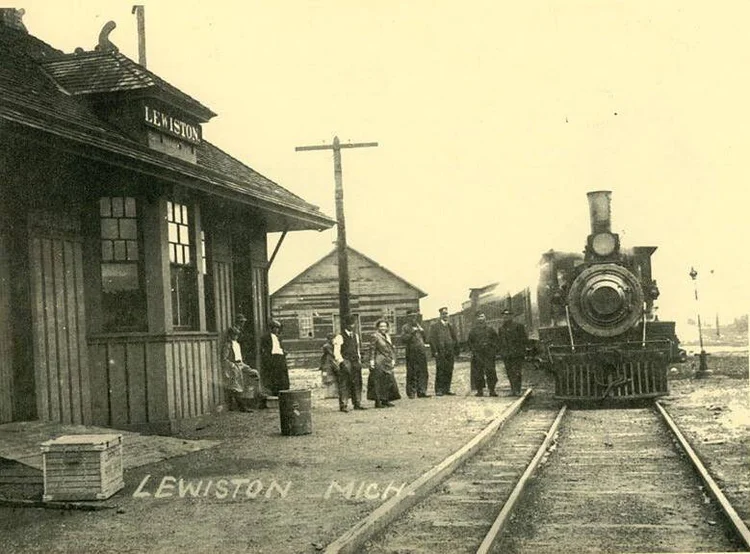
Railroad records offer an unusually clear picture of daily travel. In 1897, a passenger train departed Grayling at 6:30 a.m. and arrived in Lewiston at 7:55 a.m. The return train left Lewiston at 12:15 p.m. The journey took approximately 90 minutes each way. That schedule let people conduct business, receive freight, and stay connected with communities outside Montmorency County.
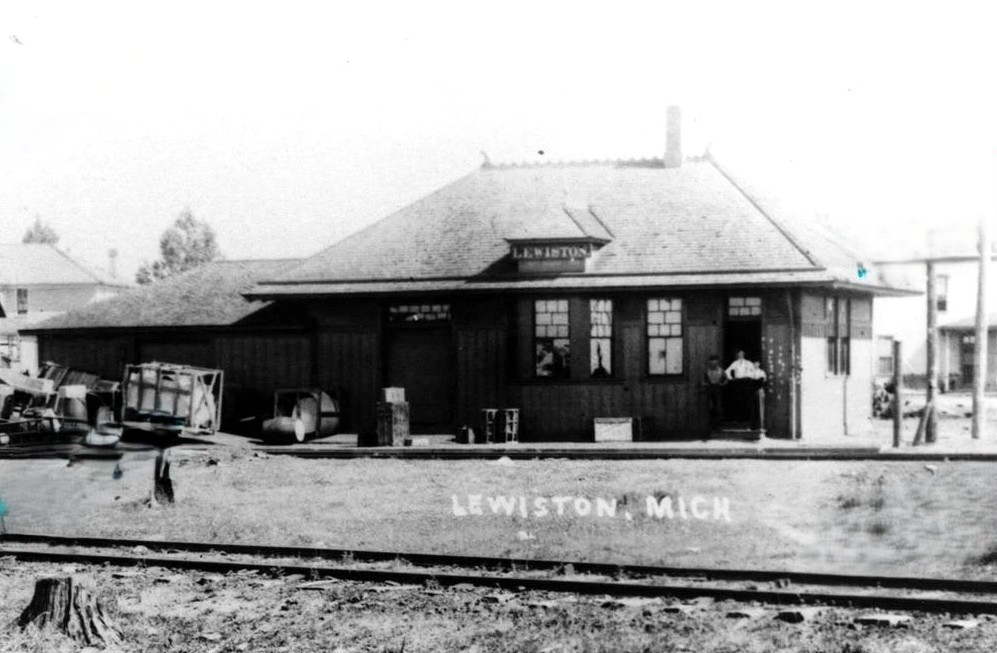
Another interesting feature of the local railroad was its route. According to a Lewiston historical marker, trains approached along the south shore of West Twin Lake, continued north between the lakes and reached a wye where locomotives could change direction.
The trains then backed toward the depot and lumber mill. For residents, the locomotive was part of daily life. It brought visitors, delivered goods, and carried away the products that paid local wages. The railroad also helped explain why businesses appeared along Lewiston’s streets.
A Town Built for Work Also Needed Places to Gather
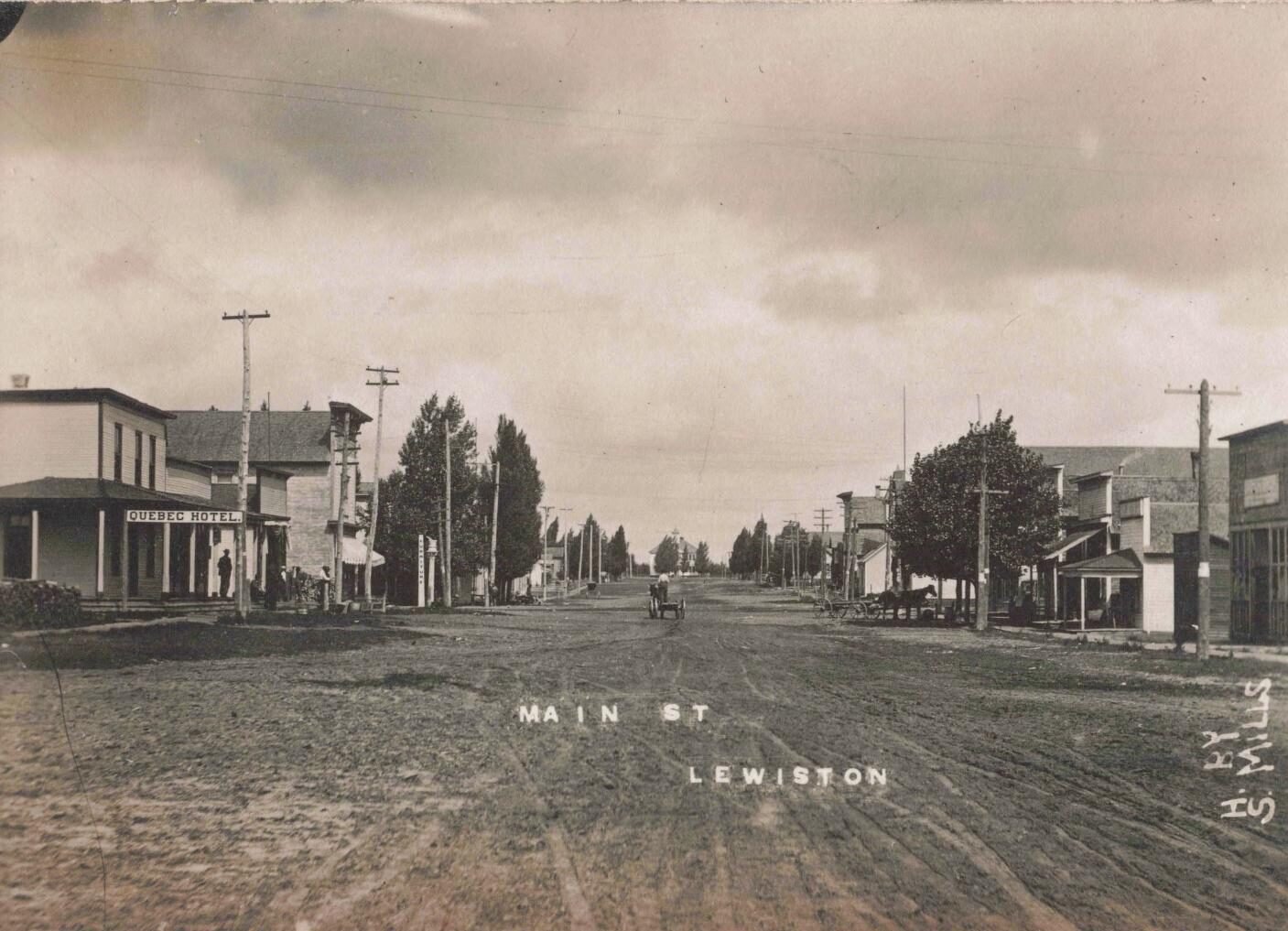
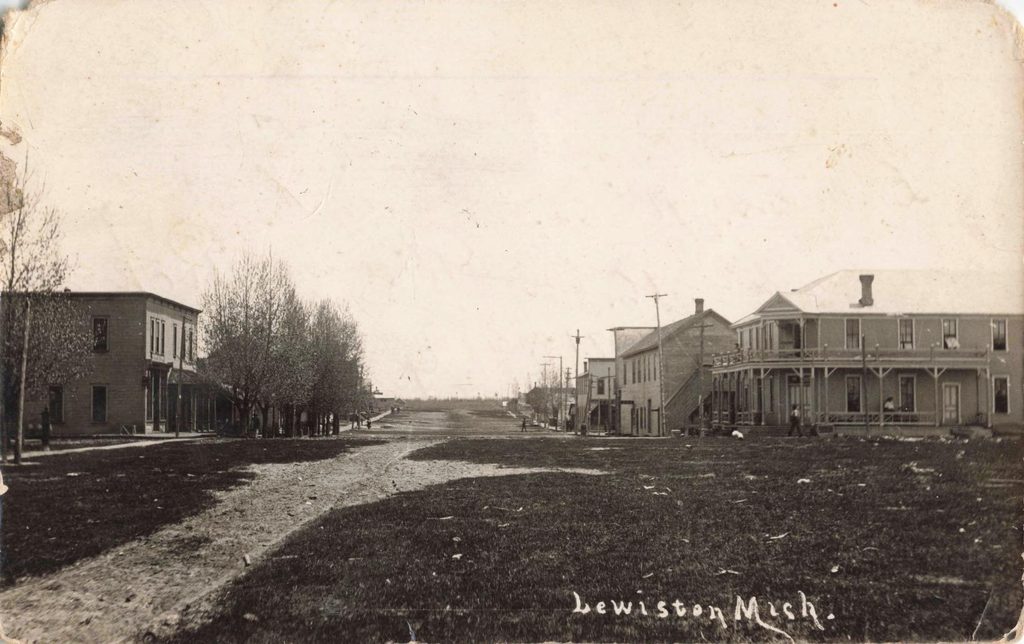
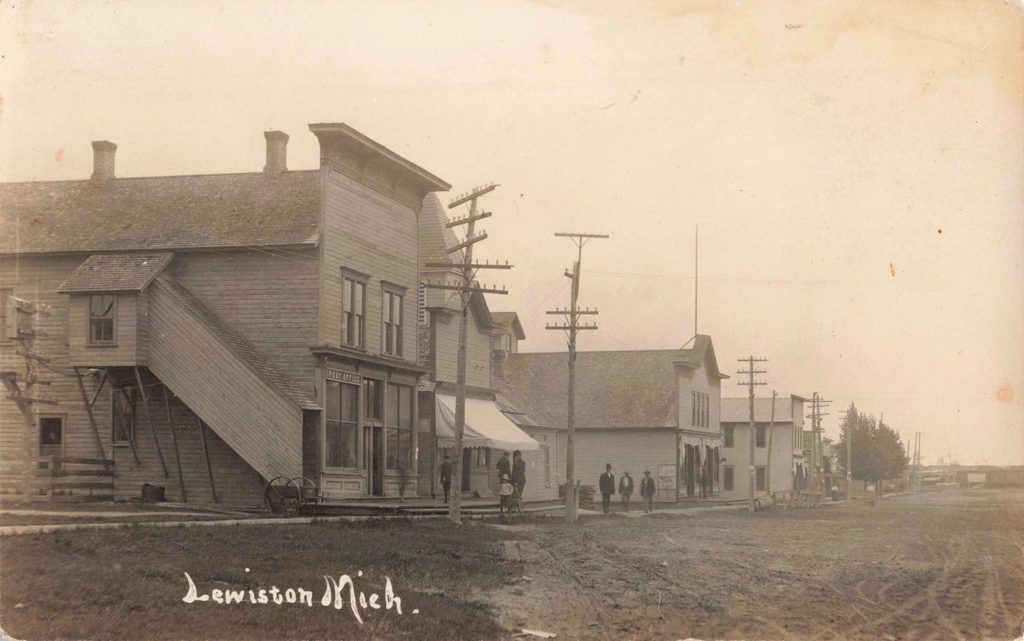
By the early 1900s, Lewiston had developed into a busy little community. There were grocery stores, hotels, restaurants, saloons, churches, a school, and businesses that supplied the lumber camps.
The Lewiston Area Historical Society also records livery stables and a local newspaper. Life revolved around long working hours, but residents found time for entertainment. A historical marker at the former town bandstand describes Friday evening concerts in summer and weekly dances in winter.
Occasional traveling opera companies also performed in Lewiston. These entertainments were important before radio became common. A town band or visiting performer could provide the week’s main social event.
Schools and churches were equally important. Lewiston established its first school in 1892. It burned in 1894, and residents built a replacement in 1896. The Congregational Church became another early institution. People held religious meetings in the lumber camp before a permanent congregation formed.
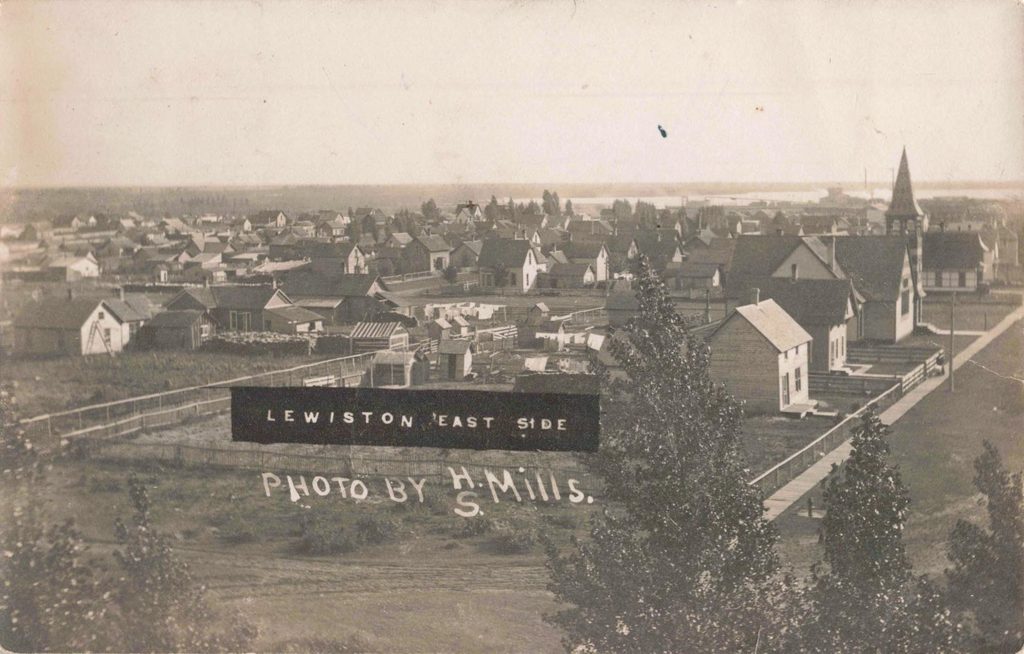
The original settlers were building institutions that would outlast the sawmills.
Why Lewiston’s Main Street Was Built So Wide
The lumber industry created a dangerous problem for Lewiston. Sawmills produced enormous quantities of sawdust, wood scraps, and other combustible material. Fires could spread rapidly through wooden buildings and dry timber. The first sawmill fire in 1892 was only the beginning.
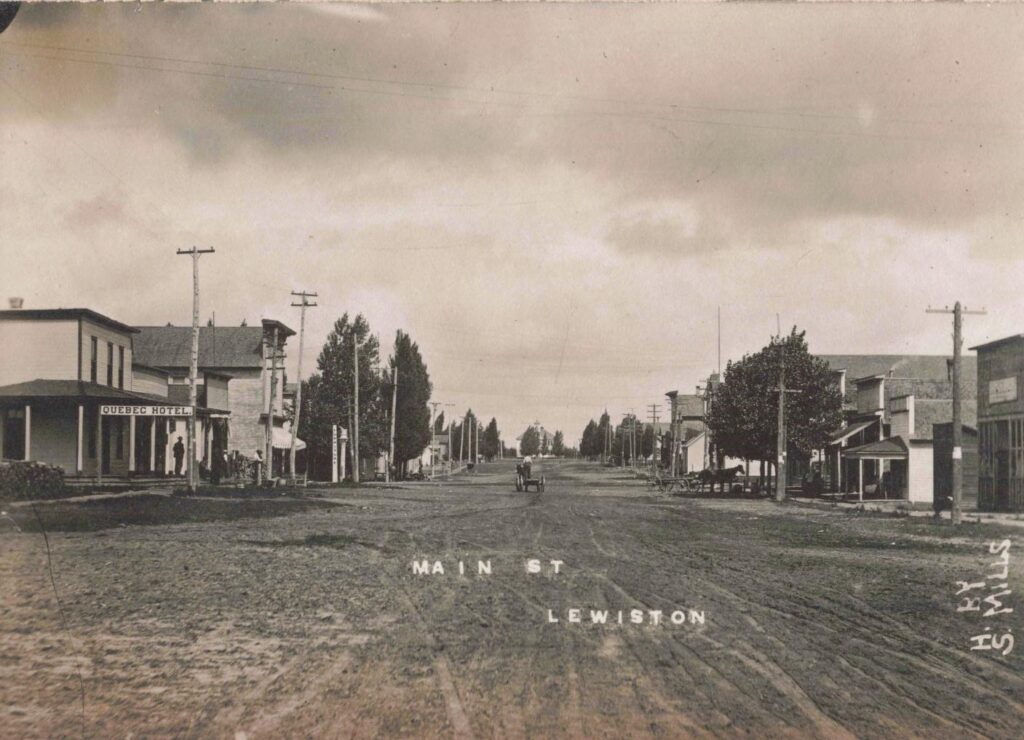
Lewiston experienced several destructive fires during the years that followed, particularly between 1910 and 1916. Much of the original downtown business district disappeared. One surviving reminder of that danger is Kneeland Street’s unusual width. According to the historical marker describing the Michelson and Hanson sawmill, the street was designed in part to provide a firebreak separating buildings on opposite sides of downtown.
What might seem like an unusually generous main street was also a practical attempt to keep a small fire from becoming a townwide disaster. By then, however, fire was no longer Lewiston’s only problem.
The lumber company was running out of pine.
Cephas Buttles and the Attempt to Turn Lumberland Into Farms
By 1910, the Michelson and Hanson Lumber Company had ended its local operations. Other companies continued harvesting hardwood timber, but Lewiston’s first industrial boom had ended. The land surrounding the village looked considerably different from the forested country that had attracted the lumber companies.
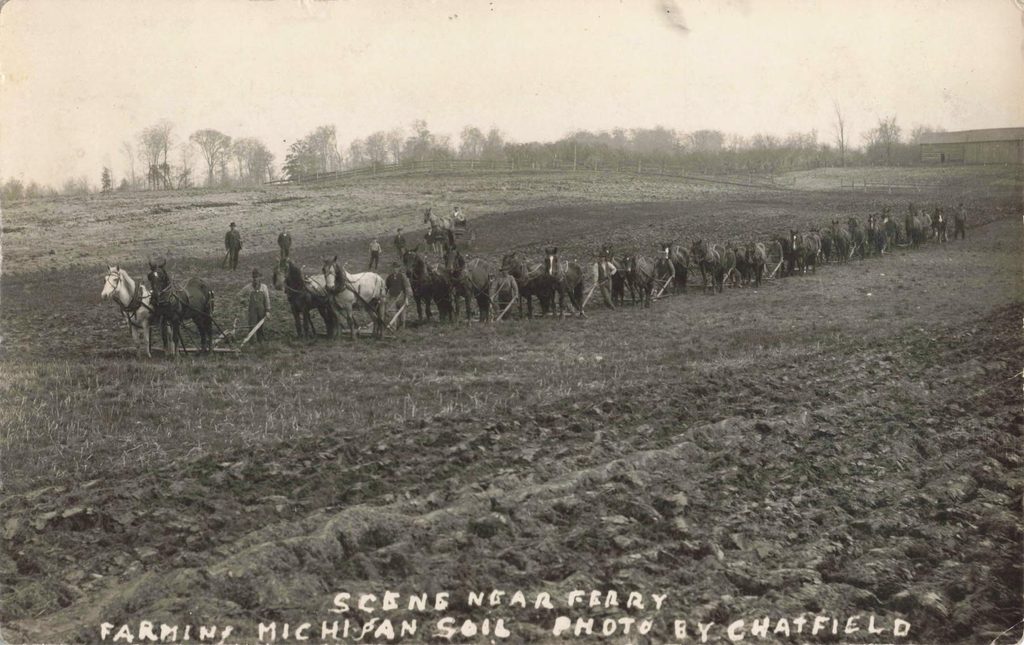
Large areas had been cut over. Tree stumps and brush remained where valuable timber once stood. To some investors, this land represented another business opportunity. One of them was Cephas Buttles, a Milwaukee businessman connected to local lumber executive David Kneeland through marriage.
In 1901, Buttles bought about 25,000 acres of cutover timberland and formed the Home Colony Company. His plan was to bring agricultural settlers into northern Michigan. He promoted inexpensive land throughout the Midwest and advertised in newspapers reaching immigrants from Finland and Sweden.
According to the Lewiston Area Historical Society, Buttles bought land for approximately $1.25 per acre and sold parcels for $5 to $15 per acre. He also established Angusdale Stock Farm in 1902 as a model agricultural operation. The farm covered about 1,200 acres and appeared in promotional materials meant to attract settlers.
The plan had a serious problem.
Much of the local soil contained a thin fertile layer over sand. The growing season was short, and farming required considerable effort. By the 1920s, depleted soil and disappointing harvests had ended much of the land boom. Some settlers left. Others remained and raised families.
The attempt to turn northern Michigan’s former lumberlands into farms helped sustain Lewiston for a time, but agriculture would never fully replace the old timber industry.
Hunters and Fishermen Helped Keep Lewiston in Business
Lewiston’s next important industry developed from something that had always been nearby. East Twin Lake, West Twin Lake, and the surrounding streams and forests offered fishing, hunting, and recreation. During the early 20th century, sportsmen from other parts of Michigan began traveling north in greater numbers.
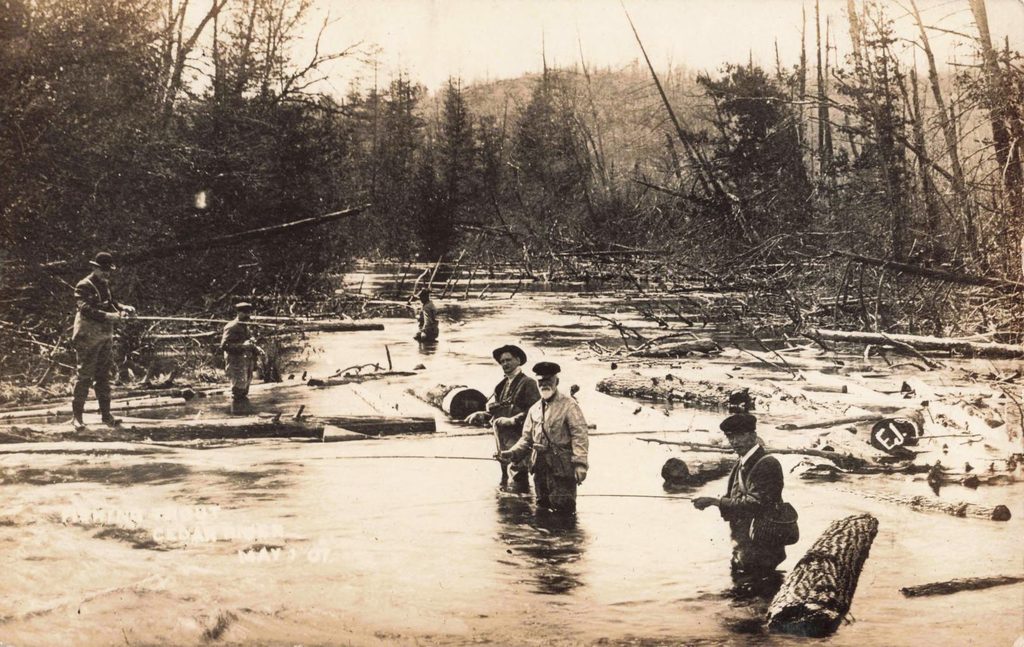
The arrival of automobiles made these journeys easier.
Local families sometimes rented spare bedrooms to visiting hunters and fishermen. The extra income helped offset the limited opportunities farming offered. Eventually, more organized tourist accommodations appeared. Small lakeside cabins were especially popular with vacationing families who wanted a place to sleep, cook and spend time outdoors.
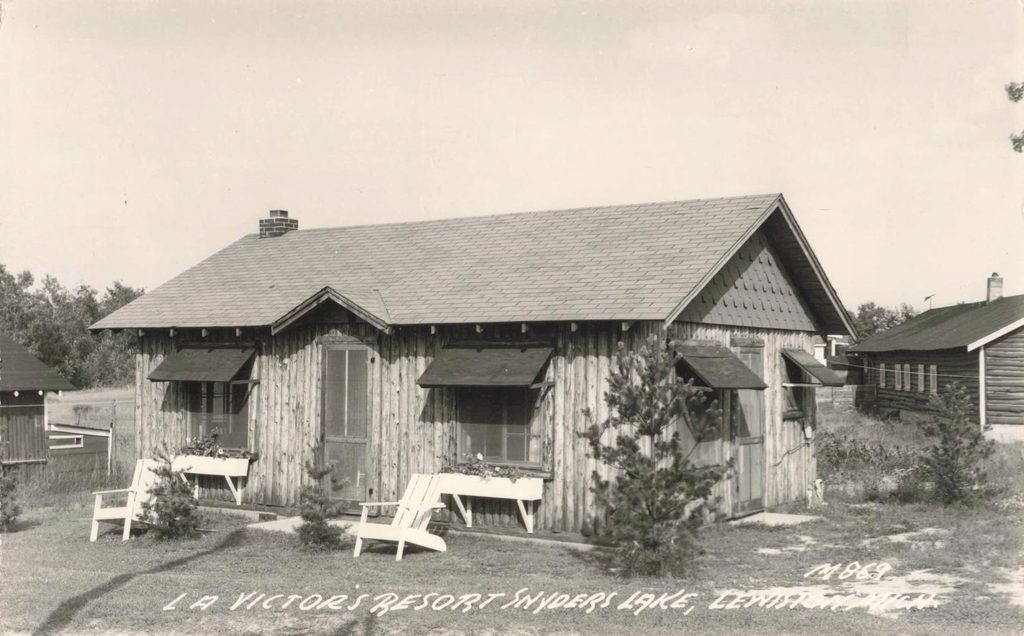
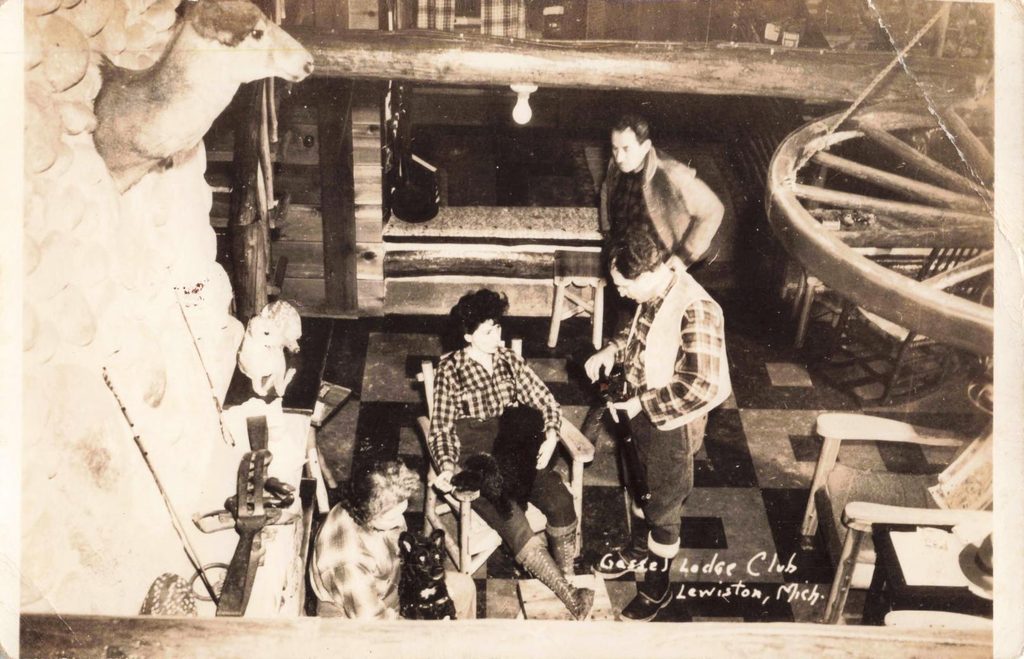
One property that illustrates the early resort era is the present-day Lewiston Lodge. Its recorded history begins in the mid-1920s, when the property operated as a private retreat called Gassell Lodge. The original lodge contained six guest rooms.
The owners added several cabins in the early 1930s. After Prohibition ended in 1933, the property began accepting paying guests. By the early 1940s, visitors could reportedly spend an entire week at the lodge, including meals and accommodations, for approximately $25 per person.
That price reflected the simple hospitality that helped make northern Michigan resorts popular.
Other local establishments welcomed visitors arriving by automobile. The Neuenfelt Hotel offered meals, lodging, and a bar. Its log construction suited the image of a northern Michigan vacation community.
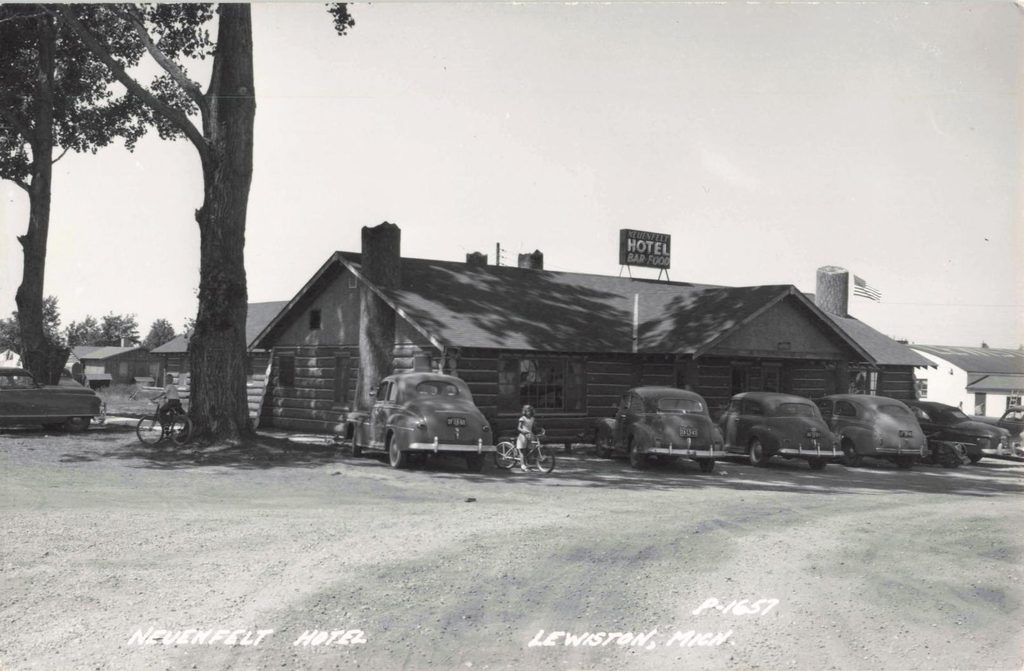
The business had changed since the lumber era. Instead of serving mostly mill workers and railroad passengers, hotels and restaurants increasingly depended on travelers arriving by road.
The Great Depression Brings Camp Lunden to Lewiston
During the Great Depression, the federal government established a program that would affect communities throughout northern Michigan. President Franklin D. Roosevelt created the Civilian Conservation Corps in 1933 to employ young men on conservation projects.
In June of that year, 200 men ages 17 to 23 arrived near Lewiston. They initially camped along Hunt Creek before moving to a permanent location east of town. The facility became known as Camp Lunden.
The men first lived in tents. They later constructed wooden barracks, a mess hall, and other buildings.
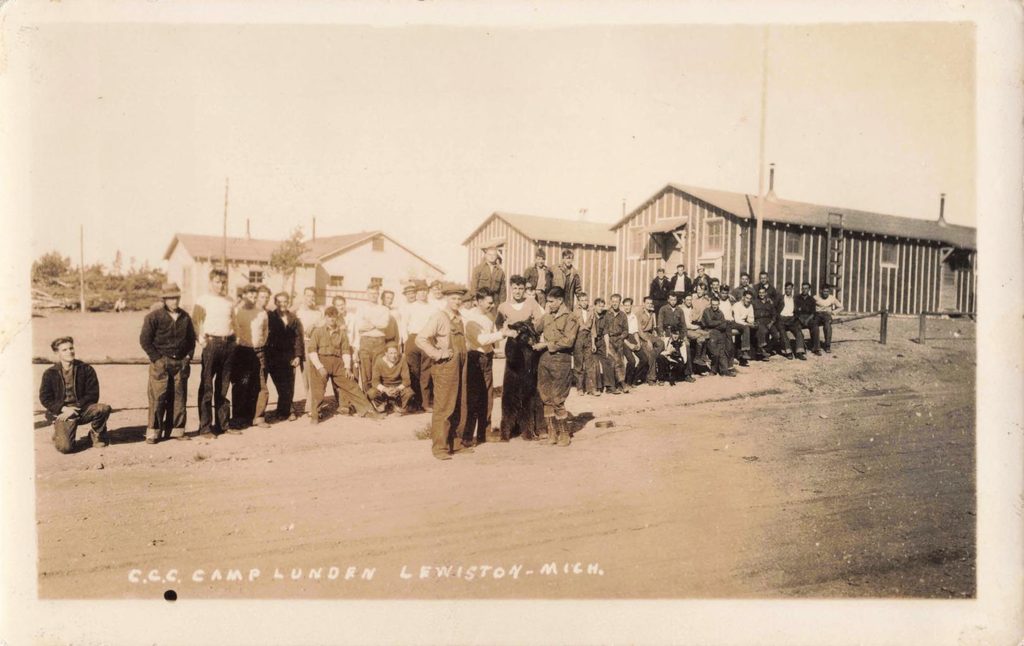
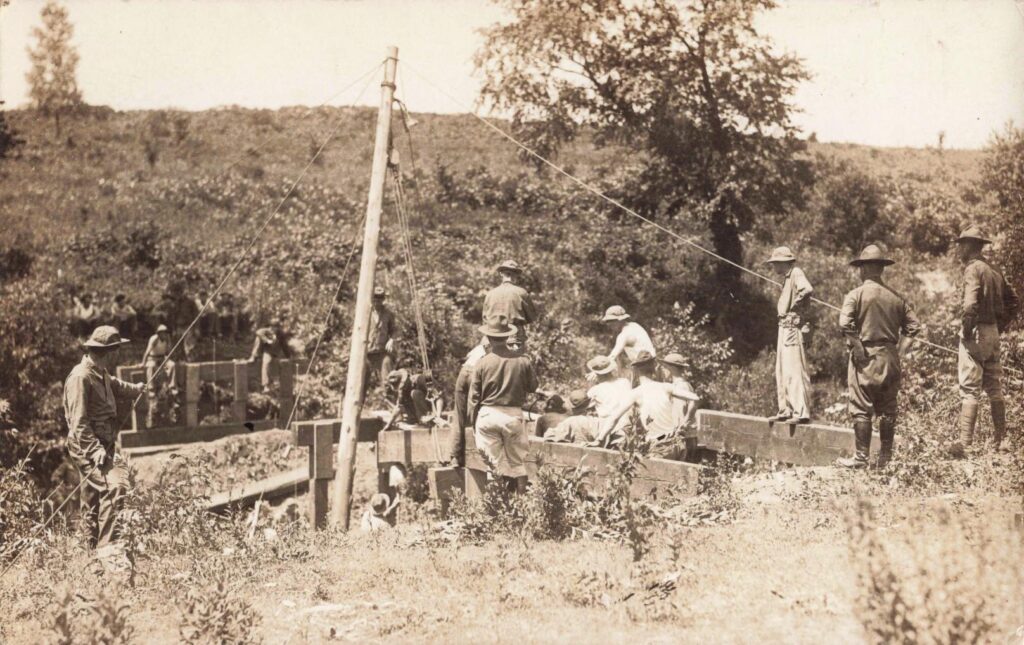
At Camp Lunden, workers planted trees, built roads, constructed firebreaks, and developed trout ponds. The men also helped clear land for an airfield near Atlanta. Much of their work addressed damage left by logging and repeated forest fires.
Young men from the camp also became part of Lewiston’s social life. The official historical marker records boxing, musical performances, and visits to town. For local merchants, the camp brought additional customers during difficult economic times.
The Young Men Who Built a Miniature Michigan
One of Camp Lunden’s most unusual projects shortly before the camp closed. In 1936, approximately 40 men studying drafting and civil engineering arrived at the facility.
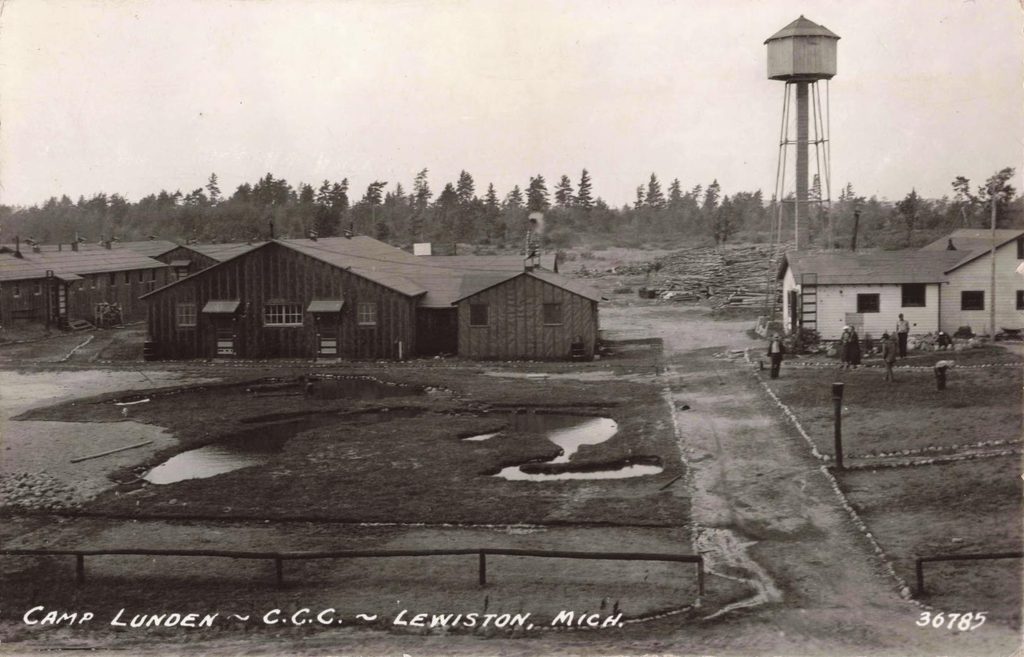
During their spare time, they constructed an earthen model of Michigan in front of the barracks. The miniature state included excavated basins representing Lakes Superior, Michigan, Huron, Erie, and St. Clair. Water from an artesian well filled the small lakes. The men even stocked them with fish.
The project combined technical training with a practical lesson in geography and engineering. Camp Lunden closed in 1936, but the miniature Michigan remained. In 1994, the site received recognition as a Michigan State Historic Site. The Lewiston Area Historical Society has helped preserve the site and its history.
It remains one of the more unusual surviving reminders of Michigan’s CCC program.
Fire Towers and Trout Research Help Protect the North Woods
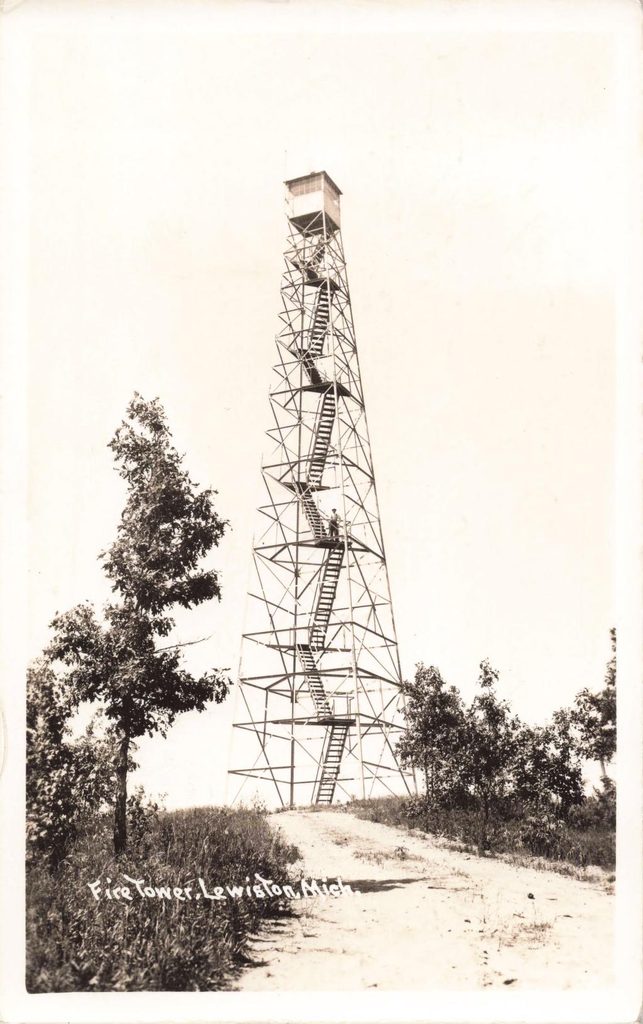
By the 1930s, Michigan conservation officials were taking a more active role in protecting forests and managing wildlife. Fire detection was especially important in regions that had suffered repeated logging-related fires.
Elevated observation towers allowed observers to scan the surrounding country for smoke. Lewiston had one of these towers.
Conservation work also extended to fishing. In 1939, the Michigan Department of Conservation established the Hunt Creek Fisheries Experiment Station east of Lewiston. The station became a research center for studying brook trout and the effects of fishing regulations and stream management.
Biologists monitored fish populations and examined how management changes affected trout habitat and angler success. The station eventually became an important source of long-term fisheries research. This work complemented the growing importance of fishing to the regional economy.
Lewiston’s streams and forests were no longer viewed simply as resources to be harvested. They were increasingly managed for continued public use.
When Cars Replaced Trains on Lewiston’s Main Street
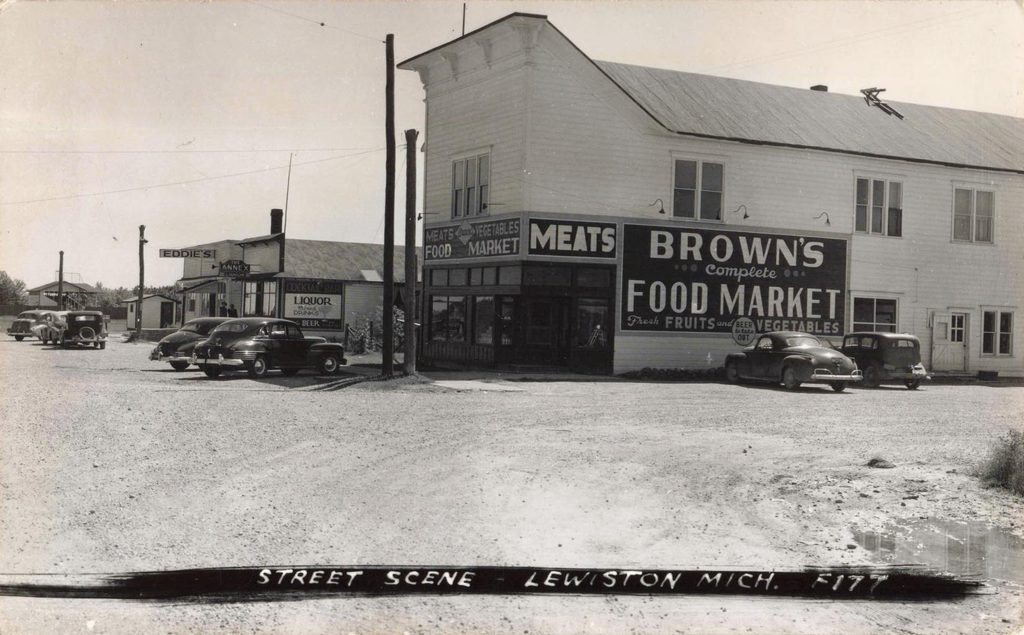
Lewiston’s commercial district changed considerably between the early 1900s and the late 1940s. The railroad had once dominated transportation. By the 1930s, automobiles were becoming the preferred way to reach northern vacation destinations. The Michigan Central Railroad abandoned its Lewiston branch in 1933.
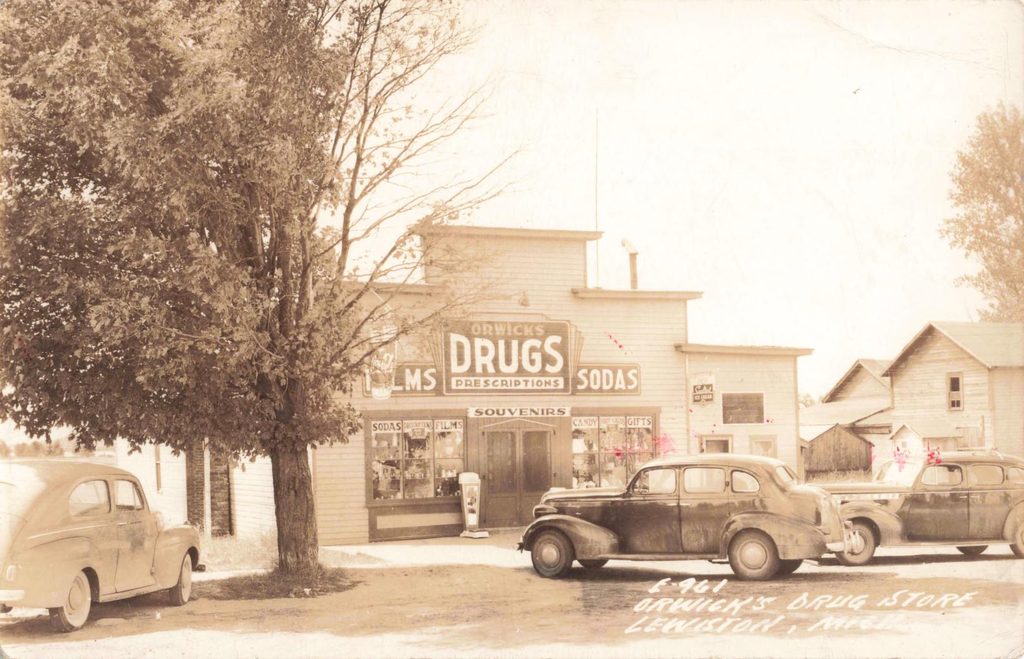
Hotels, grocery stores, restaurants, and gasoline stations increasingly served motorists. One business was Orwick’s Drug Store. Its signs advertised prescriptions, sodas, souvenirs and other merchandise that appealed to residents and vacationers alike.
Other stores carried groceries, meats, fresh produce, and general merchandise. Brown’s Food Market became a familiar name along the commercial strip. The Lewiston Co-op Store offered groceries and general merchandise while also serving automobile customers.
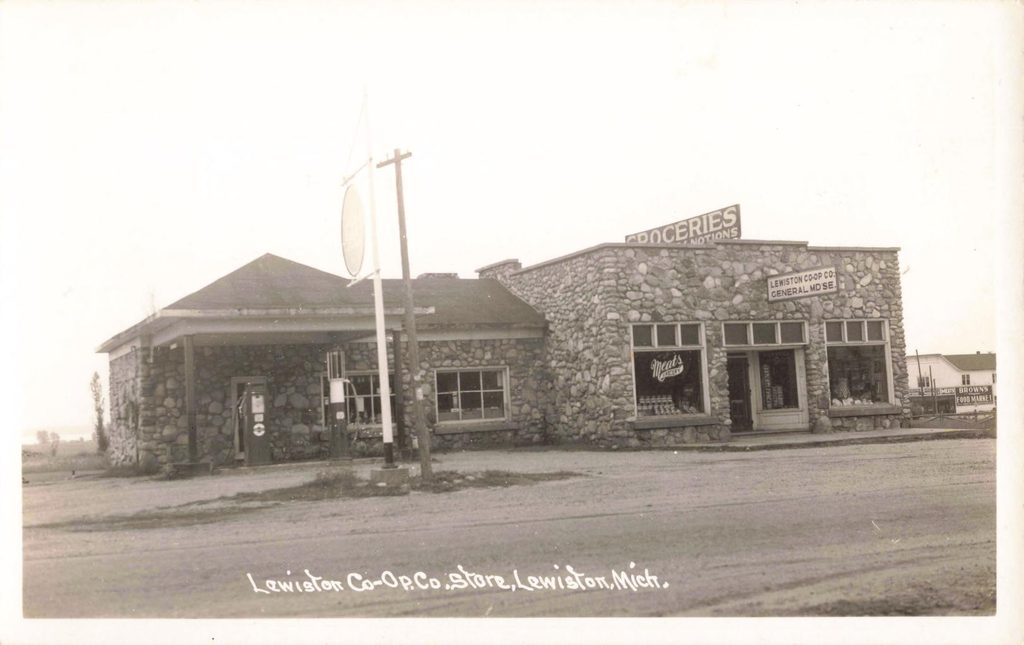
Surrounding businesses formed a commercial district that served local families year-round and visitors during the tourist season. Traditional small-town entertainment still had room. A vintage image of Lewiston’s toboggan slide shows a long snow-covered chute running down a hillside.

The slide offered winter recreation as northern Michigan communities began attracting visitors in more than one season.
History of Lewiston Michigan After World War II
World War II temporarily disrupted recreational travel across Michigan. Gasoline rationing and other wartime restrictions made long automobile trips difficult. After the war, travel increased again.
Families purchased cottages near northern Michigan lakes. Resorts expanded their accommodations, and new waterfront vacation properties appeared. Lewiston benefited from this growing demand. Its forests and lakes offered a setting for fishing, swimming, boating, hunting, and family vacations.
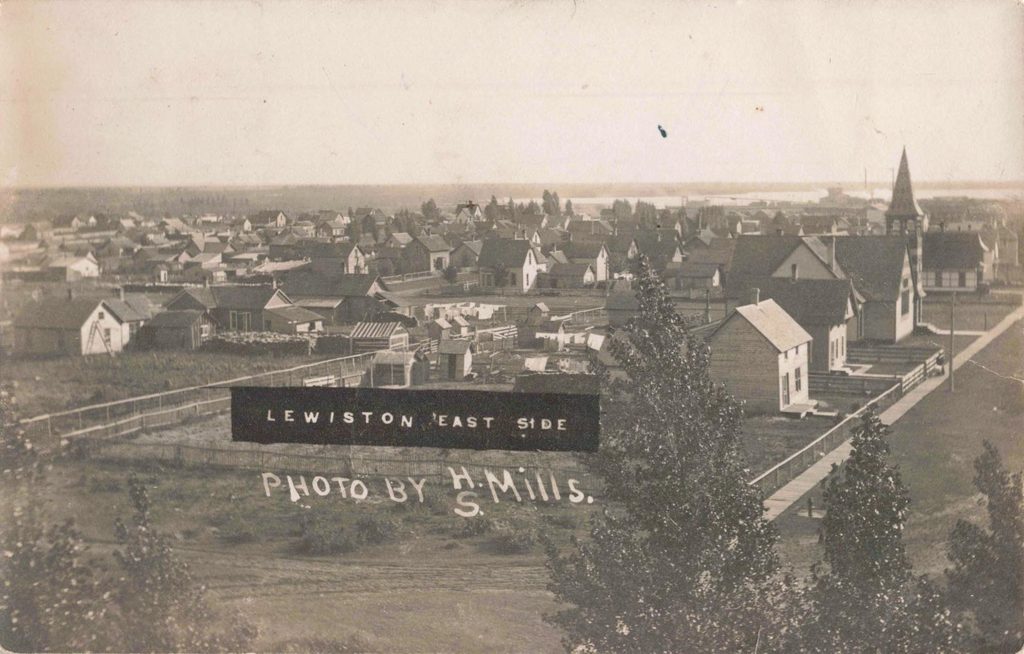
By 1950, Lewiston’s economy increasingly depended on recreation and tourism. The contrast with its early history was considerable. During the 1890s, railroad tracks and lumber mills had determined where businesses and homes were built.
By the mid-20th century, highways, vacation cabins, and lakeside properties became more important.
The Lumber Manager’s House That Became Lewiston’s Museum
One of Lewiston’s surviving links to its founding years is David Kneeland’s former home. The house was built in 1892, as the Michelson and Hanson Lumber Company established local operations. Kneeland and his family lived there until 1910.
When the lumber company closed, George and Martha Sachs bought the property for $425. The Sachs family occupied the house for decades. It eventually became the Lewiston Area Museum, preserving photographs, artifacts and records of the community’s early years.
The Lewiston Area Historical Society, founded in 1975, also helps preserve the former Camp Lunden site. Those two historic places recall different chapters in the town’s development. The Kneeland house belongs to the years when lumber companies created Lewiston.
Camp Lunden recalls the Depression-era effort to restore forests that earlier generations had cut. Between them lies the story of farmers, merchants, railroad workers, hunters, fishermen, and resort owners who kept Lewiston functioning as its economy changed.
The history of Lewiston Michigan is especially interesting because the forests that first supported the lumber industry eventually became central to the area’s recreational economy. The old sawmills disappeared. The passenger trains stopped running. Yet East Twin Lake, West Twin Lake and the surrounding woods continued drawing people to this corner of Montmorency County.
The community had found another reason to remain.
Lewiston, Michigan: Historical Timeline
Lewiston, Michigan
Follow Lewiston’s transformation from a busy lumber town to a northern Michigan vacation community.
Select a historical period below to view the important events from that era.
The Lumber Boom
1891–1902
Lewiston Is Established
The Michelson and Hanson Lumber Company plats Lewiston near East Twin Lake. The village develops around the company’s timber operations.
The First Sawmill Burns
The company’s new sawmill burns during its opening week. The owners rebuild, and lumber production resumes later that summer.
The Railroad Arrives
Railroad service connects Lewiston with Grayling. The line carries lumber, freight, passengers and mail.
David Kneeland’s Home Is Built
A residence is constructed for lumber company manager David Kneeland. The house eventually becomes the Lewiston Area Museum.
The First School Burns
Fire destroys Lewiston’s original school building, creating another challenge for the growing community.
A New School Opens
A replacement school building is completed, allowing local children to continue their education.
Cephas Buttles Buys Cutover Land
Land promoter Cephas Buttles purchases approximately 25,000 acres of former timberland and begins encouraging agricultural settlement.
Angusdale Stock Farm Opens
Buttles establishes Angusdale Stock Farm as a model agricultural operation intended to attract new settlers.
The Years of Change
1910–1920s
The Lumber Company Departs
Michelson and Hanson end their local sawmill operations as the supply of valuable pine timber declines.
Fires Damage Downtown Lewiston
A series of destructive fires eliminates much of the village’s original wooden business district.
Tourism Begins Taking Hold
Hunting, fishing and lakeside recreation become increasingly important. Small resorts and tourist accommodations begin serving visitors arriving from other parts of Michigan.
The CCC and Conservation
1933–1939
Camp Lunden Opens
Approximately 200 young men arrive near Lewiston as part of the Civilian Conservation Corps. They begin planting trees, improving roads and working on conservation projects.
Railroad Service Ends
The Michigan Central Railroad’s Lewiston branch is abandoned, marking the end of an important transportation era.
The CCC Builds a Miniature Michigan
Young men studying drafting and civil engineering at Camp Lunden construct a miniature Michigan, complete with basins representing the Great Lakes and Lake St. Clair.
Water from an artesian well fills the miniature lakes, which are stocked with fish.
Camp Lunden Closes
The CCC camp ends operations after three years of conservation work in the Lewiston area.
Hunt Creek Fisheries Research Begins
Michigan establishes a fisheries experiment station near Lewiston to study trout populations, fishing regulations and stream management.
Tourism and Preservation
1940s–1994
The Automobile Era Changes Lewiston
Hotels, restaurants, markets and lakeside cabins increasingly serve vacationers arriving by automobile. Hunting, fishing and family tourism support the local economy.
Camp Lunden Receives Historic Recognition
Camp Lunden is recognized as a Michigan State Historic Site, preserving the history of the CCC and its unusual miniature Michigan project.
Frequently Asked Questions About Lewiston History
When was Lewiston, Michigan, founded?
Lewiston was platted in 1891 by the Michelson and Hanson Lumber Company. Development accelerated when sawmill operations and railroad service were established in 1892
Why is Kneeland Street so wide?
According to a local historical marker, the street was designed in part to serve as a firebreak between the east and west sides of the business district
What was Camp Lunden?
Camp Lunden was a Civilian Conservation Corps camp that operated east of Lewiston between 1933 and 1936. Its workers planted trees, improved roads and constructed other conservation projects
Where can visitors learn about Lewiston’s early history?
The Lewiston Area Museum occupies the former home of lumber company manager David Kneeland at 4384 Michelson Avenue. The Camp Lunden historic site is located east of Lewiston along County Road 612.
Share Your Lewiston Memories
Do you remember the Neuenfelt Hotel, Orwick’s Drug Store, Brown’s Food Market or the old lakeside resorts? Perhaps your family has a connection to Camp Lunden or the Michigan Central Railroad.
Share your memories in the comments. Family photographs, business records and firsthand recollections can help document details that might otherwise disappear from Lewiston’s history.
Works Cited
“Angusdale Stock Farm.” Angusdale Stock Farm Historical Marker. The Historical Marker Database.
“Camp Lunden.” Camp Lunden Historical Marker. The Historical Marker Database.
Lewiston Area Historical Society. “History of Lewiston.” Lewiston Area Museum.
The Lewiston Lodge. “Our History.” The Lewiston Lodge.
Michigan Department of Natural Resources. “FY 2026 Capital Outlay Five-Year Plan.” State of Michigan.
MichiganRailroads.com. “Station: Lewiston, MI.” Michigan Railroad History.
MichiganRailroads.com. “Timetable: MCRR — Twin Lakes Branch, Grayling to Lewiston.” Michigan Railroad History.
“Michelson & Hanson Saw Mill.” Michelson & Hanson Saw Mill Historical Marker. The Historical Marker Database.
“Lewiston Band Stand & Early Entertainment.” Lewiston Band Stand Historical Marker. The Historical Marker Database.
Michigan Economic Development Corporation. “Lewiston Area Historical Society.” Pure Michigan.