 by
by Linwood, Michigan, is a small village on the shores of Saginaw Bay. Once surrounded by pine forests, it grew into a farming community and a summer destination. Today, Linwood’s older residents and the local museum keep the history of Linwood, Michigan, alive through stories and photographs. In this post, we explore Linwood’s journey from timber town to lakeside village, relying on century-old photos and local accounts to guide us.
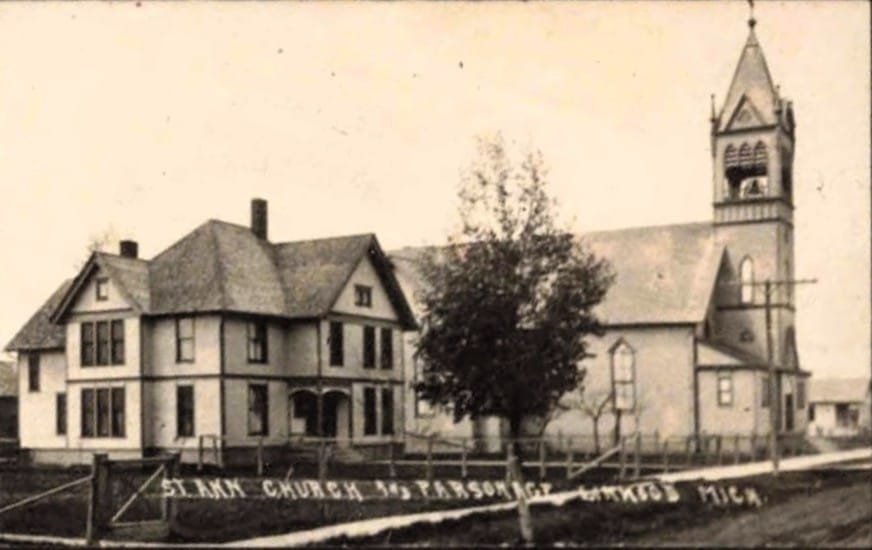
Table of Contents – History of Linwood
Video – Linwood Didn’t Boom or Bust — It Just Outlasted Them All
Early Days and Lumbering
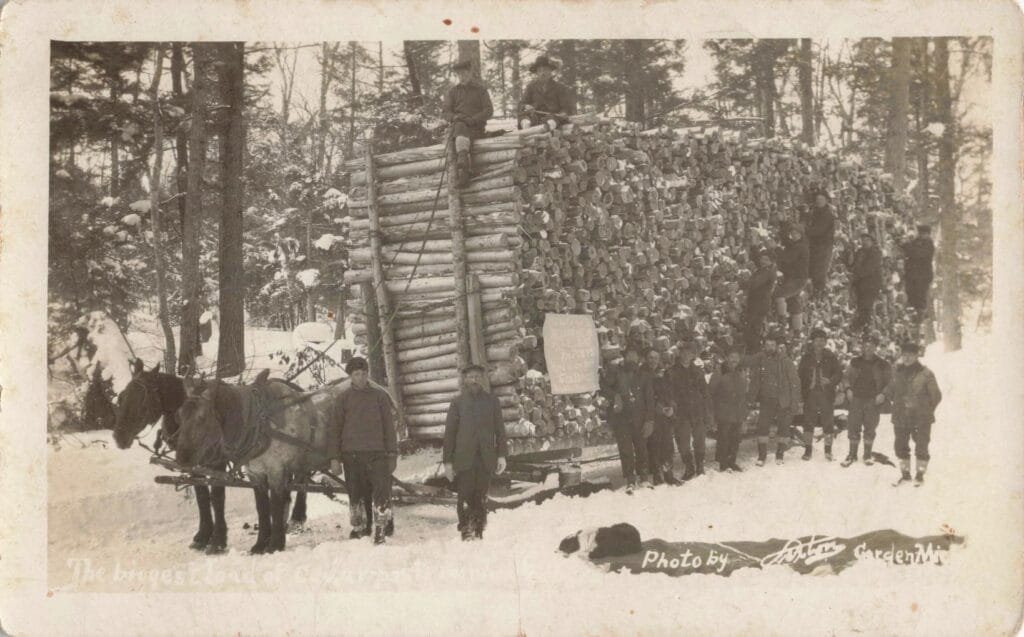
The story of Linwood, Michigan, begins in the 1870s when Northern Michigan was a vast forest. Lumber barons like James G. Terry came here to cut white pine. In 1872, a railroad line (the Michigan Central) pushed through this part of Bay County, and a small station and post office opened under the name “Terry’s Station,” after the mill owner. Around that depot, loggers and their crews spent winters cutting trees and summers floating logs down Saginaw Bay.
As a community took shape, the name changed. On June 28, 1882, “Terry’s Station” was officially renamed Linwood – a tribute to its location on the township line and the wooded land that still surrounded it. The “History of Linwood Michigan” at that time was written in stumps and sawdust. By the 1890s, most of the pine had been cut, and the village’s focus began to shift.
Railroads and Community Growth
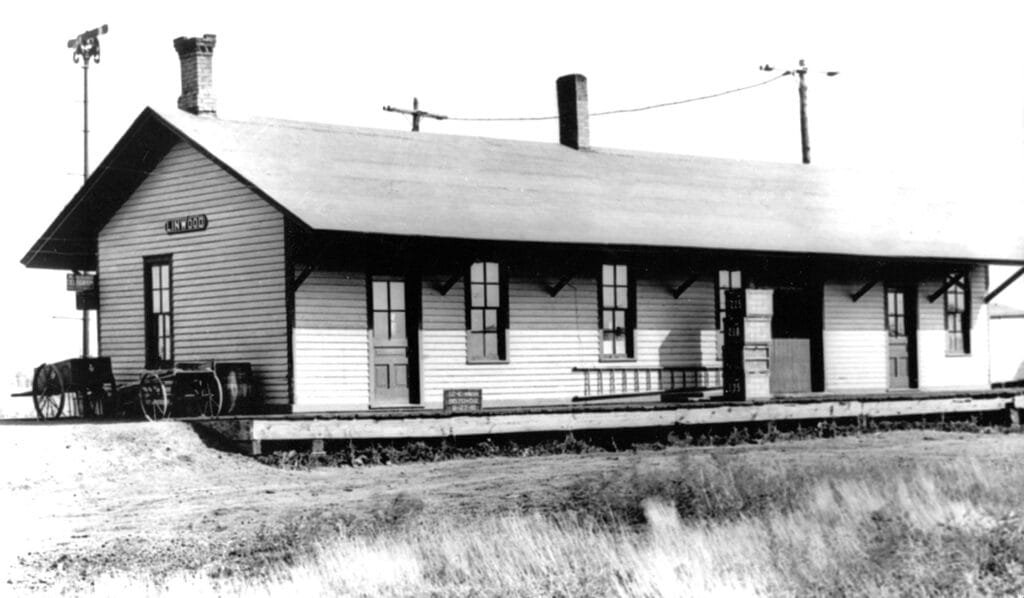
Linwood’s growth was tied to the railroad. The Michigan Central (later the Detroit & Mackinac) trains stopped here, and the village became a shipping point for farm produce. In fact, early community records note that Linwood had one of the county’s first cheese factories, operated by the Bay City Sanitary Milk Company. By 1905, Bay County newspapers remarked how even in this remote township, dairy farms were flourishing.
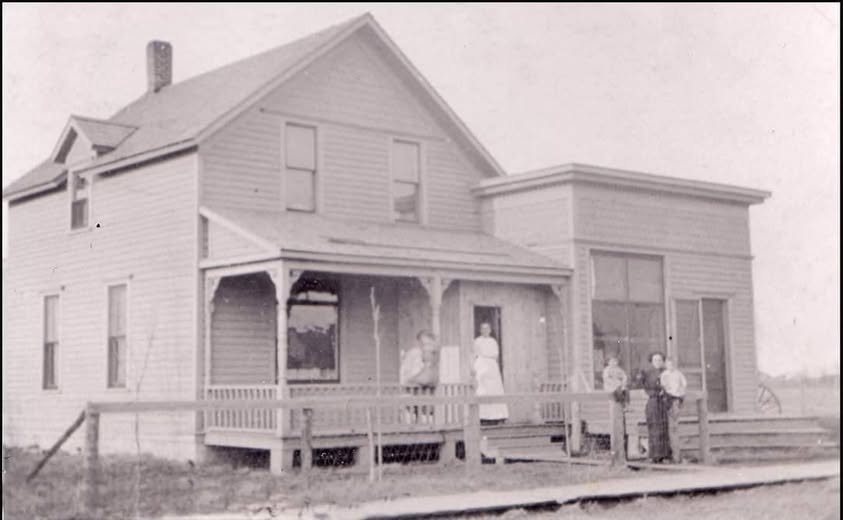
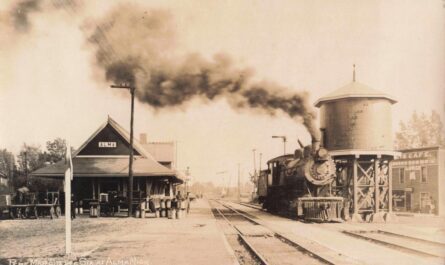
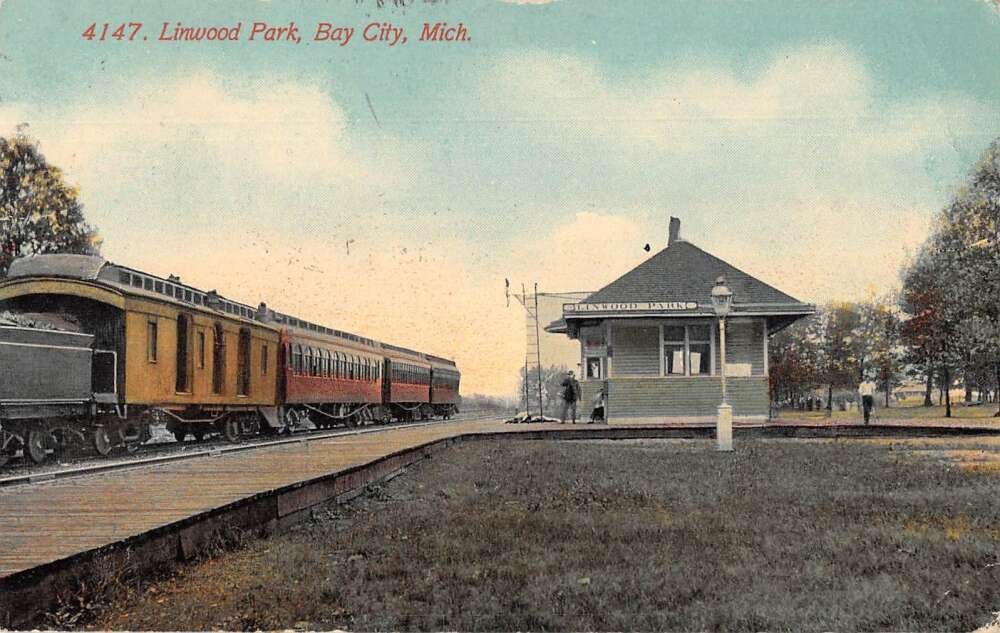
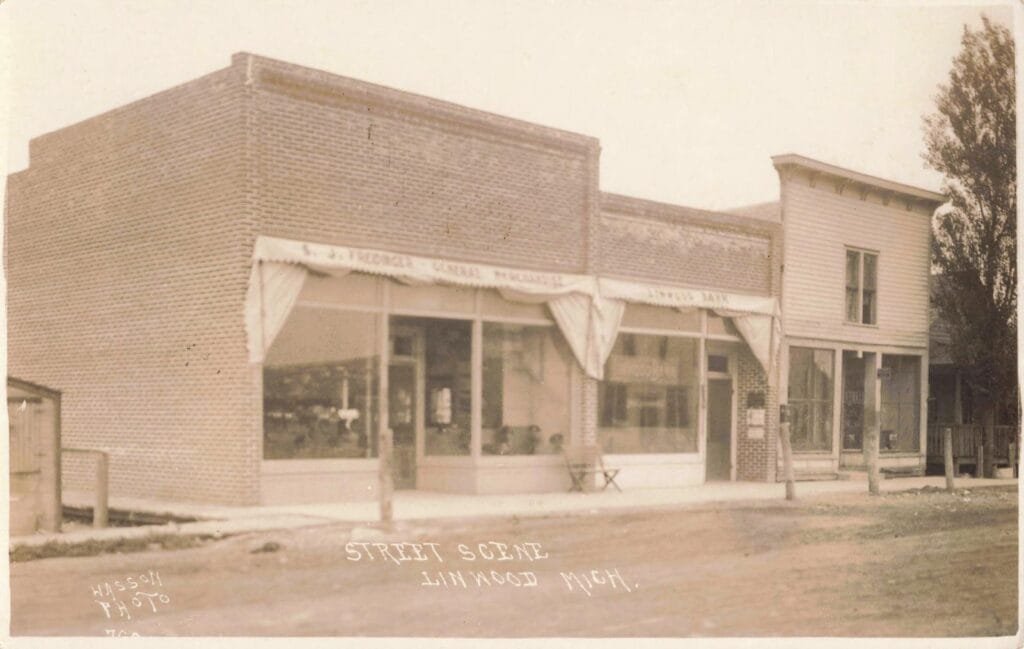
Along the tracks, Linwood’s Main Street slowly developed. A photograph dated around 1915 shows a dirt road lined with wooden storefronts and a small depot in the distance. The post office – opened originally in 1872 – served locals by mail and telegraph. Every day, passenger trains arrived with travelers and goods; farmers shipped their grain and potatoes northward.
Images on this page may contain affiliate links in which we may receive a commission. See our affiliate disclosure for details.
Historic Photos of Detroit in the 50s, 60s, and 70s
Historic Photos of Detroit in the 50s, 60s, and 70s documents what a Metro Detroiter would have experienced through those decades, from the commonplace—to a visit from John F. Kennedy.

St. Anne’s Church and Local Life
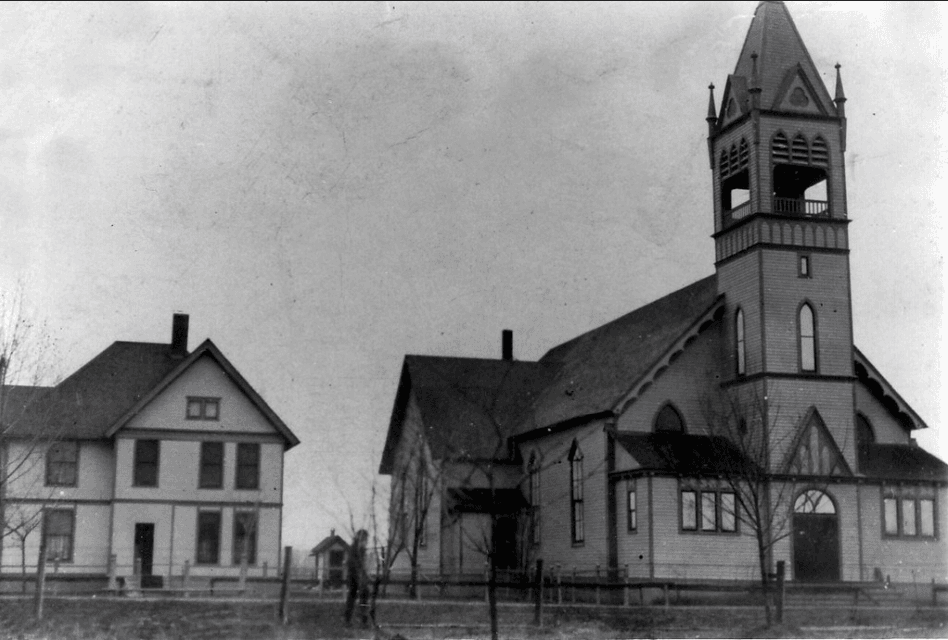
A key chapter in the History of Linwood, Michigan, is the founding of St. Anne’s Catholic Church. In 1882, the same year Linwood was named, Edwin and Myra Seel Parsons – members of a leading local family – donated land to build St. Anne’s Church and cemetery. The small white church, built with community labor, quickly became the village’s social heart. Reverend clergy and parishioners held Sunday Masses, weddings, and baptisms under its steeple. Outside services, people held Sunday School classes and meetings of the local chapter of the Michigan Agricultural Society right at the church.
In a way, St. Anne’s anchored Linwood. The Parsons family, who owned much of the surrounding land, also built the parsonage next door (seen in the photograph above). Two generations of Linwood families passed through St. Anne’s doors. The building shown in the vintage photo above is actually the second church: the original 1883 building burned down in 1916, and a new church was completed by 1921. But its role stayed the same. When you look at that old black-and-white picture of the church and parsonage, you can almost hear the village bells ringing on Sunday morning – a reminder of everyday life in Linwood decades ago.
Farming and Industry
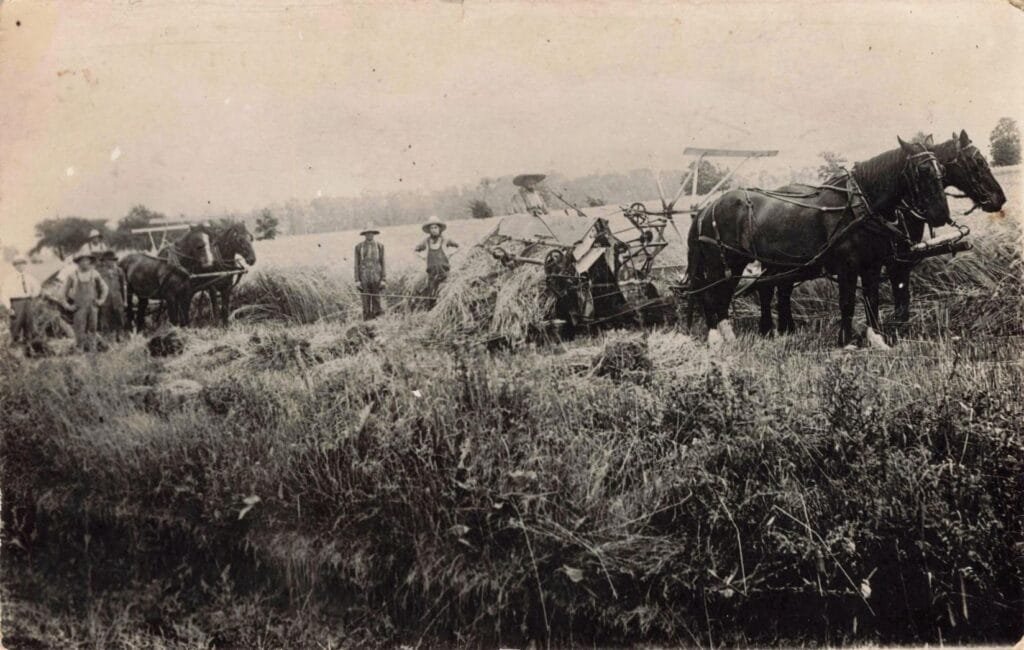
With the forests gone, Linwood’s settlers turned to farming. The alluvial soils here produced good crops of potatoes, corn, sugar beets and celery. One 1903 report called Bay County “a garden spot” with fertile farms, and Linwood’s fields contributed to that reputation. Many families kept cows and raised grains; their barnyard and dairy production led to that one cheese factory mentioned earlier. For three decades, Linwood farmers would stack hay in their lofts by day and work in the fields by night if needed – a far cry from the isolated timber life of the 1860s.
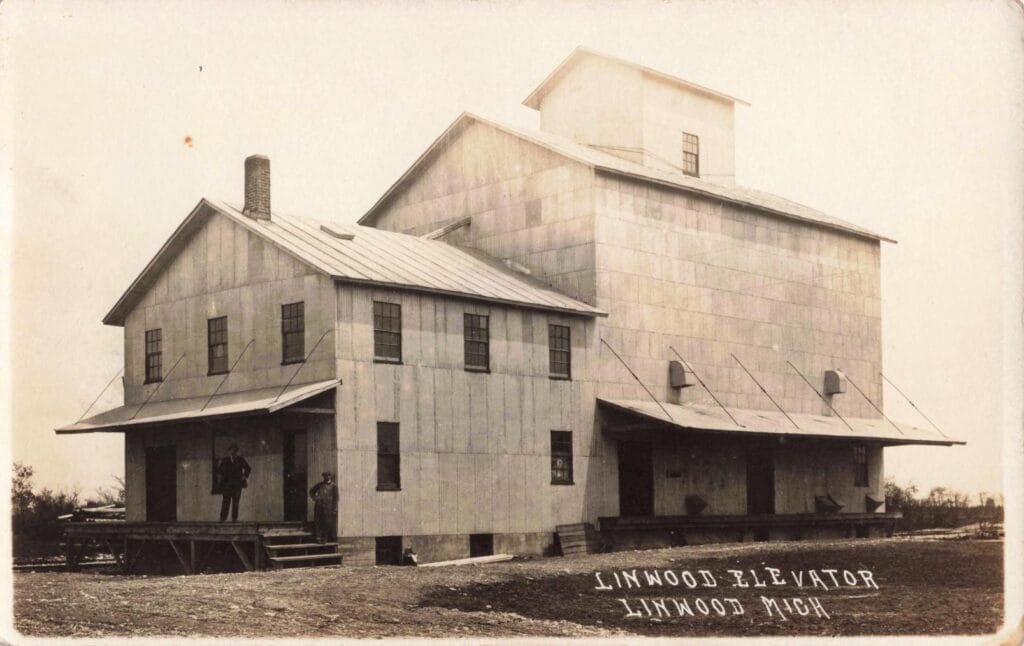
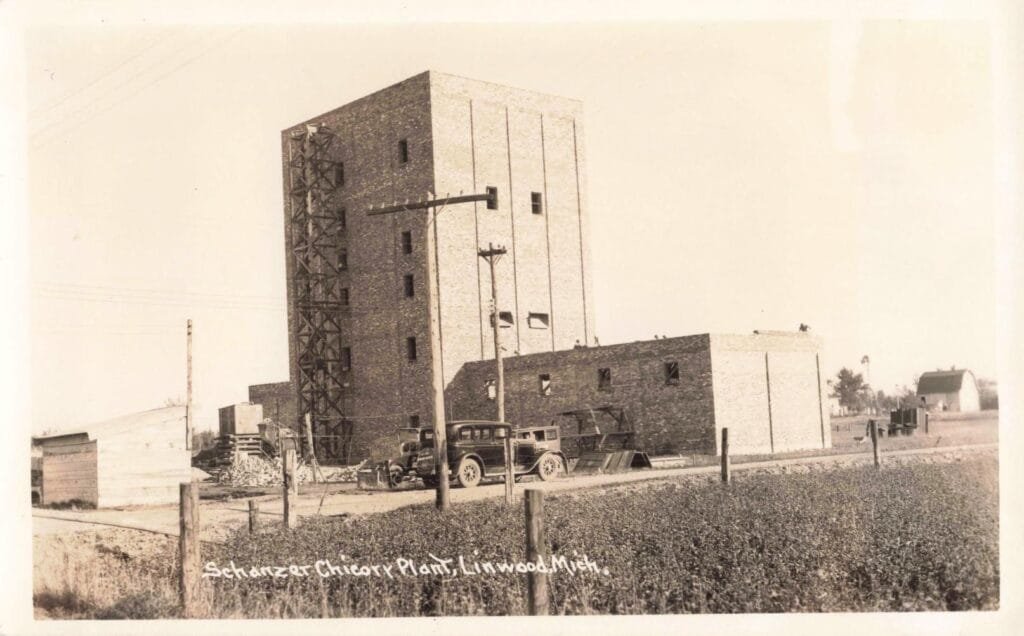
Early industry also came in small parcels. You’ll notice in some photos a tall wooden structure – the grain elevator. In a 1916 scene of Linwood’s depot, a wooden mill elevator stands ready to collect sacks of wheat. Farmers would haul wheat and oats there, and it would be shipped to Bay City and beyond. Similarly, local orchards produced cider and preserves at home, but more ambitious ventures arrived, too. In 1933, for example, the Schanzer company built a chicory plant here. Chicory (a root often used to stretch coffee) was imported overseas, but local farmers found they could grow it. By drying chicory root in Linwood, the company turned Linwood into part of Michigan’s supply of this coffee substitute. Although we lack a photo of the chicory kiln, it was part of the village’s late heritage.
Cottages and Bayfront Tourism
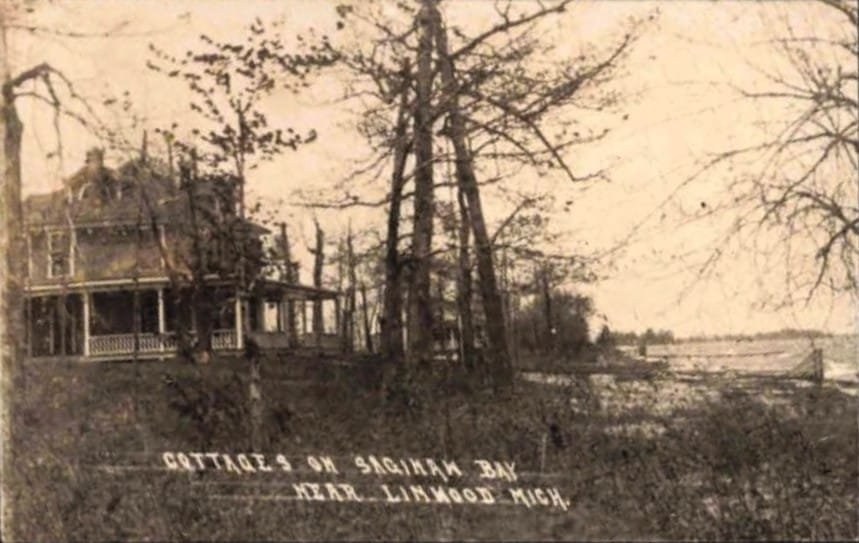
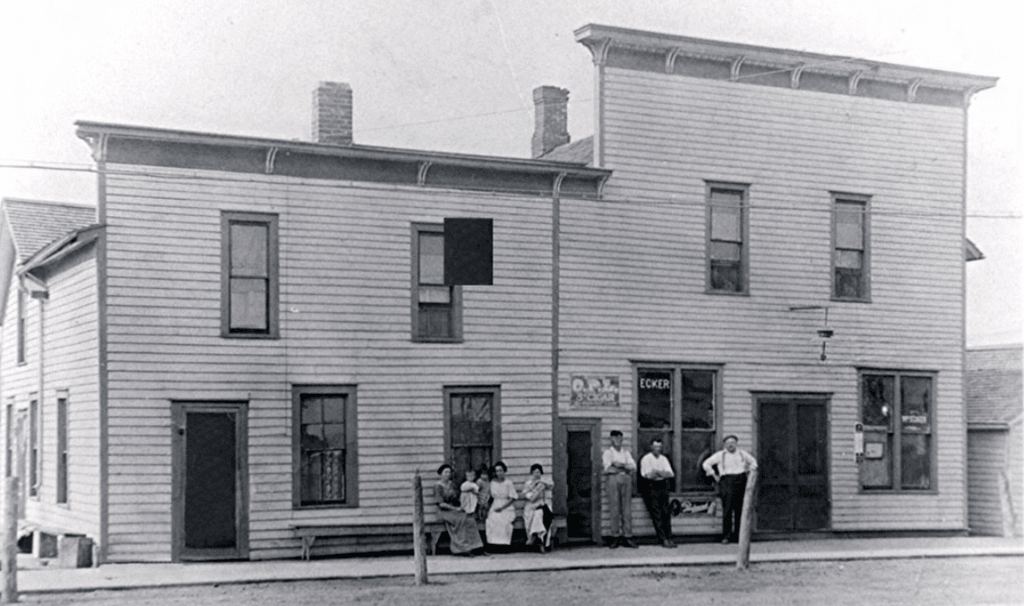
By the 1920s, a new phase began: Linwood’s beaches. Vacationers discovered that the calm waters of Saginaw Bay made fine swimming and fishing. On summer weekends, families from Bay City and Flint drove out for picnics. To accommodate them, small hotels and boarding houses opened. In fact, one postcard scene from 1915 shows the Ecker House Hotel – a two-story wood frame building – advertising rooms and meals. Nearby was the Rosebush Hotel (another local inn) for travelers exploring Michigan’s Thumb.
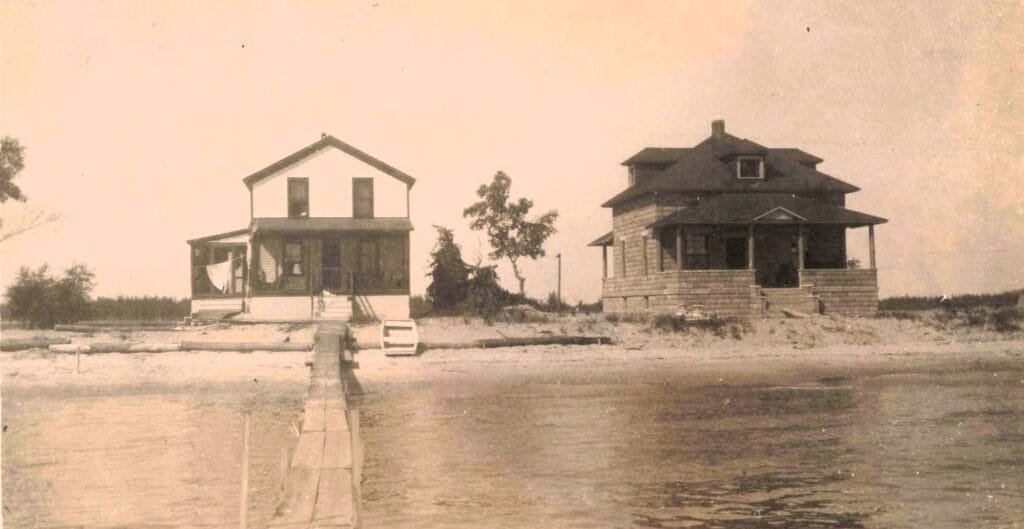
Perhaps the most distinctive turn in Linwood’s story is the arrival of cottages. Where once stood empty dunes, rows of clapboard cottages arose along Linwood Beach Road (called Cottage Grove and Linwood Beach). These little summer houses, some originally cabins or hunting shacks, were painted in pastel colors. Today they are gone or modernized, but early photos show families in bathing suits at wooden piers and children building sandcastles. From those cottages, you could see the steeple of St. Anne’s in the distance. The community life shifted – in the winter, Linwood was quiet, but in the summer, fishermen like the Beebe and Trombley families cast nets, while kids sold ice cream from a cart on hot afternoons.
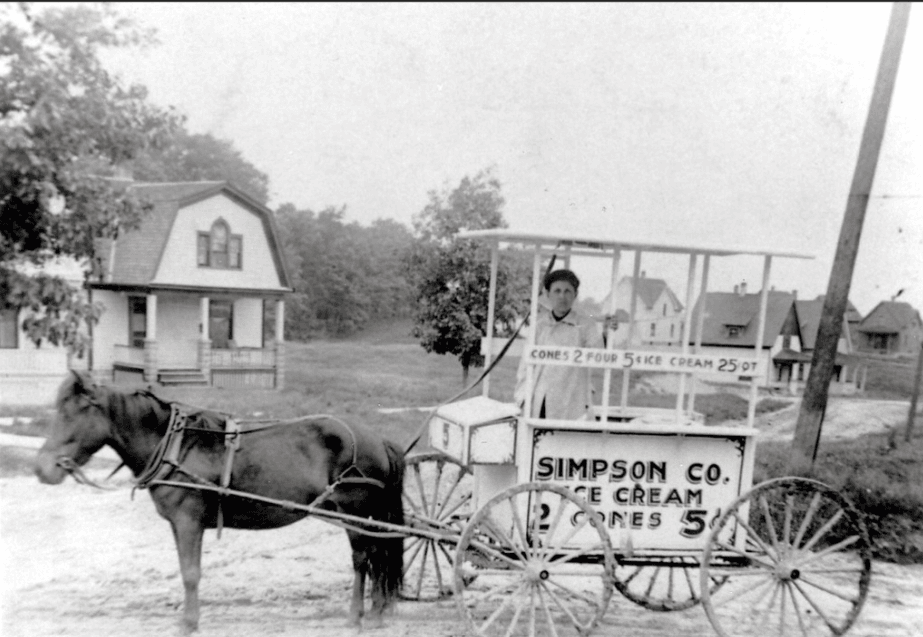
A 1900 photograph from Linwood shows just such a summer moment: a horse-drawn cart selling ice cream outside a general store, with men and boys in straw hats strolling by. That image captures the simple joys after the hard farm work. In every sense, Linwood had become a place of sun and sand, even as it kept its farming traditions. Its story illustrates the rich history of Linwood Michigan: a town that reinvented itself from logging to farming to leisure, all within a lifetime.
Everyday Life on Main Street
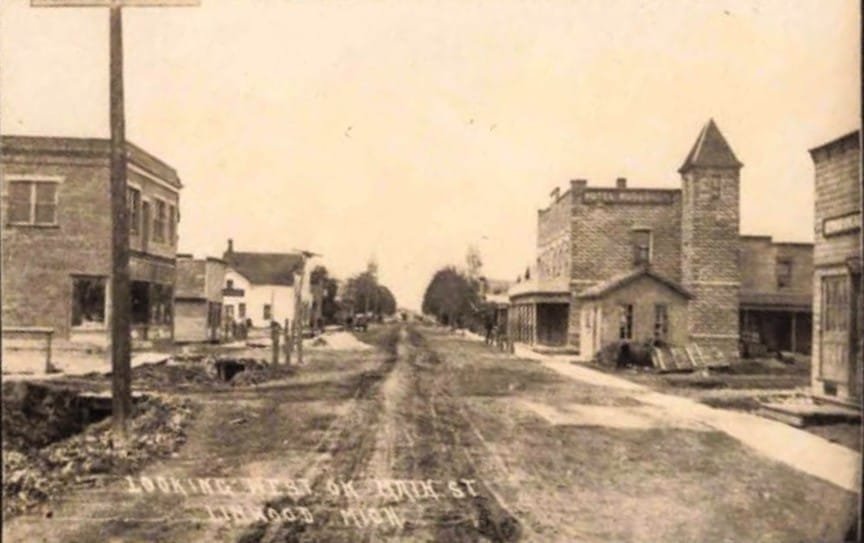
Back in town, everyday life revolved around simple routines. The Main Street (Center Street) corner had a grocery, a hardware store, and the post office (opened in 1872 under the name “Terry Station”). We can see mail coaches and neighbors talking on the porch. The village school sat close by, teaching the children of farmers and ranchers. Town meetings took place in the same building where dances were held at Christmastime. In memoirs, Linwood residents recall milking cows by lantern light, then walking to bed in the dark prairie night.
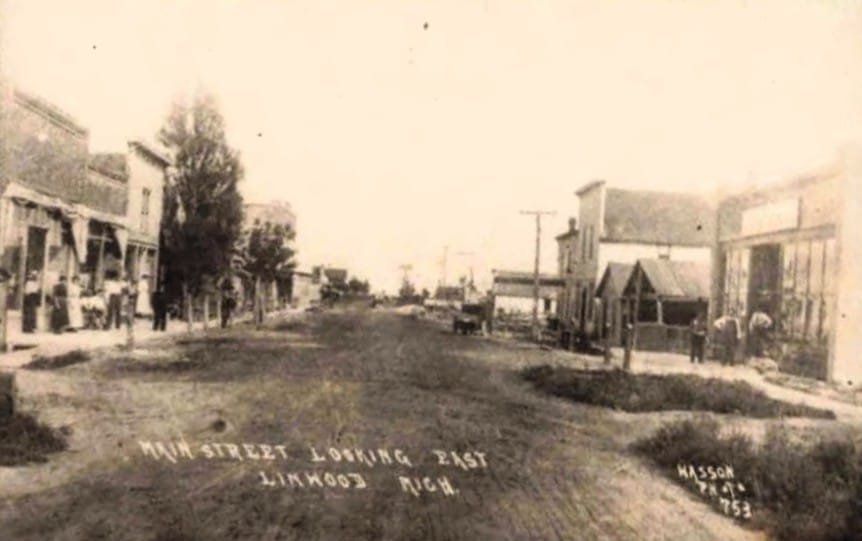
One vivid detail: during the early 1900s, some children attending a summer camp at Saginaw Bay even heard the church choir practicing hymns drifting over the lake. Fishing was not just a job but also sport; perch and walleye were so plentiful that every summer the village brimmed with boats and spearing houses on the ice.
Even today, locals recount Linwood’s past as though flipping through family photo albums. Veterans remember digging canals to drain the marshes before planting crops. Women remember churning butter by hand, and elders still talk about Mrs. Parsons walking down Main Street in a bonnet. These snapshots, though not formally recorded, make clear that Linwood was a hardworking community that took time to celebrate simple comforts – church potlucks, harvest fairs, and fishing tales on the porch at dusk.
Why Linwood Matters Today
Linwood’s story is the story of many small towns across Michigan. It shows how natural wealth – forests and fertile soil – drew people here, how those people built institutions like churches and schools to bind them together, and how they adapted as industries changed. The last farmer or logger of Linwood has long passed, but the village still honors its legacy. In the summer, when the Linwood Scenic Park opens by the bay, children play where horses once pulled hay wagons. Pickle lovers celebrate in an annual festival, keeping a quirky tradition alive. And old photos of Main Street and the depot hang in homes and libraries, reminding everyone that Linwood was once a bustling center of rural life.
Throughout this narrative, we’ve seen how the History of Linwood, Michigan, flows from one era to the next. From “Terry Station” on the map to a village of white-collar cottages, Linwood spans Michigan’s lumber era, agricultural age, and vacation boom. It stands today not just as a set of coordinates on M-13, but as a testament to the people who made it home. In each weathered photograph – the church, the hotel, the grain elevator – we find clues to who they were and what they did. Knowing this history helps us appreciate Linwood’s place in Michigan’s story and why Linwood, Michigan, still holds a special charm on Saginaw Bay.
Works Cited For the History of Linwood
- Genealogy Trails. “History of Bay County, Michigan: Chapter 10.” Genealogy Trails, 2015. Accessed Jan. 2026.
- Houses of God. “St. Anne Parish, Linwood, Michigan.” WordPress.com, 21 Aug. 2012. Comment by Doug Uhlmann. Accessed Jan. 2026.
- “Linwood, Michigan.” Wikipedia, 7 July 2025. Accessed Jan. 2026.
- Fraser Township. “About Fraser Township.” FraserTownship.org. Accessed Jan. 2026.