 by
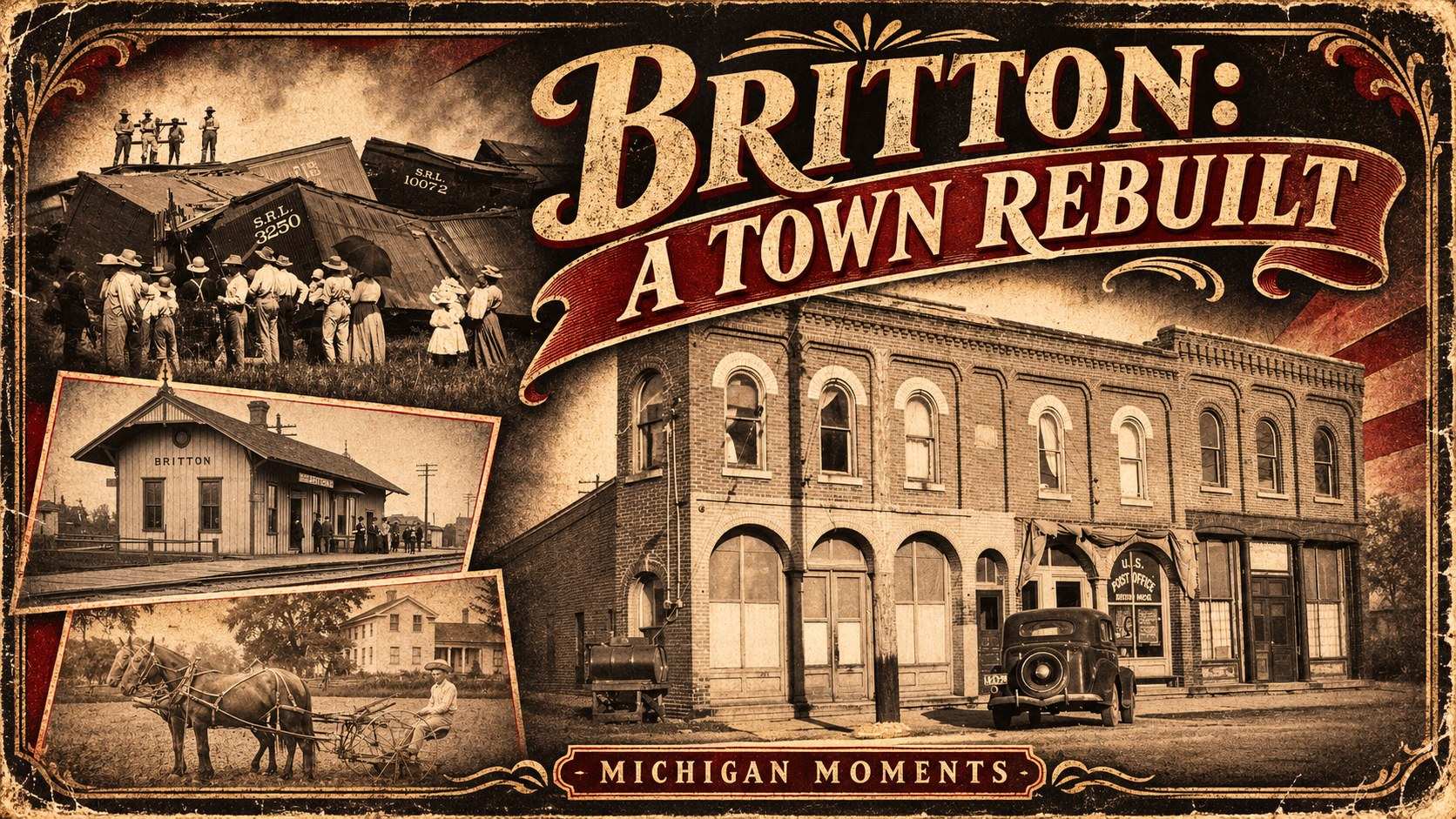
A 1909 postcard carried a brief report from near Britton: a railroad wreck the week before had involved “11 cars of dressed meat.” The note links a small Lenawee County village to a much larger rail network—and offers a glimpse of how news traveled between neighbors.
Britton Michigan history starts at a railroad crossing. The village grew where a line from Detroit met a road between Tecumseh and Monroe. Within a few years, a second railroad made Britton a junction for passengers and freight.
Watch: History of Britton Michigan: A Lenawee Railroad Junction
History of Britton Michigan Begins at a Railroad Crossing
Britton began in 1881, when the Detroit, Butler and St. Louis Railroad crossed the road between Tecumseh and Monroe. The rail line connected Detroit with Montpelier, Ohio, and opened a direct route toward St. Louis and Kansas City. The settlement formed at the crossing, where the railroad met a road already used by local residents.
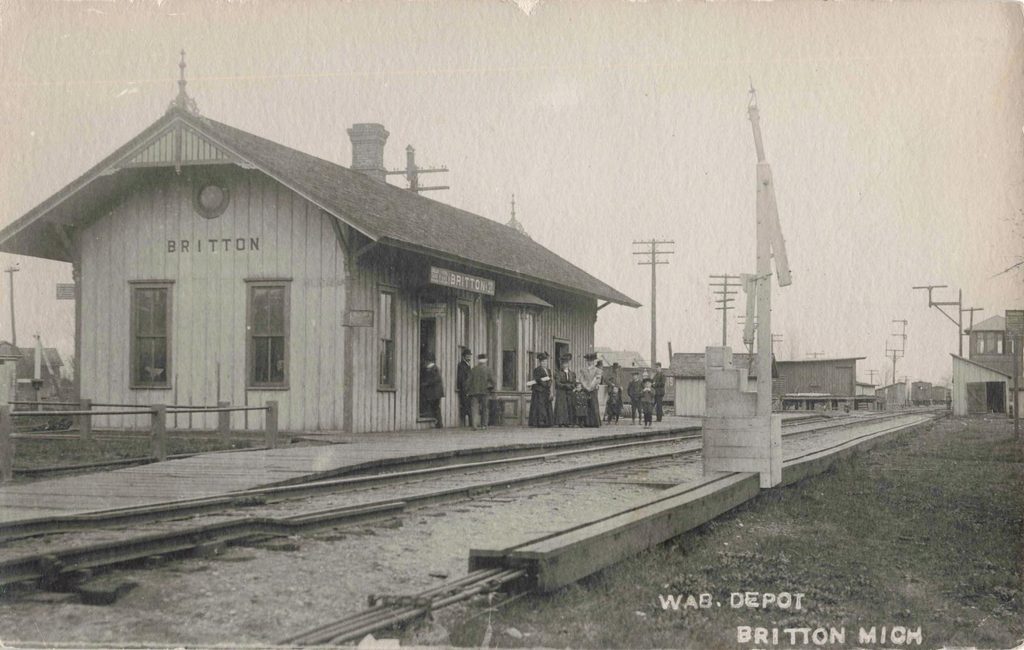
The line later became part of the Wabash system. Its route crossed Lenawee County on a diagonal, passing through Britton and Adrian. For a new village, the station gave residents a place to board trains and gave nearby farms a connection to markets beyond the county.
The settlement first went by Balch. A Lenawee County account says storekeeper John Britton made several trips to Detroit and paid $500 to have the settlement renamed. The name changed to Britton in 1888. A small town had secured a place name that would stay on rail maps and timetables.
A Second Railroad Changes the Route Through Britton
The Wabash was not Britton’s only railroad. The Michigan and Ohio Railroad began building a line across southern Michigan in the early 1880s. Its plan connected Toledo with Grand Haven, where rail car ferries could carry passengers and freight to Milwaukee.
By July 1883, crews had laid about half a mile of Michigan and Ohio track at Britton. The railroad also built a Y-shaped connection and a siding. A newspaper report described business as lively. The new line was changing Britton from a station on one route into a working junction.
The Michigan and Ohio formally consolidated in October 1883. By January 1884, passenger and freight trains ran separately on the line. The new service gave travelers another way to reach Toledo and Detroit, while freight cars carried goods along the route.
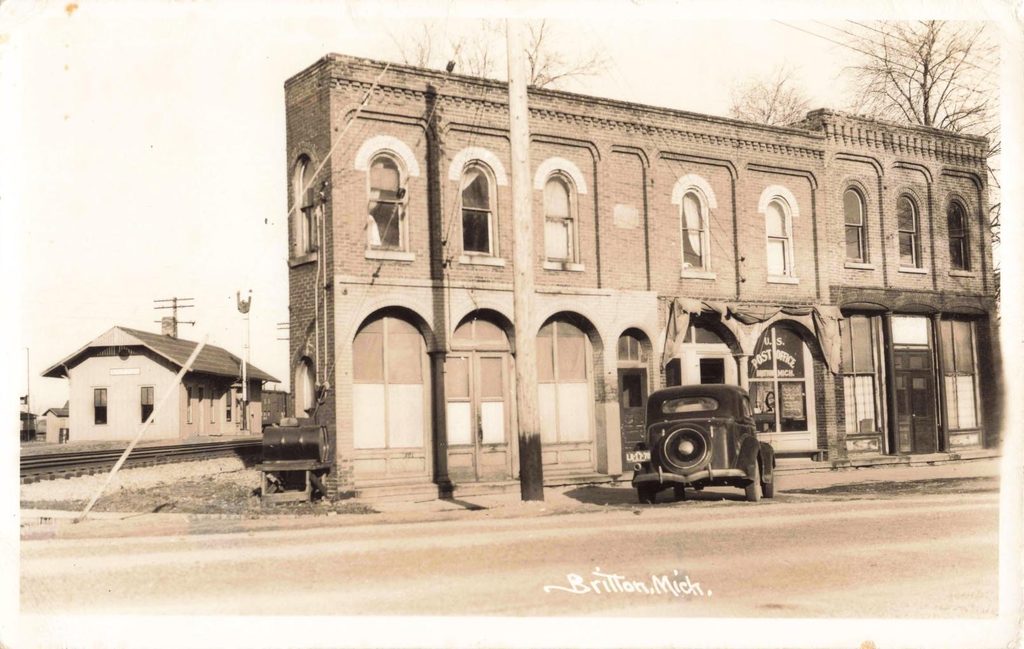
The fares made the connection practical. A passenger could ride from Tecumseh to Britton for 20 cents, then pay $1.45 for the Wabash trip to Detroit. A competing route cost $2.20 and required two train changes. The junction offered a direct and less expensive choice for travelers heading east.
Rail construction also depended on nearby communities. Farmers along the route could sell timber for ties and wood for the locomotives. Construction crews graded the route and laid rail across fields and township roads. Britton’s place in the line came from more than its station: it sat where routes and roads converged.
The Junction Town and Its Daily Life
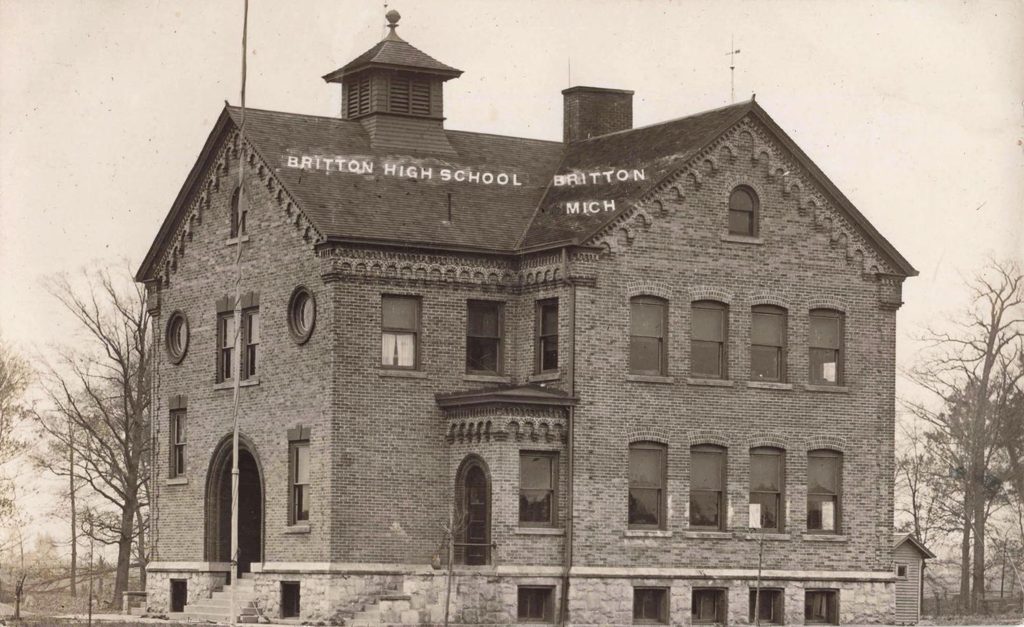
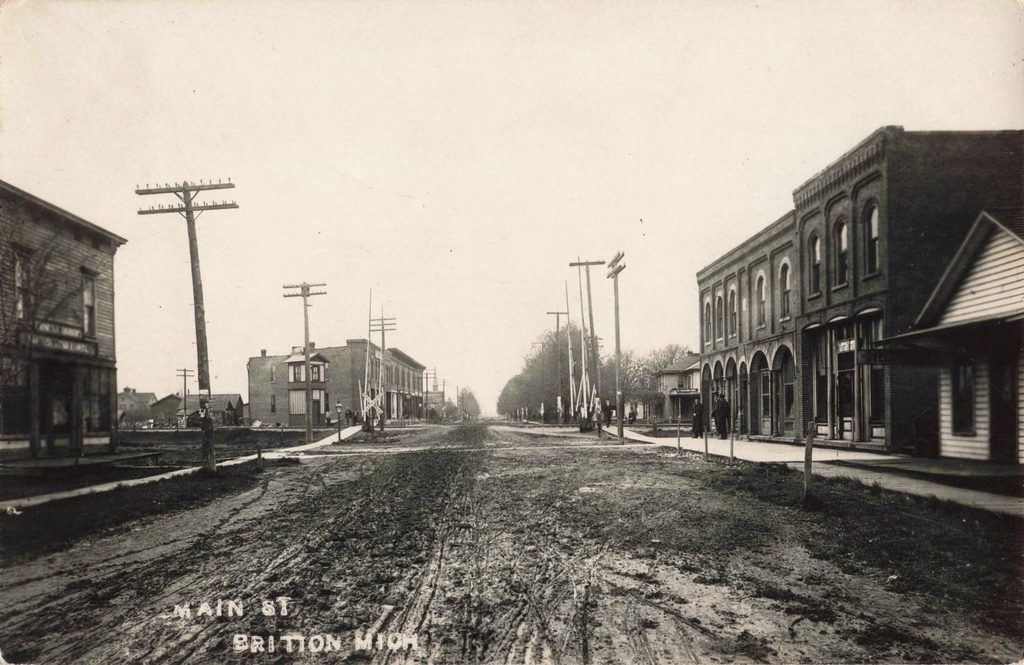
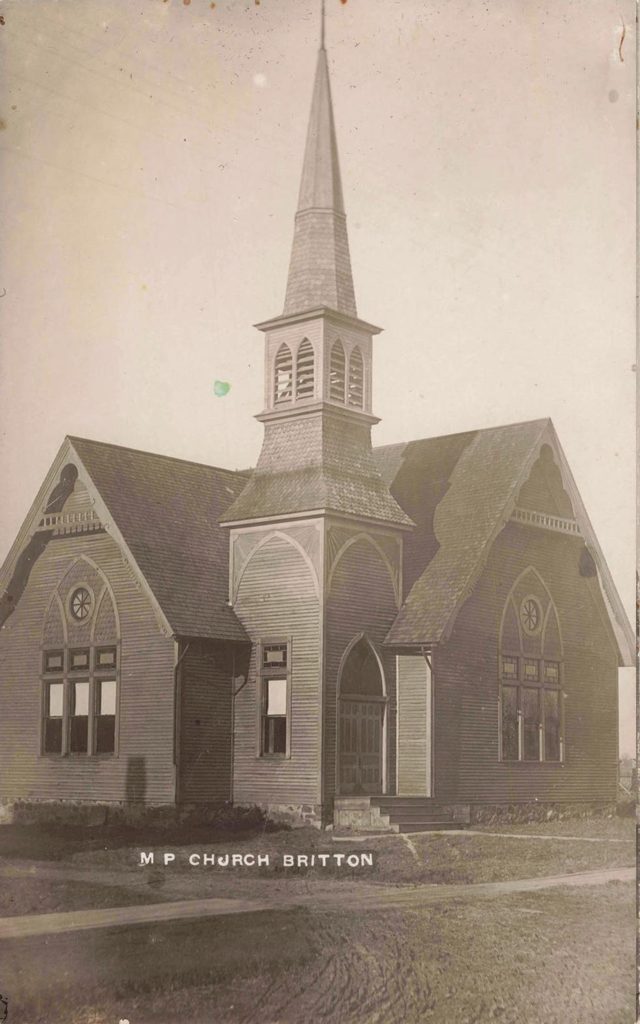
Railroads shaped the town’s business, but residents built their daily lives around more than the depot. Britton had a high school, churches, a post office and businesses along Main Street. A hotel sign advertising meals points to the travelers and local customers who moved through the village.
The postcard below presents the Britton Hotel as more than a place to sleep. Its roadside sign advertises “Chicken and Steak Dinners” and “Home Cooking.” The two-story, wood-sided building has a long front porch and sits beside a brick commercial building.
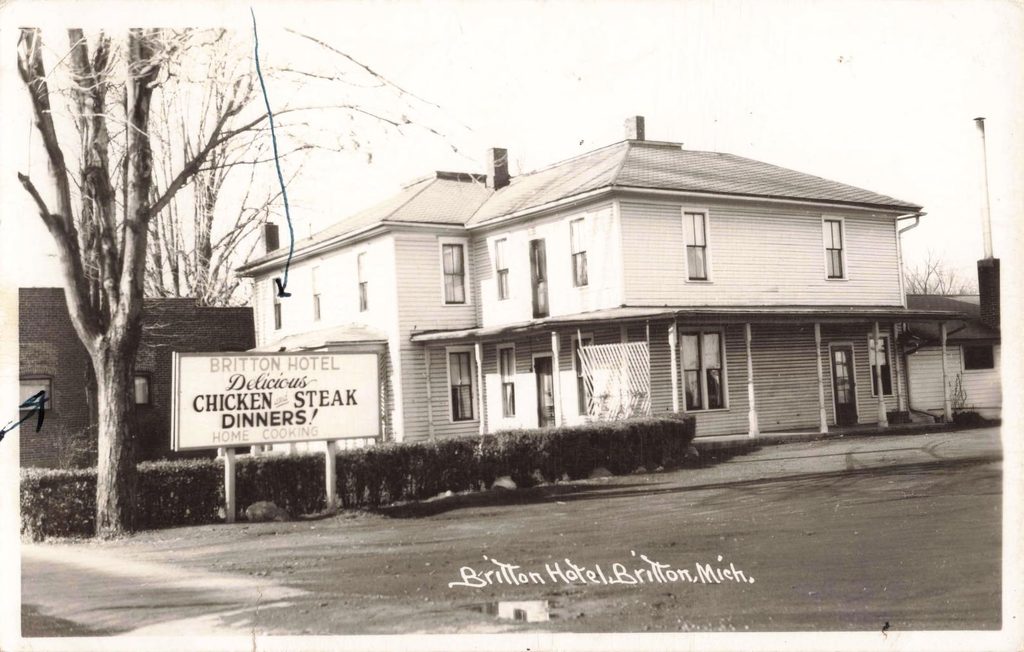
A family-history account offers an early clue about the hotel. It says Bertha Williams Adams, born in 1878, worked at a restaurant and the Britton Hotel. Her account points to the hotel’s presence in local life around the turn of the 20th century
The census counted 345 people in Britton in 1900 and 370 in 1910. By 1940, the village had 409 residents. Those numbers describe a small community whose importance came from connection rather than size. The rail junction linked Britton to Toledo, Detroit and other towns along the lines.
Two Railroad Events, Eight Years Apart
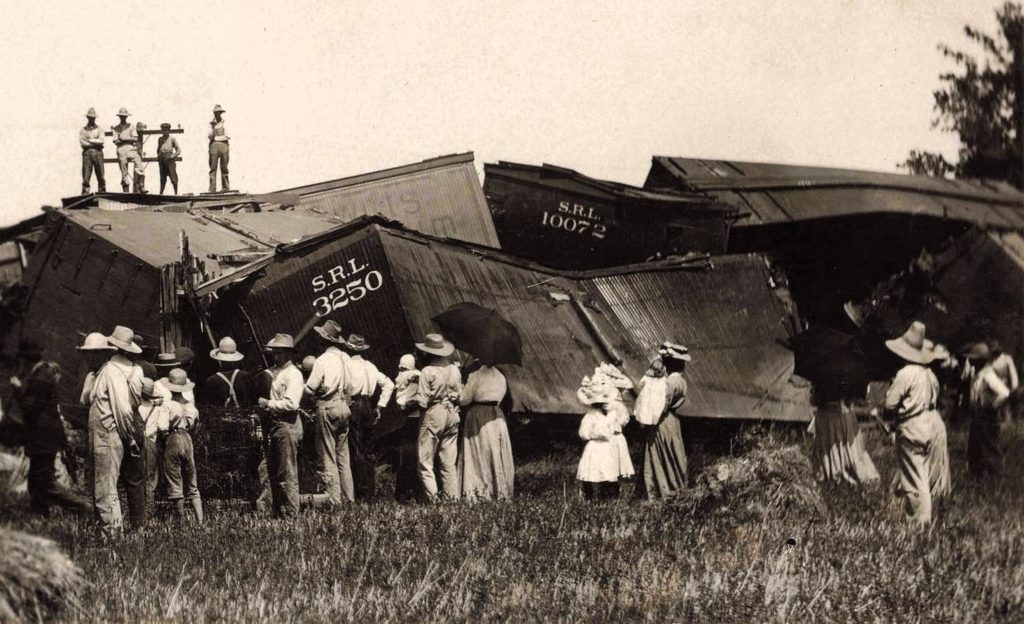
The 1909 postcard turns a railroad event into a personal message. The writer told Eda that a wreck had happened the previous week and mentioned 11 cars of dressed meat. The brief note belongs to the everyday world of the railroad: a shipment, an accident and news passed between people.
In 1917, an accident on the Wabash at Britton prompted an investigation by the Interstate Commerce Commission. The report gives the town another dated moment in its railroad history. The two events are eight years apart, each showing a different way the railroad entered local life.
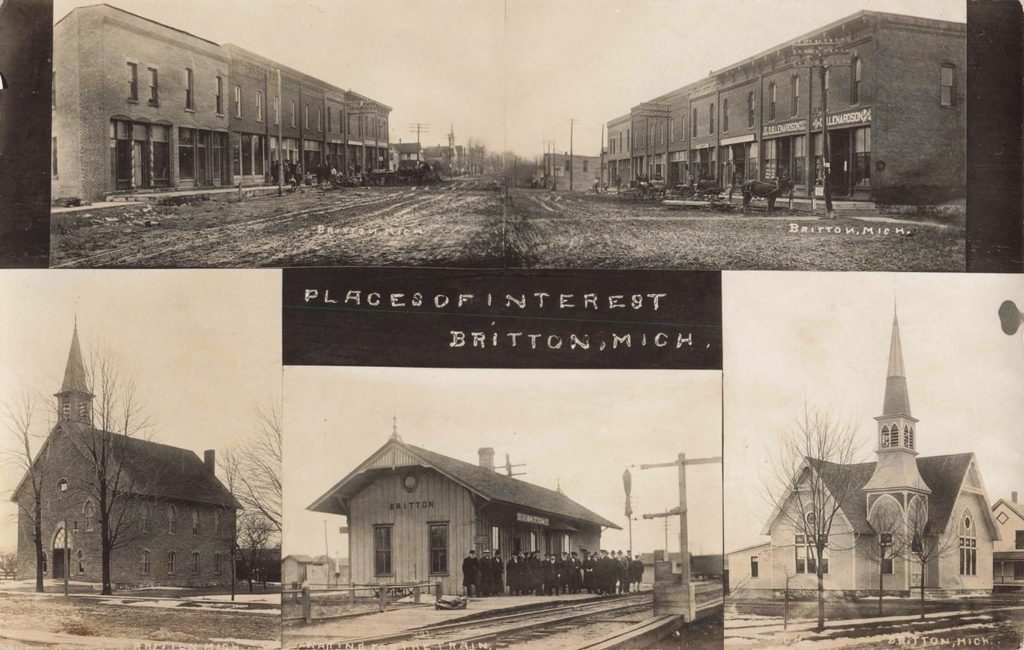
The History of Britton Michigan is the story of a crossing that became a community. The Wabash connected the village to a broader rail network, while the Detroit, Toledo & Milwaukee route gave it another path through southern Michigan. Main Street, the school, church and factory made the junction a place where people lived and worked between train arrivals.
Historical Timeline For Britton Michigan History
Railroads • Main Street • Community
Britton, Michigan: Historical Timeline
A crossing became a junction, connecting Britton with regional rail routes and helping shape the village’s work and daily life.
Select a date to read more. Photo cards show later views of the places and themes described.
1881A railroad crossing starts a settlement
The Detroit, Butler and St. Louis Railroad connected Detroit with Montpelier, Ohio, and crossed the road between Tecumseh and Monroe. The settlement formed at the crossing.
The railroad named the place Balch in August 1881, according to a Lenawee County place-name account.
Read the railroad history1883Michigan and Ohio crews reach Britton
The Michigan and Ohio Railroad built a line across southern Michigan, intended to connect Toledo with Grand Haven. Construction was underway near Britton in 1883. A local report described track, a Y-shaped connection and a siding at the village.
The new route gave Britton a second railroad connection and made the crossing a working junction.
See the Michigan and Ohio route historyOct. 9, 1883Two rail companies consolidate
The Toledo and Milwaukee Railroad and the Toledo and Michigan Railway formally consolidated as the Michigan and Ohio Railroad Company.
Read about the consolidation1884Passenger and freight service expand
Passenger and freight trains ran separately on the Michigan and Ohio line. The service gave travelers another route through southern Michigan and helped move goods along the corridor.
Apr. 13, 1888Balch becomes Britton
A Lenawee County place-name history says storekeeper John Britton secured the name change from Balch after several trips to Detroit and a $500 payment to the railroad.
Read the Lenawee County place-name entry1897A new route changes Wabash service
The Detroit and Lima Northern line reached Tecumseh. The railroad announced that it expected to stop using the Wabash route between Adrian and Britton as its trains shifted to the new connection.
Read the Detroit and Lima Northern history1900The census counts 345 residents
The census counted 345 people in Britton. Its population was modest, but the rail junction connected the village to cities and markets beyond Lenawee County.
View the scanned population table1909A postcard reports a meat-train wreck
A postcard writer near Britton told Eda that a wreck had happened the previous week and involved “11 cars of dressed meat.” The brief message captures how railroad news reached people through personal correspondence.
1910Britton’s population reaches 370
The census counted 370 residents, up from 345 in 1900. The figures show gradual growth in a village whose importance came partly from its rail connections.
View the scanned population table1917Federal investigators review a Wabash accident
The Interstate Commerce Commission published a report on an accident involving the Wabash Railroad at Britton. The document adds a specific event to the village’s railroad record.
Open the accident investigation report1940The census counts 409 residents
Britton’s population reached 409 in 1940. The village remained small, with its depot, Main Street businesses, school and churches serving a community built around the rail crossing.
View the 1940 census population tableHistorical photos are illustrative views supplied with the article. Their placement does not establish that each photo was taken in the year shown on its timeline card.
Frequently Asked Questions
Why did Britton become a railroad town?
The first railroad crossed the road between Tecumseh and Monroe at Britton in 1881. A second line arrived in the 1880s and made the village a junction.
Which railroads served Britton?
The Wabash and the Detroit, Toledo & Milwaukee routes met at Britton. The Detroit, Toledo & Milwaukee line began as the Michigan and Ohio Railroad.
What was the Michigan and Ohio Railroad’s route?
The Michigan and Ohio built across southern Michigan, connecting Toledo with Grand Haven and its rail car ferry service to Milwaukee.
How can readers help document Britton’s history?
Readers can share family stories, identify buildings or people in local images, and add details about businesses that served the village.
Works Cited
Branch District Library. Digitized population table listing Michigan village counts for 1900 and 1910. View the scanned table.
Hodges, Edward D. “The Railroads of Tecumseh—Part 2, the M&O (DT&M).” Tecumseh Junction.
Hodges, Edward D. “The Railroads of Tecumseh—Part 3, the D&LN.” Tecumseh Junction.
Interstate Commerce Commission. “Report of the Accident Investigation Occurring on the Wabash Railroad, Britton, MI.” 1917.
Lenawee County. “Old Settlements & Post Offices.” Migenweb.
United States Census Bureau. “Population of All Incorporated Places: 1950 and 1940.” 1950 Census of Population.