 by
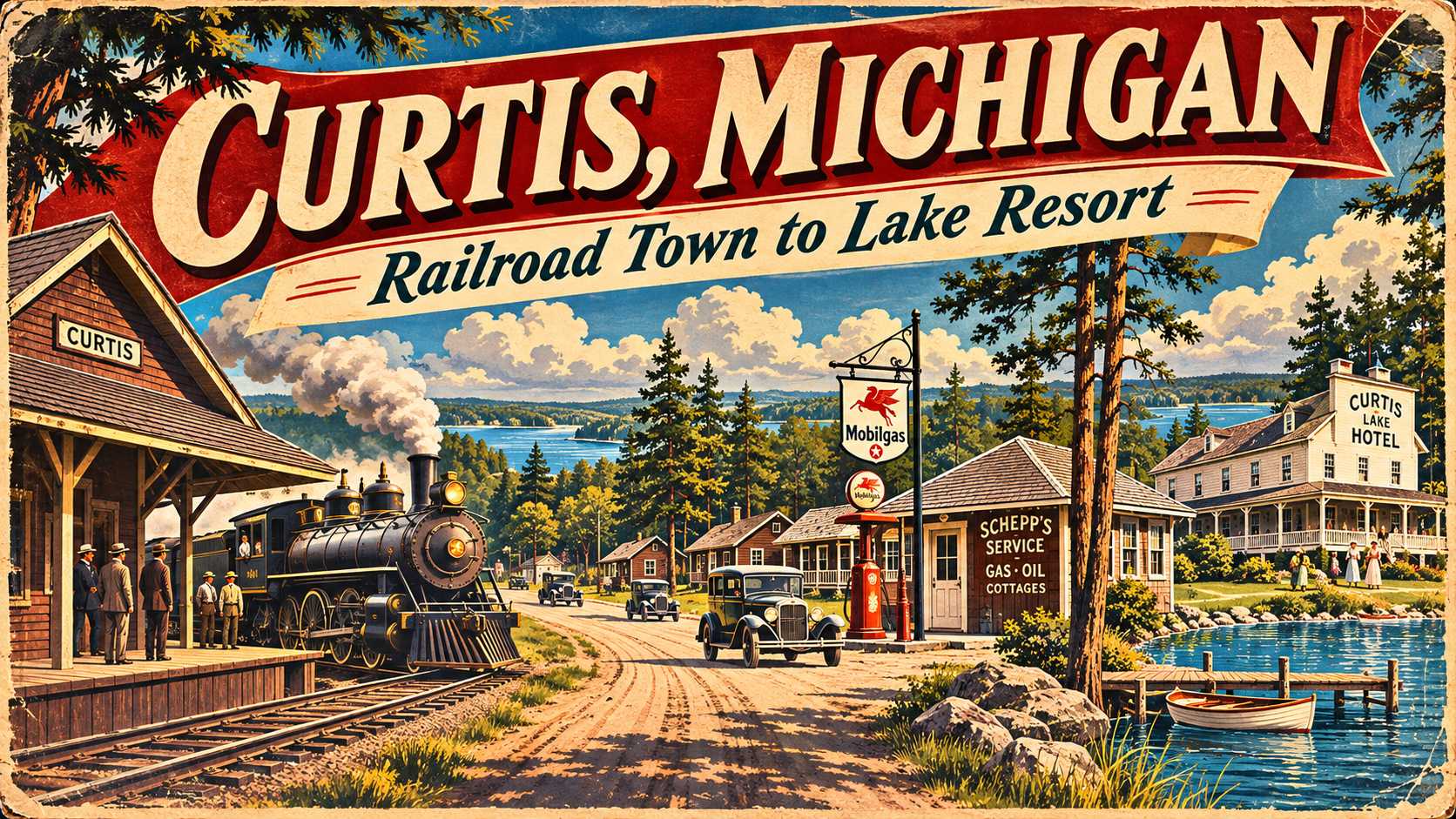
In 1924, people moved a hotel built for railroad passengers in Curtis, Michigan, by horse-drawn log sleds to a new site overlooking Big Manistique Lake. The building would become a fishing and hunting resort, a fitting symbol of a community whose railroad economy was giving way to tourism.
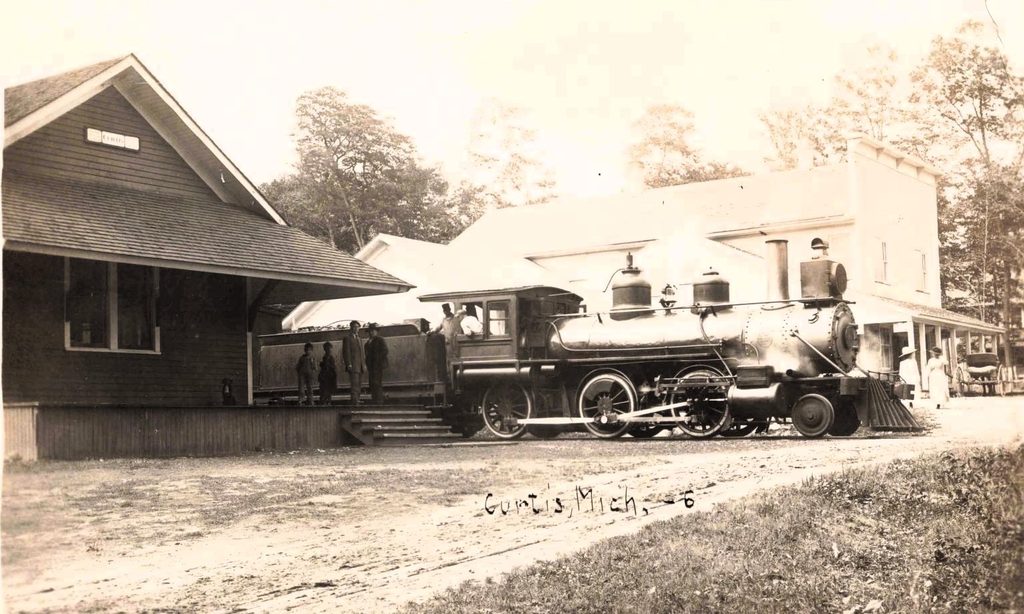
The history of Curtis, Michigan, is closely tied to the Manistique Lakes area, but the community’s early years were shaped by the forests, the people who settled along the water, and the railroad companies that came for timber. Curtis was a railroad town only briefly. The lakes gave it a reason to survive long after the passenger trains were gone.
History of Curtis Michigan
Curtis, Michigan: Historical Timeline
From an early lakeside settlement to a railroad town and vacation community.
View 13 Important Dates in Curtis History
- 1883: Portage Township is organized.
- 1884: John Lee arrives in the area, according to family history.
- 1886: Lee and several Ojibwe residents receive federal land patents.
- 1888: Rhoda Lee is born at the family homestead.
- 1905: The Curtis post office opens Nov. 15.
- 1906: Curtis is formally platted.
- 1910: Railroad passenger service ends.
- 1922: Stack Lumber Co. acquires part of the former railroad route.
- 1924: James Ostrander moves the former railroad hotel and establishes the Forest Inn.
- 1955: The Forest Inn changes ownership to Vic Litzinger.
- 1989: Bud Chamberlin begins the process of restoring the former inn.
- 1990: The restored property opens as a bed-and-breakfast.
- 1992: Its restaurant opens.
Sources: Curtis Remembered, Michigan Railroads, the Belvedere Grand and the Congressional Record.
Watch: Curtis, Michigan: How a Railroad Town Found a Second Life
History of Curtis Michigan Begins With the Ojibwe and a Portage
The Ojibwe people knew the site of present-day Curtis long before European-American settlers established farms and businesses in the area. Waterways connected communities, trading routes, and seasonal activities throughout the Upper Peninsula. The narrow strip of land between Big Manistique Lake and South Manistique Lake provided a practical crossing point.
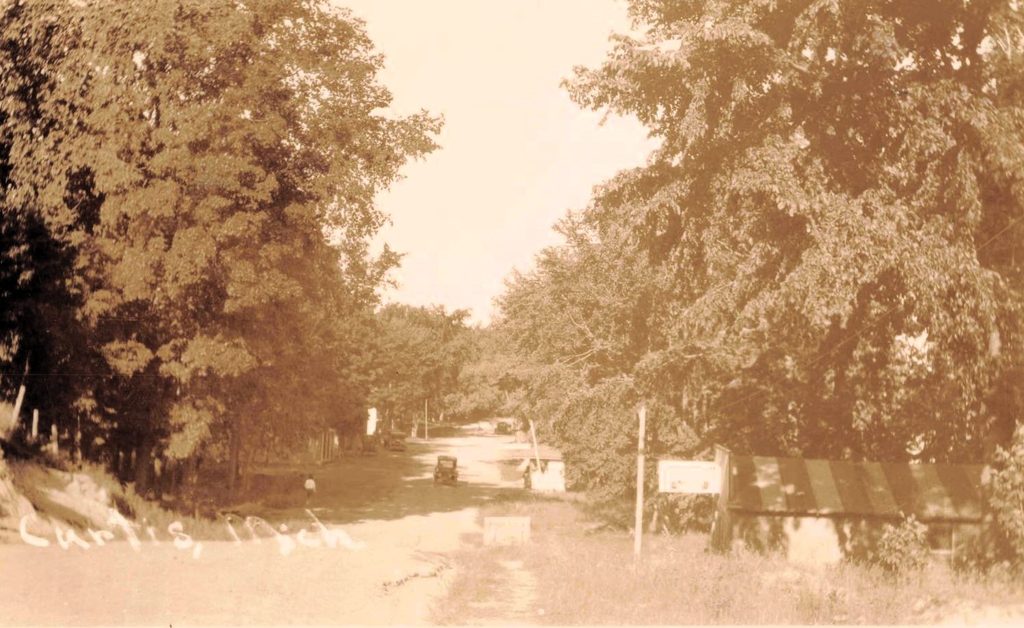
That geography eventually gave the settlement its first name: Portage. Today, the community remains an unincorporated part of Portage Township in Mackinac County. The connection between the two lakes still defines its location.
According to family history preserved in Curtis Remembered, John Lee arrived in the area around 1884. Lee’s grandson, Vernon Lee, recalled that his grandfather lived with Ojibwe Chief Saw-Naw-Quato for approximately 18 months. The two reportedly remained friends after Lee established his own home.
The account places the chief’s dwelling near the site of the present-day Curtis community park. Saw-Naw-Quato’s name remains an important part of the area’s local history, including its appearance in local place names.
John Lee’s Homestead and Everyday Life in Portage
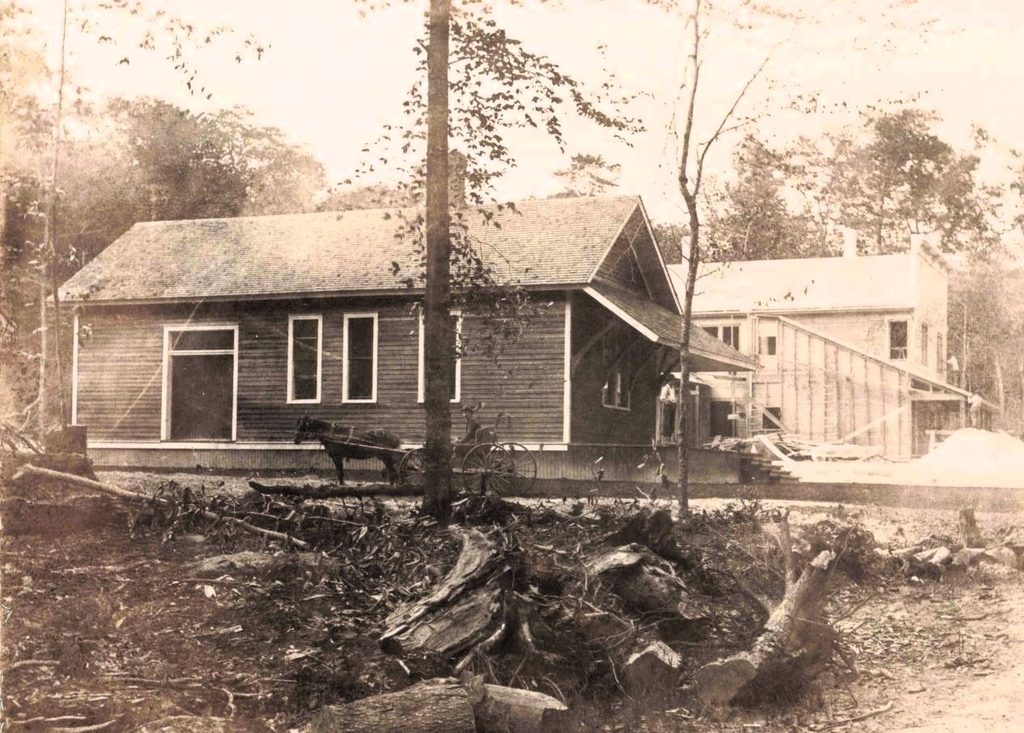
In 1886, the federal government granted land patents to Lee and several Ojibwe residents. Lee’s property extended from the present-day park area toward South Manistique Lake. He built a log home and barn, creating a homestead that became an important part of the settlement.
Family history identifies the home as the location of early township voter registration and an election. Lee’s daughter Rhoda was born there in 1888, reportedly the first white child born in Portage Township.
The Lee family’s recollections provide unusually detailed accounts of daily life. John Lee farmed and traded goods with neighbors. He might leave home with eggs, potatoes, or milk and return with merchandise acquired through barter. Before they installed a well, Mary Lee carried water from the lake up the bluff using buckets suspended from a wooden yoke.
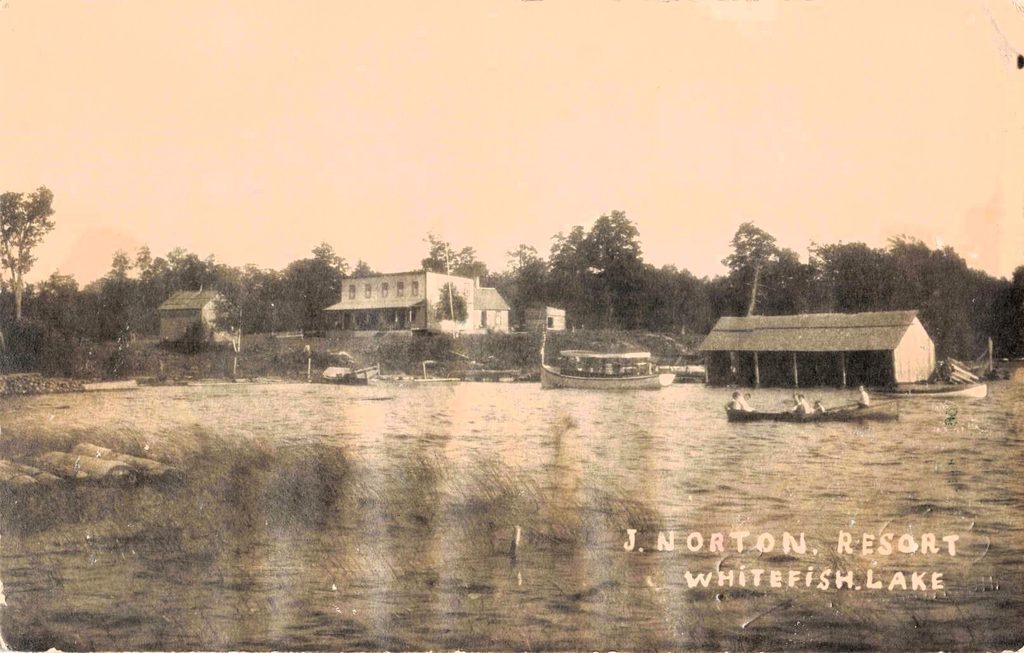
Fishing was another daily activity. Lee and his son used a canoe to collect fish for household meals at home. During winter evenings, the family sometimes burned strips of cedar for additional light. These details show the practical challenges settlers faced in a community still developing roads, stores, and public services.
Railroads Brought Timber Workers and Businesses to Curtis
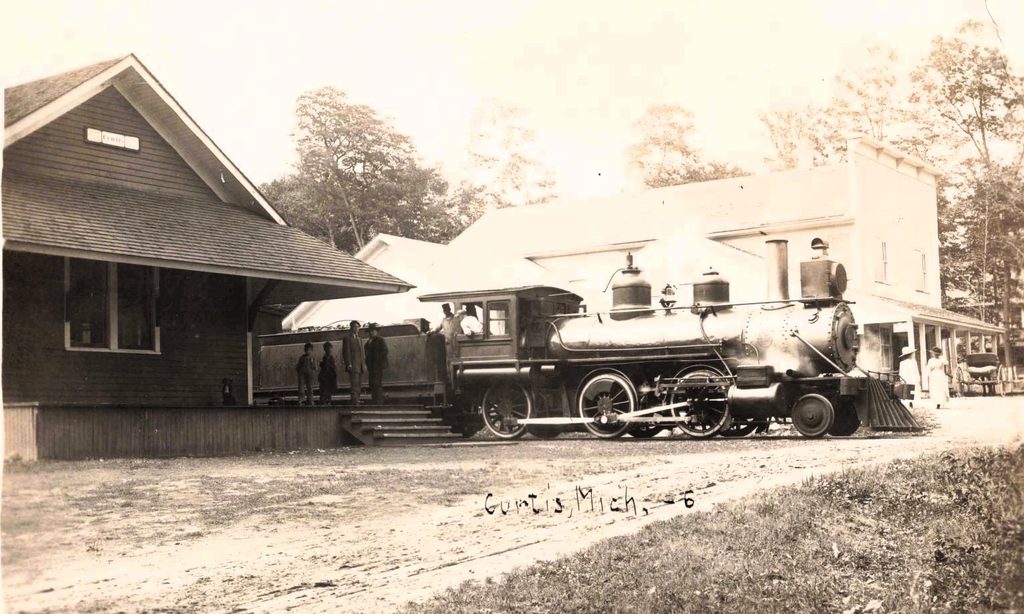
Timber provided one of the region’s earliest and largest commercial opportunities. Lumber companies needed reliable transportation to move logs out of the forests and supplies into their camps. Railroads made it possible to operate over larger distances and during more of the year.
The Manistique Railway connected Curtis with other Upper Peninsula communities involved in lumber operations. Railroad histories differ on the exact year track first reached the settlement, but rail service was firmly established during the first decade of the 1900s.
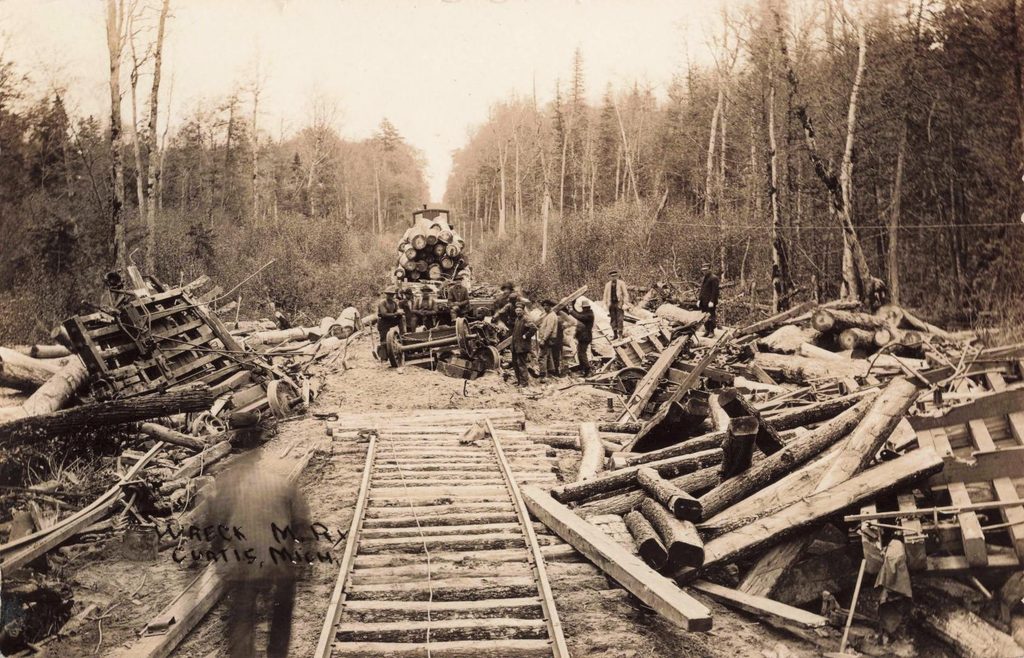
The railroad carried more than timber. It also transported passengers and supplies, encouraging stores and lodging businesses to develop near the station. According to the Belvedere Grand’s history, the Manistique Railway system carried more than 17,000 passengers in 1906.
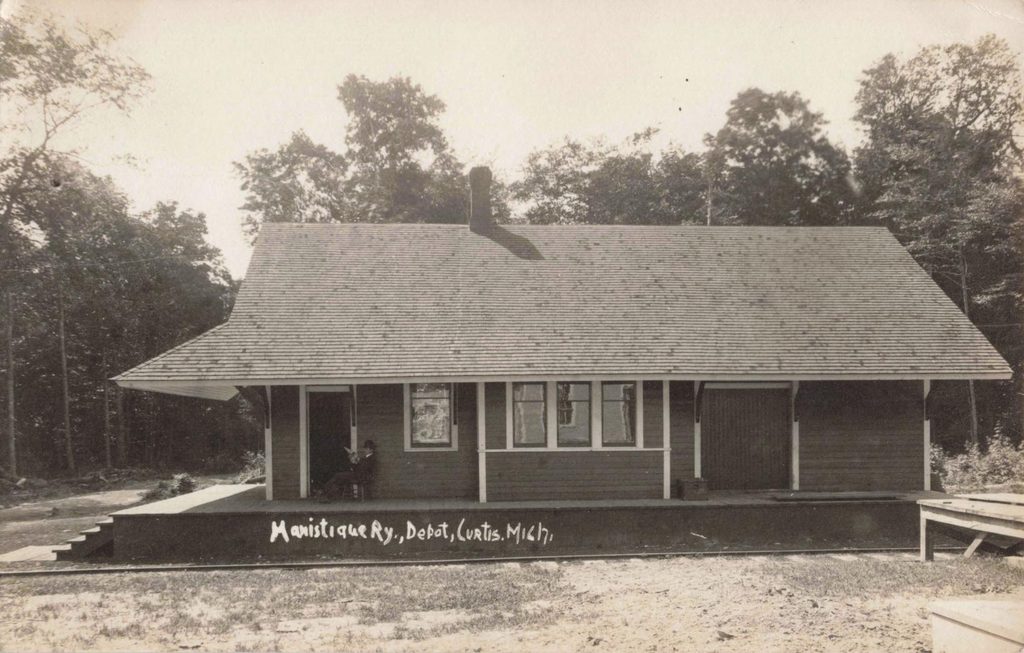
The timber business extended far beyond the village. Lumber operators with holdings near Curtis shipped material toward mills in Grand Marais. Railroad connections let companies do business across large parts of the Upper Peninsula.
Why Portage Became Curtis in November 1905
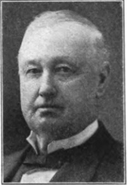
The settlement’s name changed its name when a post office opened on Nov. 15, 1905. They named it Curtis in honor of William L. Curtis, a Michigan state senator with ties to the regional lumber business. A congressional historical account identifies Mark Howard Miller as the first postmaster.
The village was formally platted in 1906. Its streets, businesses, and railway facilities were becoming part of a recognizable community. The settlement was also known as Sawaquanto Beach, preserving a connection to Chief Saw-Naw-Quato.
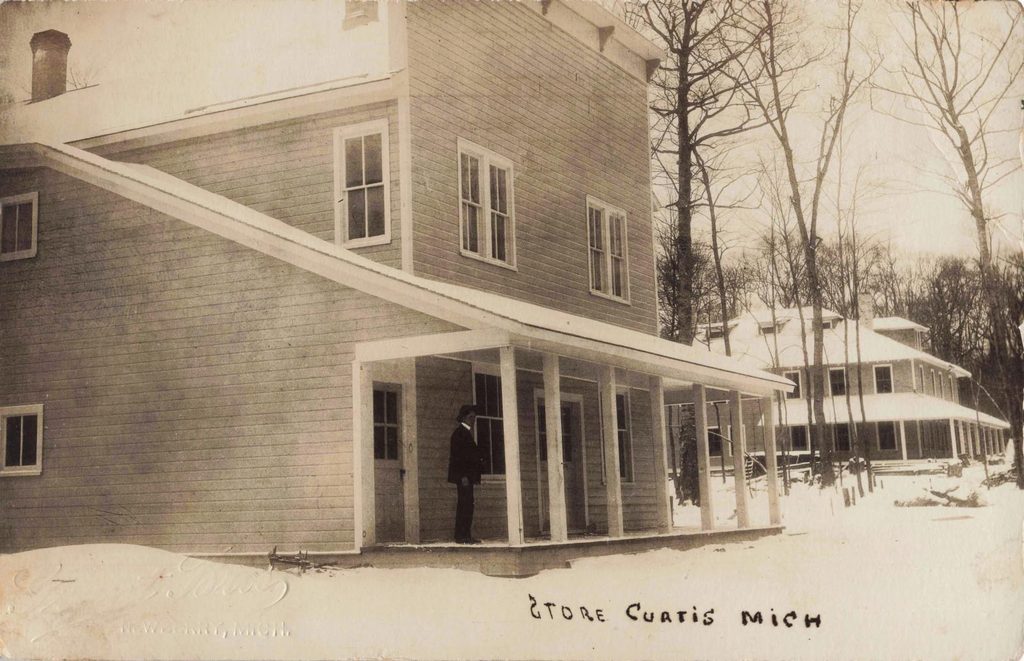
By the first decade of the 20th century, stores, hotels, and other establishments served residents, timber workers, and travelers. The businesses reflected a town still dependent on transportation and forestry, but one with growing connections to surrounding communities.
When the Passenger Trains Stopped Coming
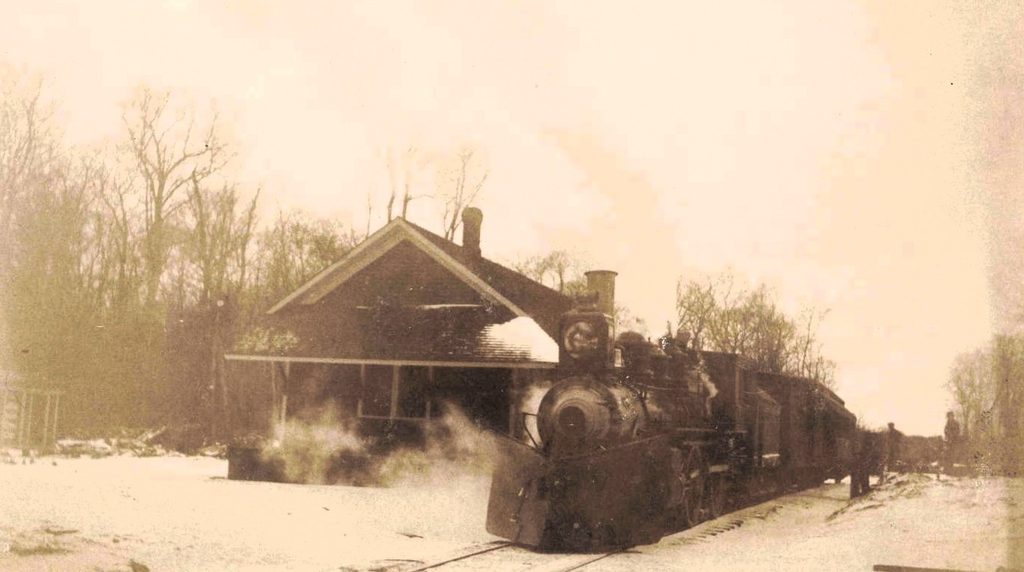
The railroad’s importance did not guarantee its future. Timber resources were finite, and lumber companies changed operations as they harvested he most profitable stands. According to the Belvedere Grand’s historical account, passenger service between Grand Marais and Curtis ended in 1910.
The change affected hotels and stores built to serve passengers and railroad employees. By 1922, the Stack Lumber Co. had acquired part of the former railroad route between Seney and Curtis for logging operations. Passenger traffic did not return.
For Curtis, losing train service made road connections and local natural resources increasingly important. The community had to attract business without depending on a busy passenger depot.
The 1924 Hotel Move Helped Curtis Become a Resort Town
One of the clearest examples of that transition was a large wooden hotel originally built near the Curtis railroad station. After railroad activity declined, its original purpose largely disappeared. In 1924, James Ostrander acquired the property and moved the building to a lakeside location.
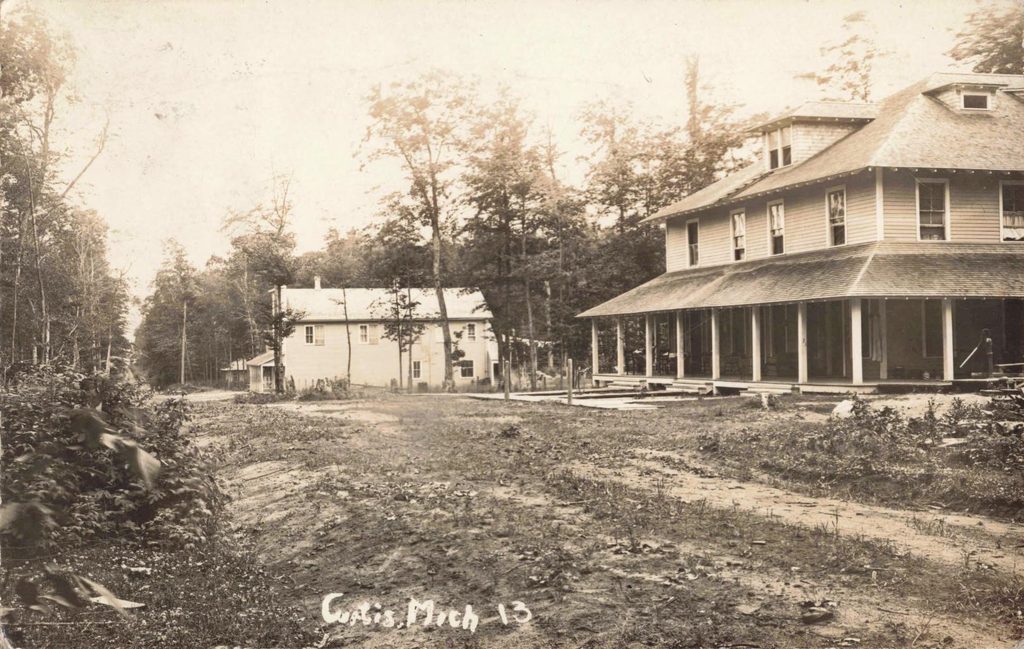
Workers reportedly rolled the structure on logs and pulled it with horses. Ostrander renamed it the Forest Inn and opened it as a seasonal resort for hunters and fishermen. The building offered accommodations and meals, with Big Manistique Lake providing the principal attraction.
Later owners kept the inn operating for decades. The Belvedere Grand preserves its history, tracing the building from its railroad origins through its later restoration. The same structure that once housed railway travelers became part of the area’s vacation economy.
How Lakeside Cabins and Automobiles Changed Curtis
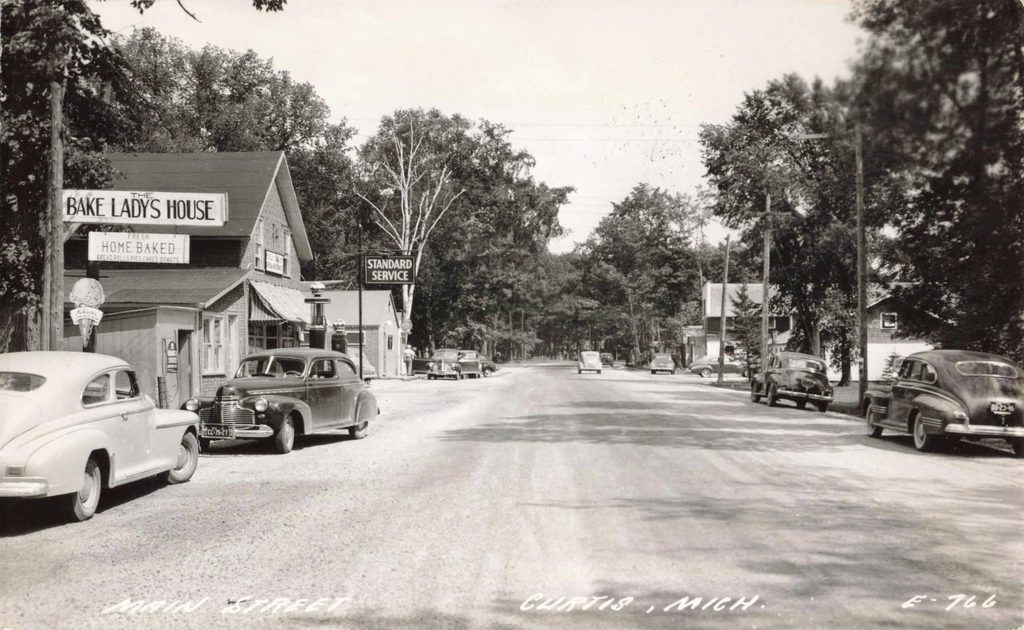
Fishing, boating, and summer recreation grew increasingly important as Curtis became known as a lakeside destination. Automobile travel gave visitors more freedom to reach the community and spend time at cottages and resorts.
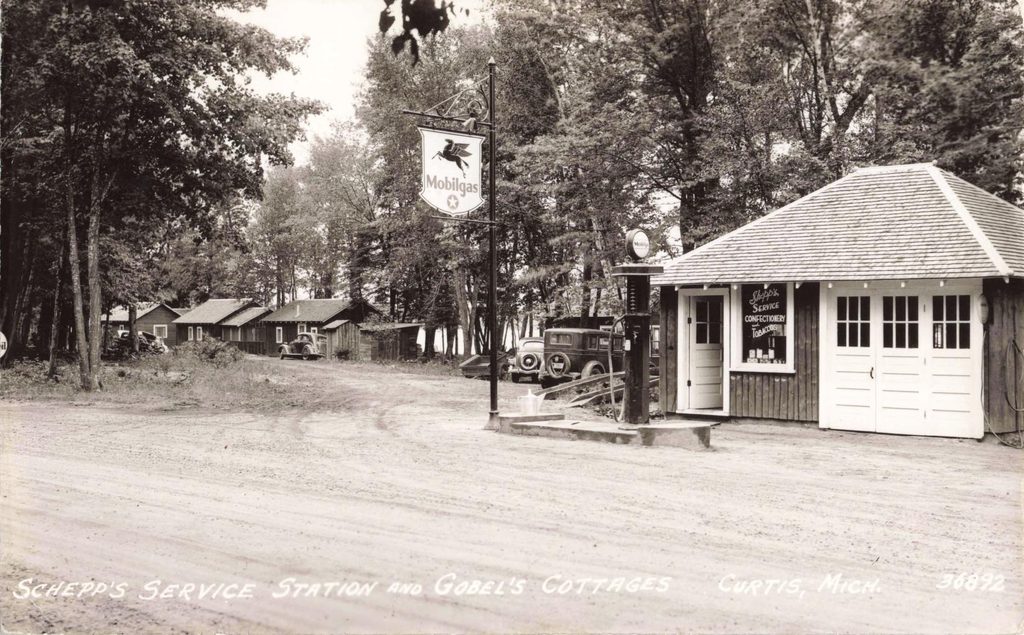
Roadside businesses followed the changing traffic. Gasoline stations, stores, lodging establishments, and small restaurants served motorists arriving for fishing trips and family vacations. The town increasingly depended on visitors who came to enjoy the lakes rather than work in the lumber camps.
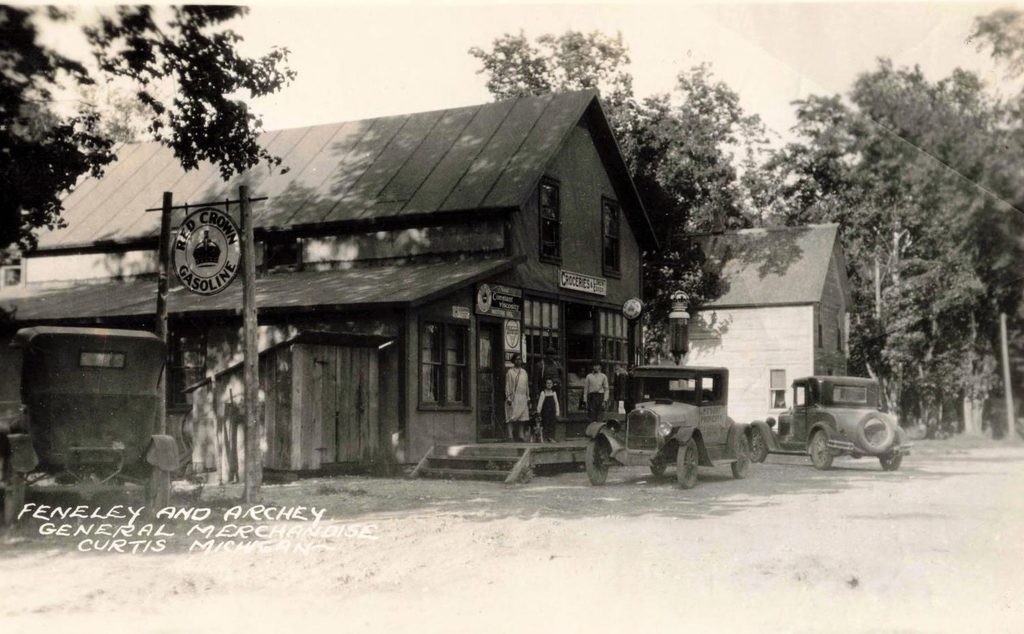
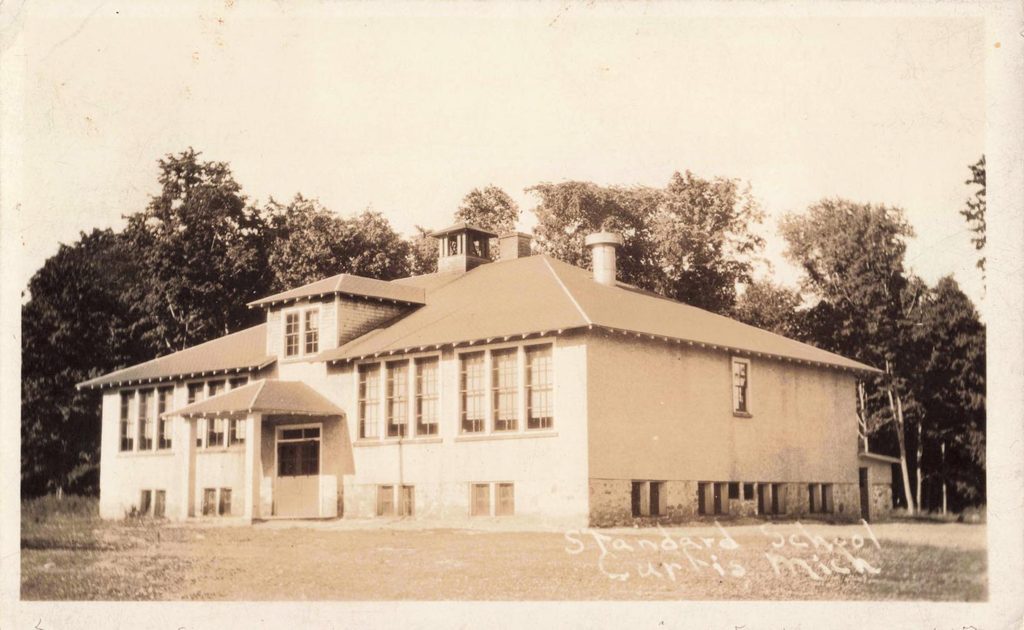
Residents still needed services beyond those offered to vacationers. The school, local shops, and community institutions served families year-round. The historical record shows that Curtis was developing as a permanent community, not merely as a seasonal collection of cabins.
What Remains of Historic Curtis Michigan Today?
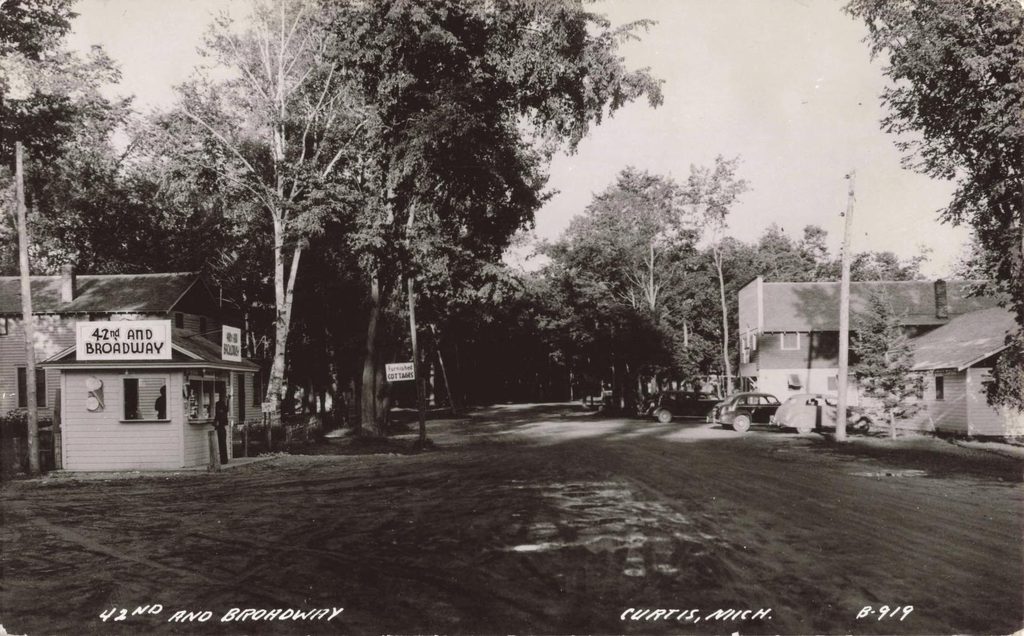
The Manistique Lakes area can still be understood through its location and surviving historic buildings. The community remains on the narrow land between Big Manistique Lake and South Manistique Lake, the same feature that originally gave Portage its name.
The former railroad hotel is one of the most direct connections between the lumber era and the resort economy. Its 1924 move preserved a substantial building while changing the business it served. The Curtis Historical Society Museum also maintains material related to the area’s settlement and logging history.
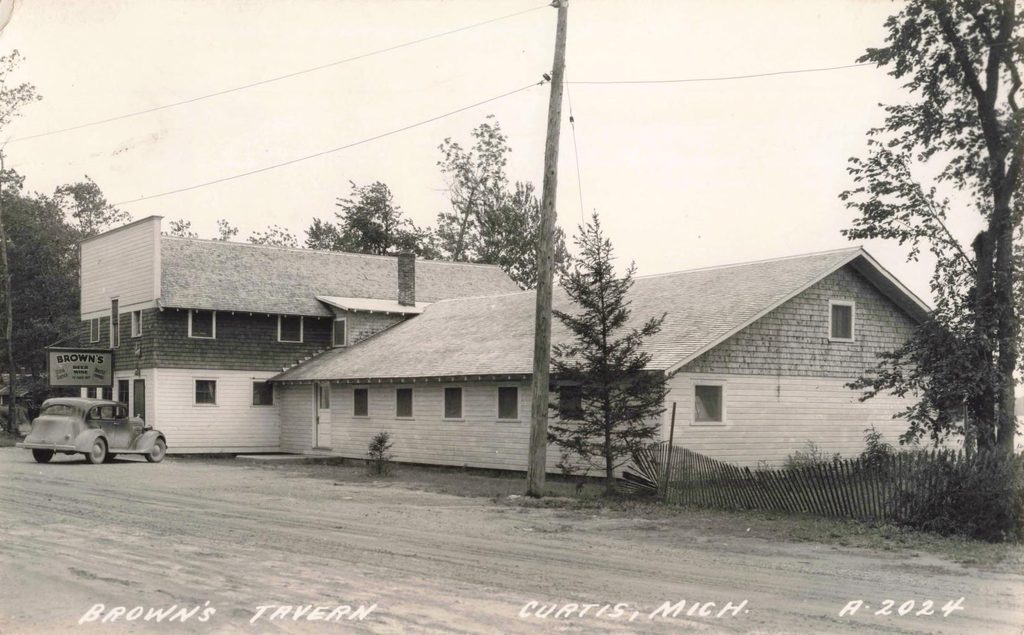
Railroads helped establish Curtis, but the community ultimately found greater economic opportunity in its lakes. The difference shows in the old depot views and later postcards of automobiles, cottages, and roadside shops.
Do you remember a former Curtis business, family resort, or building shown in an early postcard? Share the name, approximate date, and any family records you have in the comments. Those details can help document another part of the community’s history.
Historical Sources and References
Curtis Community Website. “A Piece of Early Curtis History.” Based on Vernon Lee’s recollections as told to Jane Kopecky, from Curtis Remembered, 2007.
The Belvedere Grand. “The History of the Belvedere Grand.” Historical account of the Curtis railroad hotel and Forest Inn.
Michigan Railroads. “Curtis, MI.” Station history and railroad chronology.
Michigan Department of Transportation. “Pure Michigan Byways Driving Guide.” Curtis historical museum and visitor information.
United States Congress. “Congressional Record — Extensions of Remarks.” Historical account commemorating Curtis’ centennial, 2005.