 by
by Tucked into the rolling countryside of Lapeer County, Metamora, Michigan is a village where the past feels remarkably close. Between its preserved railroad depot, early storefronts, and lakeside summer camps, Metamora Michigan history tells a story familiar to many small Midwestern towns—one of steady change and strong community roots.
Video – Metamora, Michigan’s Historic Crossroads: What Old Photos Reveal About Small-Town Life
A Rail Stop That Built a Town
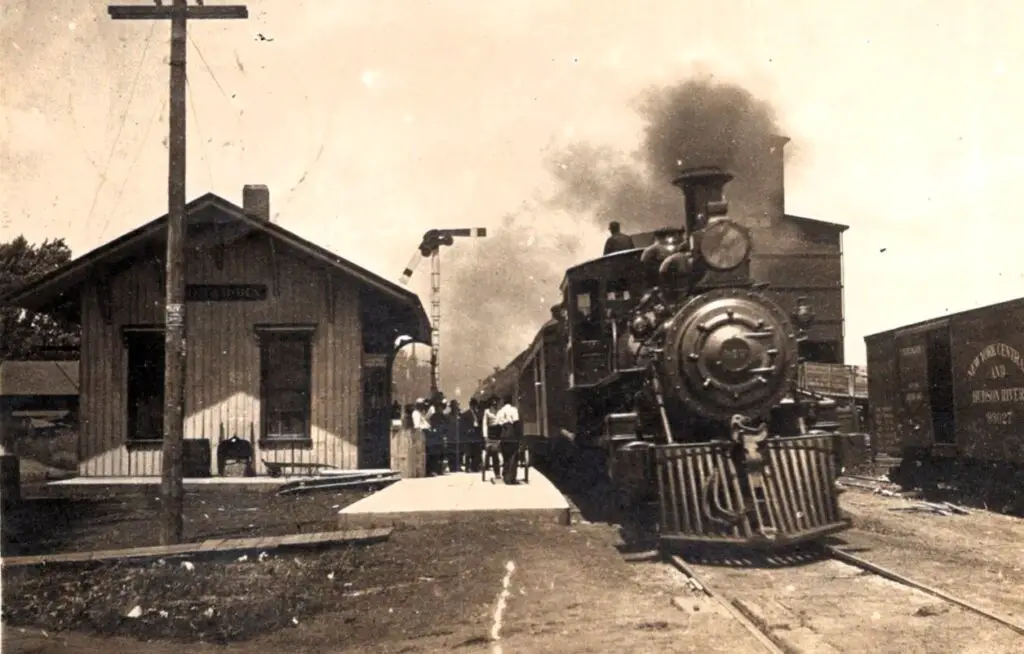
The railroad brought people and prosperity to Metamora. Its brick depot, marked clearly with a sign reading “Metamora,” became the town’s link to Flint, Detroit, and points beyond. The platform welcomed both passengers and freight, with carts lined up along the tracks ready to haul crates into the village. The building still stands, a physical reminder of the town’s role in Michigan’s once-vast rail network.
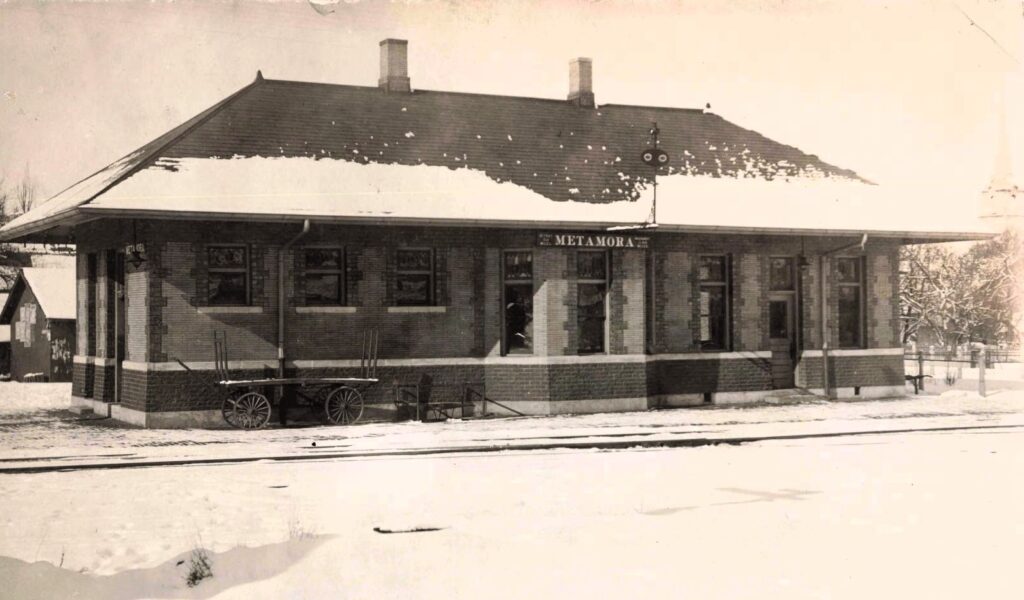
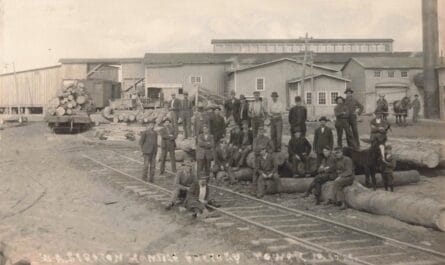
Railroads expanded the town’s role. A depot helped ship out livestock, grain, and timber. The small population meant business was personal, and nearly everyone was part of the local economy. Farmers, builders, teamsters, and merchants worked together to keep things moving.
Winter Commerce on Wood-Planked Streets
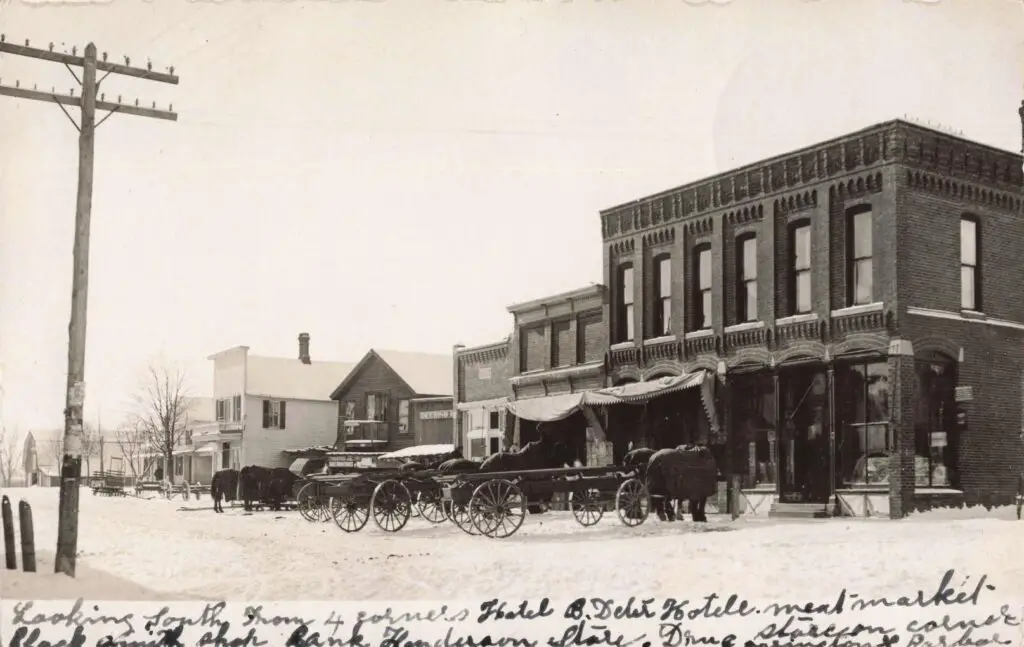
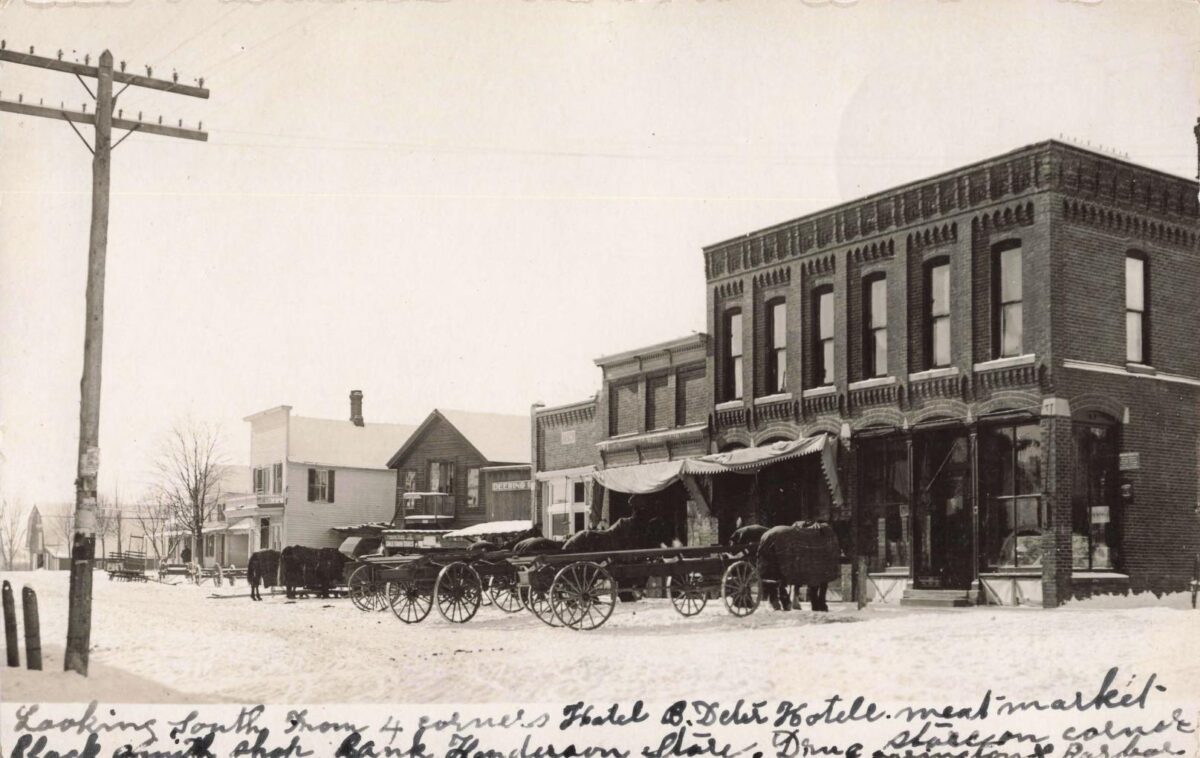
Photos from the early 1900s show a typical Michigan winter—snow-covered streets, horse-drawn wagons, and brick storefronts doing steady business. Kingo’s Hardware and the Hoard House were among the familiar fixtures. Business owners swept snow from steps while men in wool coats exchanged the week’s news. Back then, supplies had to last the season. Trips into town weren’t made lightly.
Metamora Hardware: Where Everyone Shopped
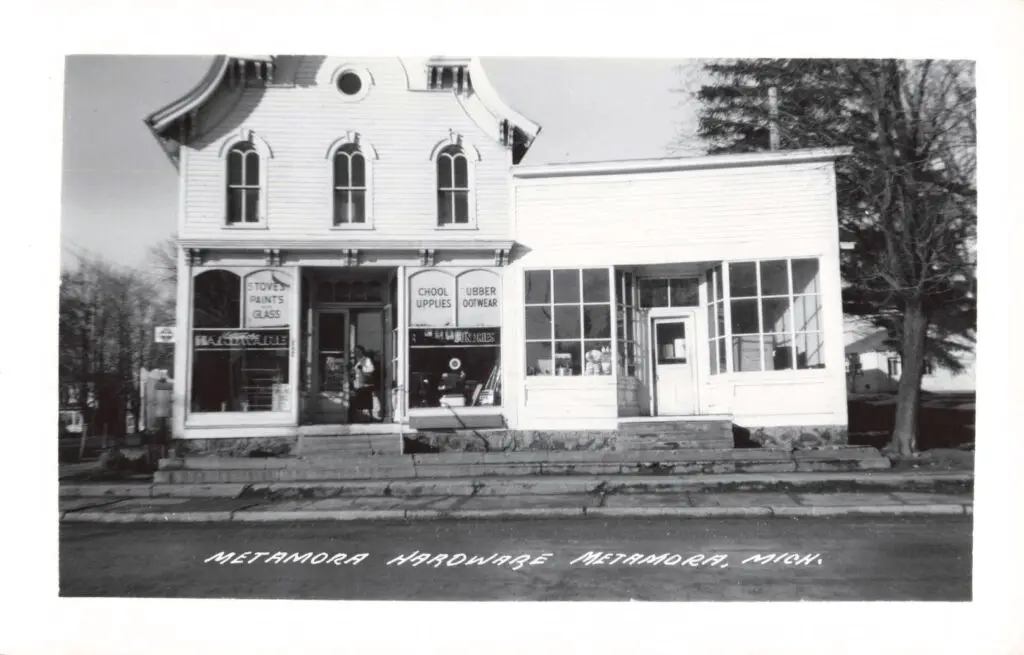
One of the village’s most enduring scenes is the white-painted Metamora Hardware building. Inside, customers found tools, paint, stove fittings, and winter gear. The signage was practical—“School Supplies” and “Rubber Footwear”—painted clearly above the shop’s wide windows. Long before big-box stores, everything a home or farm needed could be found right on Main Street.
Camp Metamora: Where Summer Came to Life
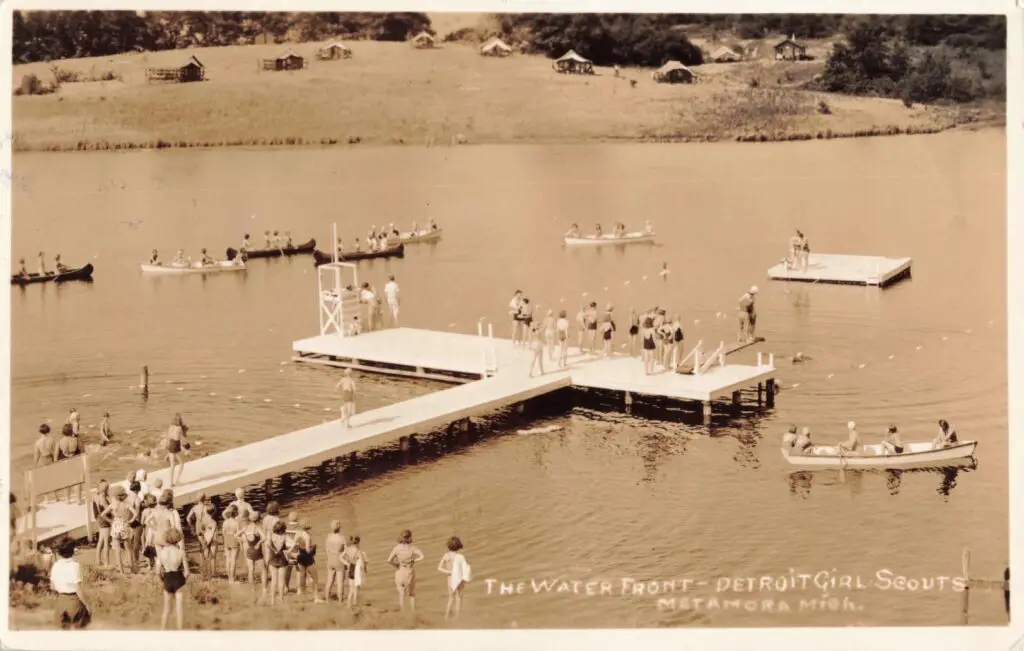
Metamora’s scenic setting also made it ideal for recreation. Camp Metamora, operated by the Detroit Girl Scouts, was a summer tradition for generations. A postcard from the 1930s shows dozens of girls lined up at the docks, waiting to canoe or dive into the lake. In the background, wooden cabins dot the shoreline, and counselors watch from a raised tower.
The Assembly Lodge hosted talent shows, songs, and rainy day games. For many Detroit families, this camp was their daughters’ first experience with the outdoors.
The White Horse Inn: Still Serving Since 1850
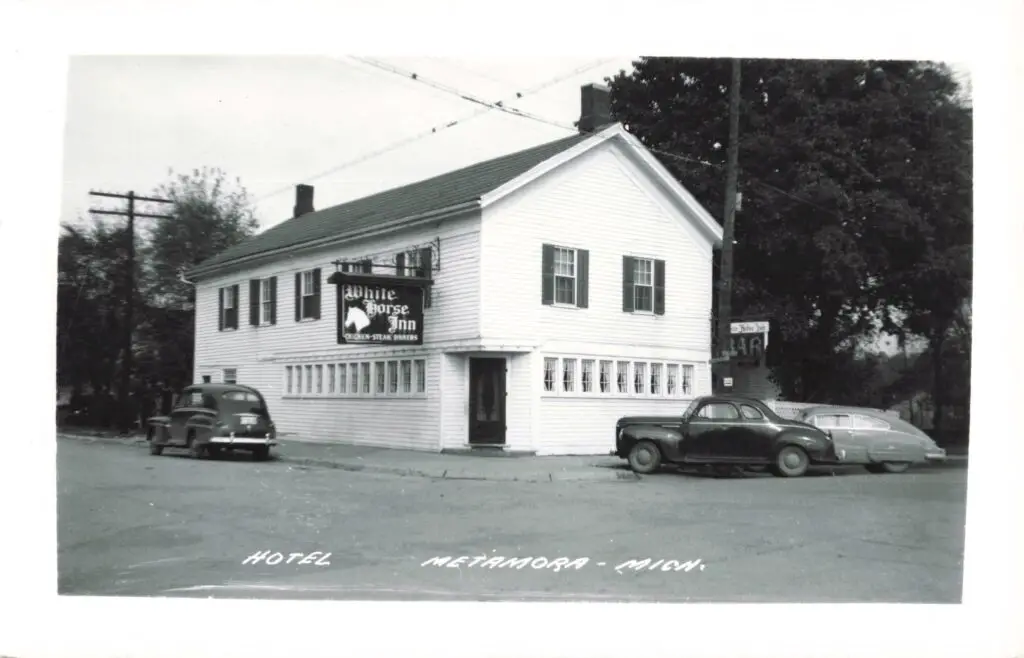
Just steps from the village center stands the White Horse Inn, built in 1850. It’s believed to be the oldest continuously operating restaurant in Michigan. Its white clapboard siding and clean lines have stayed nearly unchanged for more than a century.
In the 1950s, signs advertised chicken and steak dinners. Locals came for a good meal, and travelers came for the stories. The Inn was more than a restaurant—it was a gathering place, a local landmark linking Metamora’s pioneer era to the present.
Metamora Michigan History – A Village That Preserved Its Past
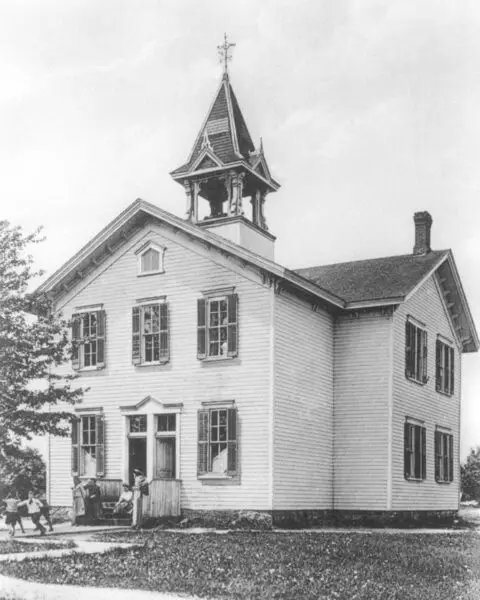
Today, Metamora, Michigan, has maintained much of what made it unique. The village has avoided large-scale development, choosing instead to preserve its Crossroads Historic District. Its architecture—Greek Revival, Italianate, and Gothic Revival—offers an authentic look at how rural Michigan towns evolved between 1850 and 1910.
For anyone interested in Michigan history, Metamora offers more than old photos. It offers continuity. You can still see the outlines of a horse hitch or trace a railroad’s influence in the layout of the streets.
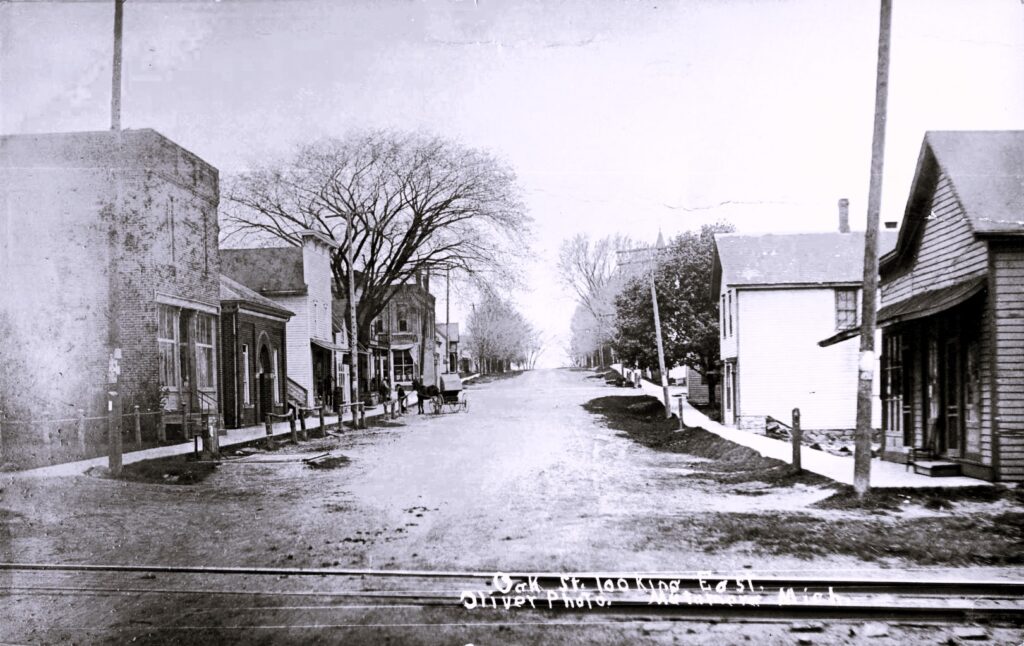
Metamora, Michigan stands as a small town with a clear identity. Its people, its traditions, and its buildings are part of a shared story. One told in red brick, pine planks, and still water.
Images on this page may contain affiliate links in which we may receive a commission. See our affiliate disclosure for details.
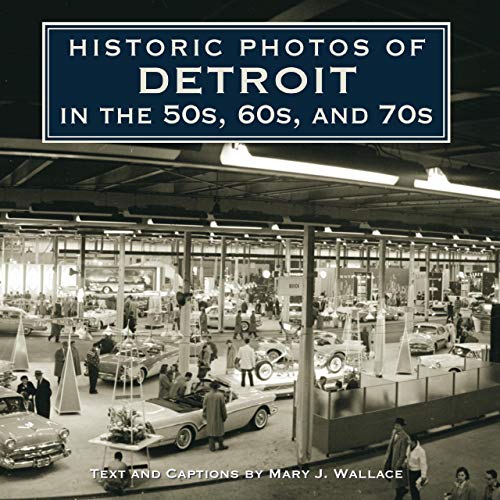
Historic Photos of Detroit in the 50s, 60s, and 70s
Historic Photos of Detroit in the 50s, 60s, and 70s documents what a Metro Detroiter would have experienced through those decades, from the commonplace—to a visit from John F. Kennedy.
Sources Used for Metamora, Michigan History
Crossroads Village & Huckleberry Railroad. Metamora’s White Horse Inn History. Genesee County Parks, https://geneseecountyparks.org/crossroads-village/white-horse-inn/. Accessed 22 Feb. 2026.
“Metamora.” Michigan Place Names, Clarke Historical Library, Central Michigan University, https://www.cmich.edu/library/clarke/ResearchResources/MichiganPlaceNames/Pages/Metamora.aspx. Accessed 22 Feb. 2026.
“Metamora Crossroads Historic District.” National Park Service, National Register of Historic Places, https://npgallery.nps.gov/AssetDetail/NRIS/99000648. Accessed 22 Feb. 2026.
“Metamora Hunt Club.” Metamora Hunt Club Official Website, https://www.metamorahuntclub.com/. Accessed 22 Feb. 2026.
“White Horse Inn (Metamora, Michigan).” Detroit Free Press, https://www.freep.com/story/entertainment/dining/2017/09/12/white-horse-inn-metamora/651456001/. Accessed 22 Feb. 2026.
Lapeer County Historical Society. History of Metamora Township, https://lapeercountyhistoricalsociety.org/. Accessed 22 Feb. 2026.
Romig, Walter. Michigan Place Names: The History of the Founding and the Naming of More Than Five Thousand Past and Present Michigan Communities. Wayne State University Press, 1986.
Sanborn Map Company. Fire Insurance Maps of Metamora, Michigan. Library of Congress Digital Collections, https://www.loc.gov/collections/sanborn-maps/. Accessed 22 Feb. 2026.
Tinder, David V. Real Photo Postcards of Michigan: Lapeer County Collection. William L. Clements Library, University of Michigan, https://clements.umich.edu/. Accessed 22 Feb. 2026.