 by
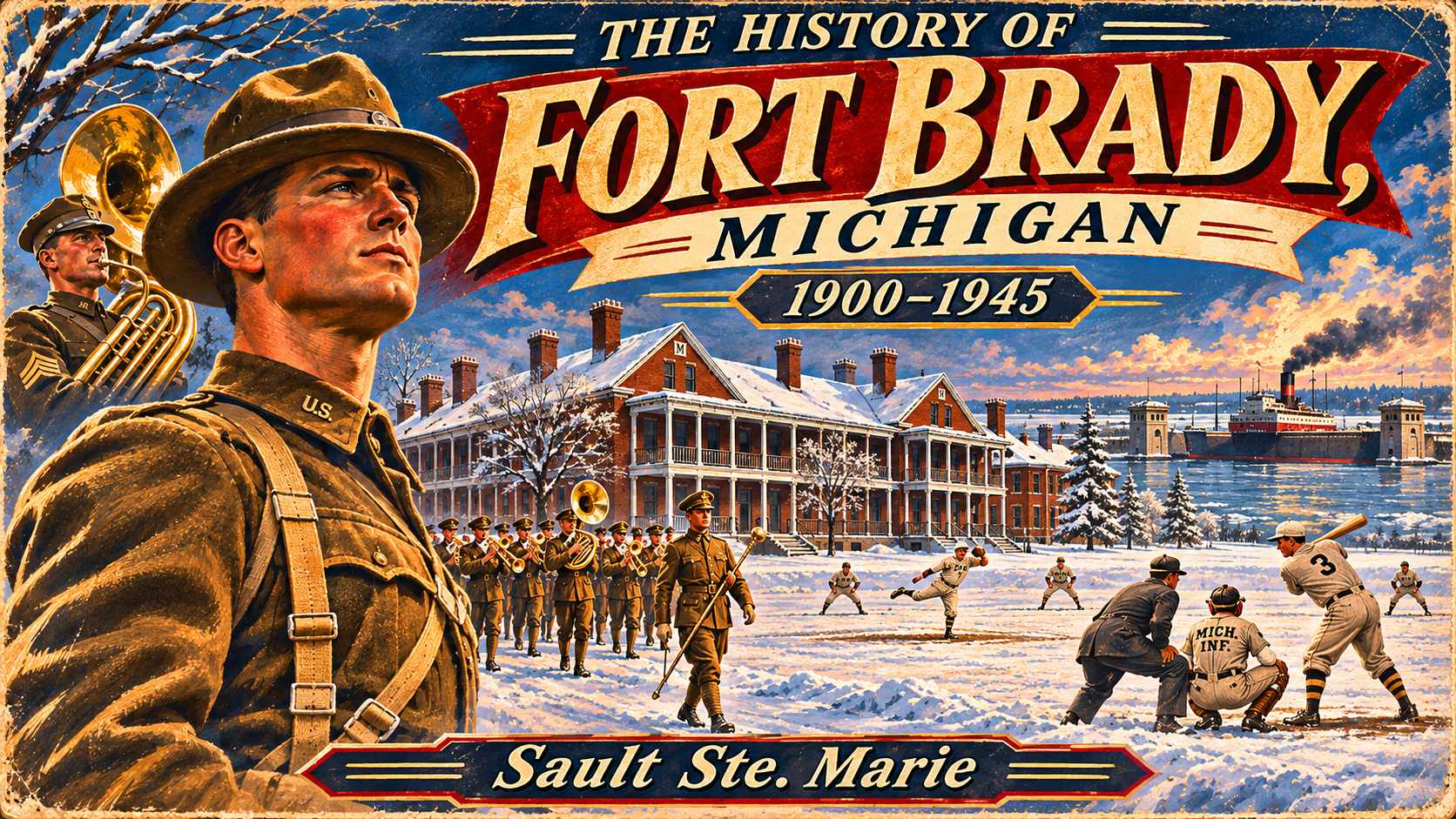
High above the busy Soo Locks in Sault Ste. Marie, Michigan, an Army fort stood watch over one of America’s most important shipping routes. Yet behind its military mission was a community where soldiers played baseball, marched to brass band music, and battled some of the Upper Peninsula’s heaviest snowstorms.
The History of Fort Brady, Michigan is a fascinating account of military service, small-town life, and the changing role of the U.S. Army during the first half of the 20th century. Established in 1822 and relocated to Ashmun Hill in 1893, Fort Brady became a permanent fixture in Sault Ste. Marie. Between 1900 and 1945, the installation served as a military garrison, training center, and strategic defense post protecting Great Lakes commerce.
Through rare historical photographs, military records, and firsthand accounts of daily life, we examine Fort Brady’s remarkable past—from its peaceful years of baseball games and military bands to the heightened security around the Soo Locks during World War II. The story concludes with the fort’s transformation into what is now Lake Superior State University, preserving an important chapter of Michigan’s military heritage.
Table of Contents
On a bitter winter morning in Sault Ste. Marie, the shortest route between two Army buildings could become a long job with a shovel. Snow drifted against the brick barracks. Men pushed through banks that reached their waists. A bugle still marked the day, and the work still had to be done.
That was Fort Brady in the early 20th century: part strategic military installation, part small northern Michigan town. Its residents worked, trained, raised families, played baseball and made music. Their lives unfolded just above the Soo Locks, where freighters carried the iron ore that fed the nation’s steel mills.
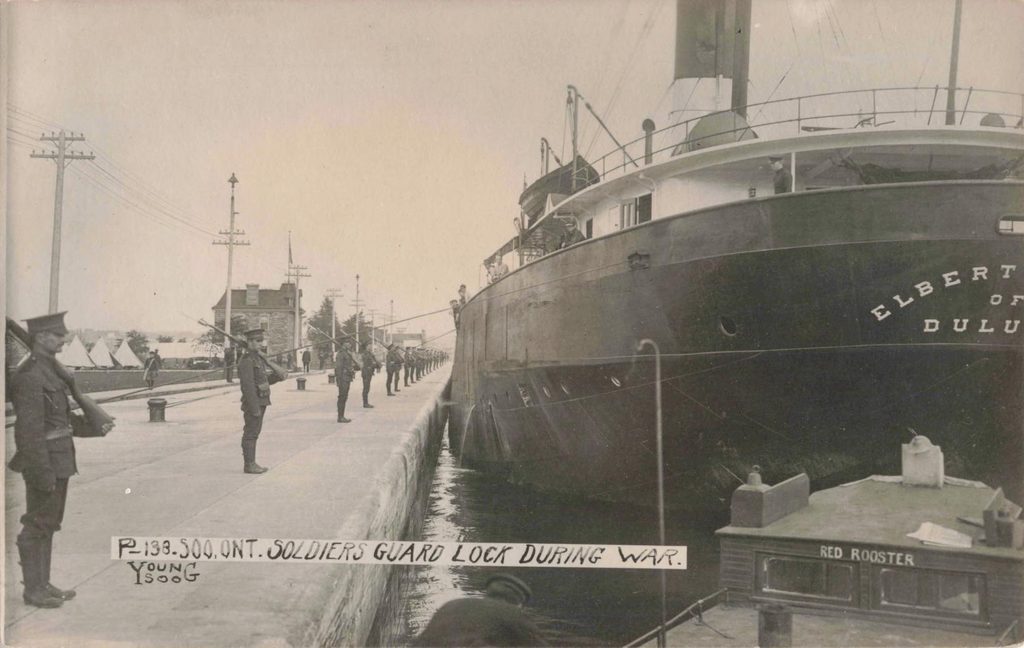
Between 1900 and 1945, the post experienced two very different eras. For decades, it followed the familiar routine of a peacetime garrison. By World War II, its position overlooking the waterway had made it part of a major defense effort involving American and Canadian troops.
Watch: Fort Brady, Michigan: Snow, Baseball and Life at the Soo Locks
Timeline of Fort Brady
A Fort Brady Timeline: 1900–1945
From a quiet Army community to the military defense of the Soo Locks. Select an era, then tap any date to read the story. Historic thumbnails are from the Fort Brady collection; some illustrate the era rather than the exact dated event.
1903New infantry barracks open
The permanent Army post grows.

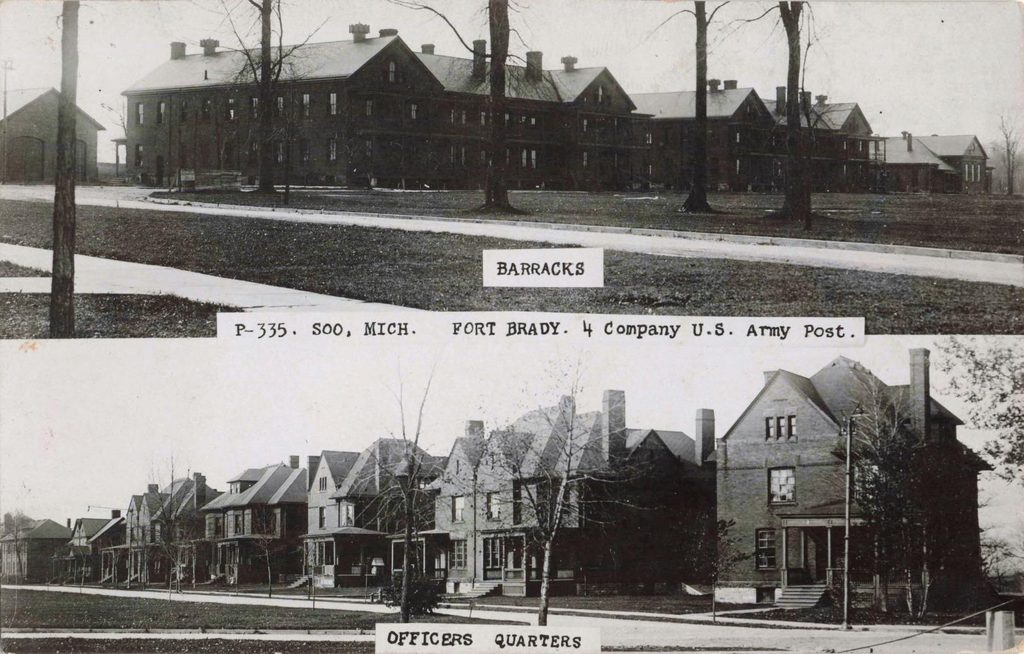
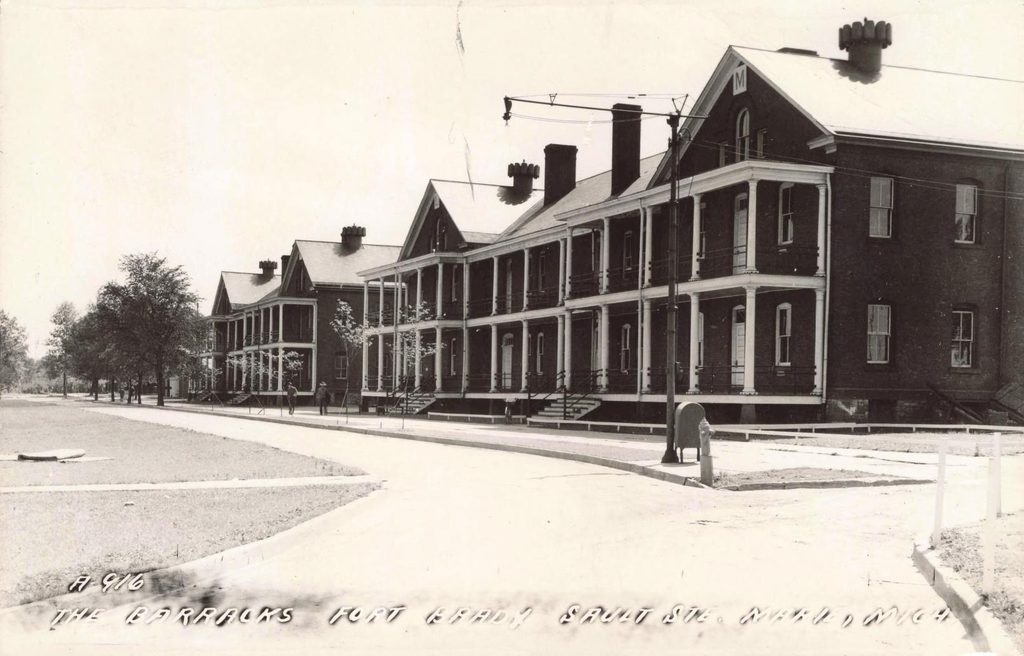
The infantry barracks later known as South Hall were built in 1903. The buildings and officers’ quarters organized life around the parade ground and helped give Fort Brady the character of a small community.
1910–11A northern Army neighborhood
Quarters, headquarters and the guardhouse.
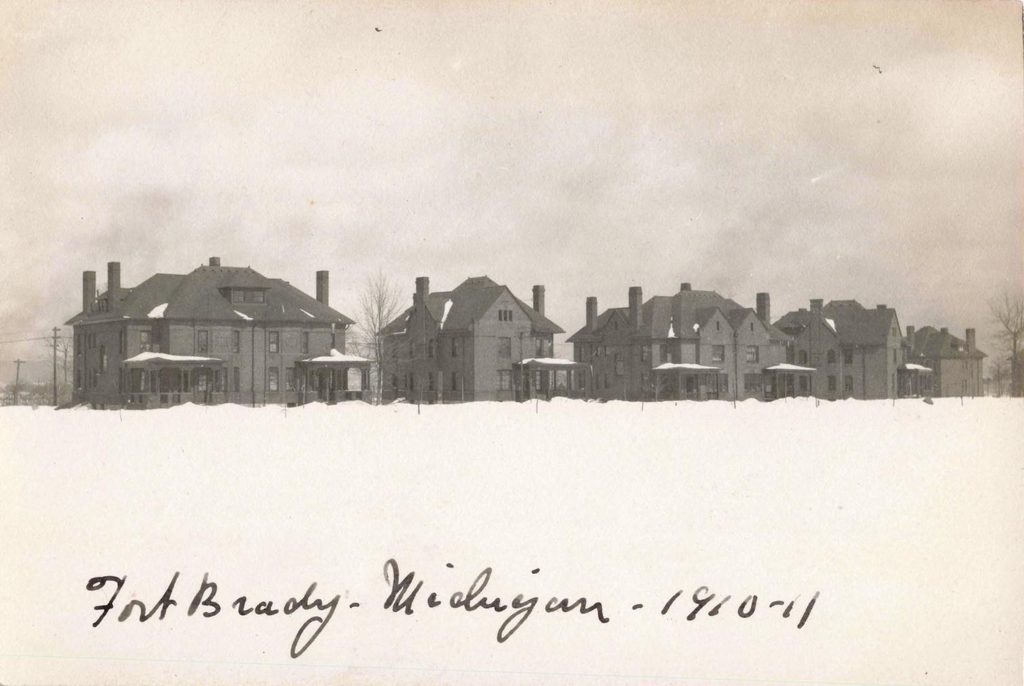
A group of Fort Brady postcards is handwritten “1910–11.” They show officers’ quarters, the guardhouse, post buildings and barracks. These are archival date annotations rather than independent confirmation of the exact day each image was made.
1910–11Deep snow and skis
Winter duty at the fort.
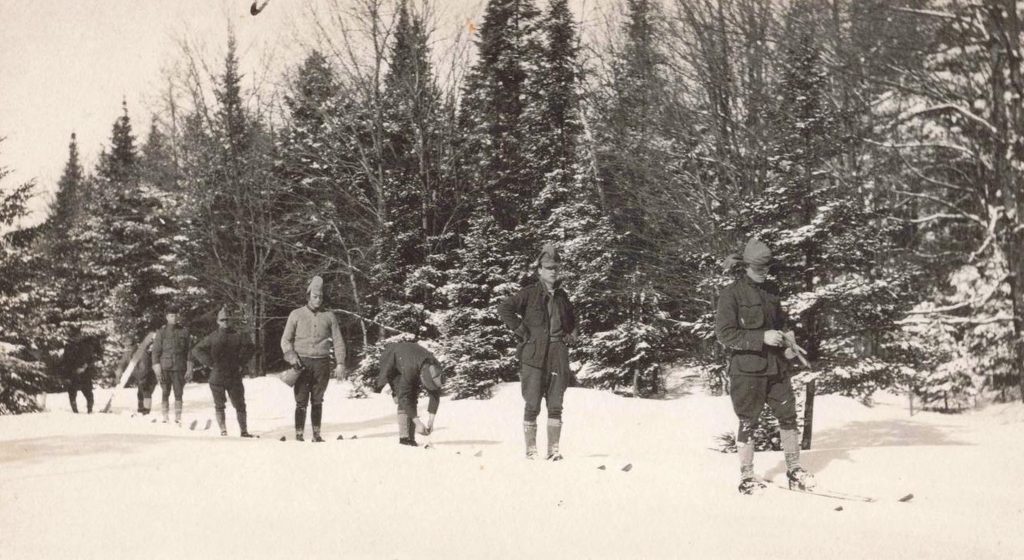
Soldiers cleared deep drifts, while another surviving postcard shows military men traveling on skis. These scenes document winter life years before World War II.
1920–21The post gets new facilities
Post office and controlled entry.
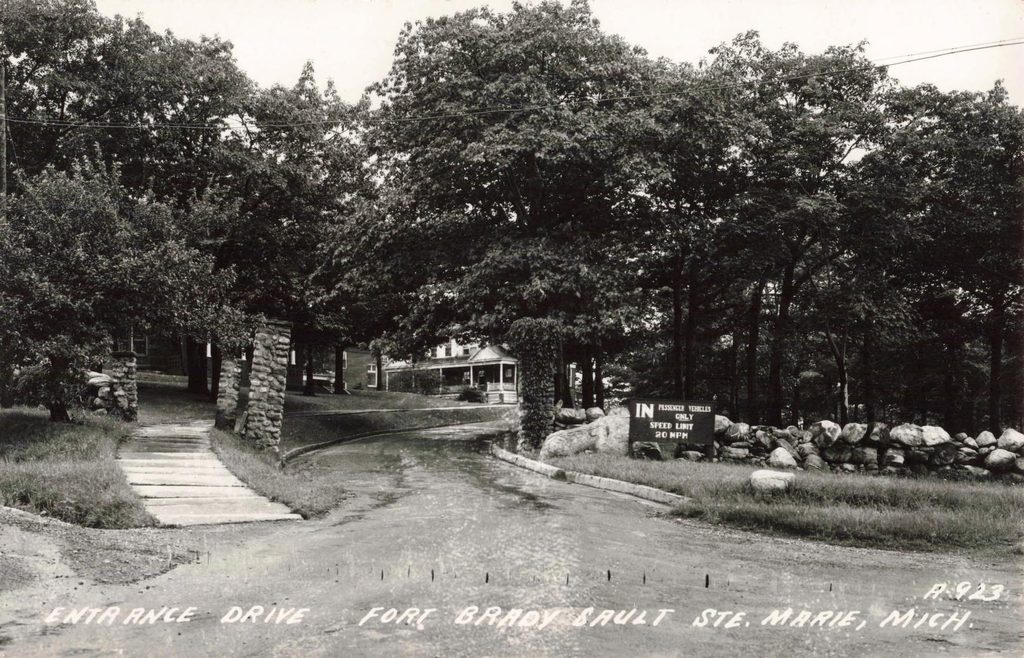
In 1920, a building later used as the Lake State administration office was completed as the Army post office and quartermaster quarters. The east gate and gatehouse were built in 1921 to shelter guards.
1923Civilian trainees join Army life
Citizens’ Military Training Camp.
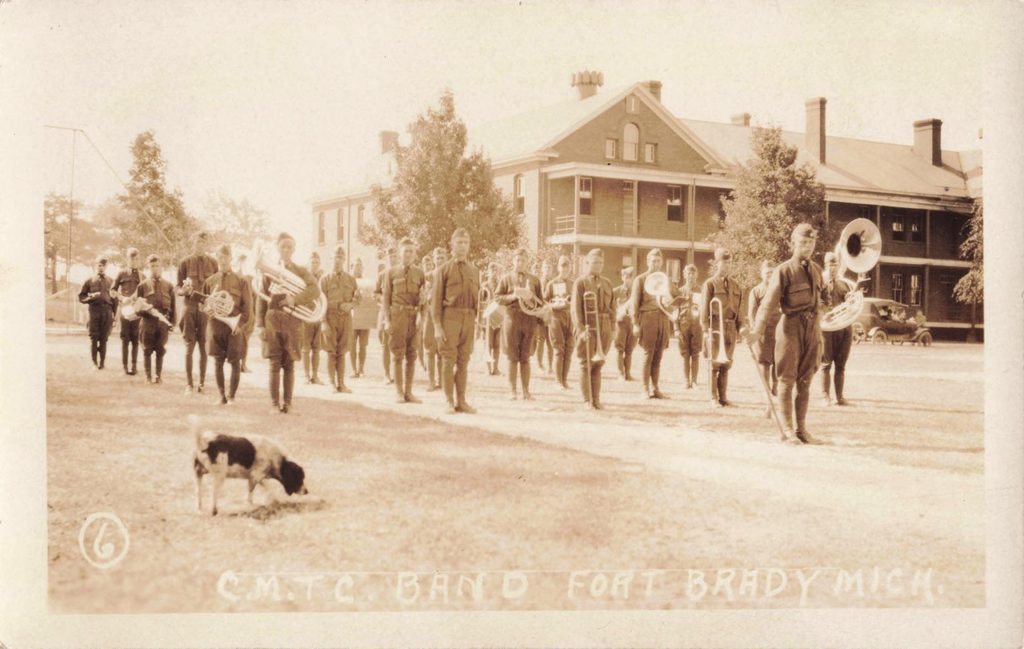
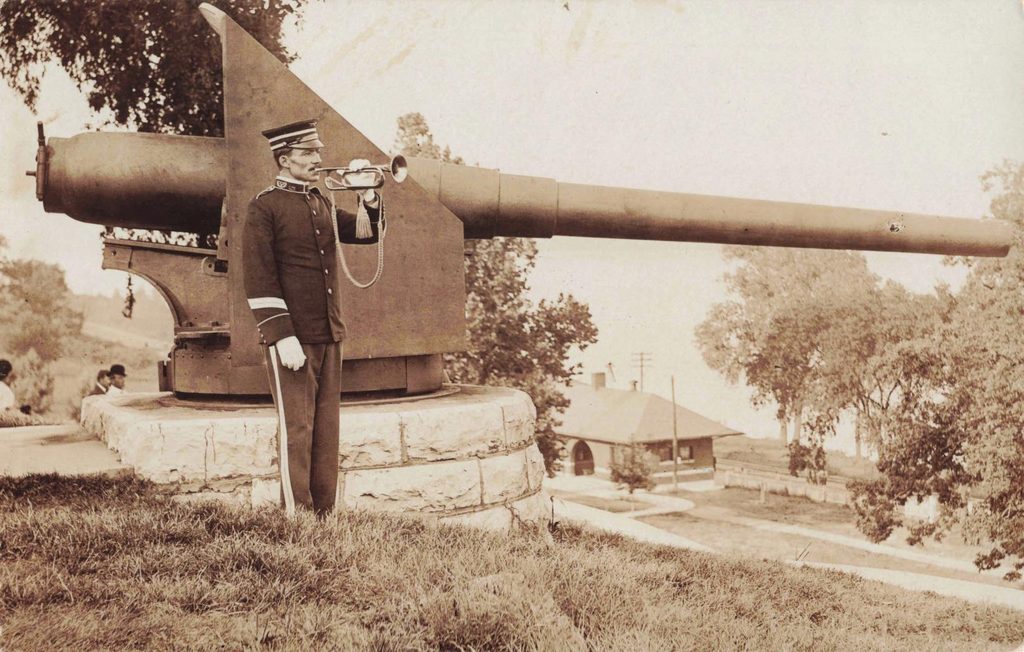
A 1923 Camp Custer/Fort Brady C.M.T.C. yearbook documents the training program’s connection to the fort. An undated postcard shows its band assembled in uniform, a reminder that military instruction also included music and public ceremony.
1939The Soo Locks go on alert
Guards, patrols and searchlights.
With war underway in Europe, the Army directed Fort Brady troops to protect the Sault waterway. Its September 1939 report described guards, Coast Guard patrols, searchlights and machine gun positions above the locks. Four companies of the 2nd Infantry were stationed at the fort.
March 1941A new military district
U.S. and Canadian defense cooperation.
The Military District of Sault Ste. Marie took effect March 15, 1941. Col. Fred T. Cruse commanded the district. In May, the 702nd Military Police Battalion took over the remaining local infantry guard assignment.
Oct. 1941A bridge collapse halts freighters
An accident exposes a weakness.
On Oct. 7, a railroad bridge collapsed into the locks canal. Two railway workers died, and freight traffic was disrupted for about 48 hours. The incident was ruled an accident, not sabotage, but it demonstrated how quickly shipping could be interrupted.
1942Fort Brady enters full wartime duty
Infantry, antiaircraft guns and public drills.
By spring, the 131st Infantry, 100th Coast Artillery (Antiaircraft) and 39th Barrage Balloon Battalion had elements in the Sault area. About 7,000 troops served in the wider military district by midsummer. Sault Ste. Marie held its “M-Days” demonstrations May 15–16.
1943Defenses begin to shrink
Troop strength falls as plans change.
With the risk of an attack judged lower, the War Department ordered the Sault garrison cut to roughly 2,500 by September 1943. This figure refers to the area defense force, not to the total number of soldiers who had trained at Fort Brady over the years.
1944–45Fort Brady closes in stages
Surplus status, inactivation, departure.
Fort Brady was declared surplus April 5, 1944, and placed on inactive status Nov. 25. Some troops continued to depart during 1945. Its buildings were adapted for a new role after the war, and the Sault branch of Michigan College of Mining and Technology opened in 1946.
Using the timeline: Choose an era and select a date to expand its history. The layout works on phones and does not require JavaScript.
Image credit: Historic postcards from the Fort Brady collection. Original handwritten dates are not always independently verified. Google Drive thumbnails should be replaced with WordPress-hosted media URLs for dependable public display.
Why an Army Fort Overlooked Sault Ste. Marie
Fort Brady began in 1822 as an American military post near the St. Marys River, under Col. Hugh Brady’s command. The original fort was intended to strengthen U.S. presence near the Canadian border. Its later mission focused on protecting navigation through the rapids.
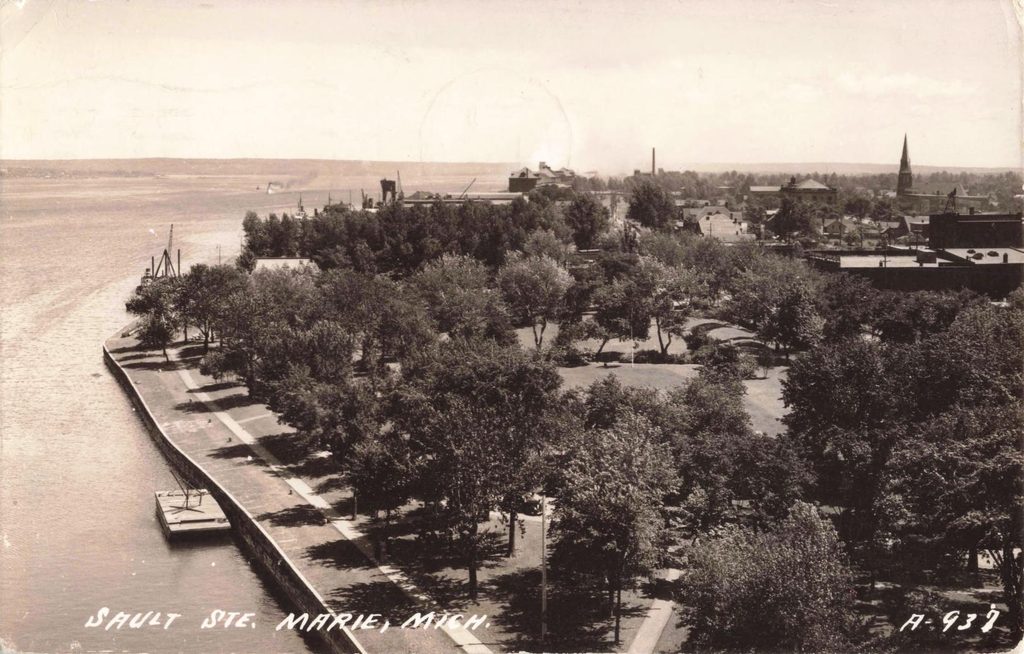
As Sault Ste. Marie grew, the riverfront fort occupied land needed for a growing city and shipping channel. The Army relocated to Ashmun Hill and opened New Fort Brady in 1893. Its commanding position above the city offered a view toward the locks and room for a larger post.
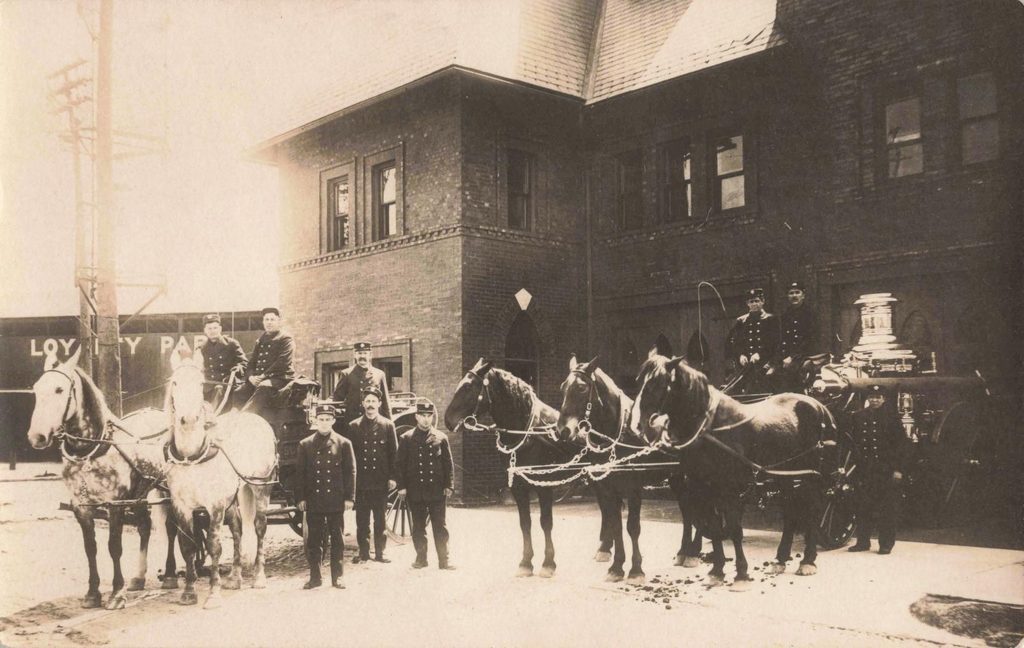
By 1900, the new site looked like a permanent Army community. Barracks and administrative buildings stood near the parade ground. Officers’ houses lined nearby streets, while support buildings handled food, supplies, medical care, and discipline.
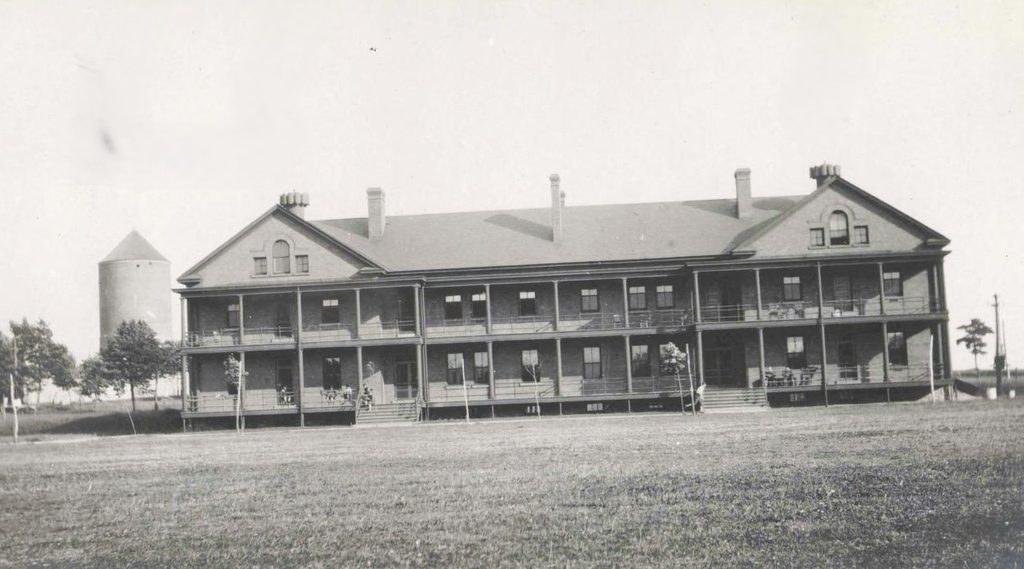
One infantry barracks, later known as South Hall, was completed in 1903. A headquarters building followed in the early 1900s. These structures, along with officers’ quarters dating from the 1890s and early 1900s, later helped shape Lake Superior State University’s campus.
An Army Town With Baseball, Bands and Families
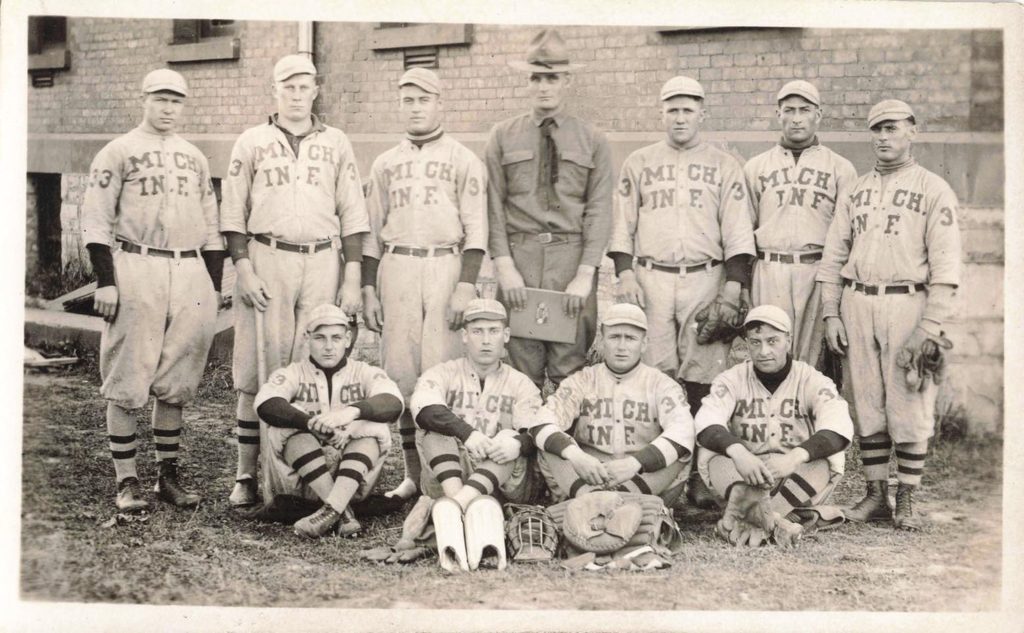
Army life ran on a schedule: formations, inspections, training and guard duty. Yet soldiers also made room for ordinary pleasures. Baseball was one of them. A surviving team portrait shows players in uniforms marked “MICH INF,” with equipment arranged at their feet. The lettering suggests a Michigan infantry team, though the image alone does not establish its exact unit or date.
Music was part of the post’s public identity. The Citizens’ Military Training Camps of the 1920s and 1930s brought young civilian men to Army facilities for short courses in military life. A 1923 yearbook documents a training camp connected with Fort Brady. Another surviving postcard shows a large Citizens’ Military Training Camp band with brass instruments assembled in front of one of the post buildings.
The band, baseball team, and officers’ homes show a side of Army history that battlefield accounts rarely capture. This was a place where military duty and civilian community life existed within sight of each other.
When a Northern Winter Became the Daily Assignment
Winter was not an occasional interruption. Heavy snow shaped the way the fort operated for months at a time. Early postcards marked 1910–11 show the guardhouse buried behind snowbanks, officers’ quarters surrounded by white fields and men opening a route through deep drifts.
Work still remained after the digging. Soldiers had to reach the mess, guard posts, and training areas. Winter sports and ski movement also appear in the surviving record. A postcard from the same group shows soldiers crossing a snowy woodland trail, one behind another.
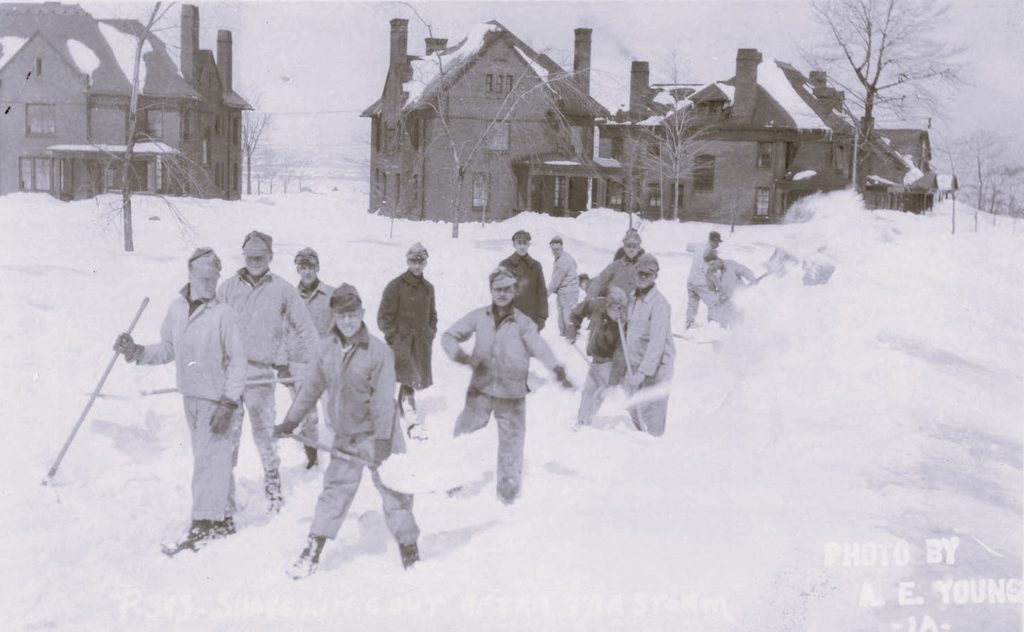
Years later, the Army would take greater advantage of northern conditions for winter maneuvers. But the early scenes need no wartime explanation. Snow removal and winter travel were already part of the ordinary life of Fort Brady.
Fort Brady’s Buildings Tell Their Own Story
Fort Brady continued to change during the interwar years. The structure later used as Lake State’s Administration Building was completed in 1920 as a post office and quarters for quartermaster personnel. The east gate and gatehouse followed in 1921, serving guards and traffic moving in and out of the post.
The later campus also inherited a 1930s gymnasium, now known as the Fletcher Center. Other buildings changed purpose over time. Together, these improvements made the hilltop post more than a collection of barracks. It had the physical services of a compact settlement.
In 1939, the Quiet Post Returned to the News
When war began in Europe in September 1939, the Army saw new danger at the Soo Locks. Nearly nine-tenths of the iron ore consumed in the United States passed through the Sault locks before the war, according to the Army’s official history. Blocking the waterway could interrupt steel production just as American industry faced growing military demands.
Four companies of the 2nd Infantry were then stationed at Fort Brady. On Sept. 7, 1939, the Army reported guards at the locks, Coast Guard patrols at the canal approaches, and machine guns and searchlights being installed above the waterway.
Security planning accelerated. In March 1941, the War Department established the Military District of Sault Ste. Marie. Col. Fred T. Cruse took command. American officials worked with Canadian authorities to coordinate defense on both sides of the international boundary. That May, the 702nd Military Police Battalion replaced the remaining infantry company assigned to guard duty.
The same shipping route that made Sault Ste. Marie a prosperous port also made it a national security concern.
A Bridge Collapse Exposed the Locks’ Weakness
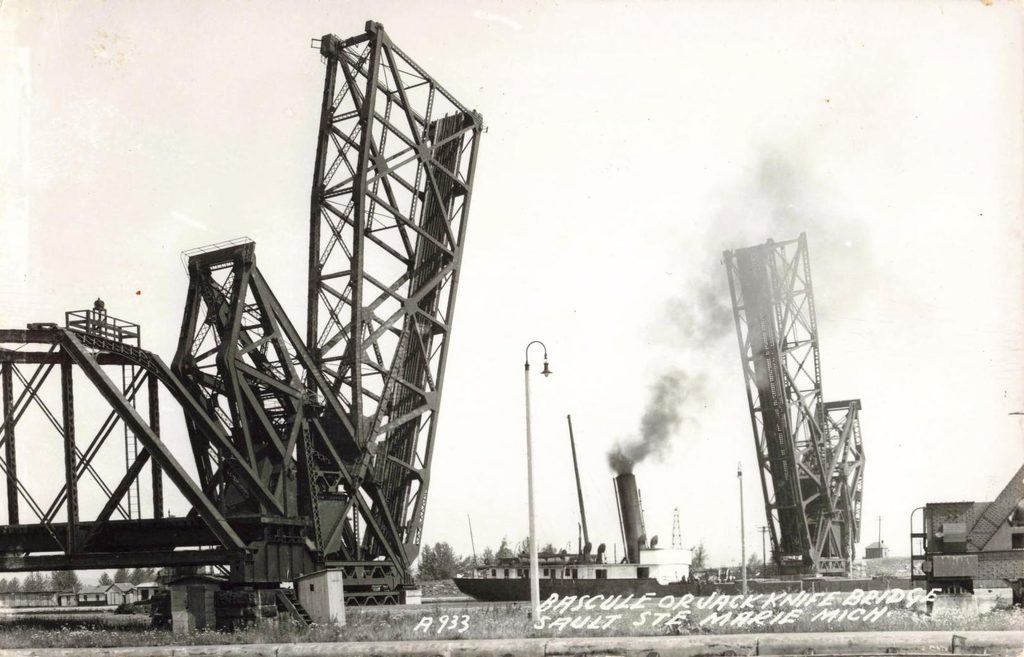
On Oct. 7, 1941, part of a railroad bridge collapsed into the canal at the Soo Locks, carrying a locomotive into the water. Two railroad workers died. The accident blocked important shipping channels for roughly 48 hours, delaying freighters. Investigators did not find sabotage.
Even so, the disruption made the stakes clear. A single failure could stop vessels carrying materials American factories needed. Two months later, Japan attacked Pearl Harbor, and the United States entered World War II.
Troops, Antiaircraft Guns and Wartime Sault Ste. Marie
By April 1942, elements of the 131st Infantry, 100th Coast Artillery (Antiaircraft) and 39th Barrage Balloon Battalion were in the Sault area. Radar sites, aircraft observers and new defensive positions became part of a coordinated cross-border plan. On May 15–16, 1942, the city held “M-Days,” which gave local residents a chance to see military personnel and equipment and learn about civilian defense.
Wartime growth also strained Fort Brady. Temporary buildings and tent facilities supplemented the established post. Training and security duties continued alongside the daily demands of housing and supplying troops.
How many troops were at Fort Brady? Published histories give different large totals for the fort’s wartime activity. The Army’s official history offers a narrower, documented measure: the wider Sault Military District had about 7,000 officers and men by midsummer 1942, rising to roughly 7,300 by year’s end.
The Army later scaled back the defenses as its assessment of the threat changed. By September 1943, planners had ordered the district garrison reduced to about 2,500. Early in 1944, the Army reported a return to military police units for local guard duties.
Fort Brady’s Last Military Years, 1944–1945
Fort Brady did not end with one dramatic closing ceremony. The War Department declared the post surplus on April 5, 1944, and placed it on inactive status Nov. 25 of that year. Lake Superior State University’s history notes that troop departures continued into late 1945. The National Guard assumed responsibility for protecting the canal.
The change left a difficult question for Sault Ste. Marie: What should happen to the sturdy buildings and open grounds of a military post that had helped shape the city for generations?
In 1946, the answer came through education. The property became the Sault branch of Michigan College of Mining and Technology, later Michigan Technological University. Veterans were among the first students. The barracks, officers’ quarters, and former administrative buildings became classrooms, offices, and student housing.
Today, Lake Superior State University occupies the old fort grounds. The grounds still tell the story of daily life in an Army garrison.
Fort Brady never needed a battlefield to leave its mark on Michigan. For nearly half a century after 1900, its story was made in smaller moments: a baseball game, a brass band, the scrape of shovels through snow and the steady watch over ships passing through the Soo Locks.
Works Cited for the History of Fort Brady, Michigan
- Conn, Stetson, Rose C. Engelman, and Byron Fairchild. Guarding the United States and Its Outposts. Center of Military History, U.S. Army, 1964.
- Lake Superior State University. “Fort Brady.” Lake Superior State University, n.d.
- Michigan Military Technical & Historical Society. “1923 Camp Custer / Ft. Brady CMTC Yearbook.” Digital Collections, n.d.
- “Lockdown: The Story of the Soo Locks and WWII.” Military History of the Upper Great Lakes, Michigan Technological University, 16 Oct. 2016.
- “Michigan College of Mining and Technology, Sault Ste. Marie Branch.” Military History of the Upper Great Lakes, Michigan Technological University, 19 Oct. 2016.
- “New Fort Brady.” The Historical Marker Database, text of Michigan History Division marker erected 1976.
- “Historian Bernie Arbic Describes ‘M-Days’ 1942 and Sault at War.” SooLeader, 2022.
- Thumbwind Publications. Fort Brady Historical Image Collection. Archival images in Google Drive, various dates.