Around a winter campfire in the Upper Peninsula, an object small enough to hold in one hand could represent a connection reaching far beyond Michigan.
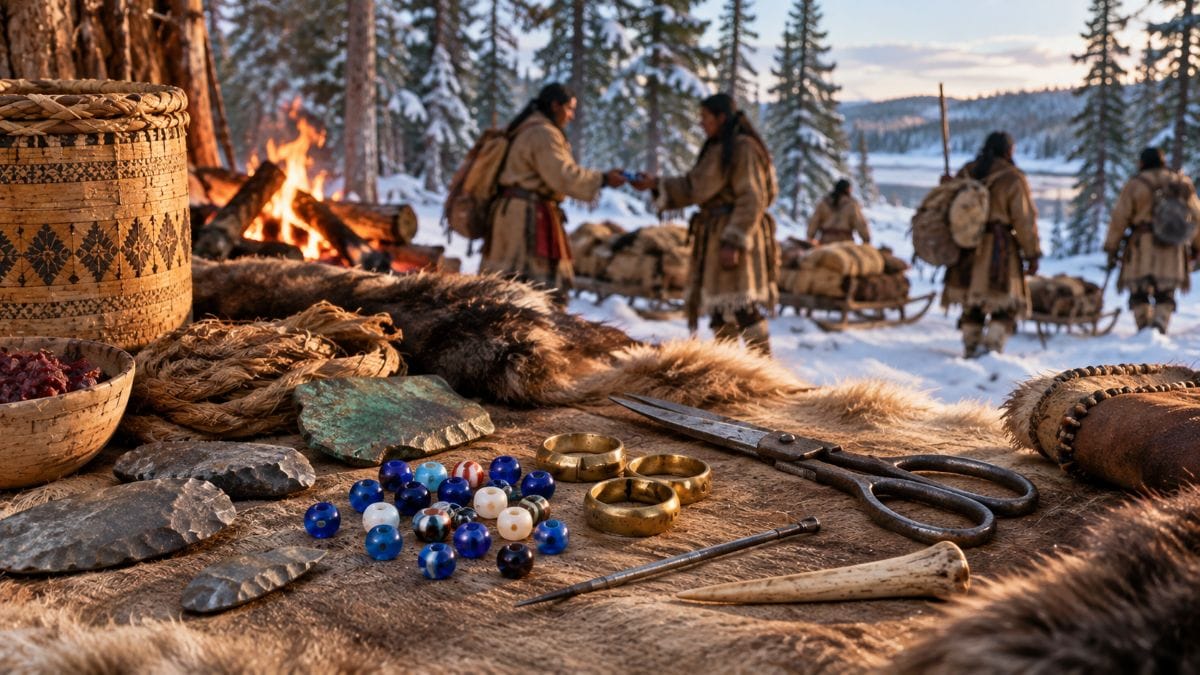
This historical illustration evokes the trade goods that circulated through Indigenous networks in the early 1600s. At an Anishinaabe hunting camp near Goose Lake, archaeologists identified European-made glass beads and metal objects along with locally produced tools. The finds suggest that goods moved westward through existing relationships before permanent French trading posts spread through much of the region.
The camp’s occupants had their own seasonal activities and knowledge of the surrounding land. Participation in trade did not replace those practices. It added new objects to a much older system of travel and exchange.
The scene is interpretive artwork rather than a record of a particular winter evening.
What object from early Michigan history would you like to see in a museum?