 by
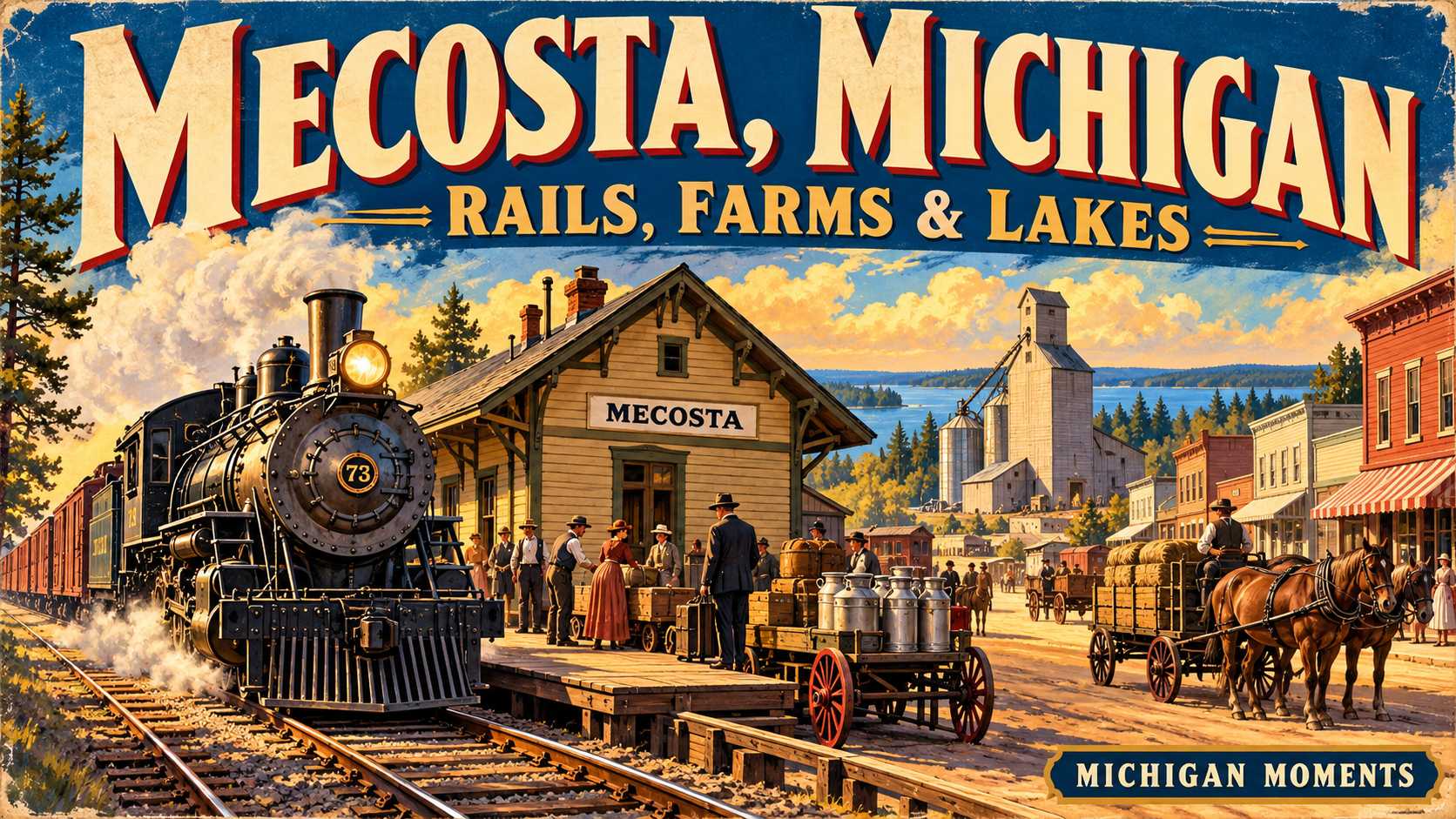
by In 1879, investors marked off 120 acres beside a new railroad and the East Branch of the Little Muskegon River. The history of Mecosta, Michigan, begins with that calculated choice: place a station between established farms to the south and east and valuable pine stands to the north.
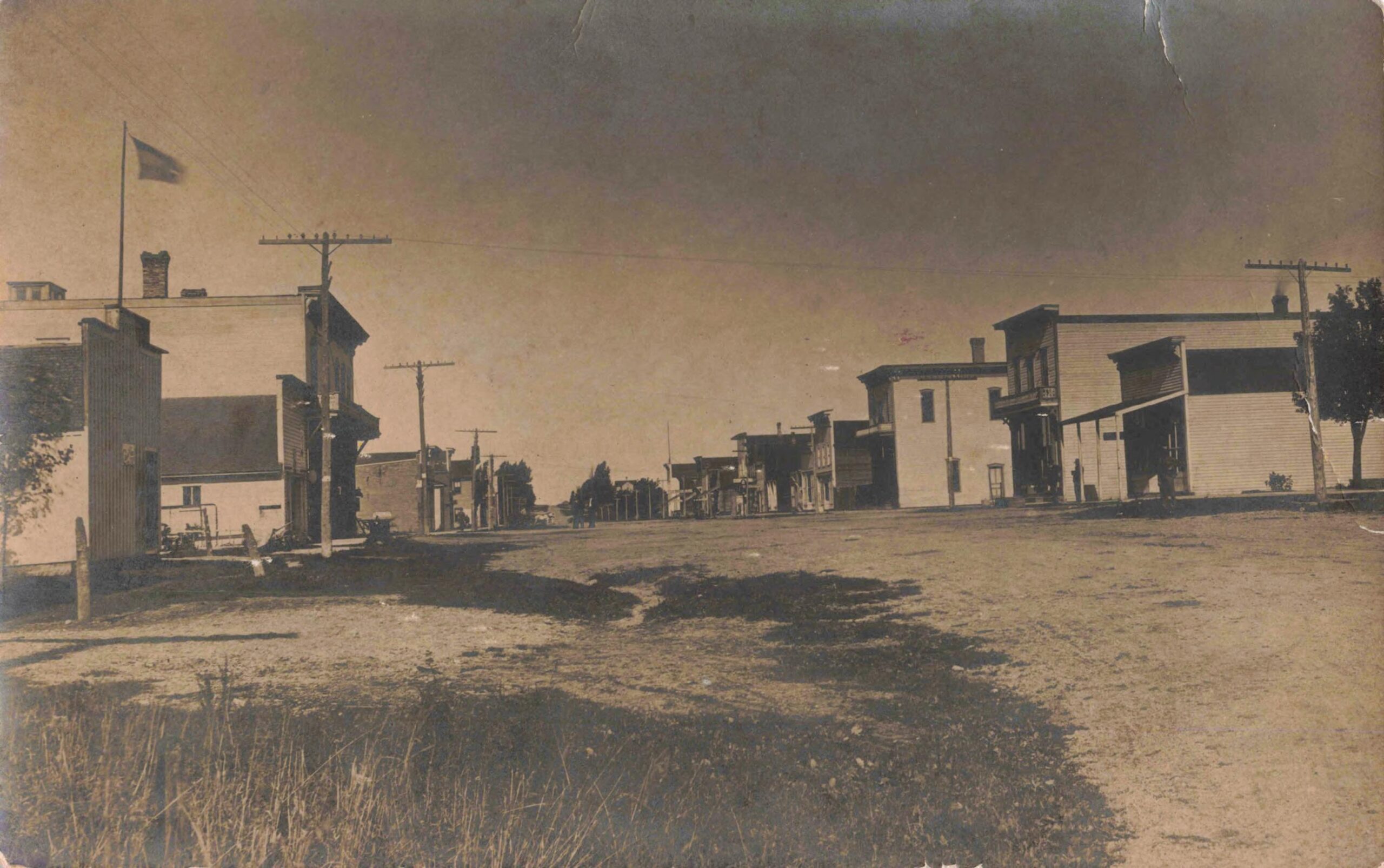
The plan worked quickly. Regular trains began running in May 1880. That year, a village of 189 residents soon supported hotels, mills, stores, a private bank, and a newspaper. The first rush did not last, but it gave Mecosta the street plan and business center that still shape the village.
Chief Mecosta and the Country Before the Village
Potawatomi people lived in and traveled through central Michigan long before railroad crews arrived. The county and village were named for Chief Mecosta, a Potawatomi leader associated with the 1830s treaties and removals. Sources give several English meanings for his name, including “Big Bear,” “Bear Cub” and “Having a Bear’s Foot.” These different versions show how government officials recorded Native names in English.
An earlier Mecosta post office operated from 1867 to 1873 south of the later Rogers Dam. It was not the present village. The community known today as Mecosta appeared six years later in Morton Township.
How the Railroad Created Mecosta
Weber Brothers of Ionia, E.B. Moore of Edmore and Giles Gilbert of Stanton organized the company that platted Mecosta on July 17, 1879. They appointed Amos S. Johnson as resident land agent. D. O’Brien built the first building that October. John Van Vleck and his son began a steam sawmill and shingle mill.
The post office opened in December 1879. Ephraim LeGrange opened the Mecosta House at Main and Weber streets. When regular Detroit, Lansing and Northern trains arrived in 1880, the town gained the connection it needed to sell lumber and supply nearby farms.
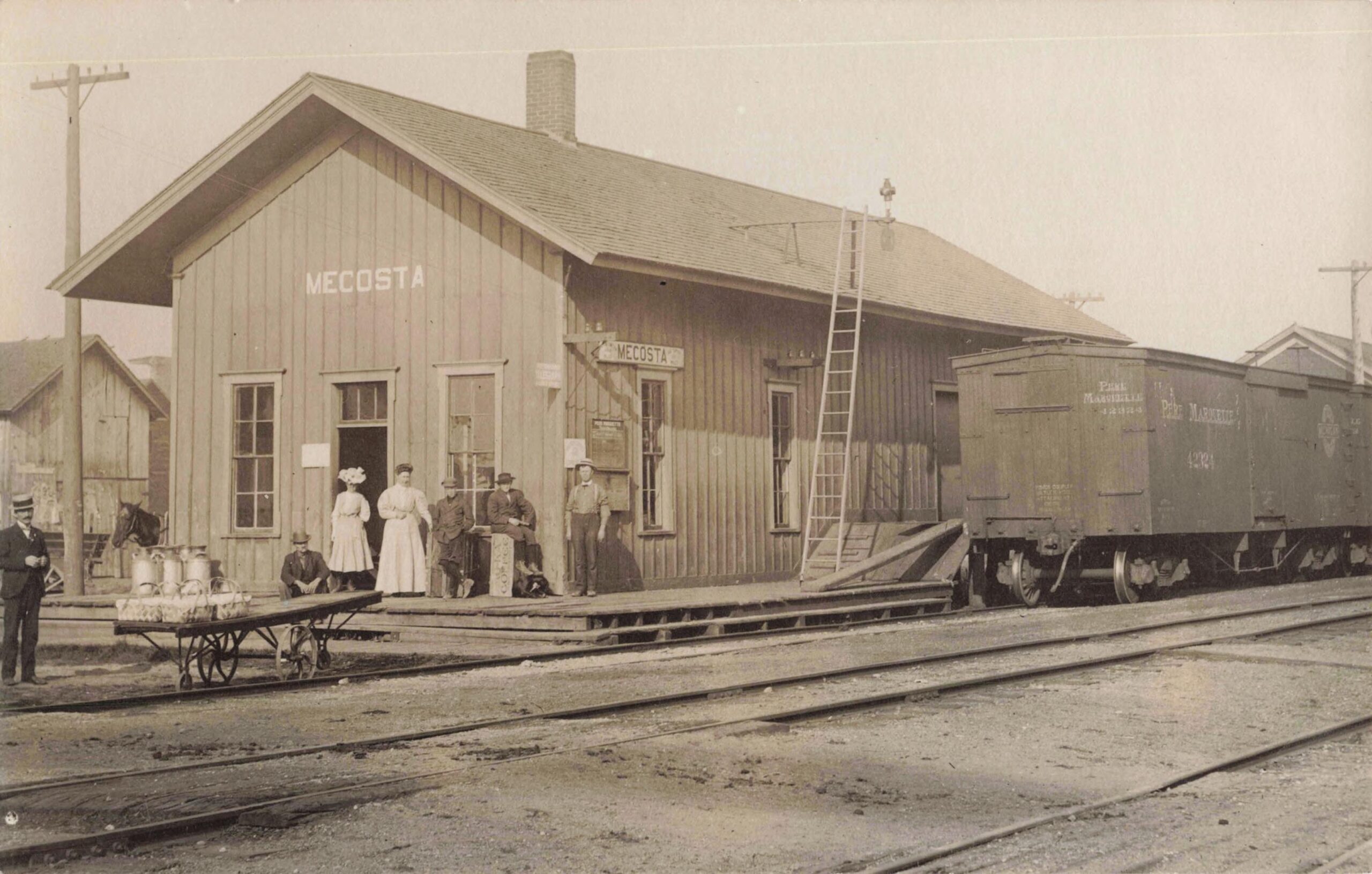
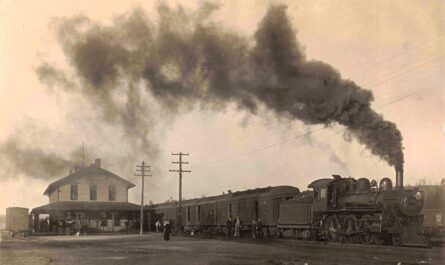
The depot was Mecosta’s front door to the world. Trains brought mail, machinery, household goods, and new residents. Outbound cars carried lumber and shingles. Later, they hauled potatoes, grain, and dairy products. The route eventually became part of the Pere Marquette system.
A Complete Small-Town Business District
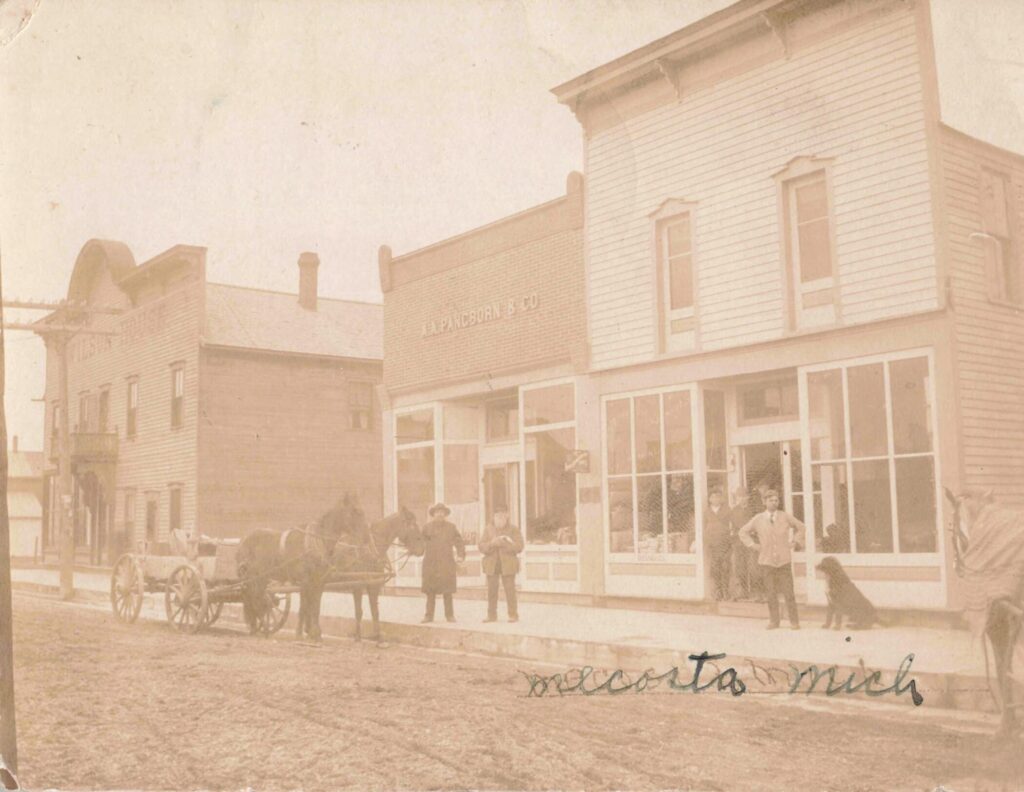
Mecosta’s 1883 business list reads like an inventory for a complete small town. It included two hotels, several general stores, two drugstores, blacksmith shops, a wagon shop, a livery, a furniture store, a photography gallery, a private bank, and offices for two doctors. The village also had a lawyer and a newspaper called The Mecosta Advance.
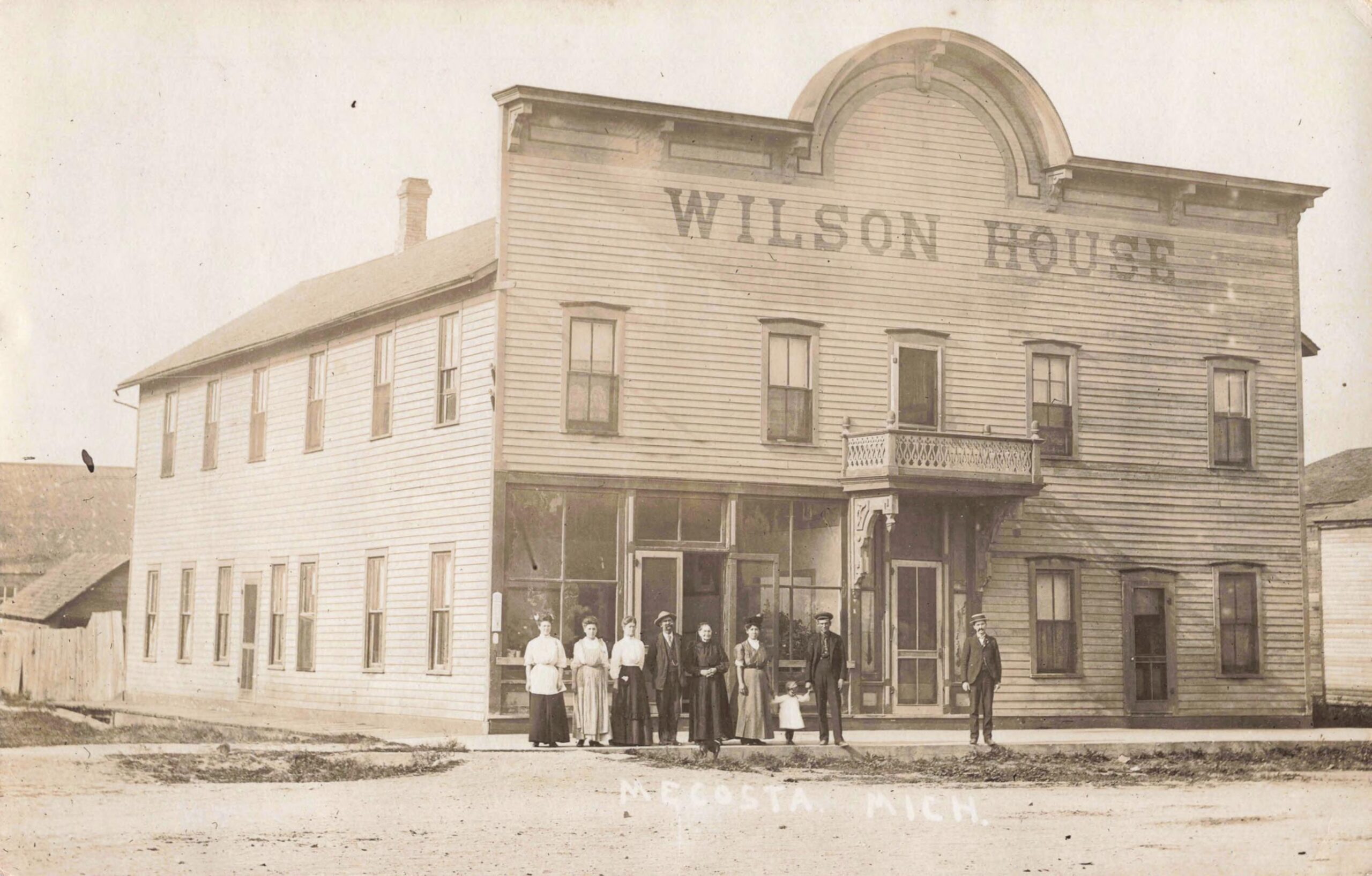
Malon Carman ran a grocery and a shingle works that produced 75,000 to 100,000 shingles a day. The Rathvon Brothers opened a planing mill in 1883. Mecosta’s brass band, organized in 1882, gave the young village another sign of permanence.
When Farm Freight Replaced Pine
The lumber supply could not support the first pace forever. Mecosta’s federal census population reached 472 in 1890, then fell to 416 in 1900, 352 in 1910, and 297 in 1920. The decline followed the end of heavy pine cutting and the reduced need for mill labor.
Farm commerce kept the railroad useful. The Mecosta Elevator Co. handled grain, while adjoining warehouses stored potatoes. Poultry, dairy products, and other goods from mixed farms also moved through town. The economic base was smaller than the lumber trade, but it suited the cleared land surrounding the village.
What did a village grain elevator do?
An elevator received crops from area farmers, weighed and stored them, then loaded them into railcars. It also served as a place to buy feed, seed, and other farm supplies.
Schools, Old Settlers and Little River
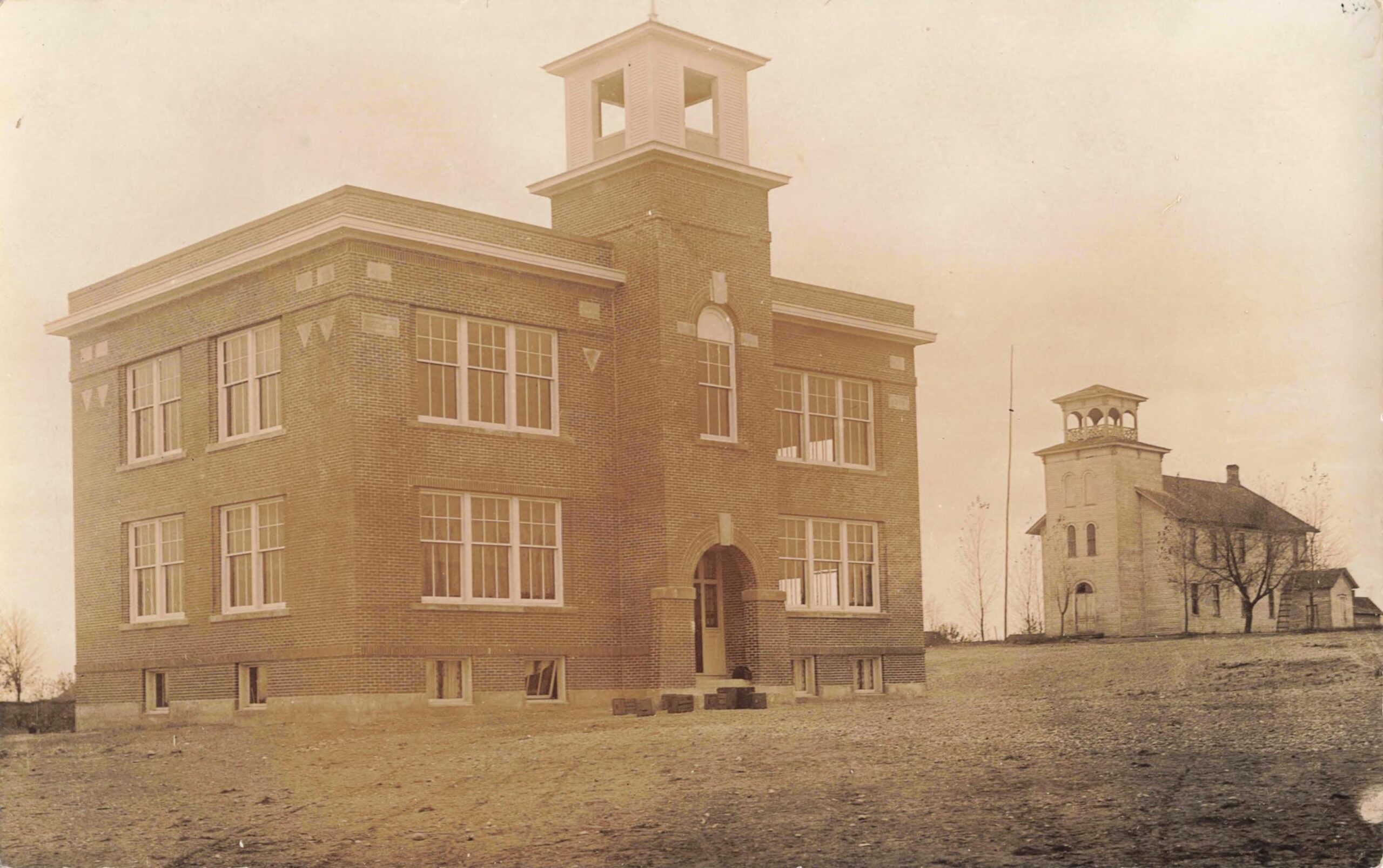
Mecosta became a school district in 1879. A frame school completed in 1881 later stood beside a larger brick building. The added space marked the village’s shift from a short-lived lumber-camp economy to a community of families from town and nearby farms.
The wider history of the Mecosta area also includes the Old Settlers, the Black pioneers who established farms and communities across Mecosta, Isabella, and Montcalm counties. Some had escaped slavery through Canada. Others came as free families and used the Homestead Act to acquire land.
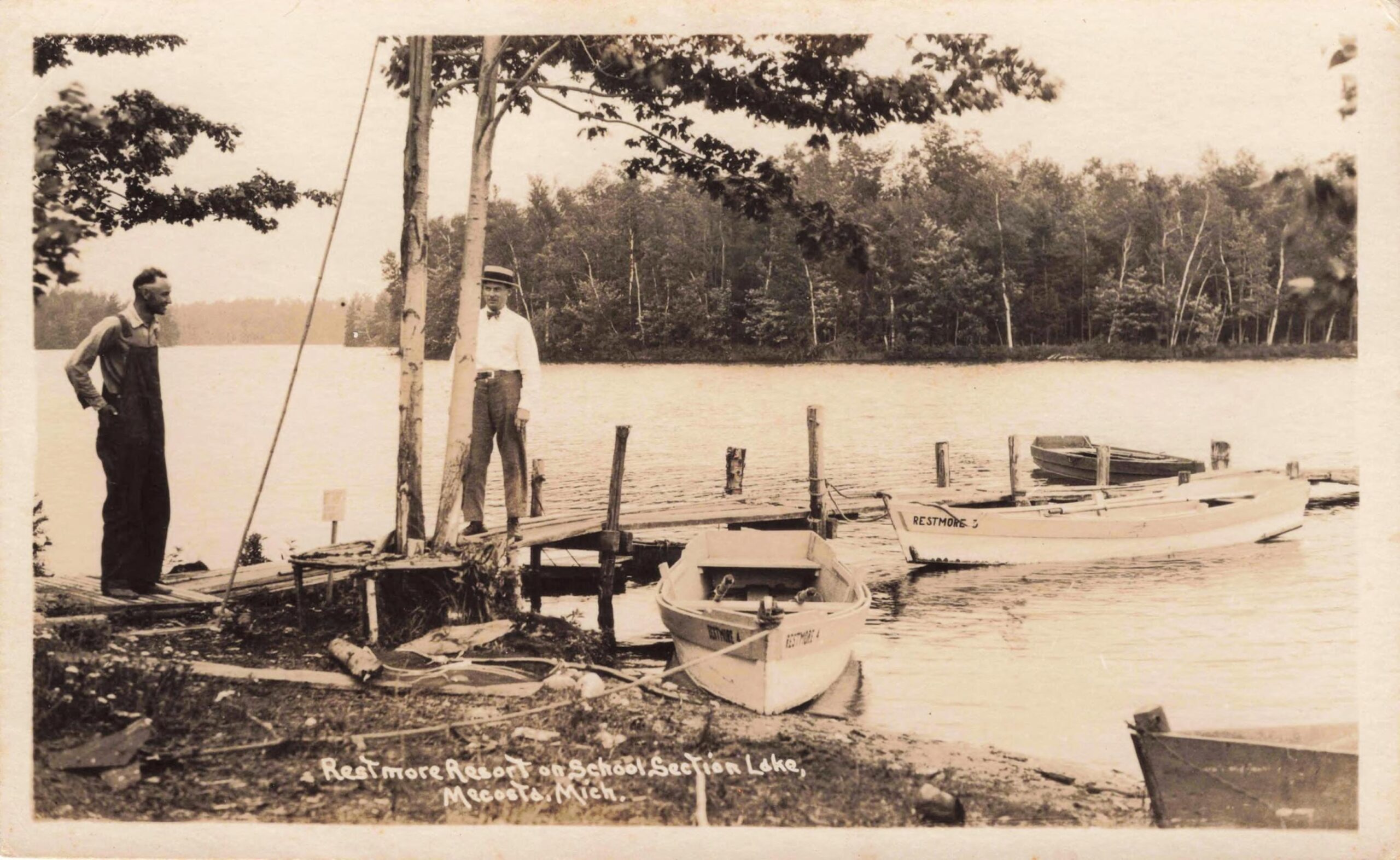
Isaac and Lucy Berry settled near School Section Lake in 1877. Isaac had escaped slavery in Missouri and reached Canada in 1858. Lucy became the first teacher at Little River School. Black, white, and Native American children attended the one-room school. Residents replaced the original log building with the surviving frame schoolhouse in 1905.
The Berrys also cleared a beach, built bathhouses, and rented boats and fishing equipment at a place they called Pleasant View. Mecosta County bought the property in 1929, and it became School Section Lake Veterans Park.
Why was the Little River school bell important?
The bell did more than call pupils to class. Community members used different ringing patterns to announce fires, serious illness, births, and deaths.
Horsehead Lake and the Early Resort Trade
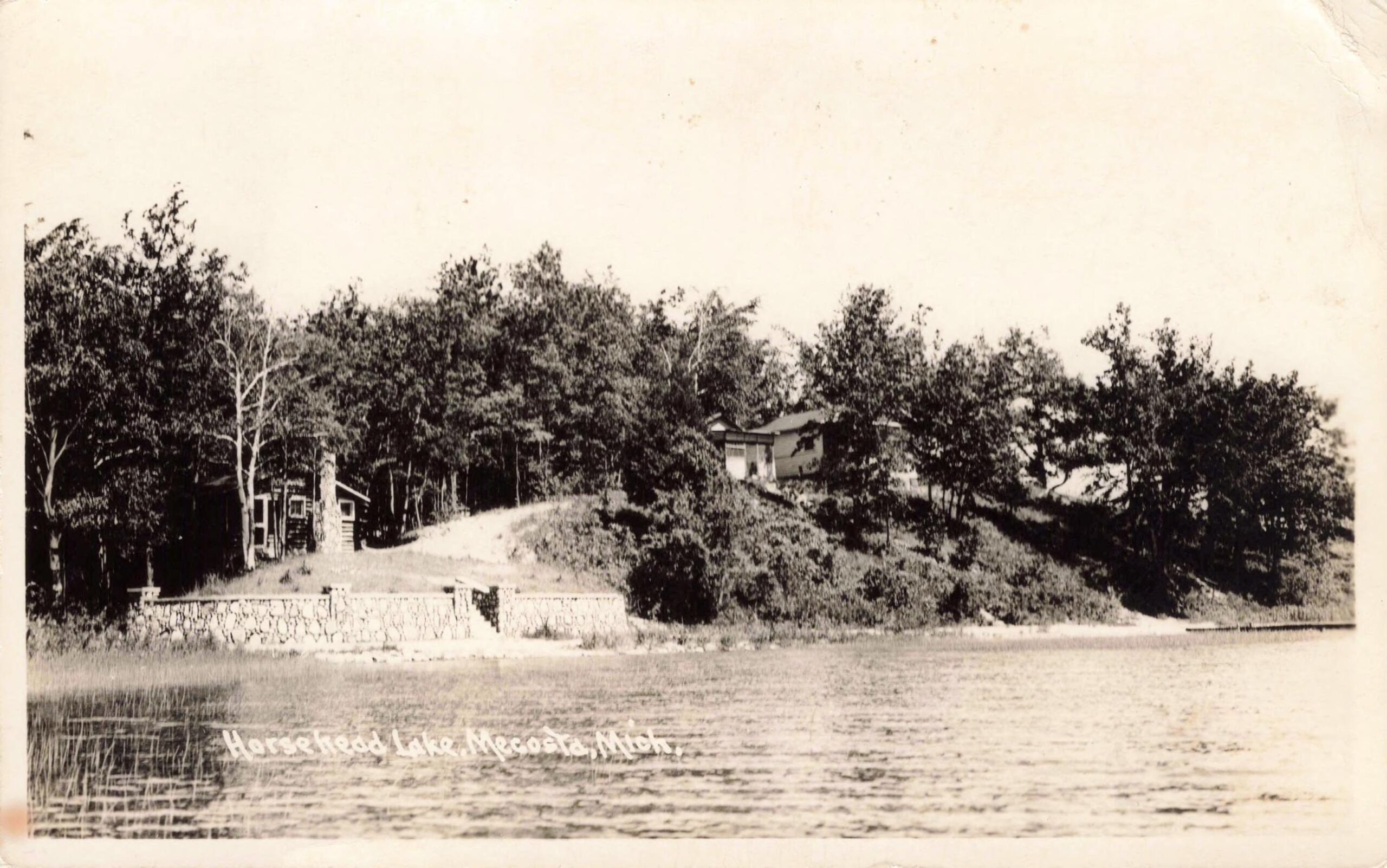
Mecosta’s lakes offered another source of income. By the late 1890s and early 1900s, the Percy family operated a boat landing and campground at Horsehead Lake. Visitors rented boats, stayed in simple cabins or tents and fished the lake.
Summer recreation also created winter work. The Percy family cut and stored lake ice, then sold it to cottage owners during warm months. Electricity did not reach those lake properties until about 1940.
Cars Arrive and the Railroad Leaves
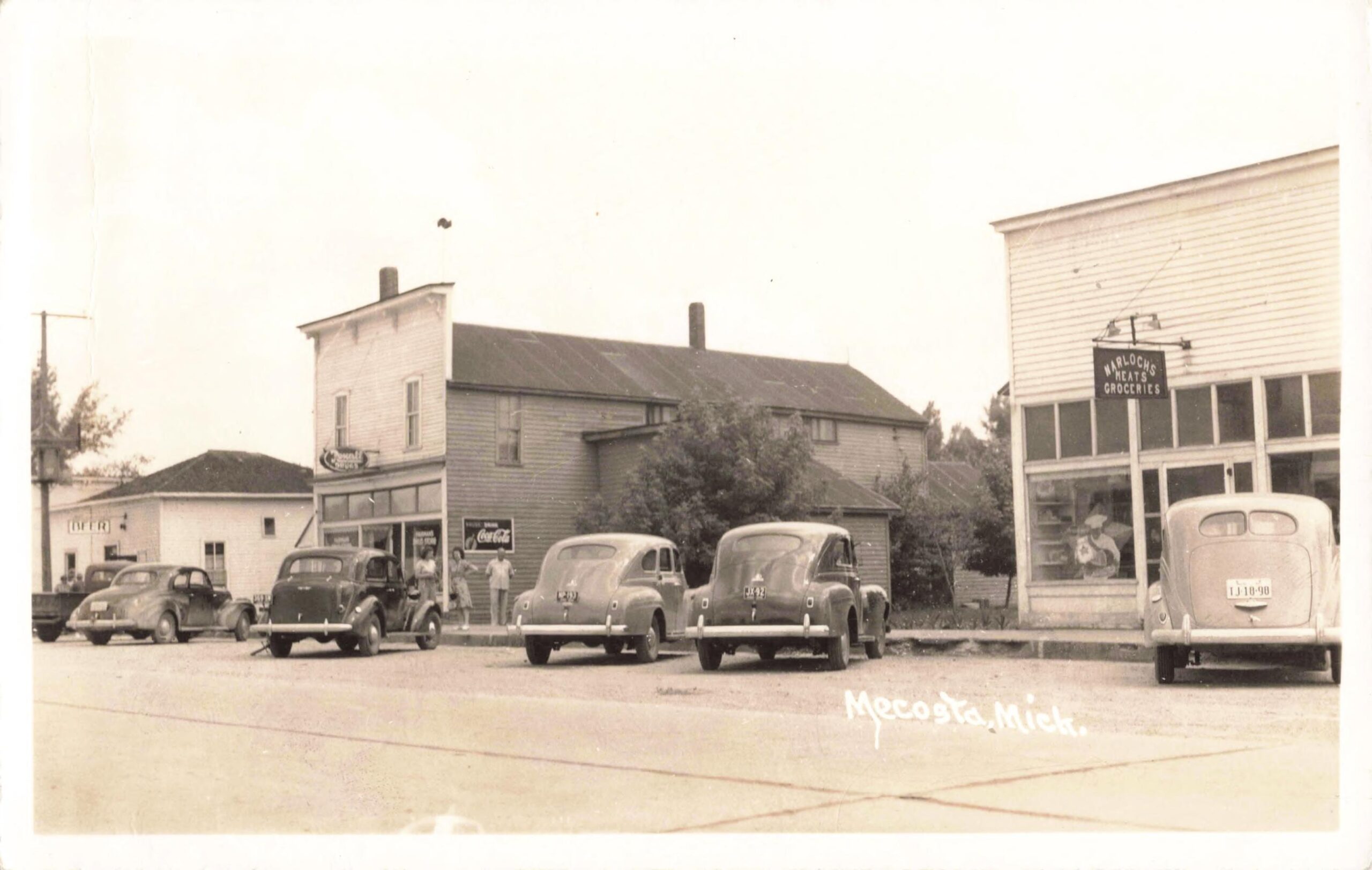
By the 1930s, automobiles lined Mecosta’s business street. Signs advertised Fairman’s Drug Store, ice cream, Coca-Cola, and Harlock’s meats and groceries. Cars gave residents more freedom, but they also weakened the railroad’s passenger business.
The railroad abandoned the Remus-to-Big Rapids section in 1943. They removed Mecosta’s depot and tracks. For a village created by rail service, the loss was a sharp break. M-20 and the surrounding lakes kept traffic moving through town, though the scale of business had changed.
A Writer’s Home and a Village That Continued
Mecosta later became closely associated with author and political thinker Russell Kirk. His mother’s family had deep roots in the village. After publishing The Conservative Mind in 1953, Kirk made the family property, Piety Hill, his permanent home. Writers, scholars and students came to Mecosta to meet and study with him.
The sawmills, depot and potato warehouses are gone. Still, Mecosta’s 1879 street plan, river crossing and nearby lakes remain. Old photographs preserve the missing pieces: a crowded depot platform, hotel porches, school towers, and storekeepers standing at their doors. Together, they show a Michigan village that rose with pine and railroads, then shifted to farms, highways, and lake travel.
Mecosta, Michigan: Historical Timeline
Michigan Moments
Mecosta Through Time
From the Little River community and the arrival of the railroad to the loss of the depot and the rise of Piety Hill.
The First Mecosta Post Office
An earlier post office carrying the Mecosta name opens in Mecosta Township, south of the later Rogers Dam.
1867The First Post Office Closes
The original office closes six years before the present village is laid out in Morton Township.
1873Little River School Begins
Isaac and Lucy Berry settle near School Section Lake and help open a school serving Black, white and Native American children.
1877A Railroad Village Is Platted
The present Village of Mecosta is recorded July 17 beside the Detroit, Lansing and Northern Railroad.
1879Regular Trains Arrive
Scheduled rail service begins in May. The federal census counts 189 village residents.
1880A New Frame School
Mecosta completes a frame schoolhouse at a reported cost of $2,000.
1881The Village Finds Its Sound
Residents organize a brass band as stores, mills, hotels and professional offices fill the young business district.
1882Mecosta Incorporates
Voters choose Amos S. Johnson as the village’s first president on April 2.
1883Population Reaches Its Early Peak
The federal census records 472 residents, the village’s highest count in the historical census table.
1890Little River Builds Again
Residents replace the original log classroom with the frame Little River School House that survives today.
1905The Berry Property Becomes Public
The School Section Lake property is sold to Mecosta County and later becomes Veterans Park.
1929Little River School Closes
The rural school ends regular operation after serving local families for nearly six decades.
1935The Railroad Era Ends
The line between Remus and Big Rapids is abandoned. Mecosta’s depot and tracks are removed.
1943Russell Kirk Returns to Mecosta
After publishing The Conservative Mind, Kirk makes his family property at Piety Hill his permanent home.
1953
Frequently Asked Questions
When was Mecosta, Michigan, founded?
The present village was platted July 17, 1879, and incorporated in 1883. An earlier post office named Mecosta operated elsewhere in the county from 1867 to 1873
Which railroad served Mecosta?
The Detroit, Lansing and Northern created the route. It later became part of the Detroit, Grand Rapids and Western and Pere Marquette systems. The line through Mecosta was abandoned in 1943
What industries supported Mecosta?
Lumber, shingles and planed wood drove the first boom. Grain, potatoes, dairy products and mixed farming followed. Lake resorts and fishing added seasonal income
Where can visitors see local history?
The Little River School House at School Section Lake Veterans Park preserves the story of Isaac and Lucy Berry and the area’s multiracial pioneer community in Mecosta County, MI.
Help Identify Mecosta’s People and Buildings
Do you recognize a storefront, teacher, railroad worker, or family member in these views? Add the name, approximate date, and your source in the comments. Those details can turn an unidentified face or building into a documented part of Mecosta’s record.
Sources for the History of Mecosta Michigan
- Horsehead Lake Association, “Horsehead Lake History.”
- Library of Michigan, “Mecosta.”
- Michigan Historical Center, “Little River School House / Isaac and Lucy Berry.”
- Michigan Humanities, “Old Settler Reunion Website Works to Restore and Preserve Black History in Michigan.”
- Morton Township, “History.”
- Russell Kirk Center, “Kirk Essay: Mecosta County.”
- U.S. Census Bureau, Michigan: 2010, Population and Housing Unit Counts.
- William L. Clements Library, “David V. Tinder Collection of Michigan Photography.”