by
by Conway sits on the west end of Crooked Lake in Emmet County. It looks small on a map, yet it stands at the start of a 35-mile water route that links Crooked, Burt, and Mullett Lakes to the Cheboygan River and Lake Huron. For a time, a traveler could step off a Grand Rapids & Indiana train, cross a short street, and board a launch with a striped awning. That simple handoff—rail to water—shaped the History of Conway Michigan.
Video – Conway, Michigan: Where Rail Met the Inland Waterway
A Place at the Water’s Door
Geography gave Conway a job. U.S. 31 ties it to Petoskey and Alanson, but the real line was liquid. The Inland Waterway offered quiet miles of connected lakes and rivers. Families used it for outings and extended hotel stays. Freight and mail moved on it, too. This corridor helps explain the History of Conway Michigan and why activity clustered near the dock and depot.
How the Town Got Its Name
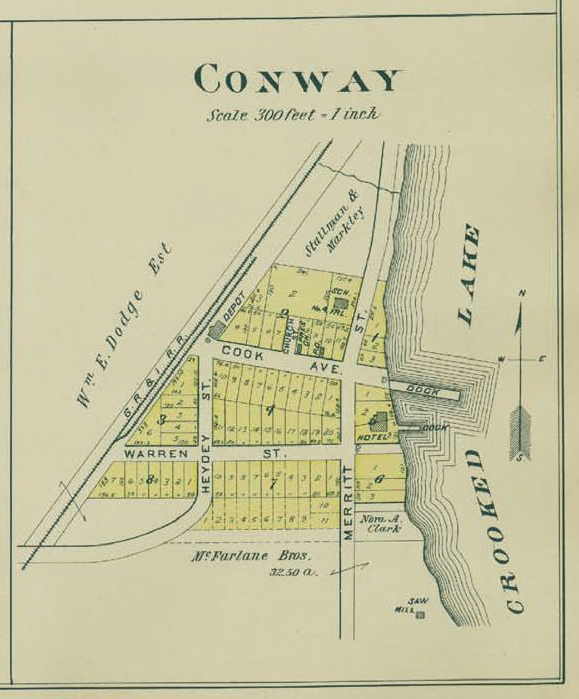
The settlement passed through early labels such as Crooked Lake and Dodge’s Landing. New York industrialist W. E. Dodge bought land here in the 1870s and supported a church and school. In 1882, after his young son Conway Dodge died, residents adopted the boy’s name for the community. The post office opened the same year, and the Grand Rapids & Indiana Railroad added a station stop. These events mark a clear start in the History of Conway Michigan.
Rail Arrivals, Launch Departures
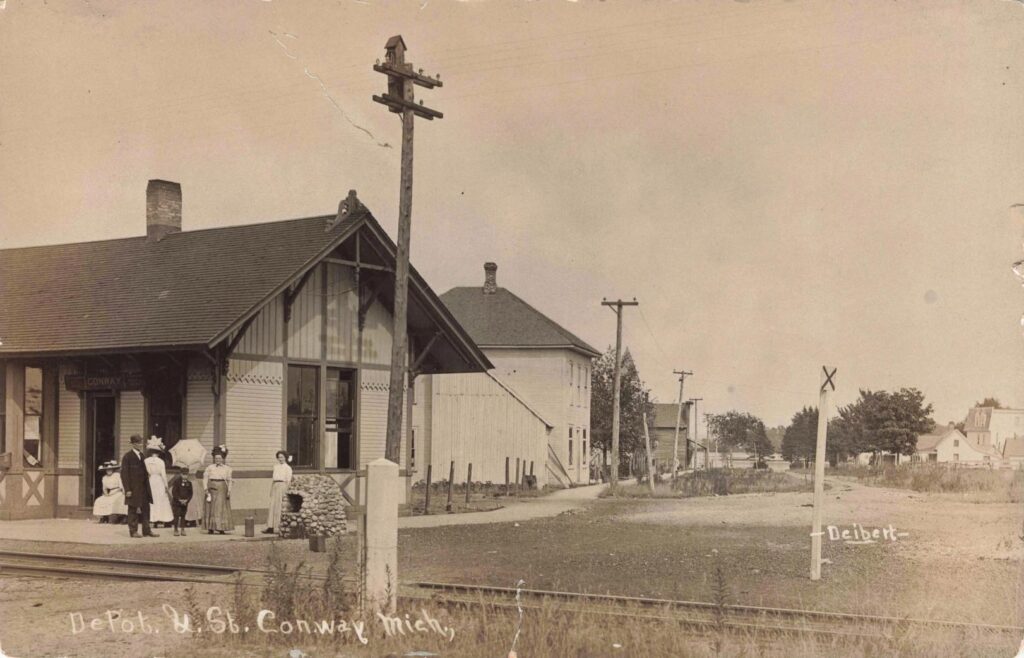
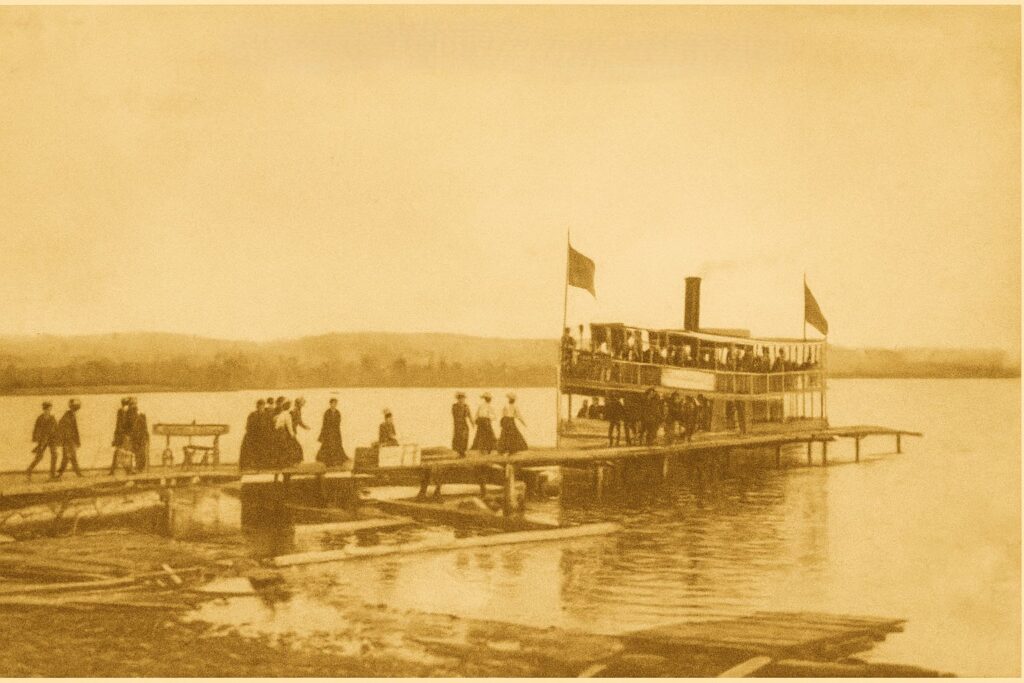
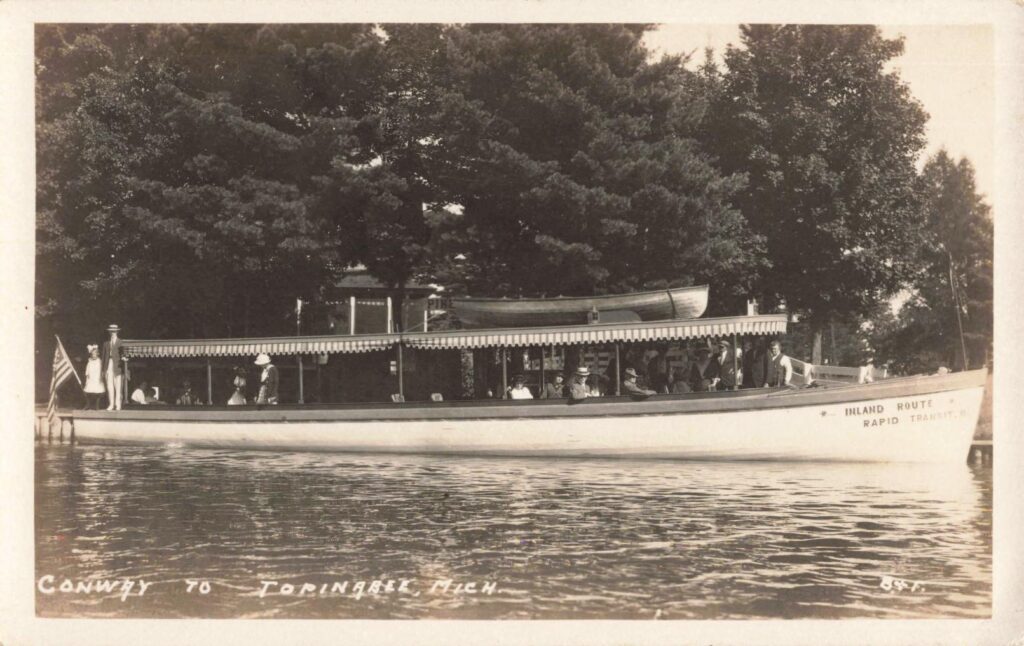
The depot made Conway visible to summer travelers. Trains dropped passengers within sight of the shoreline. Launches then carried them east through the Crooked River and on to Burt and Mullett Lakes. Period photos show the “Inland Route Rapid Transit” launch loading at Conway. The trip passed low bridges and quiet cutbanks and ended at towns with boardwalks, cottages, and hotel docks.
Inns That Anchored a Season
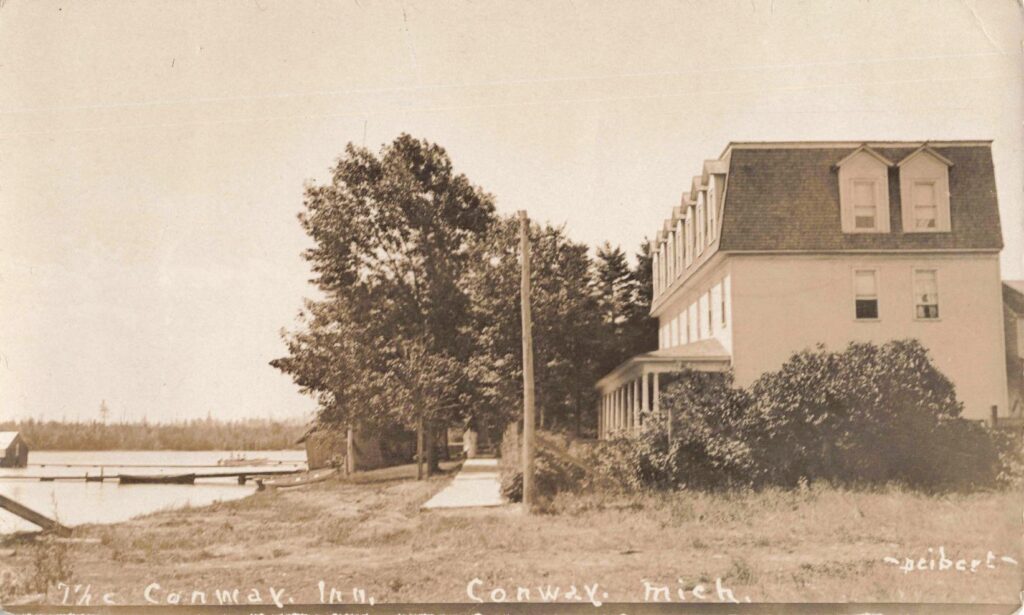
Lodging rose to meet the traffic. In 1879, Merritt Blackmer built the Inland House along the lake. He drilled an artesian well and ran a small guest business. In 1908, David Hastings rebuilt and enlarged the property as the Conway Inn. The new structure stood three stories with a mansard roof and an eight-stall boathouse. Guests woke to water light and day trips by launch. Hastings later transferred the inn to his sister, Jean Hastings Trask, and her husband, Homer Trask. The Trask family eventually conveyed shoreline for public use, honoring Blackmer’s early wishes.
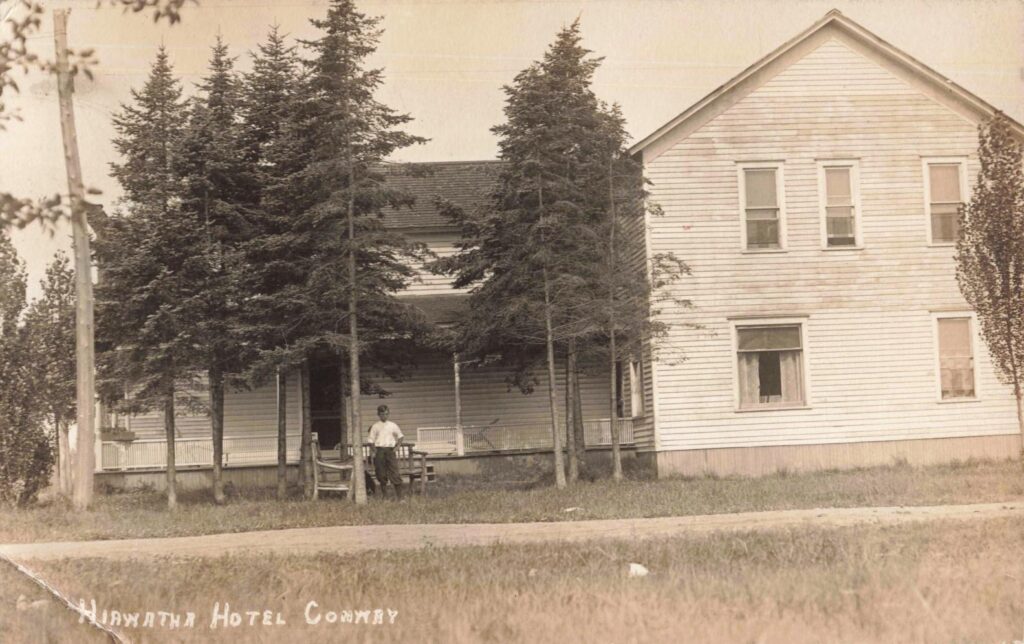
A few doors away, the Hiawatha Hotel—later known as the Hiawatha Tavern—offered rooms and a deep porch under tall trees. A simple roadside sign read “Tourists Rooms.” Both properties show how the hospitality trade powered the History of Conway Michigan and pulled in steady summer crowds.
Stores, Porches, and a Corner Pump
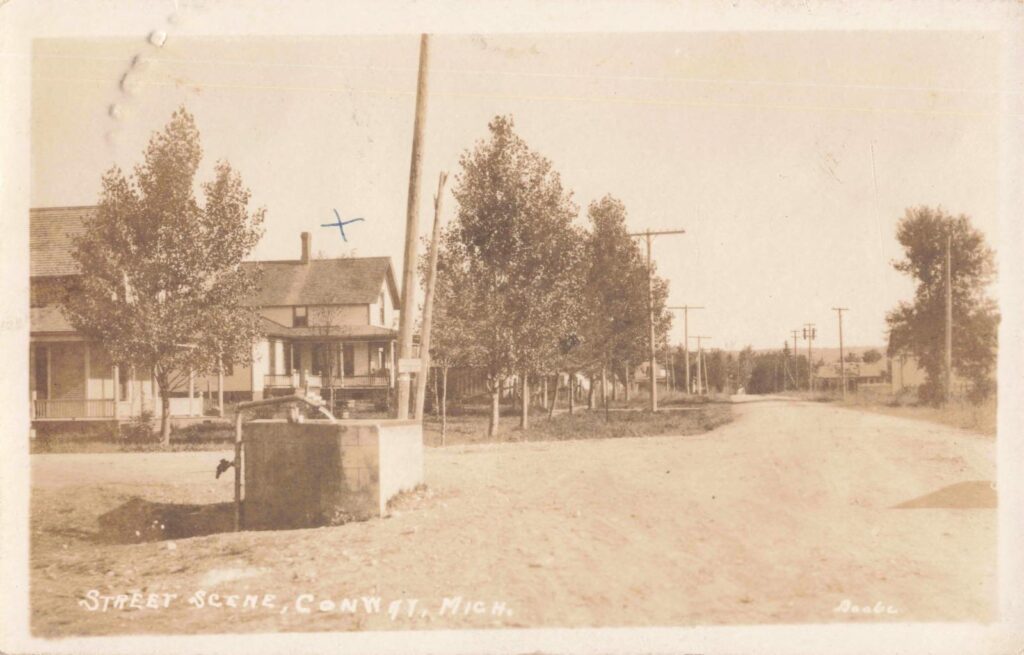
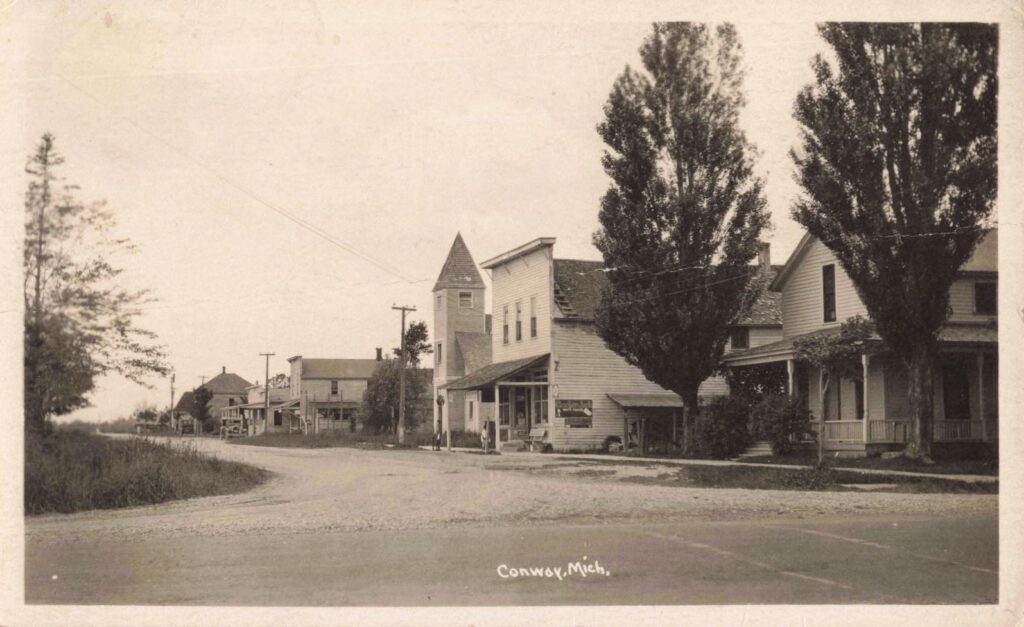
Conway’s main street was direct. A frame store, labeled in one postcard as the Treadwell Store, sold coffee, lamp wicks, and fishing line. A public pump stood near the corner. Porches faced the road and the water. Utility poles formed a straight row toward the lake. These images show daily life supported by modest services and a seasonal count of visitors.
Pictures That Froze a Moment
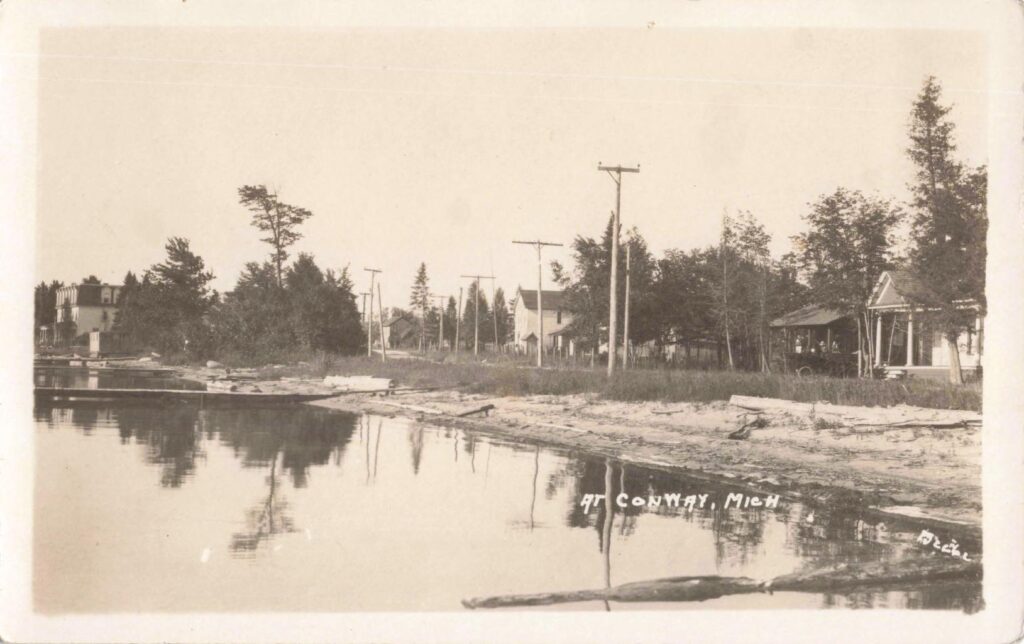
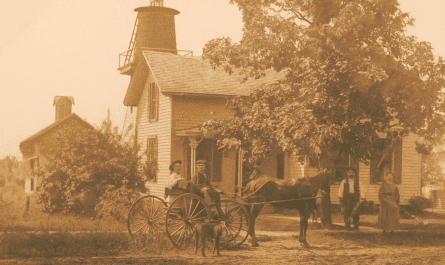
Photographer W. H. Deibert and other RPPC makers documented Conway in the 1900s and 1910s. Their cards show the depot, the inn, shoreline cottages, and launches under awnings. The views made the village feel larger than its census count because every frame included the lake and what it enabled.
Change Comes by Highway
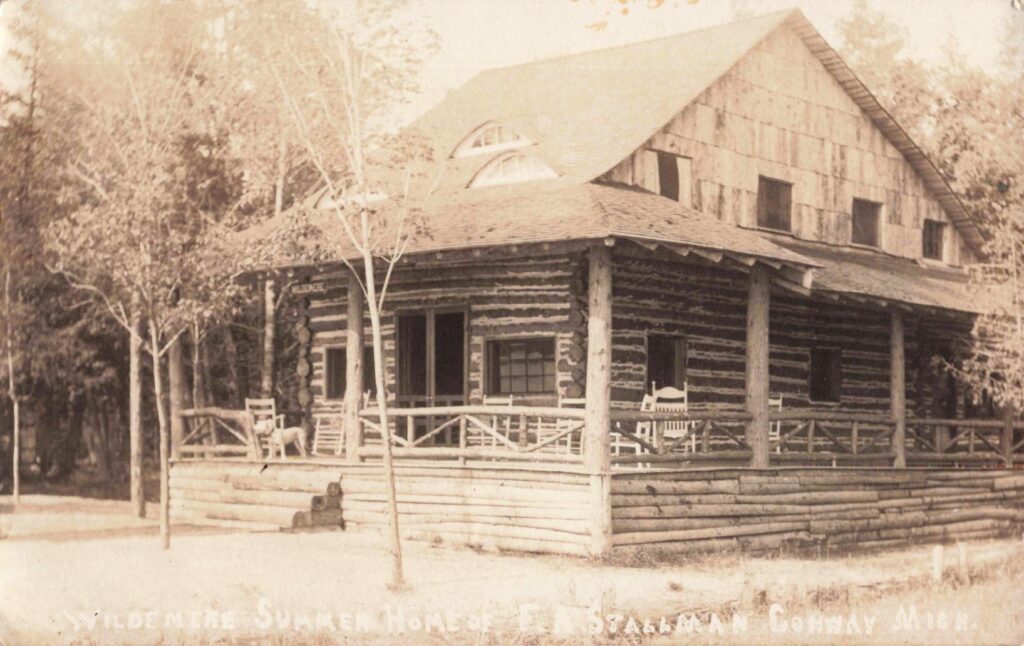
After World War I and again after World War II, highways redirected vacation traffic. People favored cars and cottages with private launches. Large inns faced new costs and shifting tastes. Some buildings were repurposed or removed. The Waterway still runs, aided by locks at Alanson and Cheboygan, but the era of seamless rail-to-boat travel has ended. What remains is the line where street meets shore and the memory of how people moved.
Why Conway Still Matters
Conway holds value for regional history. It shows how transportation networks build small towns. It ties a family story—the naming for Conway Dodge—to the public story of a working water route. It also preserves access to Crooked Lake, thanks in part to shoreline gifts made by owners of the old inn. Stand near the water on a quiet evening and you can still picture a launch easing away from the dock, canvas awning rattling in the breeze, as passengers point down the long route east.
Planning a Visit
Today, Conway is unincorporated and compact, set between Oden and Petoskey. U.S. 31 brings you in. The water route and public access sites provide a direct line to the same corridor used in the early 1900s. Read the markers, look at the shore, and you will understand the History of Conway, Michigan, in clear, practical terms: a rail stop, a dock, and a community that grew from both.