A canoe route could connect a small winter camp to trading partners hundreds of miles away, even when the journey required difficult portages.
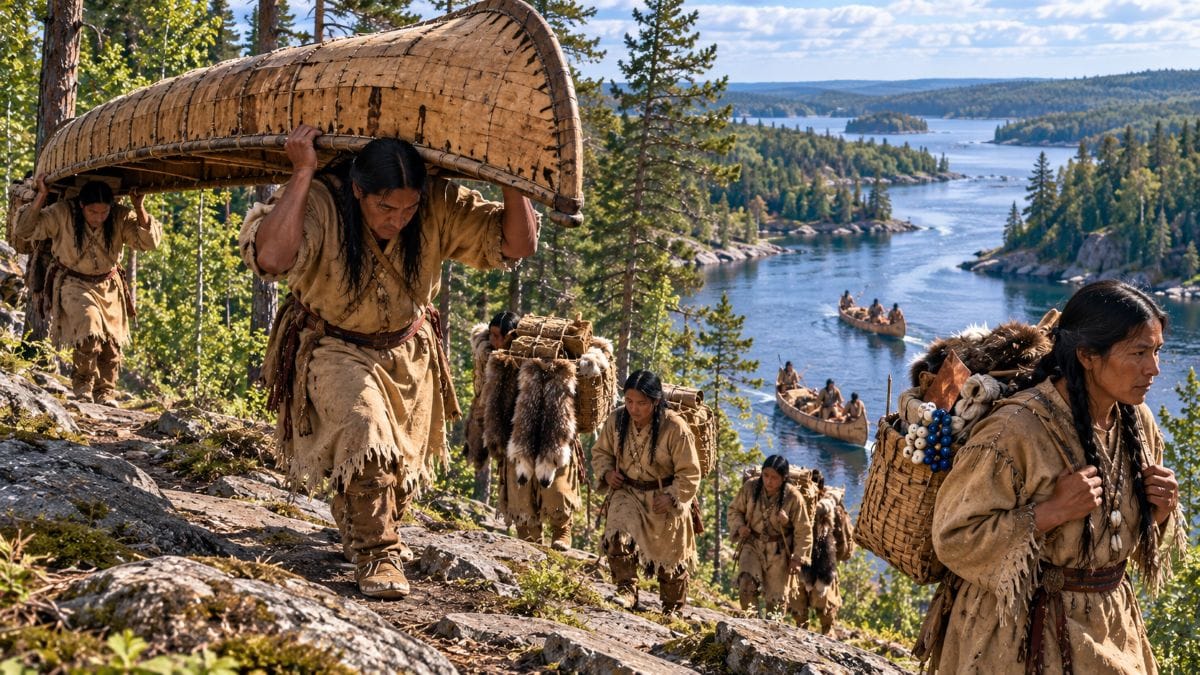
This historical illustration depicts Anishinaabe travelers with furs, packs and goods moving through northern Great Lakes country. Archaeologists examining a 1630s camp near Goose Lake in Michigan’s Upper Peninsula found European-made beads and other objects alongside locally made tools. The finds provide evidence of connections with trade networks that extended well beyond one camp.
Indigenous communities were experienced travelers who understood the rivers, lakes and overland passages linking the region. Imported goods could move through those networks without their original makers ever visiting Michigan.
The illustration is an artistic interpretation of travel and trade. It helps show why the waterways mattered to communities whose history long preceded permanent French posts.
Have you paddled an old Great Lakes portage route?